



Summary: Being prepared for a medical emergency in Richmond Hill requires more than just calling 911; it requires immediate, hands-on intervention. By securing WSIB-approved Canadian Red Cross certification under the new 2026 CSA Z1210:24 standards, residents and employees learn to administer High-Performance CPR, utilize AEDs, and manage severe trauma. Whether you are a local business owner ensuring workplace compliance or a resident protecting your family, formal training bridges the critical “Platinum Minutes” before York Region Paramedics arrive.
Lifesaving CPR Training: Essential Medical Emergency Prep in Richmond Hill
Richmond Hill is a vibrant and rapidly growing community in York Region, home to over 200,000 residents and a thriving commercial sector that continues to attract new families and professionals. With this rapid urban growth comes a statistically increased need for community members who are trained and ready to respond when severe medical emergencies occur. Comprehensive CPR training is one of the most effective, evidence-based ways to ensure that Richmond Hill residents can confidently handle sudden cardiac arrest, choking incidents, and massive bleeding.
Medical emergencies do not announce themselves in advance. They happen without warning in living rooms, corporate office towers, local parks, grocery stores, and community centres. The person who is physically closest to the victim at the exact moment of crisis is the one with the greatest ability to save a life. By enrolling in an official first aid certification course at one of our convenient Richmond Hill training locations, you transform from a helpless, panicked bystander into a highly capable first responder.
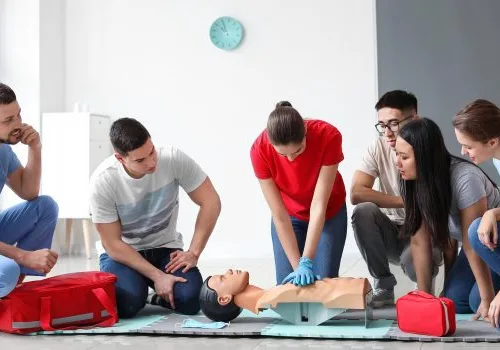
Types of Medical Emergencies You May Encounter
Understanding the broad spectrum of medical emergencies that can occur in everyday life illustrates exactly why multi-disciplinary first aid training is so incredibly valuable. Cardiac arrest is the most time-critical emergency that CPR addresses. When the heart suddenly stops pumping, every single second without physical intervention reduces the victim’s chance of survival by up to 10%. Immediate, high-quality CPR acts as a manual pump, keeping oxygenated blood flowing to the brain until professional York Region EMS arrives.
Choking is another highly common emergency that can swiftly become fatal if not addressed with precision. Young children, elderly adults, and people with neurological or swallowing difficulties are particularly vulnerable. A comprehensive first aid course teaches you the exact biomechanical techniques for clearing a severely obstructed airway in adults, children, and infants using abdominal thrusts and back blows.
Severe allergic reactions (anaphylaxis) can cause the throat to swell shut and blood pressure to plummet dangerously low in minutes. Recognizing the early clinical signs of anaphylaxis and knowing how to confidently administer an epinephrine auto-injector (EpiPen) can save a life instantly. Strokes require rapid, systematic recognition using the FAST method (Face drooping, Arm weakness, Speech difficulty, Time to call 911) so that the victim can receive clot-busting medical treatment within the critical time window.
The Science of Survival: High-Performance CPR & CCF
A 2026 certified Canadian Red Cross CPR course goes far beyond simply learning to push on someone’s chest. Modern resuscitation science is heavily data-driven. Instructors focus on High-Performance CPR, a methodology that prioritizes the Chest Compression Fraction (CCF). CCF refers to the total percentage of time during a rescue that active chest compressions are being performed. By minimizing pauses, responders maintain the critical blood pressure needed to keep the brain alive.
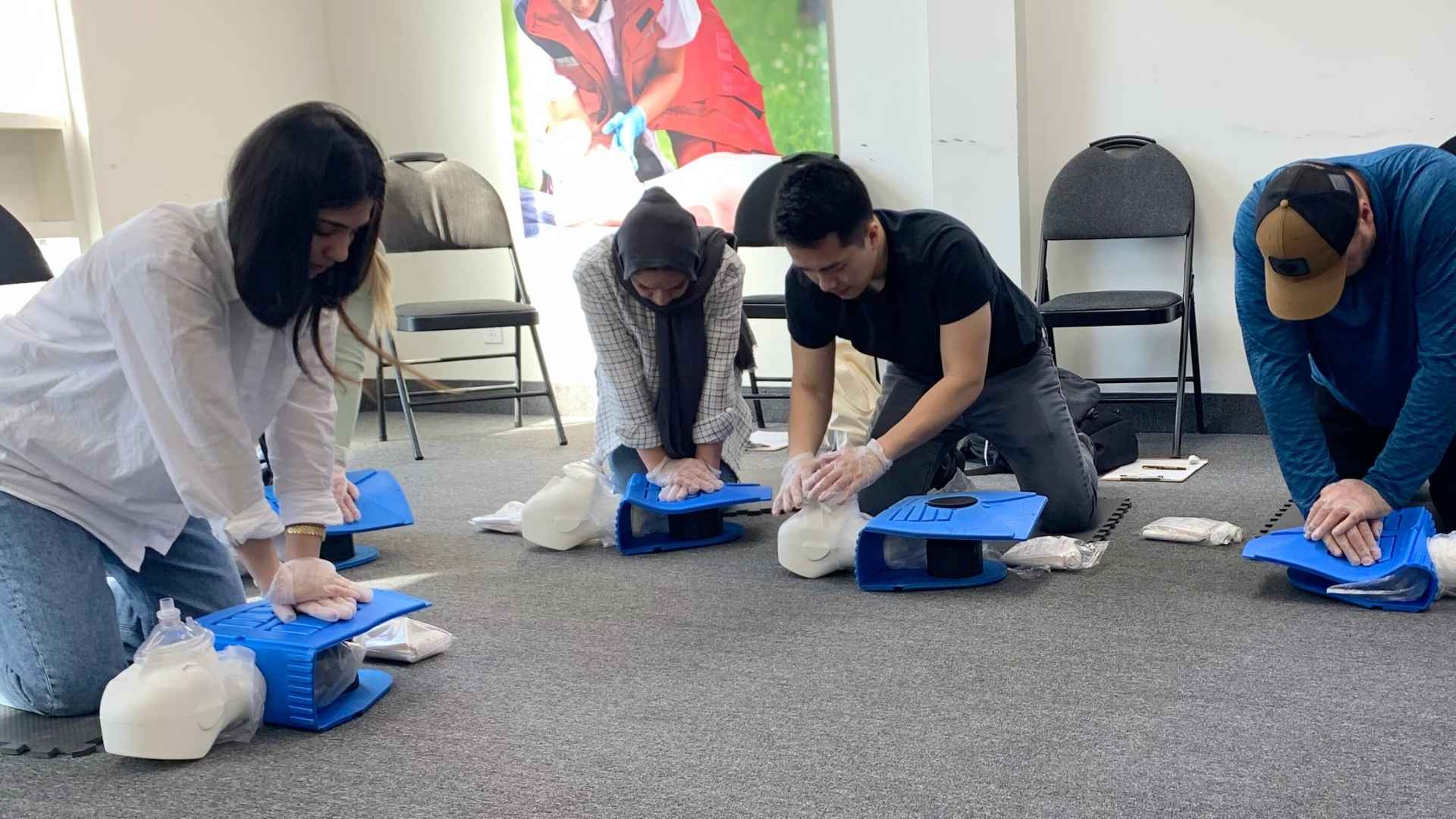
To master this, Richmond Hill students utilize high-fidelity feedback manikins during their practical skills assessment. These advanced devices provide real-time mechanical and digital feedback, ensuring you consistently hit the required compression depth of at least 2 inches (5 cm) and maintain an optimal rate of 100 to 120 compressions per minute.
AED Integration and Oxygen Administration
Automated External Defibrillator (AED) training is a mandatory, core component of every modern CPR course. You learn how to locate, power on, and operate an AED under extreme stress. These devices analyze the heart’s electrical rhythm and deliver a shock to correct ventricular fibrillation. Many public buildings across Richmond Hill, including the Elgin Barrow Arena and the Richmond Hill Public Library, are legally mandated to have AEDs installed.
For clinical environments, such as dental offices or specialized clinics, advanced courses like Basic Life Support (BLS) introduce team dynamics and oxygen administration protocols, utilizing Bag-Valve-Masks (BVMs) to provide superior ventilation without direct mouth-to-mouth contact.
Watch: How to Perform High-Quality CPR
Workplace Compliance for Richmond Hill Businesses
Richmond Hill’s diverse business community—from retail plazas along Yonge Street to the corporate headquarters in the Beaver Creek Business Park—has a strict legal obligation to ensure employee safety. The Ontario Workplace Safety and Insurance Board (WSIB) actively enforces Regulation 1101, which outlines exact first aid kit and training requirements based on workforce size.
To align with the updated 2026 CSA Z1210:24 national standards, workplaces must have designated responders trained in Basic or Intermediate First Aid. Coast2Coast makes achieving full corporate compliance seamless by offering private group training. Our certified instructors come directly to your Richmond Hill facility with all required manikins and testing equipment, customizing the emergency scenarios to match the specific hazards of your industry.
Granular Niche Targeting: Specialized Industry Needs
Different professions in Richmond Hill require vastly different levels of emergency preparedness. Meeting the certification prerequisites for your specific field is crucial:
- Security Guards & Loss Prevention: Personnel must hold valid Standard First Aid to legally maintain their Ontario security licenses and manage chaotic scenes in shopping malls or condo developments.
- Construction Foremen & Industrial Workers: High-risk sites require advanced knowledge of crush injuries, severe bleeding control, and spinal immobilization.
- Daycare Staff & Camp Counselors: Caregivers must possess CPR Level C (Pediatric) to address child-specific emergencies like febrile seizures, severe asthma, and playground fractures.
- Hospitality & Non-Aquatic Staff: Restaurant workers and event coordinators must be prepared to handle sudden cardiac arrests and severe choking in crowded dining rooms.
- Healthcare Providers: Paramedics, nurses, and dental staff must renew their Basic Life Support (BLS) credentials annually to master rapid pulse checks and multi-rescuer coordination.
Career Advancement and Insurance Liability Reduction
Possessing an active Canadian Red Cross certificate is a massive asset for career advancement. Hiring managers aggressively seek candidates who have already passed their written examination and hold valid credentials, as it demonstrates responsibility and saves the company onboarding time.
Furthermore, businesses that maintain a highly trained staff actively protect themselves against devastating “failure to rescue” lawsuits. Corporate insurance providers frequently offer lucrative premium discounts to Richmond Hill businesses that implement robust, WSIB-compliant safety programs, proving that investing in CPR training provides both moral and financial returns.
Flexible Blended Learning Options
Coast2Coast understands that Richmond Hill residents lead demanding lives. That is exactly why we offer the highly popular blended online learning format. This hybrid model allows you to complete the heavy theory modules online at your own pace from home. Afterward, you attend a significantly shorter, fast-track in-person session to complete your hands-on practical skills assessment.
If your current certificate is nearing its three-year expiry, our streamlined recertification courses offer a rapid review of the material to seamlessly renew your legal credentials without having to retake the entire multi-day program.
Get CPR Trained in Richmond Hill Today
Prepare yourself to handle medical emergencies with absolute clinical confidence. Register for a WSIB-approved first aid or CPR course with Coast2Coast and secure your Canadian Red Cross certification.
Frequently Asked Questions
Question 1: Where can I take CPR training near Richmond Hill?
Answer: Coast2Coast has multiple premier training facilities easily accessible from Richmond Hill and throughout York Region. Visit our locations page to find the nearest available Canadian Red Cross session.
Question 2: How long does a standard CPR course take?
Answer: A standalone CPR/AED Level C course takes approximately 4 to 6 hours. Emergency First Aid takes one full day, and Standard First Aid takes two full days. Choosing the blended online format cuts the in-person classroom time in half.
Question 3: Is CPR training suitable for seniors in Richmond Hill?
Answer: Absolutely. CPR training is vital for people of all ages. Seniors often live with or care for spouses who are at a statistically higher risk for sudden cardiac events, making these life-saving skills incredibly relevant.
Question 4: What happens if my CPR certification expires?
Answer: In Ontario, there is no grace period. If your certificate expires, you are no longer WSIB compliant and cannot legally act as a workplace first aider. You must retake the full original course if you miss the recertification window.
Question 5: Does WSIB Regulation 1101 apply to small Richmond Hill businesses?
Answer: Yes. Even small offices with 1 to 5 employees per shift are legally required to have at least one staff member holding a valid Emergency First Aid certificate and an accessible Type 1 first aid kit.
Question 6: Is Automated External Defibrillator (AED) training included?
Answer: Yes, comprehensive AED training is a mandatory component of all our CPR and First Aid certification courses. You will physically practice applying pads and following voice prompts on a training device.
Question 7: Do daycare staff need a specific type of CPR?
Answer: Yes. Early childhood educators, daycare staff, and camp counselors are typically required by provincial licensing to hold Standard First Aid with CPR Level C, which specifically covers infant and child resuscitation protocols.
Question 8: What is the difference between Level A and Level C CPR?
Answer: Level A focuses exclusively on adult resuscitation. Level C is much more comprehensive, covering adult, child, and infant CPR techniques, as well as complex two-rescuer CPR dynamics.
Question 9: Do I need to be a doctor or nurse to take BLS?
Answer: No, anyone can take Basic Life Support. However, it is specifically tailored for healthcare environments and covers advanced clinical concepts like pulse checks, oxygen administration, and BVM usage.
Question 10: Is there a written exam required to pass?
Answer: Yes, a multiple-choice written examination is required to verify your theoretical knowledge of the 2026 CSA guidelines, alongside a physical practical skills assessment.
Question 11: Are barrier devices provided during the class?
Answer: Yes. To ensure strict hygiene and safety, Coast2Coast provides single-use barrier devices and training pocket masks for all students to practice rescue breathing safely.
Question 12: Can I fail the practical skills assessment?
Answer: While our instructors provide extensive coaching, students must demonstrate the physical ability to perform effective compressions (correct depth and rate). If you cannot meet the standard, certification cannot be issued.
Question 13: How quickly do I receive my Red Cross certificate?
Answer: Upon successful completion of both the practical and written exams, you will receive your official, highly secure digital Canadian Red Cross certificate via email, usually within 24 to 48 hours.
Question 14: Does Coast2Coast offer private corporate training?
Answer: Yes. We specialize in private group training and can deploy certified instructors directly to your Richmond Hill office, warehouse, or facility to train your entire staff simultaneously.
Question 15: Is workplace CPR training tax deductible in Ontario?
Answer: For businesses, employee safety training is almost always a deductible corporate expense. For individuals, it may be deductible if it is a strict requirement for your professional development. We advise consulting a tax professional.
About the Author
Ashkon Pourheidary, B.Sc. (Hons) — Co-Founder, Coast2Coast First Aid & Aquatics
Ashkon has been a certified First Aid and CPR instructor since 2011 and an Instructor Trainer since 2013. He is also a certified Emergency Medical Responder (EMR) instructor, Psychological First Aid instructor, and BLS (Basic Life Support) instructor. Ashkon graduated with honours with a Bachelor of Science in Neuroscience from the University of Toronto in 2016. As co-founder of Coast2Coast First Aid & Aquatics, he has helped grow the organization to over 30 locations across Canada and into the United States. Ashkon has served on the First Aid Council for the Canadian Red Cross. He spends his time coaching the team of over 100 instructors at Coast2Coast to ensure that students training at Coast2Coast locations receive the best training experience. Connect on LinkedIn