We offer courses in Canada and the US. If you are experiencing issues with our website and need help to register, or if you have questions, please call us at 866-291-9121.
If you are facing any issues with your online course, registration, or training, please click here to submit a help request.
If you are facing any issues with your online course, registration, or training, please click here to submit a help request.
Are you a personal trainer looking to take your fitness career to the next level? One crucial aspect you can’t afford to overlook is CPR certification. In this comprehensive guide, we’ll walk you through the ins and outs of CPR certification for personal trainers. You’ll learn why it’s essential, which certifications are recognized in the industry, and how obtaining one can significantly enhance your clients’ safety and your professional credibility. Whether you’re a seasoned trainer or just starting in the fitness industry, understanding CPR certification requirements is a must. Read on to ensure you’re on the right track to becoming a well-prepared and responsible personal trainer.
Coast2Coast, a provider of first aid training services, has exciting news for Albertans! We have recently expanded into Alberta, opening two locations in Edmonton and one in Calgary. If you want reliable and affordable first aid training in the province, look no further.
While learning CPR may feel intimidating at first, it is a crucial skill to have in case you ever find yourself in a medical emergency situation.
Although CPR training is essential, it’s just as crucial that it is performed correctly. The key to effective CPR training is learning how to tailor the procedure according to the age of the patient.
Knowing CPR is not only a necessity for parents and caregivers, but anyone who spends time around children regularly.
CPR for adults and children may share some similarities, but some significant differences exist, especially when performing it on younger children and infants. The correct CPR training considers age group differences, preparing you to take action in a medical emergency.
What is Adult CPR?
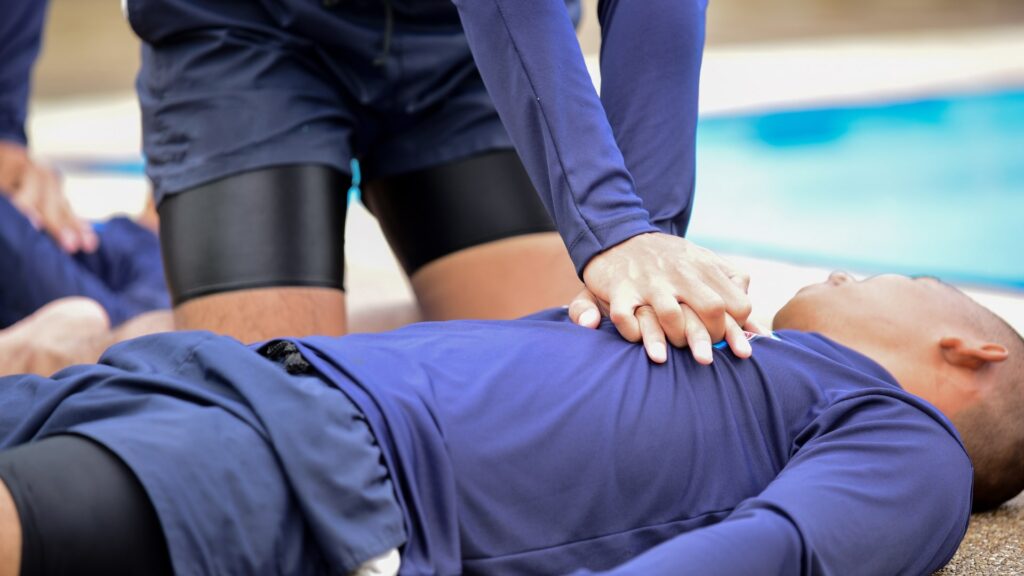
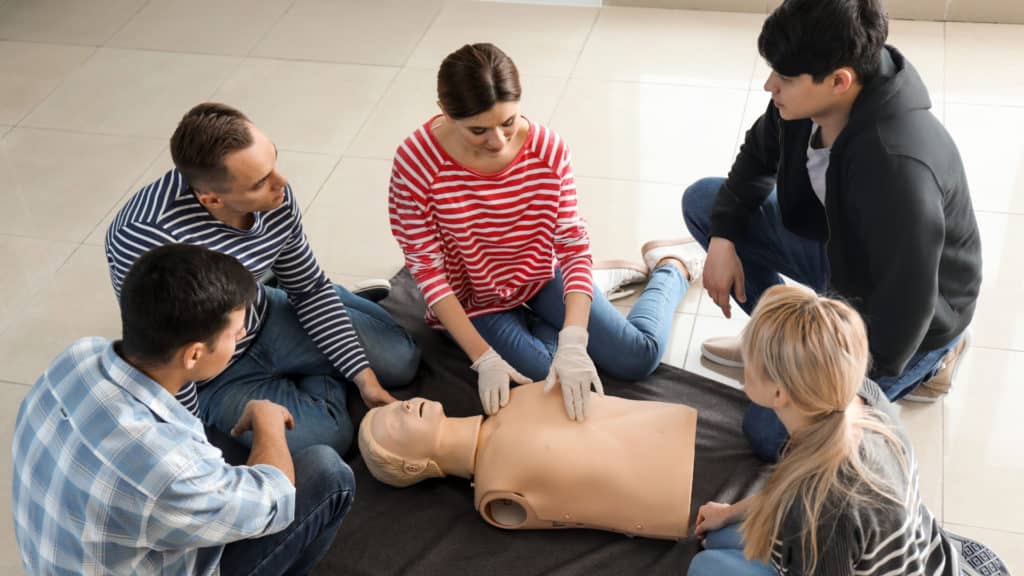
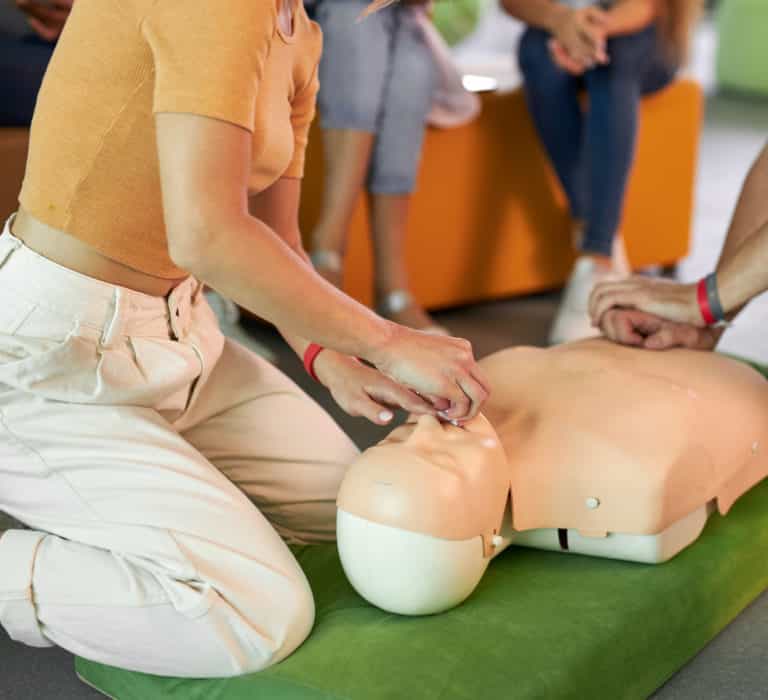
Cardiopulmonary resuscitation (CPR) combines 30 rhythmic chest compressions and two rescue breaths used as an emergency lifesaving procedure in patients with no heartbeat. During CPR, the rescuer uses both hands to compress the chest center at a depth of two inches at a rate of 100 to 120 compressions per minute, a procedure that helps stimulate the heart physically. They then give rescue breaths using the correct quantity of air to raise the patient’s chest.
Adult CPR Example
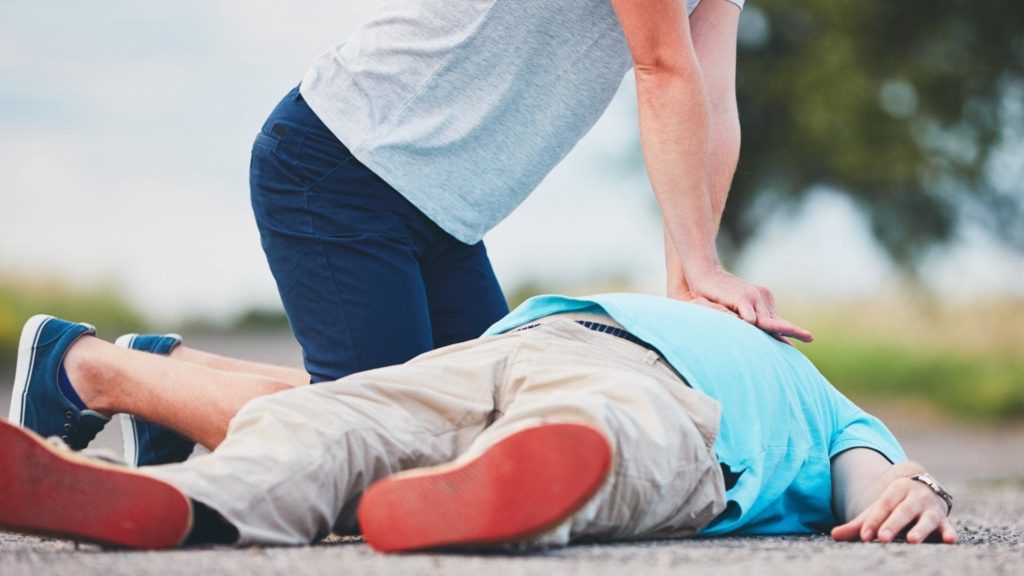
Imagine witnessing an adult suddenly collapse in a park. You check for responsiveness—no response. You call for emergency help and position the person on their back. Starting chest compressions, you place your hands interlocked in the center of the chest, pressing down at least 2 inches deep at a rate of 120 compressions per minute. After 30 chest compressions, you tilt the head back, seal your mouth over theirs, and deliver two rescue breaths, watching for chest rise. You continue this cycle until help arrives.
Learn about First Aid & CPR/AED Course you might need
Certify for First Aid & CPR/AED training to assist someone with your life-saving skills as you complete the course with us. Call our toll-free number to know more.
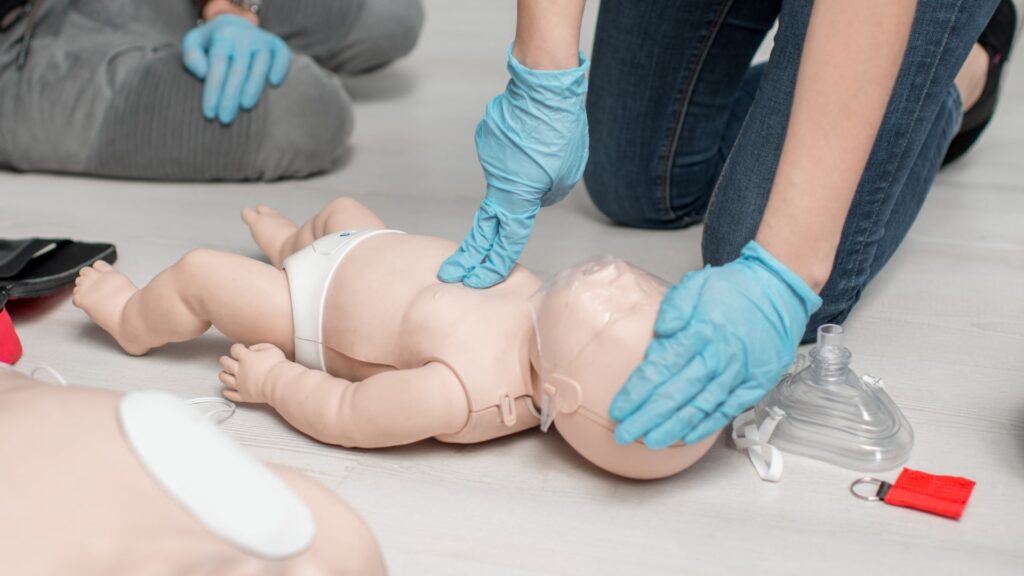
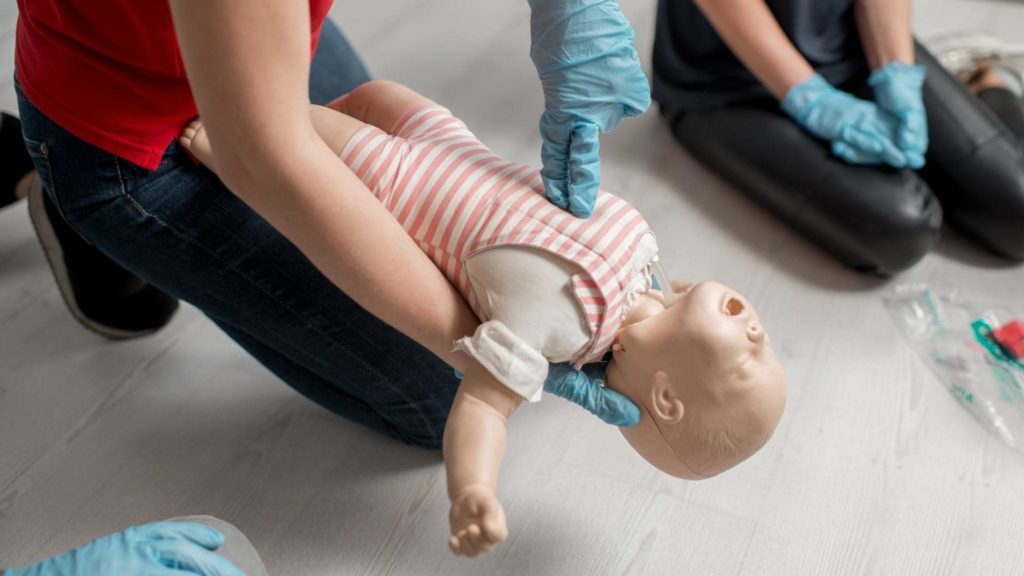
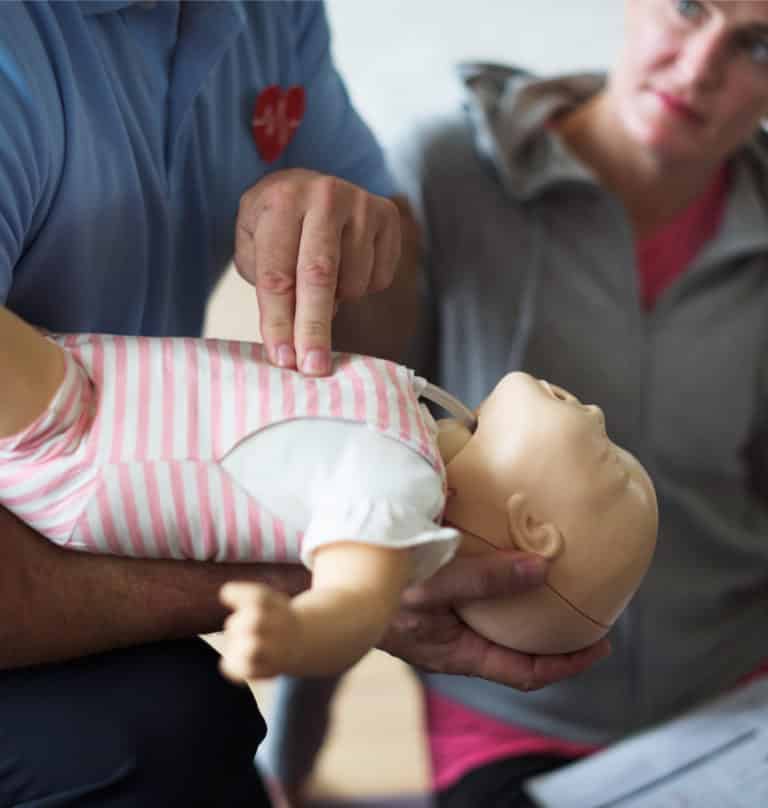
Children have flexible bones, ensuring they don’t get hurt when CPR is required. When performing CPR on an infant, it is crucial to make a complete seal over both the infant’s mouth and nose while administering rescue breaths. However, infants require special care because they are more delicate because of their lighter weight and bone density. Therefore, children and infant CPR teaches you to check for responsiveness and a pulse in different age groups and perform rescue breaths and chest compressions.
Child CPR Example
Now, consider a scenario where a child, about 7 years old, collapses at a family gathering. You ensure the scene is safe and call for emergency assistance. The cardiopulmonary resuscitation process starts with laying the child on a firm surface; you use one hand for chest compressions, pushing down about 2 inches deep at the same rate of 120 compressions per minute. After 30 compressions, you give two rescue breaths, covering both the mouth and nose, ensuring to see the chest rise. You repeat until professional help arrives.
Recognizing Cardiac Arrest
Recognizing cardiac arrest is crucial for performing CPR effectively. Cardiac arrest occurs when the heart suddenly stops beating or fails to beat effectively. Key signs of cardiac arrest include:
No breathing or abnormal breathing
No pulse or a weak pulse
Unresponsiveness
Pale or blue-tinged skin
Confusion or loss of consciousness
If you suspect someone is experiencing cardiac arrest, it’s vital to call the emergency response system immediately. Once you’ve alerted emergency services, start CPR if you are trained to do so. Quick action can significantly increase the chances of survival.
Checking for Responsiveness in Children and Infants
You can gently shake a young child to see if there is any responsiveness, but you can’t do this with an infant. Since a gentle shake is unsafe for babies, the correct way to check is to tap its foot or speak loudly to see if it responds.
Checking for a Pulse
In young children, you can check for a pulse in the same way that you would for an adult at the carotid artery. However, the best way to check for their pulse in infants is on the inner upper arm, known as the brachial artery.
Giving Rescue Breaths
To perform CPR on an adult, full lung-strength rescue breaths are required for better effectiveness. However, children need gentler puffs, and baby breaths even more so. Filling your cheeks with air usually suffices for infant rescue breaths. You must always ensure that the chest rises and falls during rescue breaths to achieve adequate chest rise.
Additionally, the head is always tilted back gently when performing rescue breaths on a young child or infant.
Giving Chest Compressions
When giving chest compressions to infants, the CPR techniques differ; you should only use two fingers because of the size of their bodies. The depth of the compressions also changes; they are shallower than those given to adults and young children.
With infants and children, always begin CPR immediately and call 911 after a few minutes or when it regains consciousness. Why is this important? Because children and infants have a better chance of survival when performed immediately, therefore you need to start chest compressions immediately. Of course, in cases where two people are present, one can perform CPR, and the other should call in all cases, whether they are adults, children, or infants.
Benefits of Learning CPR
CPR is a lifesaving procedure performed when someone’s heart stops beating. Pediatric CPR is especially important as it involves specific techniques tailored for children and infants. Research has shown that CPR increases the chances of survival for cardiac arrest victims by more than double.
CPR keeps the blood flow active in someone who has stopped breathing and has no pulse, allowing blood and oxygen to maintain the function of vital organs like the brain.
How to Prepare for Providing CPR
Training remains the best way to prepare for CPR and maintain your certification. However, logic says that even if you are untrained, it’s always best to try and do something to save someone’s life than to do nothing.
Always make sure of the following as you prepare to offer CPR:
Ensure a safe environment.
Check if the person is unconscious.
Call 911 first if dealing with an adult and then perform CPR, or do the opposite if it’s a child or infant. Knowing child CPR is crucial as it involves specific procedures and distinctions for children aged 1-12.
Use an AED only if it instructs you to proceed with delivering the shock.
Remember the order of CPR: compressions, airway, breathing.
Survival Rate Statistics for CPR
Brain damage occurs within minutes from a lack of oxygen. Therefore, if a person does not receive CPR immediately in an emergency like a cardiac arrest, it is improbable that they will survive if they wait for emergency services.
Recent statistics show that quickly performing CPR increases their chances of survival by nearly 45 percent in out-of-hospital situations for cardiac arrest victims helped by bystanders or relatives.
Find a CPR Training Near You
Not only do medical emergencies happen at work, but they also take place in more familiar settings like around the house. Being certified in First Aid and CPR means that you can step up and help in any emergency situation. The more training you have, the better equipped you are to handle unforeseen situations which might come your way.
Help improve the outcomes for people in out-of-hospital situations by completing CPR training so that you are ready to take immediate action. Coast2Coast provides CPR Level A, CPR Level C, and Basic Life Support classes across Ontario in several locations, making it highly convenient for you.
Register for a First Aid & CPR Training Course
Choose from any of our locations across Ontario and gain the knowledge and skills to save a life!
CPR is one of the most essential life-saving skills that can help someone survive if they have stopped breathing after cardiac arrest or an accident. However, a lack of knowledge is debilitating during an emergency because it can prove harmful.
Defibrillators or Automated External Defibrillators (AEDs) are devices that deliver a life-saving shock to someone suffering from cardiac arrest. The electric shock from the defibrillator passes through the chest wall to the heart, often giving a person in cardiac arrest a chance to survive.
Healthcare professionals learn CPR, First Aid, and Basic Life Support training to help save people in health and other emergencies. However, CPR and First Aid training courses are also compulsory in different places of employment. Many citizens also learn these skills in their private capacity to offer their assistance whenever and wherever required.
Once you have completed your training in any of these lifesaving disciplines, you receive a certificate that proves your skills. Depending on the training, the certificate’s validity has an expiration date, and it is essential to keep the certificate up-to-date by taking the recertification training.
All these first response disciplines, whether to assist someone with a cut, bruise, cardiac arrest, anaphylaxis, choking, drowning, etc., are based on having the skills required to apply the techniques to help the person until professional help arrives.
We are an aging society, and the generation of Baby Boomers is now increasingly reaching the age where they may require medical assistance. The risk of exposure to viruses, infections, and environmental illnesses has also increased in recent years. First Aid and CPR are essential for helping an unconscious person or someone with an injury.
Using the proper techniques can save a life and improve the person’s chances of recovery. CPR and First Aid training is inexpensive and requires just a few hours, ensuring that you have the skills to help in any situation.
However, once you complete the training, you must consider that retraining and recertification are essential to keeping your skills refreshed. Workplaces and school programs often require employees and students to maintain valid certificates. Regular certificate updates benefit you because you retain the confidence to practice your lifesaving skills while also learning any new developments and techniques to save lives.
Workplace Requirements and First Aid
According to WSIB Ontario, First Aid training requirements differ in the workplace. These requirements include the number of people and type of First Aid training required and depend on several conditions. These include the number of shifts, people per shift, and the kind of business activity.
If a company does not use dangerous equipment or chemicals, the required number of employees usually take only Emergency First Aid training. Other companies must provide Standard First Aid training to the prescribed number of employees per shift if they work under more dangerous conditions.
Generally, if less than five employees work per shift, one employee per shift requires valid Emergency First Aid & CPR/AED Level C training and certification. For companies with more than five employees per shift, at least one employee must have a valid Standard First Aid & CPR/AED Level C certificate.
At some workplaces, the requirements are annual recertification, even if the certificate is valid for three years.
Stay Certified, Stay Prepared!
Renew your skills with our recertification courses at Coast2Coast! Keep your knowledge up to date and ensure you’re ready to respond in emergencies. Our expert instructors will guide you through the latest techniques and best practices.
Don’t forget the validity period of your First Aid, CPR, or Basic Life Support certification, especially if the certificate is a requirement under Ontario’s Regulation 1101 for your workplace.
CPR Training
CPR or cardiopulmonary training does not include any first aid training. The various levels of CPR training teach candidates how to recognize and respond to breathing emergencies like cardiac arrest, choking, drowning, etc. One of the major learnings would be the use of an Automated External Defibrillator (AED). CPR certificates are valid for three years, but can be recertified multiple times regardless. You need to retake the training and receive a new certificate before the old one expires.
First Aid Certificate Validity
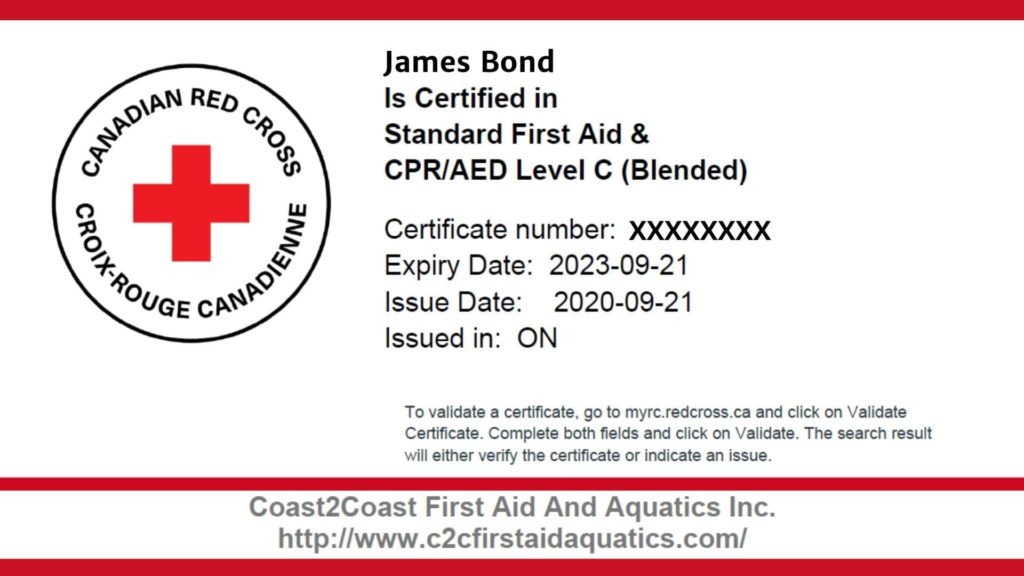
Our Canadian Red Cross Emergency and Standard First Aid & CPR/AED certificates issued by Coast2Coast are valid for three years.
Standard First Aid & CPR/AED Recertification – Standard First Aid & CPR/AED recertification training must be completed before the certificate expires; otherwise, it is invalid. Once you complete the one-day renewal course, your certificate indicates the recertification. After the expiry of the Standard First Aid & CPR/AED recertification, you must complete the full training course again. Training must be alternated between a full course and the Recertification course.
Emergency First Aid & CPR/AED – According to WSIB in Ontario, Emergency First Aid & CPR/AED Level C courses can not be recertified. Before the expiry of this certificate, you need to register for the full training course. The online blended format is an ideal training, allowing you to complete half the training online followed by a 5-hour in-class section.
Basic Life Support Training
Basic Life Support is the intensive training required by people working in healthcare and rescue services. BLS certificates are only valid for one year. Full training is required each time because of the ever-changing duties of these professionals who usually work in fast-paced and demanding environments.
Coast2Coast First Aid& CPR Recertification Courses
Remember, if your Standard First Aid Certificate is about to expire, you need to complete the recertification training before to ensure its validity. All other certificates require you to do the training again. Whatever your CPR and First Aid certification needs, Coast2Coast offers various recertification courses throughout the day to best fit your schedule. Register for one of our Recertification courses from one of our 18 locations all over Ontario.
Register for First Aid Training
Register today for a First Aid training course and learn how to deal with emergencies and keep your loved ones safe! Check out our facilities and book your spot now.
First aid and CPR are both procedures administered in emergencies to help save lives. The difference between first aid and CPR is that first aid covers a broad spectrum of life-saving skills, including CPR. On the other hand, CPR training primarily focuses on how to perform CPR, use an AED and more to resuscitate unconscious victims that have no pulse.
What Is the Difference Between First Aid Training And CPR?
Both CPR and first aid are essential procedures that can help save lives. You can take a CPR class without first aid, but a first aid course through the Canadian Red Cross always includes CPR.
First Aid Training
During first aid training, you will learn a wide variety of procedures needed to help someone who is feeling ill or has suffered trauma from an accident. These procedures include treating deep cuts, burns, stopping bleeding, choking, allergic reactions, how to put a splint on a fractured bone, etc. You are trained to offer assistance to victims by relieving their pain and preventing them from suffering further injuries until professional medical assistance arrives.
CPR Training
During cardiopulmonary resuscitation (CPR) training, you are taught how to focus on someone who is experiencing cardiac arrest. Cardiac arrest is caused by sudden heart dysfunction. Any person suffering the condition will be unconscious and not able to breathe. CPR is also a form of first aid but applies only to cardiac arrest.
CPR is the only treatment that can help a victim of cardiac arrest because their heart has already stopped beating, and their condition is critical. The faster CPR is administered, the better the chance of the person’s revival and survival. Once revived, the person must be taken to a medical specialist immediately for further assessment of their condition and the cause.
A patient suffering from cardiac arrest cannot breathe. Therefore, the oxygen supply needed by the body is cut off. Since cells within the body rely on oxygen within the blood, damage starts taking place immediately when it is suddenly cut off. CPR training teaches you how to provide artificial heartbeat and restore blood circulation (also with the help of an AED), helping prevent damage to other vital organs. CPR training teaches you how to monitor the patient’s pulse and the importance of performing CPR until professional responders arrive.
CPR is Based on Specific Procedures
CPR training teaches you the correct procedures that must be carried out when helping a person suffering from cardiac arrest. During the training course, you are taught how each step follows the other and how to administer CPR without injuring the patient. Students will also learn how to use an Automated External Defibrillator (AED), a specific tool used on victims of cardiac arrest.
Inquire about CPR Training
Do you have questions regarding CPR training? Contact us today! Our customer service representatives are ready to assist you.
There are several levels of CPR training. Namely, CPR A, CPR C, and CPR BLS. If you are unsure which level is the right one for you, here is a short explanation of each. Of course, before deciding, you should know that if you are getting CPR training for your job, you must choose the level that meets the requirements.
Basic Life Support (BLS)
Basic life support (BLS) is the level required if you are planning to become a professional first responder, paramedic, firefighter, or healthcare provider (doctor or nurse). Up until early 2019, the Canadian Red Cross taught the HCP (Health Care Provider) level of CPR, but then it was replaced with BLS.
The training only takes a few hours, and certification is valid for one year.
CPR C Training
CPR C training is very popular because it includes techniques to assist choking/unconscious adults, children, and infants. During the training, you are also taught how to apply two-rescuer CPR and use an AED. The training is required for all people working with children, those working in healthcare, and for most workplaces. Recertification is required every three years.
CPR A Training
Some workplaces just require CPR A training. During CPR A training you learn to assist adults who are choking or require CPR.
Is It Better to Take A CPR And First Aid Training Online or In-Person?
Online courses are very good if you want to learn the basics of first aid and CPR but don’t want to commute and want to complete it at your own pace. However, an all-in class or blended course is often the better option if you are learning first aid and CPR for your workplace or care for children and the elderly. By attending training, you get to practice everything you learn, especially the use of the equipment. This not only enhances your skills but gives you the added confidence to practice everything you learned during the course.
The Online Only training does not provide you with a WSIB approved certificate, but an all-in-class or online blended training does.
Make sure that the course you use is offered by an accredited training agency with high standards and highly qualified Canadian Red Cross instructors. Find a training facility near you!
Register to Earn CPR Certification!
Find which CPR certification is best for you!
Register for our first aid courses, you are one click away.
Situations where people are hurt or experience a sudden incapacity to breathe can happen at the most unexpected times and places. CPR and First Aid classes prepare you to deal with any unforeseen situations by providing you with the correct knowledge of different lifesaving skills.
You may be wondering, “What Exactly will I learn from CPR and First Aid class?” is one of the many questions that come to mind when thinking about first aid training, so let’s dive into it!
CPR and First Aid training are different because they entail different lifesaving skills. If a person is suffering from cardiac arrest, CPR is applied to assist them until help arrives. On the other hand, a person who is injured requires first aid assistance.
Skills and knowledge acquired with CPR Training
CPR/AED training prepares you for your role as an emergency service provider
1.CPR Laws and Safety
During the training, you are taught to watch for the signs of various health conditions such as heart disease, stroke, etc. Courses also teach you how to assess the situation if the person is unresponsive. You can expect to learn the universal precautions that are essential in any emergency and how to take personal safety measures when attending to someone.
Part of the training includes learning laws to protect a victim as well as yourself. You will learn when to provide care, how to check if a scene is safe and how to direct bystanders for additional assistance. During CPR training, you learn the skills required to ensure you practice the chain of survival and the Good Samaritan regulations. You are also taught how to work alone or in a coordinated team.
2.CPR Knowledge
There are several different types of CPR/AED courses available to choose from. In-depth training is aimed to help you understand the importance of CPR and how it is administered. The information offered covers how proper CPR restores breathing and blood circulation to save lives. Students will learn how to administer CPR using hands and rescue breaths and working together with a team to provide CPR with the use of an AED (automated external defibrillator).
Most importantly, you learn how to apply CPR according to the age of the victim. CPR/AED Level C training includes learning how to perform CPR on all age groups, including infants. CPR/AED Level A, on the other hand, only teaches you how to perform CPR on adults.
Inquire about CPR Training
Do you have questions regarding CPR training? Contact us today! Our customer service representatives are ready to assist you.
During your CPR training, you will learn how to treat choking victims who are either in a conscious or unconscious state. You are also taught how to offer help to choking victims of different ages as methods are different for infants and adults.
4.Using an AED
Using an Automated External Defibrillator (AED) is included in every CPR course. You are taught how to operate the device and when to use it. During your CPR/AED Level C class, you learn how to use the AED on infants, children, and adults.
First Aid training
There are two types of first aid courses that you can choose to take: Emergency First Aid & CPR/AED Level C or Standard First Aid & CPR/AED Level C. Each training course covers important life-saving skills, although Standard First Aid is a higher level of training and includes additional material.
In a first aid class you are taught how to recognize and manage different first aid situations, including stroke, broken bones, bleeding, hypothermia, frostbites, heat-related illness, seizure, muscle injuries, poisoning, burns and more. Learn how to control the condition suffered by the victim and how to offer relief.
During the first aid class, you will also learn how to assess the mental state of accident victims and how to move a patient to a safer place during an emergency. Finally, you learn how to identify a patient who is having difficulty inhaling and how to restore their breathing.
Once your training is complete, you will know how to handle various types of emergencies. Use your skills to help relieve suffering or further injuries of patients until help arrives.
Final take
Whether you decide to take an Emergency First Aid CPR/AED or a Standard First Aid CPR/AED course, you will be taught enough important life-saving skills to confidently assist a victim during an emergency.
Register for First Aid Training!
We have 24 locations across Canada, find out which facility is closest to you and enroll today!
Choosing the right First Aid and CPR class is vital to ensure that your level of training matches you or your employer’s requirements. During your training, all the topics required are covered and you will receive hands-on training.
To pass the First Aid and CPR course, you are asked to take and pass a test. There are two sections to the test; the first is a written one with multiple-choice questions and the second is the practical examination.
Are you worried about what is asked during a First Aid and CPR test? Read on to feel confident!
Levels of First Aid and CPR Training
There are multiple levels of First Aid and CPR training. Each level has a specific test that goes along with it as they each provide different life-saving skills. Some of the course material does overlap between courses. For example, all of the material taught in CPR/AED Level C is also taught in Emergency First Aid and Standard First Aid. As you increase your level of training, you learn more skills. Here are the levels of training we provide at Coast2Coast:
CPR/AED Level A – learn how to assist adults only. This includes CPR, AED, shock, choking, stroke, life-threatening bleeding and more.
CPR/AED Level C – learn how to assist adults, children and infants. This includes CPR, AED, shock, choking, stroke, life-threatening bleeding and more.
Emergency First Aid & CPR/AED Level C – the lowest level of First Aid available at Coast2Coast, typically for people in low-hazard environments. Includes all of the information of CPR/AED Level C as well as wound care.
Standard First Aid & CPR/AED Level C – the most popular level of First Aid available. This 16-hour course covers all information from Emergency FIrst Aid & CPR/AED Level C, but also includes environmental illness, poisons and more.
Marine Basic First Aid – this is the highest level of First Aid training that is offered at Coast2Coast. It covers all of the material in Standard First Aid & CPR/AED Level C, but includes additional information regarding marine safety. This course is typically taken by students who work in the marine industry.
Coast2Coast has 24+ locations across Canada; for instance, if you are in the GTA area, you can attend a class in Mississauga, Brampton, Etobicoke, etc. We make sure to have a facility next to your area to stay closer to our community.
Practical Examination
The practical portion may seem intimidating, but if you pay attention to your instructor, you should have no issues! During a First Aid & CPR training course, there are many topics which are discussed. The practical examination is scenario-based. Here, candidates are told by the examiner what the problem with the person is, and they must perform various life-saving skills such as CPR, AED, bandaging and more. Candidates are graded throughout the day according to, for example, the way CPR is performed, the timing, and how the various techniques are executed. Examiners also note if the candidates perform the emergency action steps of Check, Call, and Care.
Students are also tested on how well they perform other skills such as choking. Can you demonstrate the various methods used to assist someone who is choking? Understand the use of back blows, abdominal thrusts and chest thrusts according to the Canadian Red Cross recommendations. This includes infant choking. The care you provide for a choking infant is different from an adult or child.
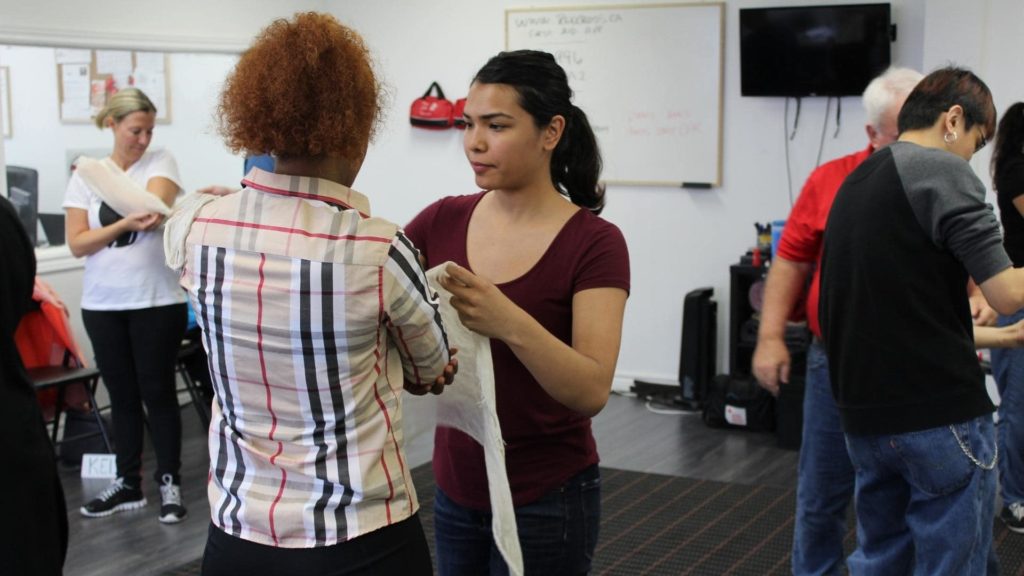
In addition to CPR and choking, many students must demonstrate wound care and splinting. Showing how to use triangular bandages for broken arms to life-threatening external bleeding is an important part of First Aid training.
To ensure you pass the practical examination, be sure to pay close attention. The practical portion may seem intimidating, but your instructor will walk you through everything. If you are ever confused, please ask questions! Instructors are there to help you. Their goal is to provide you with the skills and knowledge to leave feeling confident to save a life if needed.
Inquire about First Aid & CPR Training
Ready to start your First Aid and CPR training? Call our toll-free number to learn more about upcoming training courses near you!
At the end of your course, you will need to complete a multiple-choice test. The questions in the multiple-choice test depend on the course as followed:
CPR/AED test candidates are asked approximately 10 questions
Emergency First Aid test candidates are asked approximately 20 questions
Standard First Aid test candidates are asked approximately 30 questions
Participants require a score of 75 percent to pass the First Aid course.
Multiple-Choice Questions
Being prepared for certification testing requires some preparation. This is done by carefully studying the course material and paying attention during the course. There are a couple of ways to prepare for your First Aid and CPR training exam, such as:
Reading and reviewing the textbook
Completing practice questions in our study guide
Need Extra Help Studying?
Preparing for your First Aid and CPR course doesn’t have to feel overwhelming. While your instructor will guide you through everything you need to know, some students find it helpful to have extra support as they study. That’s where our optional Study Guide comes in.
This guide is designed to reinforce key course concepts, highlight important takeaways, and give you practice questions that mirror the style of what you’ll see during your exam. It’s a great way to boost your confidence and stay focused—especially if it’s been a while since you last studied.
Students who use the Study Guide often tell us they feel more prepared walking into class and appreciate having something to review afterward as well. It also includes one free course retake if needed, giving you extra peace of mind.
If you’re the type of learner who likes to review on your own time or just wants that extra edge, the Study Guide might be a great fit for you.
Here are some helpful materials to review before your test. If you want a more structured way to prepare, check out our Standard First Aid CPR/AED Study Guide, designed to help you feel confident and ready for certification.
Study Smarter, Not Harder
This guide is packed with essential information, tips, and practice content to help you succeed in your certification test.
One of the most effective tools for learning and remembering life-saving skills is the use of acronyms. In high-pressure situations, it’s easy to forget the finer details. Acronyms give you a simple, structured way to recall what to do, and in what order. Whether it’s to get a better understanding with SAMPLE or walking through the steps of CPR using ABC (Airway, Breathing, Circulation), these memory aids are designed to make critical actions feel more automatic.
Acronyms aren’t just for passing your exam—they’re tools that stick with you long after your course ends. They help reduce hesitation and increase confidence when every second matters. In our training, we cover the most commonly used acronyms and explain how to apply them in real-life emergencies. Understanding what each letter stands for can make a huge difference when you’re called on to help.
What is RICE?
Rice is the popular acronym for treating sprains, strains, dislocations or fractures. If you notice swelling, bruising, bones sticking out of the skin, etc., then you may need to apply the RICE method.
Rest – ensure the person rests in a comfortable position
Immobilize – try not to move the injured area as much as possible
Cool – it is important to keep the injured area cool for about 20 minutes every hour
Elevate – keep the injured area elevated unless it increases the pain
Boost Your Life Saving Skills
Join over 150,000 people this year and learn First Aid and CPR skills at Coast2Coast!
This is the acronym given to the steps commonly used to question a patient offering the first aid worker a better understanding of what is going on. It is important to gather this information so you can treat the patient accordingly. This is part of your secondary assessment and should be done after life-threatening conditions have been taken care of.
Signs/symptoms
Allergies
Medication
Past Medical History
Last oral intake (this is food or water)
Events leading up to the incident
Once you finish asking SAMPLE questions, you can check the patient’s vital signs. This includes level of responsiveness, how they are breathing and how their skin is reacting (wet, dry, colour, temperature). After completing vitals, you may perform an injury check. This is where you can identify injuries that were not found during your primary assessment.
ABC
In the world of first aid and CPR, ABC is the most popular acronym.
Airway – ensure the patient’s airway is open. If they are unresponsive, you can perform a head-tilt/chin-lift. If they are speaking, crying, or moaning, then their airway is open.
Breathing – watch their breathing for about 10 seconds. You can do this by placing your head near their mouth (to hear or feel breaths) and looking down towards their chest (to see if their chest rises and falls).
Circulation- check head to toe for any life-threatening bleeding.
If the person is occasionally gasping for air, they may be experiencing a reflex called “agonal respiration.” This is irregular and you should provide care as if the person is not breathing.
Learn additional life-saving acronyms in a First Aid & CPR training course!
The acronym “FAST” is used to determine if someone is suffering/has suffered from a stroke.
Face – is there numbness or weakness (specifically on one side) in the face?
Arm – is there numbness or weakness (specifically on one side) in the arms?
Speech – trouble speaking or understanding others, loss of speech, etc.
Time – call 911/ems as soon as possible (and get an AED)
Level of Consciousness
LOC or Level of Consciousness assessment is important in emergencies because it helps responders take the right course of action required during an emergency.
Get Prepared to Save a Life!Your knowledge is valuable when it comes to assisting others with emergencies. Be prepared for anything.
Cardiopulmonary resuscitation or CPR is vital for people not breathing normally. Test participants are quizzed on how it is administered and whether it must be applied before or after calling emergency services. They are also questioned on the ratio of chest compressions, and how they differ if there is two-person or one-person CPR for adults, children and infants.
When providing CPR, the ratio of compressions to breaths is 30:2. Continue providing CPR until help arrives or until you are too tired to continue. If you are alone, call 911 and get an AED before starting CPR. If someone else is with you, ask them to call 911 and get an AED while you begin your assessment and CPR.
CSM
Assessing pain and pressure areas in a patient, even if they cannot communicate this, can be assessed by noticing several behavioural patterns.
Summary of Important Concepts in First Aid and CPR Course
Chapter 1 The Red Cross
Regarding the fundamental principles of the International Red Cross, several key values align with the core of their noble mission: “Imagine a powerful force of compassion, unity, and aid, working tirelessly to provide help where it’s needed most.”
Principles
While studying the first chapter of the Red Cross Comprehensive Guide, make sure to go through the seven principles;
Humanity: At the heart of the Red Cross movement is an unwavering belief in the inherent worth of all human beings. It is the realization that, regardless of our differences, we all have a common bond as part of the global family. The movement seeks to alleviate suffering and promote dignity through acts of kindness and compassion.
Impartiality: Imagine a world where help is provided without prejudice or discrimination. That’s what the Red Cross movement stands for. It is based on the principle of equity and ensures that assistance is provided solely based on need without favour or bias. This is a potent reminder that compassion knows no boundaries and treats everyone equally regardless of background.
Neutrality: In a world filled with conflict and division, the Red Cross movement embodies the value of neutrality. As guardians of peace and goodwill, it remains impartial on political, religious and ideological matters. Moreover, neutrality allows the movement to act in difficult situations, promoting trust and respect while reaching out to those in need.
Independence: Imagine an organization free from outside influence and guided only by its humanitarian mission. This independence allows the Red Cross to act on its principles without being swayed by external pressures. This is a critical aspect of ensuring that the organization can autonomously serve humanity and make decisions in the best interests of those it serves.
Voluntary Service: The Red Cross thrives on the spirit of voluntary service in which individuals selflessly give their time, skills and energy to help others. Volunteers are the movement’s lifeblood, playing a vital role in providing first aid and resuscitation, supporting communities in crisis, and spreading the message of humanity.
Unity: Imagine a global network of individuals, organizations, and societies united under a common mission. The Red Cross expresses this remarkable unity by bringing together different cultures, backgrounds and perspectives. Through collaboration and cooperation, its impact is amplified and acts as a powerful force for good in a world that craves solidarity.
Universality: The International Red Cross sustain that all societies have equal status and share similar responsibilities and duties in helping others.
These core principles guide the International Red Cross and shape its actions, inspiring millions to join its humanitarian causes. They represent the essence of compassion and remind us that together we have the power to change the lives of others positively.
Symbols
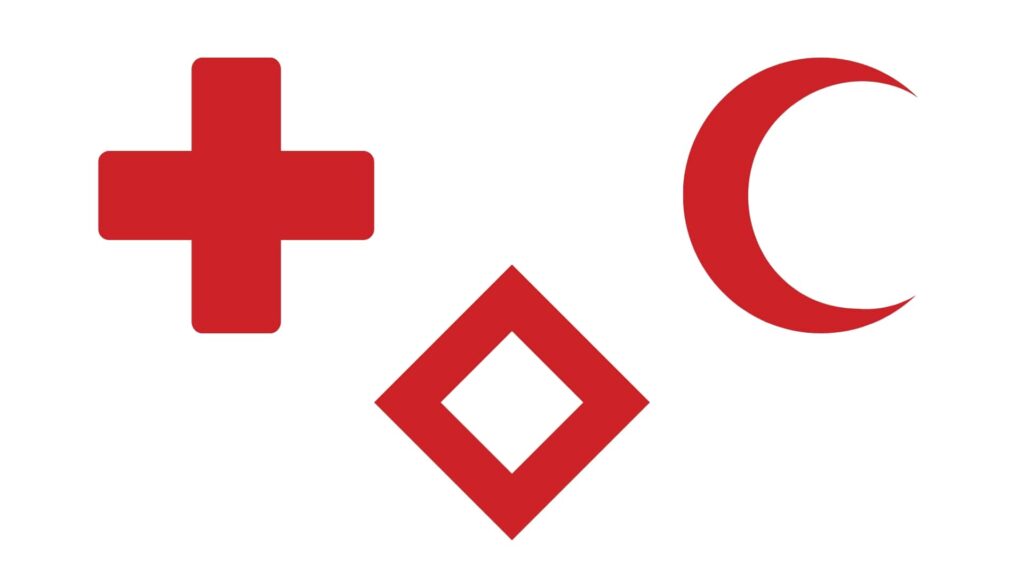
The International Red Cross and Red Crescent Movement has three official symbols: Red Cross, Red Crescent, and Red Crystal. All three symbols have the same meaning and are considered equivalent under international law. Each country chooses one of these symbols to represent their activities and help identify military medical services in armed conflicts. The emblems protect Red Cross personnel who provide assistance and protection in wars.
Chapter 2 of the Comprehensive Guide for First Aid and CPR by the Red Cross focuses on responding to emergencies and cover some important topics for you to know before sitting for the First Aid/CPR test.
This chapter presents the foundation for understanding the ethical and practical aspects of providing effective and timely first aid.
Obtaining Permission
As a First Aider, obtaining permission to provide assistance is crucial. You must remember that every person has autonomy and the right to make decisions about their well-being; therefore, as a future first aider, you must respect it. Before initiating any medical intervention, and if it is possible, the first aider must always seek consent from the patient. You can obtain permission from the patient by explaining the situation and focusing on the potential risks and benefits involved. If the injured patient cannot communicate or is unconscious, consent is implied, and as a first aider, you can proceed with the necessary assistance.
Chain of Survival
The chain of survival concept represents a series of critical actions that, if performed on time and following the sequence, can significantly improve the chances of survival for someone experiencing a life-threatening emergency.
Four Links
The chain of survival consists of four links: Early recognition and activation of emergency medical services (EMS), early cardiopulmonary resuscitation (CPR), early defibrillation, and early advanced medical care.
Early recognition and activation of EMS points out the importance of recognizing the need for medical assistance and alerting emergency medical responders on time. As a first aider, you will need to know the signs of a medical emergency and the need to ask for professional medical assistance.
Cardiopulmonary resuscitation (CPR) is a life-saving technique that helps maintain the blood flow and oxygenation to vital organs until advanced medical care arrives. Providing early CPR could be crucial in saving a patient. As a first aider, you will learn different CPR techniques, including chest compressions and rescue breathing.
The third link is early defibrillation. As a first aider, you will learn how to use an automated external defibrillator (AED) to restore a normal heart rhythm in a patient with cardiac arrest. AEDs can be found in several locations in your community and are user-friendly devices that can make a difference in an emergency.
The fourth link is early advanced medical care. This link refers to transferring the patient to a healthcare facility for specialized medical treatment. As a first aider, you can aim to stabilize the patient in an emergency, but still, the individual must be revised by professionals to provide comprehensive treatment.
Roles and Responsibilities of a First Aider
As a first aider, you will undergo specific training to provide immediate emergency assistance. Your role will be vital in stabilizing an injured person’s condition until professional medical help arrives. In general, first aiders prioritize their safety and the safety of others while assessing an emergency, providing immediate assistance and assisting with the activation of EMS.
Chapter 3 of the Comprehensive Guide for First Aid and CPR by the Red Cross covers the essential skills and knowledge required to provide effective first aid. Throughout this chapter, you must know concepts like “Check, Call, and Care,” assisting a person with medication, conducting a focused examination, and managing shock.
Check, Call, and Care Approach
This approach is a systematic framework for responding to an emergency. The first thing would be checking the scene for potential hazards and ensuring personal safety before proceeding to help the injured or ill person. After you check the scene comes the patient’s assessment. As a first aid, it is crucial to check vital signs as well as if the individual is responding and breathing. If the patient is responding and has no life-threatening conditions, you can proceed to provide appropriate care based on the patient’s need. On the other hand, if the person is unresponsive or not breathing normally, the first aider must call for emergency medical assistance and initiate CPR.
Assisting a person with medication
There are some situations where individuals require medication to manage a specific condition or emergency, such as an asthma attack or severe allergic reaction. In these cases, first aiders must assess the situation and obtain information about the patient’s medication, following the prescribed plan and assisting them in taking the appropriate dosage.
Focused examination
Another aspect you need to know for the test is the importance of conducting a focused examination. As a first aider, you must learn how to assess injuries and abnormalities while maintaining the person’s comfort and to communicate the situation to emergency medical professionals effectively.
Shock Management
Shock is a life-threatening condition resulting from various medical emergencies such as severe bleeding, trauma, and allergic reactions. First responders should recognize the signs and symptoms of shock and apply their knowledge to manage it while monitoring vital signs before the emergency specialists arrive.
Get Ready to Check, Call and Care in a CPR Training Course
Chapter 4 of the first aid guide equips first aiders with the necessary knowledge and skills to intervene effectively in situations involving choking in adults, children, and infants.
Regarding choking in adults, the guide recommends first responders encourage the patient to cough forcefully to dislodge the obstruction. If the person cannot cough or speak, the first aider should perform abdominal thrusts or Heimlich maneuvers until medical help arrives.
For choking in children, the approach differs slightly due to their smaller size and developing anatomy. In these cases, you should encourage the child to cough and deliver back blows and chest thrusts to help clear the airway obstruction.
Choking in infants requires a different approach altogether. The guide points out the delicate physiology of infants; therefore, it is vital to support the infant’s head and neck while delivering back blows and chest thrusts.
Chapter 5 Circulation Emergencies:
Chapter 5 of the First Aid guide provides essential information on responding to heart attacks, strokes and life-threatening bleeding. As a first responder, you must learn how to recognize the signs and symptoms of these emergencies, take immediate action, activate EMS, and provide appropriate assistance.
Heart Attacks
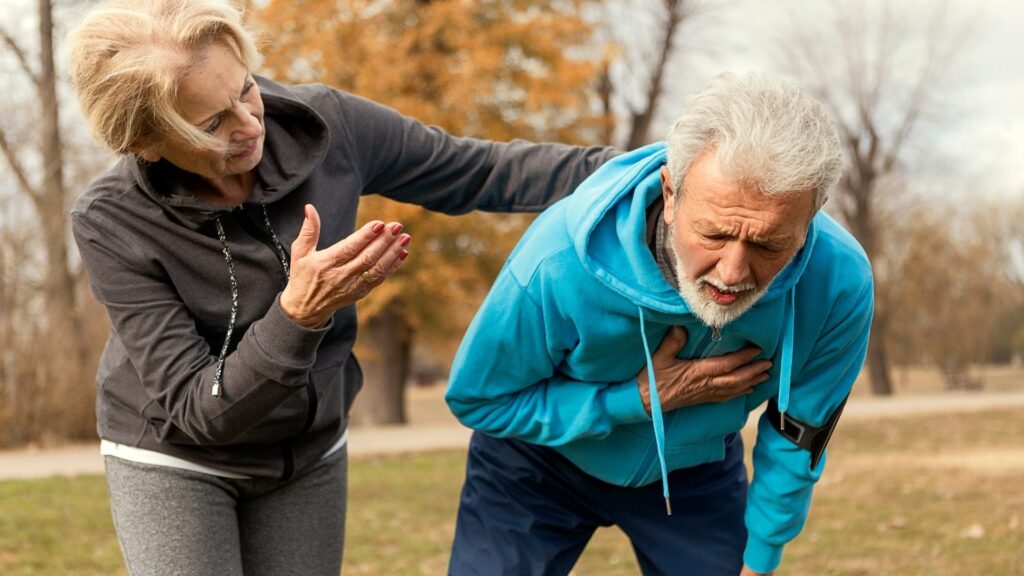
In general, heart attacks occur when the blood flow to the heart is blocked due to a clot in a coronary artery. The guide mentions several signs and symptoms to help you recognize a heart attack, like chest discomfort, shortness of breath, pain radiating to the arm or jaw and nausea. In a heart attack situation, the first aider should activate the emergency medical services immediately and help the person sit or lie down in a comfortable position. CPR should be started if the person is unresponsive and stops breathing normally.
Strokes
Strokes happen when blood flow to the brain is interrupted. In this section, the guide introduces the acronym FAST, which means Face, Arms, Speech and Time. This acronym is very helpful in remembering the signs and symptoms of strokes: face drooping, arm weakness, slurred speech, and the necessity of acting and seeking medical attention immediately. As in the case of a heart attack, first aiders should activate EMS, help the person get in a comfortable position, and, if the person becomes unresponsive, start CPR.
Life-Threatening Bleeding
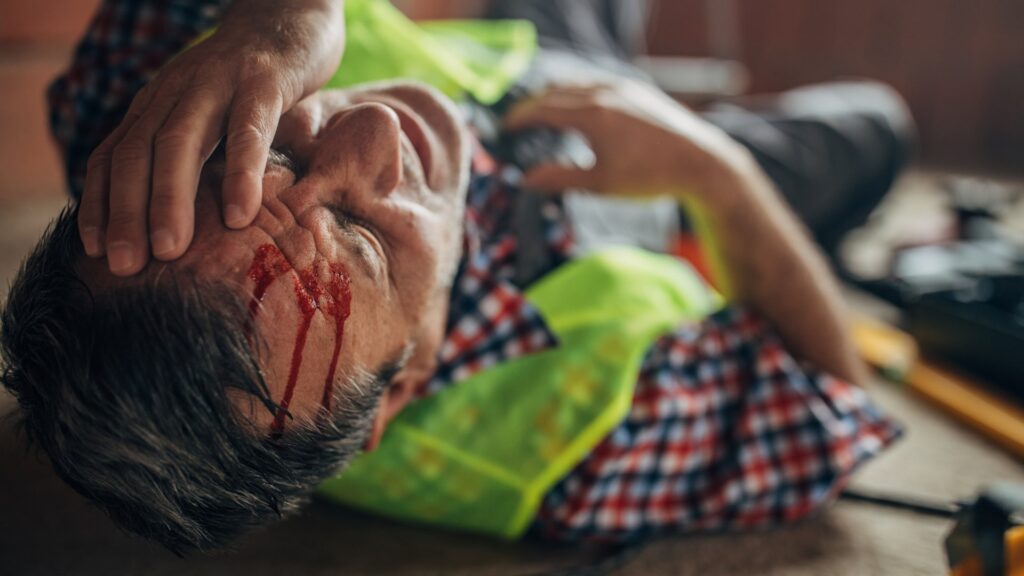
Some accidents may cause internal or external injuries with life-threatening bleeding. Therefore, the guide emphasizes the importance of quickly controlling bleeding to prevent severe blood loss and shock. The steps you need to follow to control life-threatening bleeding are;
Apply direct pressure to the bleeding site using a sterile dressing or cloth.
If possible, elevate the injured area
If it’s severe bleeding, use tourniquets or improvised pressure points
Monitor the patient’s condition until medical help arrives.
Be a Hero in an Emergency
Enroll in our First Aid and CPR training course and be prepared for any emergency that comes your way!
Chapter 6 of the first aid guide reviews the aspects of cardiopulmonary resuscitation (CPR) and the use of AEDs in emergencies.
CPR speed
As a first responder, you must know that CPR should be performed at the correct speed and depth of compressions. To sit for the first aid exam, remember that the recommended compression rate is at least 100 to 120 compressions per minute. Steady and consistent compressions aim to ensure adequate blood flow and oxygenation to the vital organs.
Compression depth
As per compression depth, the professionals suggest that to generate enough pressure to circulate blood effectively, chest compressions should be at least 2 inches (5 centimetres) for adults and children and approximately 1.5 inches (4 centimetres) for infants.
Compression-to-ventilation ratio
Moreover, the guide highlights that to ensure a balance between providing oxygen to the patient’s lungs and maintaining circulation through chest compressions, you must provide 30 compressions to 2 breaths for adults and children.
AED
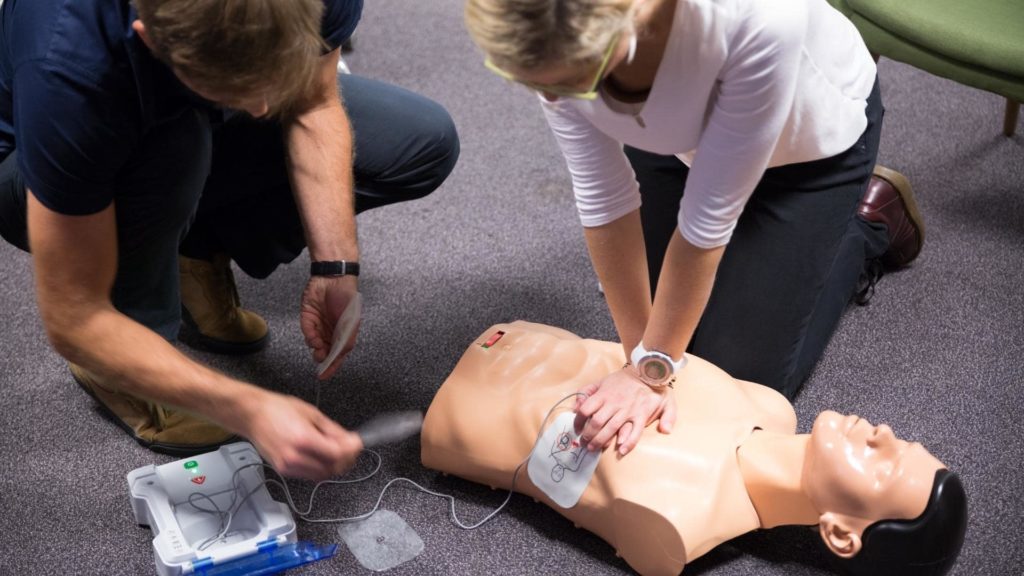
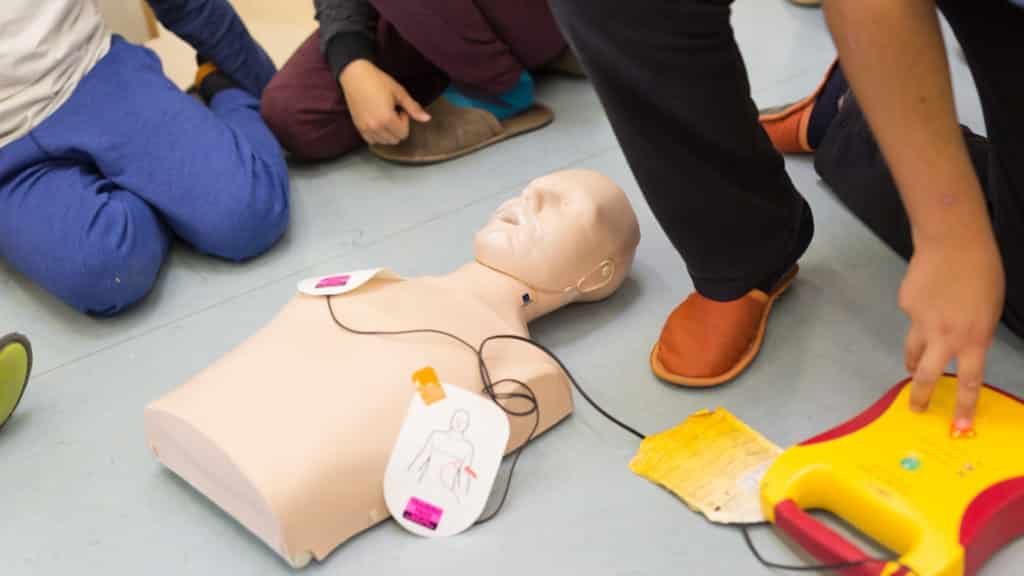
Recapturing the chain of survival, early defibrillation plays a crucial role in cardiac arrest cases. Thus, going through the clear instructions on how to use AEDs effectively, including the proper placement of electrode pads, following voice or visual prompts and ensuring the rescuer’s safety and the surroundings, are topics you need to remember in the first aid test.
Finally, the guide sustains the importance of continuous assessment and reassessment during CPR and using AEDs. As first aiders, check signs, responsiveness, and breathing while performing CPR.
Understanding emergencies is vital for first aiders to intervene promptly and potentially prevent severe complications. Chapter 7 refers to breathing emergencies, focusing on asthma and anaphylaxis.
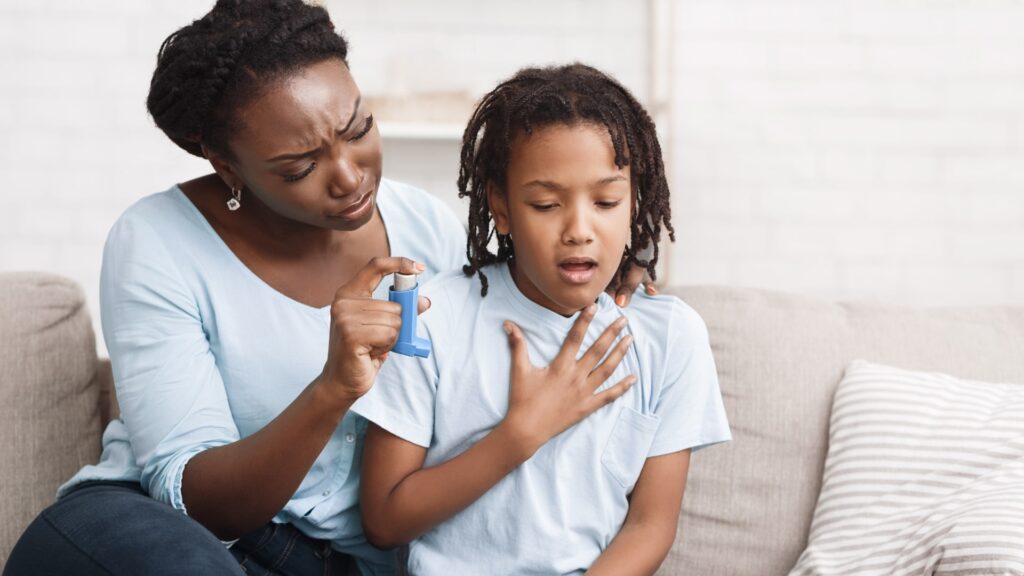
Asthma is a chronic respiratory condition characterized by the narrowing of airways. The guide highlights this condition’s common signs and symptoms, such as wheezing, coughing, shortness of breath and chest tightness. To assist a person suffering from an asthma attack, you should look for their prescribed asthma medication, help them get to a comfortable position and try to remain calm. In the case that the patient’s condition is worsened, activate emergency medical services.
Further, the guide addresses anaphylaxis, which is a severe allergic reaction that can be life-threatening. The signs and symptoms of this reaction could be difficulty breathing, swelling of the face or throat, hives and a rapid heartbeat. For this case, the first aider is recommended to call emergency services immediately and, in the meantime, help the person use their prescribed epinephrine auto-injector, if available.
Regarding wound care, chapter 8 of the Red Cross guide covers many common injuries and conditions that first aiders may encounter, including bandaging guidelines, burns, splinters, nosebleeds, knocked-out teeth, and crush injuries.
This is an essential section for you to review while studying for the First Aid test, and remember the step-by-step instructions on assessing and managing injuries effectively.
Bandaging Guidelines
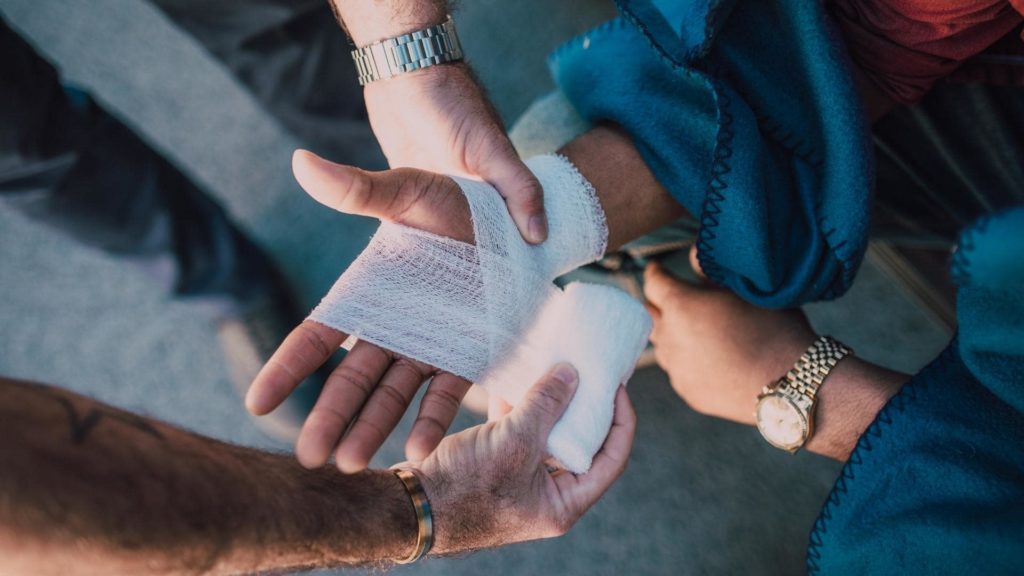
In this section, the guide highlights the importance of using sterile dressing and applying pressure to control bleeding. As a suggestion, follow the instructions on cleaning and dressing wounds appropriately and securing bandages to provide support and protection.
Burns
Burns can be categorized into first-degree, second-degree, and third-degree burns. The variety of the degrees roots on the severity of the burn, and the guide mentions recommendations for immediate first aid, such as cooling the burn with cold water and covering it with a sterile dressing. As a side note, seek medical attention for severe burns or burns involving sensitive body areas.
Splinters
The guide covers step-by-step instructions for safely removing splinters using tweezers and proper hygiene practices to prevent infections. It also suggests seeking professional medical help.
Nosebleeds
Another point you should write down for your first aid exam is how to manage nosebleeds. According to the guide, you should sit the patient upright, leaning slightly forward and pinching the nostrils together to apply pressure. If the bleeding persists or if there are other concerning symptoms, make sure to seek medical help.
Knocked-out Teeth
For knocked-out teeth, the guide emphasizes addressing the injured patient on time. In these cases, you should carefully handle the tooth without touching the root and preserve it in propolis, egg white, coconut water, whole milk or saline until the patient gets to the dentist.
Crush Injuries
Finally, you should go through the crush injuries section. The guide highlights the importance of removing the person from the crushing force if the object is crushing the person’s head, neck, chest or abdomen. In every case, the first aiders must call EMS while monitoring vital signs.
Head and neck injuries are considered severe because of their relationship with the spine. Thus, chapter 9 presents some common causes of head, neck and spinal injuries and different ways to prevent them.
How to Care for Head, Neck and Spinal Injuries?
The guide lists some steps to manage these types of injuries, starting with restricting the movement of the affected zone until EMS personnel arrive. The individual must stay in the same position where they were found unless there’s an immediate danger. If fluids start coming out of the ear canal or draining from the ear, let the fluid drain and do not move the person; once it stops draining, cover the ear loosely with a sterile dressing.
In some cases, head, neck and spinal injuries are related to brain injuries. Concussions are a type of traumatic brain injury that can occur due to a blow or jolt to the head. Understanding the signs and symptoms of a concussion is crucial if you are planning to sit for the first aid test.
Some common signs and symptoms (may appear immediately after the injury or may be delayed) of a concussion include;
Headache
Dizzinies
Confusion
Memory problems
Nausea or vomiting
Sensitivity to light or noise
Changes in mood or behaviour
As first aiders, the guide suggests assessing the person’s condition by asking specific questions about their symptoms and observing their behaviour. It is recommended to keep the person in the same place the accident occurred unless there is further danger and inform immediately to medical professionals. Concussions are serious injuries and should not be taken lightly; the patient should have proper physical and mental rest and avoid activities that may worsen the symptoms.
Be the Difference Between a Tragedy and a Life Saved
Regarding Chapter 10, first aid students must remember what to look for in bone, muscle and joint injuries. These injuries’ common signs and symptoms may include pain, swelling, deformity, limited range of motion, and difficulty bearing weight or using the affected limb. When moving or manipulating the wounded limb, every first aider is encouraged to assess the injured area with extreme caution. The injury should be treated using the RICE method:
Rest: Limit the patient’s activities and suggest resting the injured body part.
Immobilize: Try to immobilize the injured area in the position in which it was found by creating a splint.
Cool: To reduce swelling and pain, cool the injured area for 20 minutes every hour for up to 48 hours.
Elevate: Keep the injured area above the level of the heart.
Furthermore, the Red Cross advocates that these types of injuries should be treated by applying splints until the person gets medical help. Commercial splints are always the best option, but other improvised splits, such as rolled-up newspapers, magazines or scarves, are helpful too. Also, the guide outlines how to apply and secure splints and the importance of checking for proper blood circulation and monitoring the patient’s condition.
Chapter 11 Sudden Medical Emergencies:
Chapter 11 of the Red Cross guide covers a variety of sudden medical emergencies that you should study for your test, including diabetic emergencies, seizures, mental health crises and childbirth. This section explains how to recognize the signs and symptoms of these conditions and offers guidance on appropriate first-aid responses.
Diabetic Emergencies
As stated in the guide, there are two types of diabetes, hypoglycemia (low blood sugar) and hyperglycemia (high blood sugar). In most case scenarios, diabetic emergencies happen because of an imbalance between two or more exercises, food intake, medication and insulin production. For you to recognize a diabetic crisis, the signs and symptoms are:
Changes in the level of responsiveness
Changes in behaviour, such as confusion, irritability, or aggression
Rapid breathing
Cool, sweaty skin
Skin that is paler than normal
Appearance of intoxication
Feeling and looking ill
Seizures
If you encounter a diabetic emergency, the guide sustains that the first aider should provide the patient with a source of sugar or assist with their insulin administration. If the person’s condition does not improve within 10 minutes of having sugar, you should call the emergency services.
Seizures
Seizures are episodes of abnormal electrical signals in the brain that result in temporary and involuntary disturbances in brain functions, shaking or contraction of limbs, changes in sensations, shifts in behaviour, and altered levels of responsiveness.
In general, there are many causes of seizures; one is epilepsy, but others can be fevers or infections, head injuries, heat stroke, and poisons. As a first aider, you can tell a person is having a seizure because they will start hallucinating, their eyes may begin rolling upwards into the head, and they won’t be able to control muscle movement.
The appropriate care for an individual having a seizure is creating a safe environment by moving furniture and other objects that could cause injury and, if possible, rolling the person onto their side. If the patient is having their first seizure or if it lasts longer than five minutes, you must inform medical professionals.
Mental Health Crises
In general terms, mental health conditions are difficult to identify; they may go unrecognized unless the person shares the information with you. Some examples of mental health conditions may be panic attacks or acute anxiety.
If you ever encounter an individual going through a mental health crisis, try to reduce distractions and encourage the person to sit down to promote conversation. You should use your soft skills to keep the person calm, listening empathetically and acknowledging their feelings and emotions without judgment. If the person poses a risk to you or others, you should call 9-1-1 immediately.
Childbirth Emergencies
As a first aider, you should acknowledge that childbirth is a natural process and the woman’s body knows what to do; your role will be to support the mother’s comfort, recognize signs of complications, and contact emergency medical services for professional assistance.
Chapter 12 of the Red Cross guide covers environmental illnesses such as heat and cold-related emergencies. Understanding how to respond to these emergencies is crucial for first aiders to provide immediate assistance and prevent further harm.
A warm/hot environment may cause an individual to experience heat exhaustion and heatstroke. You should look for signs and symptoms of heavy sweating, weakness, dizziness, nausea, confusion and potential loss of consciousness. If you ever encounter an individual with heat exhaustion or heat stroke, the guide recommends moving them to a cooler environment, providing them with fluids and loosening any restrictive clothing. If the person’s condition worsens or if they do not improve after primary care, seek medical assistance.
A cool/cold environment may cause a person to experience hypothermia and frostbite. The signs and symptoms you should look for may include shivering, confusion, slurred speech and loss of coordination. For frostbite, the guide points out the presence of pale or blue skin, numbness and a waxy appearance. If you ever encounter an individual with hypothermia or frostbite, move them to a warm environment, removing wet clothing and providing them with warm, non-alcoholic fluids. If you see that the situation doesn’t get better, call 9-1-1.
Some recommendations for preventing heat and cold-related emergencies are:
Stay hydrated
Wear appropriate clothing
Avoid prolonged exposure to extreme temperatures
Monitor people in high-risk situations, such as athletes, outdoor workers and the elderly.
Finally, chapter 13 of the guide for first aid and CPR covers important topics related to poisons, how to recognize the signs and symptoms and what to do as a first aider.
According to the Red Cross, a poison is a substance that harms the body if it is inhaled, swallowed, absorbed or injected and can be life-threatening if they affect breathing or circulation.
There are four types of poisons;
Swallowed Poison: Enters the body through the mouth, lips, esophagus or stomach. E.g. drinking bleach.
Absorbed Poison: Enters the body through the skin. E.g. plants or chemicals.
Injected Poison: Enters the body through bites, stings or needles.
Inhaled Poison: Is breathed into the body. E.g. carbon monoxide.
Moreover, the guide recommends preventive measures to avoid poisoning emergencies, such as keeping medications out of the reach of children, wearing appropriate protective clothing while manipulating poisonous substances, run gas and other combustion engines only in open areas, among others.
If the poisoned individual is not breathing, it is recommended to start CPR taking the proper measurements so you don’t contaminate yourself with the poison. If the poison was absorbed through the skin, wash the area with water for at least 15 minutes and remove any clothing covered with poison. In every case scenario, encourage the individual to seek medical attention and call the EMS personnel.
Tick Bites
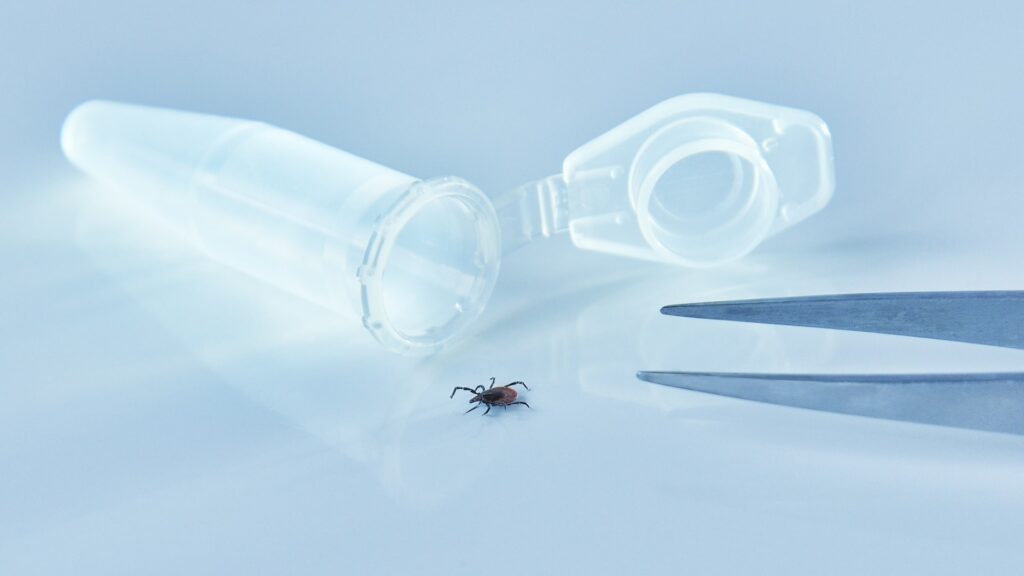
The guide covers bites and stings from numerous animals and insects, but you should pay special attention to the tick bites while studying for your test. Ticks can be found in wooded, bushy areas, tall grass, and leaf litter on the ground; they can attach themselves to any warm-blooded animal that comes in contact with them. These insects can cause serious illnesses, such as Lyme disease.
The guide emphasizes the safest way to remove attached ticks is using tweezers, grasping the tick by the head as close to the skin as possible and pulling upward slowly and steadily without twisting until the tick releases its hold. Afterwards, wash the area with clean tap water to clean the wound. Save the tick in a resealable bag and record the bite date. Suggest the person monitor the bite for several days in case it gets infected and recommend the person seek medical attention.
Snakebites
Usually, snakes live in rock outcrops, swamps, undergrowth and abandoned human structures. Most Canadian snakes are non-venomous except for the Northern Pacific Rattlesnake, Massasauga Rattlesnake and Prairie Rattlesnake.
To prevent snakebites, the guide suggests wearing proper footwear, watching where you put your feet when hiking, and not aggravating a snake. If someone gets bitten, you will notice a pair of puncture wounds in the skin, localized redness of the skin and pain and swelling in the area of the bite.
The steps to follow in a snakebite emergency are:
Keep the injured site still and level with the heart.
If the bite is on a limb, remove any jewellery before it swells.
Wash the wound with water.
Cover the bite with a clean, dry dressing.
Call 9-1-1 and get an AED if possible.
There may also be additional questions specifically about the Red Cross if you complete your training with Coast2Coast or another Red Cross training partner. Keep in mind that tests do change and course material may be updated as the years go by. First Aid and CPR skills do evolve over time and professionals learn new and improved techniques to help save lives. This is why it is important to complete Recertification courses!
Conclusion
Candidates who plan to complete their training with us at Coast2Coast will learn a wide variety of life-saving skills. Upon successful completion, you will receive a Canadian Red Cross Certification. Once they earn their certificate, they will be ready to use their life-saving skills! Keeping up-to-date with first aid training helps to ensure that responders are aware of all the latest tips and techniques required to help people in all types of emergencies.
So what are you waiting for? Get registered for a First Aid and CPR training course today at one of our training facilities in Ontario.
Register for First Aid & CPR Training
Choose from any of our locations across Ontario or Alberta and gain the knowledge and skills to save a life!
First Aid and Cardiopulmonary resuscitation (CPR) training is something everyone should think about pursuing. Having this training means you could help save someone’s life or de-escalate an emergency situation so that the outcome is not as serious. There are many reasons to consider CPR First Aid training in London, Ontario, not the least of which is that the person you could be saving is likely someone close to you – a family member, friend or co-worker. Now First Aid and CPR training is available from Coast2Coast.
What First Aid and CPR training is available in London, Ontario?
This post will focus on the non-certification First Aid and CPR/AED training courses that are available in London. Coast2Coast offer both certification and non-certification CPR and First Aid courses, depending on your needs.
If you require a certification to assist in your employment, see this post about our Canadian Red Cross certification courses. You can greatly enhance your employable skills by becoming certified in Level A and C First Aid and CPR/AED. In fact, this training can be a requirement if you are pursuing a career in law enforcement and health care support, among other fields. Coast2Coast offers courses in Standard, Emergency and Marine First Aid. These courses are offered as a blend of online and in-class learning.
What non-certified First Aid and CPR courses are available in London, Ontario?
You may not require certification and wish to take a CPR and First Aid course in London for your own personal peace of mind. London, Ontario First Aid and CPR training from Coast2Coast is not limited to certification courses, thankfully. Many of our students are expectant or new parents, as well as grandparents, who will be caring for babies and small children. You may have elderly parents who you wish to be able to assist in the event of an emergency. Keeping loved ones safe is a priority for many who take our courses, and our students learn the necessary measures to ensure their safety. Given that heart disease is one of the most common causes of death in Canada, CPR is a valuable skill to have. For those caring for small children, choking is a real hazard and is very scary if you don’t know what to do.
Coast2Coast workshops are ideal for those who do not require an official WSIB approved First Aid and CPR certificate, but still wish to learn live-saving skills.
Coast2Coast also offers First Aid and CPR workshops for those who don’t wish to commit to the full-length or cost of a Red Cross certification course, but still want to learn these valuable skills. These courses are shorter and less in-depth than our other CPR and First Aid courses, while still giving you a solid foundation in the course work. Our workshops are great for those seeking a solid foundation in CPR and First Aid training, as well as those who are looking to expand their skill set for personal use. The London CPR/AED and First Aid workshops are available for public or private training and include the following: Know Your Baby, Baby Emergency Preparedness, and Build Your Own (private training only).
First Aid and CPR for pets is another non-certification that is available from Coast2Coast in London, Ontario. Keeping our pets safe is a top priority and this course is a great way to ensure you have the confidence to assist your pet in an emergency. CPR for pets is actually quite similar as it for humans, but our specific training will allow you to master this training for your cat or dog. Our Pet First Aid course in London is done in partnership with Walk N Wags’. In this course, we cover bone injuries, CPR, poisons, and much more.
Looking for private CPR and First Aid training in London, Ontario?
Look no further! Coast2Coast also offers private training for its London First Aid and CPR courses. A minimum of eight people can participate in the training of your choice with a Canadian Red Cross instructor. You choose the time and place, and Coast2Coast will do the rest, including bringing our top-notch equipment for your group to practice with. This is an ideal way to have staff trained in a workplace, club or family. Private First Aid and CPR/AED training is available for any of our courses, including non-certification courses.
Online learning for all of our blended courses is done from the comfort of your own home, and our in-class First Aid and CPR training can be done at Western in London, Ontario and other locations. Please visit here for a full listing of courses offered in London (click the button below)
Which First Aid and CPR training program in London, Ontario is right for you?
Many students who take our courses need to be certified at their jobs, but if that isn’t necessary you can take advantage of one of Coast2Coast’s non-certification courses. You will receive training in amazing life-saving skills, while saving yourself time and money. Register today to expand your First Aid and CPR knowledge or ask one of our customer service representatives which course is right for you!