
OSHA-Compliant · American Heart Association Aligned Training Center
American Heart Association Basic Life Support
Basic Life Support is designed for people who need to respond to emergencies at work—like nurses, medical and dental staff, therapists, and students preparing for clinical placements. You’ll train on the American Heart Association curriculum, learn to work as part of a team instead of going solo, and earn a certificate that’s valid for two years. Take it fully in person, or choose HeartCode BLS and do the theory online before your skills check.
Course Types
American Heart Association Basic Life Support Certification
While both BLS and workplace CPR classes cover the same chest compressions, they don’t prepare you for the same role. A workplace CPR class is designed for a single bystander who might step in during an emergency. BLS, on the other hand, gets clinicians ready to respond as a team, equipped with tools like a bag-valve mask and a defibrillator. It also trains them to smoothly hand off care to advanced providers without missing a beat.
Both routes end with your hands on a manikin. The skills that make BLS work—compression depth, breath timing, switching rescuers without a gap—cannot be tested through a screen. So whichever format you pick, a certified instructor watches you perform them. BLS Provider runs fully in person. HeartCode BLS moves the theory online and keeps the skills evaluation in the classroom.
- All in-class training
-
Basic Life Support (BLS)
4 to 5 hours teaching time
Initial certification and renewal
- Prerequisites
-
None
No medical background is assumed. Students entering nursing, dental, respiratory therapy and paramedic programs take this course before their first placement.
Learn more
- Course content
-
View all 5 course topics
- High-performance CPR for adults, children and infants
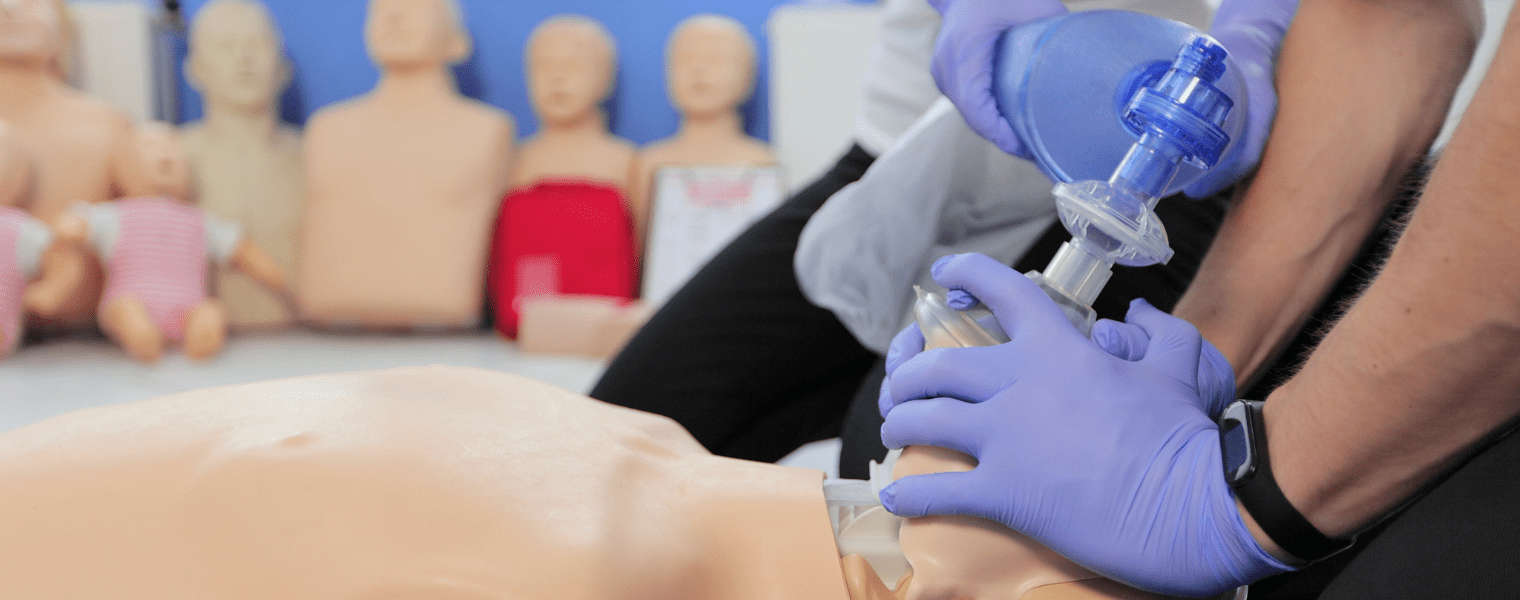
- Use of bag-mask devices and AEDs
- Strategies for effective team dynamics during multi-rescuer resuscitation
- Immediate response techniques for airway obstruction (choking)
- The importance of early recognition and prompt action in cardiac emergencies
BLS is not a first aid certification. If your role also needs bleeding control, burns, anaphylaxis and stroke care, add one of the first aid courses.
- Requirements
-
100% attendance of the course
75% score on the multiple choice knowledge test
- Certification
- American Heart Association certificate will be issued, valid for 2 years
The course starts with assessment—not chest compressions. First, you’ll learn how to quickly size up a situation, make sense of what you see, and prioritize your actions, so you’re ready to respond even when the room gets crowded and chaotic. Only after that do you build the hands-on skills: delivering high-quality compressions for adults, kids, and infants, providing proper breaths, and handling airway blockages, which look different depending on the patient’s age.
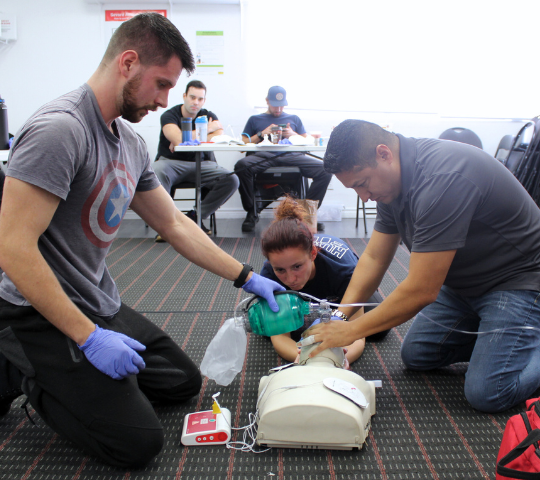
What really sets BLS apart from other CPR classes is the focus on teamwork. You’ll practice clearly communicating your actions, switching roles without missing a beat, and making sure someone’s always coordinating while another manages the airway. You’ll also get real practice with an AED trainer—so you’re comfortable using the device and its prompts before you ever see one in an emergency.
Choking response and early recognition round it out—knowing which minute you are in changes what you do next. In just one four- to five-hour session, you’ll walk away with an American Heart Association certificate that’s valid for two years.
- Blended learning
-
HeartCode BLS
Online theory at your own pace
Then an in-person skills test
- Available as
-
BLS Provider (initial)
BLS Renewal
Learn more
- Course content
-
The same American Heart Association BLS skill set as the in-person course above, split across two sittings.
The skills evaluation is not optional and it is not remote. An AHA instructor assesses you in person before the certificate is issued, which is why no BLS certification is genuinely online end to end.
- Prerequisites
-
None for the initial course
For renewal, bring your current certificate
- Certification
- American Heart Association certificate will be issued, valid for 2 years
Pick this one when your schedule, not your commitment, is the problem. Nurses, paramedics and medical students working rotating shifts do the theory at home in pieces—on a night shift break, between placements—then book one short visit for the skills check.
It is the same certificate either way. Renewing clinicians tend to prefer this route because they already know the content and want the assessment rather than the lecture. If it has been more than two years since your last card, book the initial course instead of the renewal.
Why Coast2Coast
Why Healthcare Providers Choose Coast2Coast for BLS
Most clinical staff sign up for BLS because they’re up against a deadline—a new job, a clinical placement, or paperwork that needs to be wrapped up by the end of the week. That’s why what really matters is how quickly you get your certificate, how many class dates you can choose from, and whether there’s an option to come back for extra practice if you need it.
Inside the Session
What Happens in a BLS Class
One sitting, four to five hours, and almost all of it on your feet or on the floor. Here is how a BLS course actually runs, in the order you will meet it.
Find a Class Near YouScene safety comes first, every time. You learn to check for hazards, protect yourself, and activate emergency services, so the wider emergency response is already moving while you work.
- Hazard check, precautions and glove removal
- Rapid assessment and visual survey
- Calling for help and handing over what you found
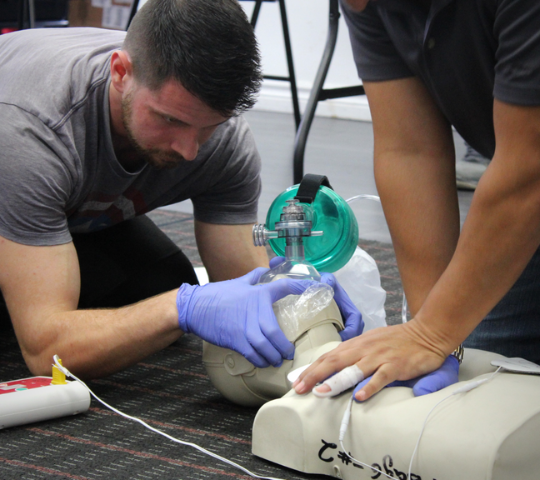
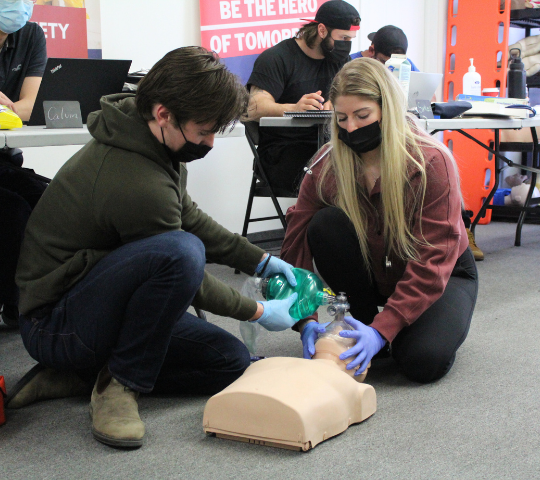
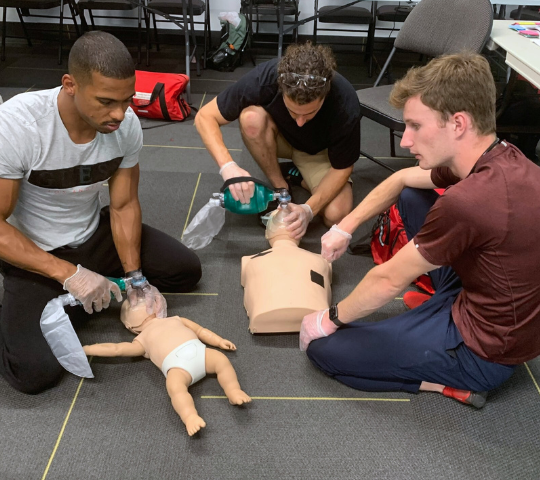
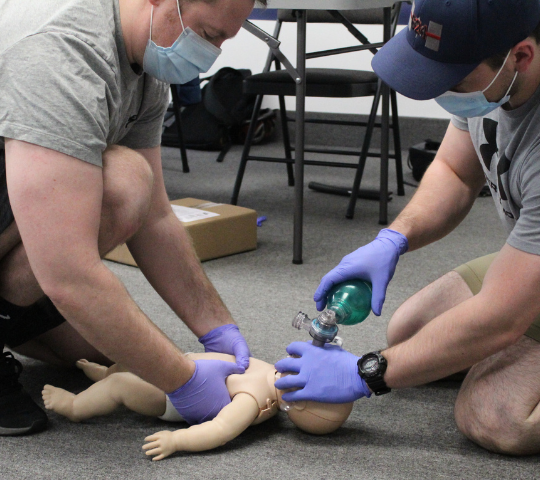
This is a hands on skills session, not a lecture. You get hands on practice delivering high quality chest compressions on all three manikin sizes, and the instructor corrects your depth and rate while you work. Learning CPR in a clinical setting means learning it as one link in a chain rather than a party trick.
- Compressions, ventilation and airway clearing
- An AED trainer, its pads and its voice prompts
- Switching rescuers without stopping the cycle
The session closes with a skills check. Your instructor watches you run the whole sequence for what to do when someone’s heart stops, then you sit the multiple choice knowledge test. Every hands on skills session ends this way, which is why your Basic Life Support (BLS) certification reflects what you can do rather than what you can recall.
Who It Suits
Who This BLS Course Is For
This course is built for health care professionals and for the students about to become them. No prior medical training is assumed. Learners arrive with every level of medical training behind them, from none at all to years on a ward. Employers and licensing boards ask for this Basic Life Support (BLS) certification by name.
- 99.9%Student success rate
- 48hrCertificate issued
- 100+Courses each week
- 2014Training since
-
Nurses, techs and clinical staff
Health care professionals who learn best by doing tend to prefer this format, because the theory is short and the floor time is long.
-
Students heading into placement
Nursing, dental, respiratory therapy and paramedic programs want the card on file before your first shift. There is no prerequisite, so book it early.
-
Responders outside the hospital
What you learn here is emergency response as a team: firefighters, lifeguard supervisors and hospital security train alongside clinical staff.
-
Anyone told to bring a card
If a manager handed you a requirement and no explanation, this is almost certainly the course. Learning CPR to this standard takes one classroom session, or a HeartCode module plus a skills check.
Ready to Register?
Start your registration for a Basic Life Support class: select your region, choose your city and click the button. It’s that easy!
You May Also Like
First Aid and CPR/AED Training
BLS focuses on resuscitation and airway management. If you want to learn how to handle other emergencies—like bleeding, burns, anaphylaxis, stroke, seizures, and more—our first aid courses cover all twelve situations that BLS doesn’t, and they’re available at four different levels. If you only need resuscitation skills for a non-clinical job, we also offer CPR/AED courses at three levels, in both in-person and blended formats.
Inside the Classroom
The Skills You Will Practice
Renewals
Keeping Your BLS Certification Current
Your Basic Life Support (BLS) certification lasts two years, and we run BLS Renewal for clinicians who book before that date — either in the classroom or as HeartCode BLS, with the theory online and a short skills check in person. Renewal only works while the card is still valid. Let a Basic Life Support (BLS) certification lapse and you sit the initial course again, proving from scratch that you know what to do when someone’s heart stops. Learners who put the expiry date in a calendar rarely get caught out.
Emergency services will not wait while you find your paperwork, and neither will an employer checking your Basic Life Support (BLS) certification.
Common Questions
Basic Life Support Questions, Answered
What is BLS training?
BLS is a four to five hour course that teaches healthcare providers to run a resuscitation as a team. You cover rapid assessment, high-quality CPR for adults, children and infants, defibrillator use, obstructed airway and opioid overdose.
Is BLS the same as CPR?
No. BLS includes CPR, but CPR on its own is a smaller course. A workplace CPR class trains one rescuer. BLS trains you as the help: two rescuers, ventilation support and a clean handoff to advanced care. Our CPR/AED courses cover the workplace levels.
Is BLS the same as CPR-HCP?
It replaced it. Healthcare provider CPR moved into the Basic Life Support program, so if a placement coordinator or a licensing body asks for HCP-level CPR, this is the course that satisfies it.
Who needs Basic Life Support certification?
Anyone whose license, employer or clinical program requires it. That requirement usually arrives one of three ways. A hospital preparing for a Joint Commission survey asks for it. A state medical or nursing board sets it as a renewal term. Or an employer applies OSHA workplace safety rules to clinical staff. Nurses, medical assistants, dental staff, therapists, pharmacy staff, students, firefighters and hospital security teams all take this course. There is no prerequisite.
What are the elements of Basic Life Support?
Recognize the emergency, get help moving, start compressions, and defibrillate early. Order matters: brain damage can begin within four to six minutes once blood flow stops. Immediate CPR can double or triple someone’s chance of survival after cardiac arrest.
How long is a BLS certification valid?
Two years from the date you pass. The expiry date is printed on your American Heart Association certificate. Protocols are updated periodically to reflect current guidelines, which is part of why the card runs out. Book before it lapses, or you sit the full course again.
Can I get BLS certified online?
Not end to end. A BLS certification an employer accepts always includes a skills assessment with an instructor in the room. What you can do is HeartCode BLS: the theory online at your own pace, then a short in-person skills test with an AHA instructor.
Does BLS cover my first aid requirement?
No. BLS and first aid are separate certifications. BLS handles cardiac arrest and airway emergencies; first aid covers bleeding, burns, anaphylaxis, stroke and more. Book a first aid course if your role needs both.
What will I practice in a BLS class?
Compressions, ventilation, choking relief and defibrillation, on adult, child and infant manikins. Choking work covers back blows and the abdominal thrusts known as the Heimlich maneuver. On an AED trainer you learn to read the heart rhythm and shock when one is advised. Hands-on skills testing with automated external defibrillator is part of the course.
What do I need to pass, and how soon do I get my certificate?
100% attendance and a 75% score on the multiple choice knowledge test. Your instructor assesses your skills in the room. The certificate is issued within 48 hours of successful completion.
What if I want more practice after my BLS class?
Come back. Every student gets a free 90-day skills practice retake at no additional cost. Repetition is the point: enough of it replaces panic with muscle memory, so your hands move before you think. Book inside 90 days and run the skills again with an instructor.
Where can I take a BLS class?
Pick your region in the class finder above, choose your city, and book a date. We run 100+ courses every week. Our US training facilities page lists every site. Call 1-866-291-9121 for a private class.