
When a medical emergency occurs, act on the Check, Call, Care framework: assess the scene for hazards, call 911 immediately, and begin care such as CPR or bleeding control before paramedics arrive. In Canada, bystanders who act promptly within their level of training are protected under Good Samaritan legislation. Completing a Canadian Red Cross first aid certification is the most reliable way to build the clinical confidence and muscle memory needed to respond effectively.
A medical emergency can strike with devastating speed, respecting neither location nor timing. Whether it is a multi-vehicle collision on the 401, a colleague collapsing in a Bay Street boardroom, a toddler choking during a family dinner, or a stranger experiencing a seizure in a crowded Vancouver transit hub, the first few minutes are the most decisive. What occurs during those critical moments, long before professional emergency medical services (EMS) arrive, often determines whether the victim survives and how successfully they achieve neurological recovery. Enrolling in a comprehensive first aid course is the most reliable way to prepare for these high-stakes scenarios. This article describes what to do in a medical emergency, from calling 911 to using a first aid kit, to recognizing symptoms like chest pressure, sudden confusion, or uncontrolled bleeding. It is written for Canadians of any age who want to be prepared before an emergency occurs.
Most untrained bystanders experience an immediate “freeze response” characterized by panic and indecision. They fear making the situation worse or lack the clinical confidence to lead. However, we know that doing something is almost always superior to doing nothing, provided that intervention follows established medical protocols. At Coast2Coast First Aid and Aquatics, we specialize in replacing that panic with a professional, systematic sequence of actions. With over 30 training locations across Canada and the US, we empower citizens to handle crises with clinical precision.
The Science of Scene Safety in Medical Emergencies: Step One (CHECK)
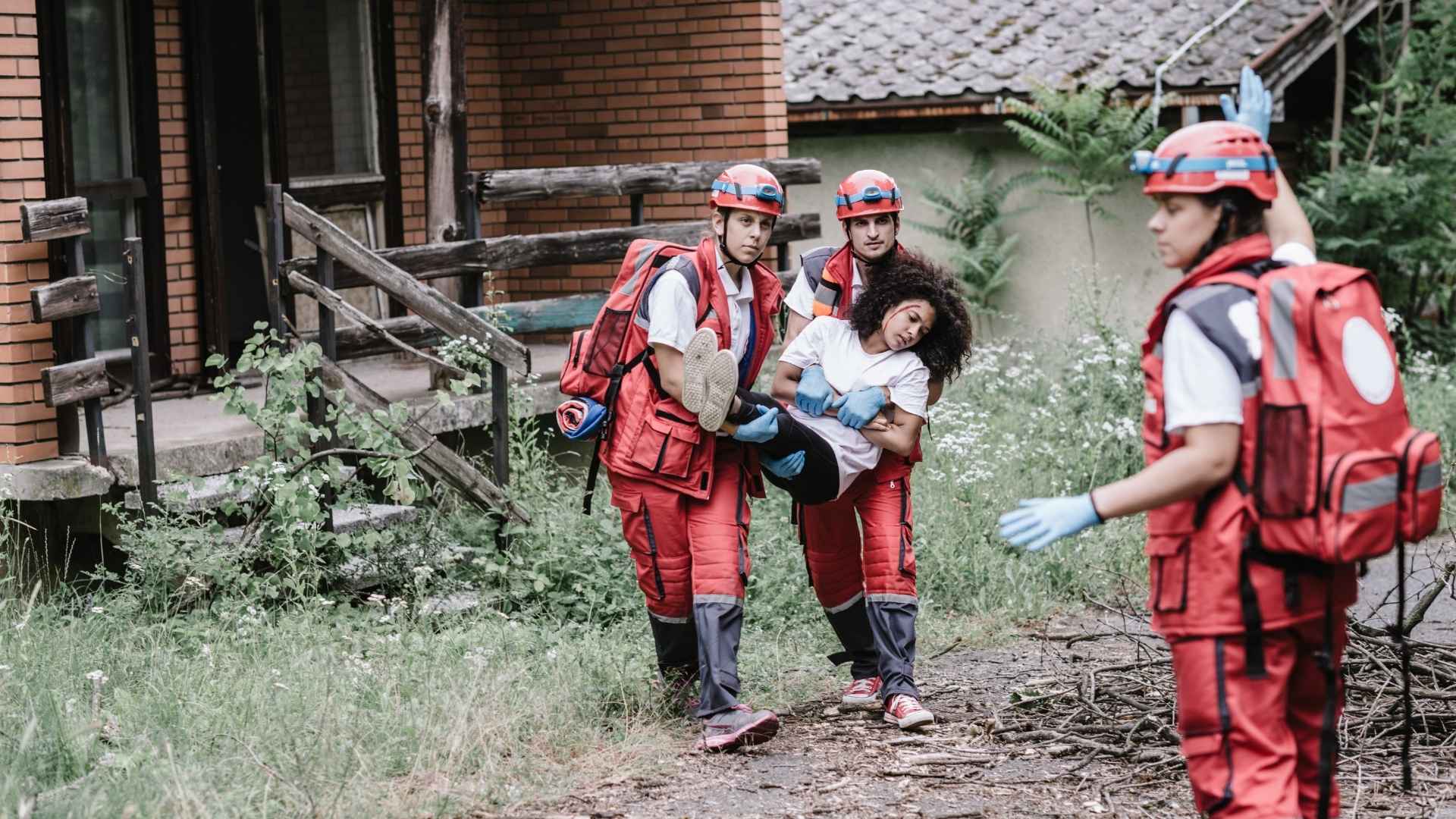
The first and most vital rule of emergency response is to check the scene for safety. Before rushing to assist, you must perform a rapid risk assessment to identify hazards that could put you, the victim, or other bystanders at further risk. In Canada’s urban environments, this includes oncoming traffic, downed electrical lines during ice storms, fire, chemical leaks, or unstable structures. We also emphasize “Human Safety,” which means assessing whether an individual is aggressive or whether the environment is hostile.
Effective emergency assistance starts by checking for danger before approaching the person. Rushing into an unsafe zone without a proper assessment can turn one victim into two, further burdening emergency resources. If the scene is unsafe, your duty is to stay back, secure the area, and wait for specialized responders. Once safety is confirmed, you move to the second part of the Check phase: checking the victim for responsiveness. Tap their shoulder firmly and shout, “Are you okay?” to determine if they are conscious and breathing normally. If you train at a CPR and AED course, you will practice this sequence until it becomes instinctive muscle memory. The sequence to remember is: check for danger, call emergency services, then provide care or CPR.
Activating the Chain of Survival: Contacting Emergency Services (Step Two: CALL)
If the person is unresponsive and not breathing normally, you must activate the EMS system immediately. Emergency services provide immediate medical assistance for urgent situations that cannot wait, and in Canada this means calling 911. If bystanders are present, point to a specific person and say, “You in the blue shirt, call 911 and get an AED!” This eliminates the Bystander Effect, where everyone assumes someone else has already made the call. During a true medical emergency, call 911 rather than driving yourself or others to the hospital.
When speaking with dispatch, remain calm and provide the following information so they can send the right response:
- Precise location: Use landmarks or GPS coordinates if you are in a remote area.
- Nature of the crisis: Is it a cardiac arrest, a trauma event, or a pediatric emergency?
- Current interventions: Tell the dispatcher that you are beginning High-Performance CPR or controlling a major bleed.
Stay on the line with the dispatcher until help arrives. They will provide real-time guidance you can follow. If you are unsure whether the situation qualifies as an emergency, call 911 anyway and let the dispatcher help you assess.
High-Stakes Intervention: First Aid Kit, CPR, and Step Three (CARE)
The Care phase is where your practical skills pay off. The actions you take here are designed to maintain the victim’s physiological stability in the minutes before paramedics arrive. The Canadian Red Cross emphasizes High-Performance CPR, which prioritizes the Chest Compression Fraction (CCF), the percentage of total rescue time spent actively pumping the chest. By minimizing pauses, even for breaths or AED pad application, you keep the hemodynamic pressure required to preserve brain function. Having a stocked first aid kit that includes gloves, bandages, a CPR mask, and basic supplies allows you to act quickly and effectively. Your preparation in those first moments can be the deciding factor.
Managing Severe Allergic Reactions, Choking, and Life-Threatening Events
- Cardiac arrest: If the heart has stopped, begin compressions at 100 to 120 beats per minute at a depth of 2 inches. Use an Automated External Defibrillator (AED) as soon as one arrives, especially if the person is unresponsive and cannot be woken.
- Choking: For a conscious adult, perform upward abdominal thrusts just above the navel (the Heimlich manoeuvre). For infants, alternate between five back blows and five chest thrusts.
- Warning signs: Common symptoms that may indicate a medical emergency include severe chest pain, difficulty breathing, sudden confusion, slurred speech, and uncontrolled bleeding. Other examples include severe abdominal pain, shortness of breath, wheezing, and sudden changes in physical or mental state. Extreme heat can cause the body to overheat rapidly, leading to heat stroke, which is a serious medical emergency requiring immediate action.
- Massive bleeding: Apply firm, direct pressure with a clean cloth or bandage. If the bleed is on a limb and direct pressure fails, apply a commercial tourniquet high and tight. Severe bleeding may continue if it does not stop after sustained direct pressure.
- Major trauma: Major trauma can include open fractures, deep wounds, and significant head trauma accompanied by confusion or vomiting.
- Opioid overdose: Administer naloxone (Narcan) if available and call 911 immediately. If the person stops breathing, begin High-Performance CPR until help arrives.
Learn These Skills in a Real Classroom
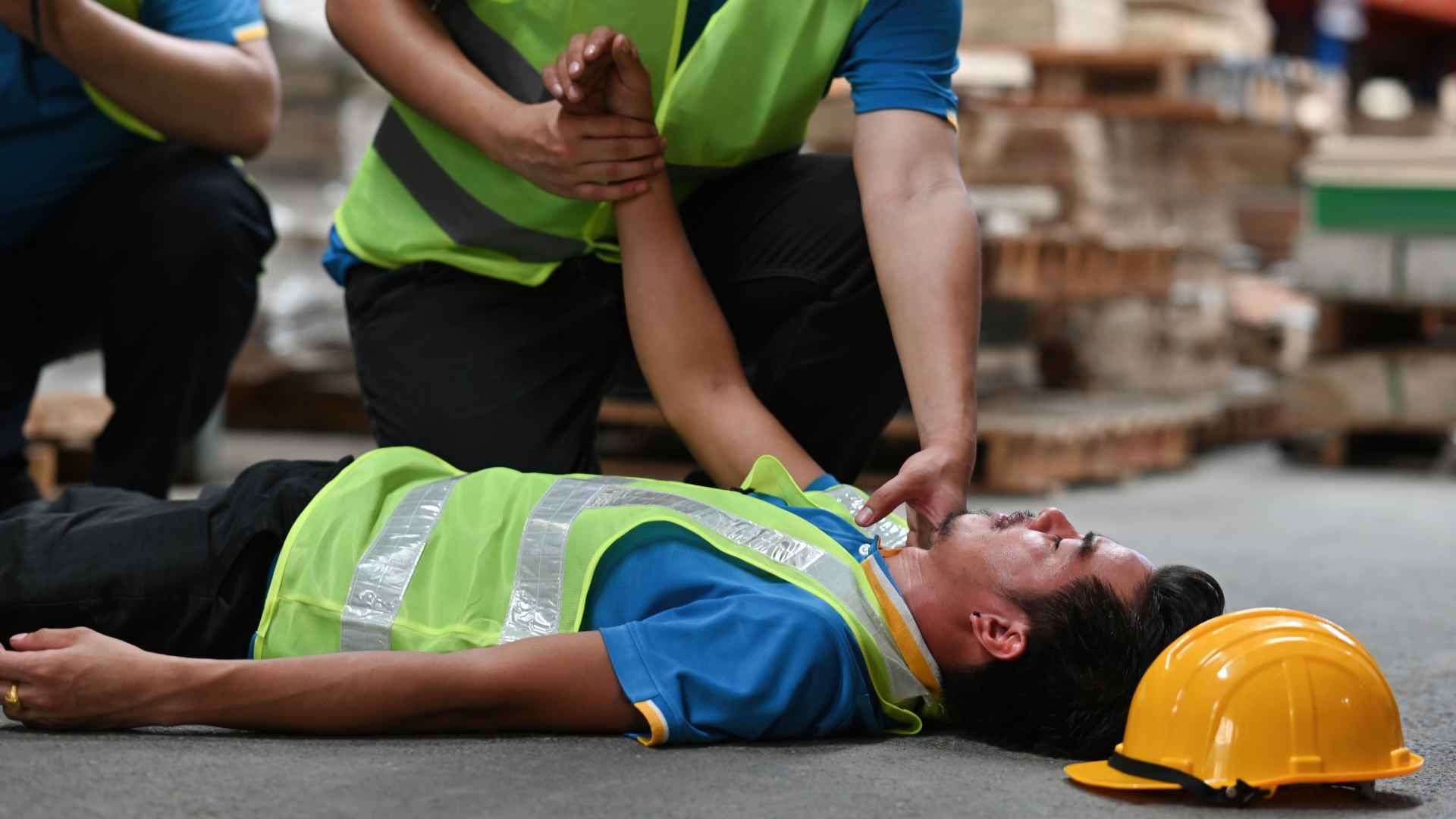
Practice High-Performance CPR, AED use, and bleeding control on high-fidelity manikins with a certified Canadian Red Cross instructor.
Clinical Practice Standards and Professional Requirements for Canadian Industries
In Canada, being prepared to handle a medical emergency is often a strict certification prerequisite for employment. To maintain legal compliance with WSIB Regulation 1101 and the updated CSA Z1210:24 standards, the following professions must hold unexpired credentials:
- Security guards and loss prevention: Must hold Intermediate / Standard First Aid to manage trauma and crowd emergencies while patrolling Canadian malls and corporate centres.
- Daycare staff and ECEs: Legally required to hold CPR Level C to manage pediatric choking and anaphylaxis.
- Construction and industrial workers: Required to manage industrial trauma and use oxygen administration tools in high-risk zones.
- Healthcare providers: Nurses and dental staff require annual Basic Life Support (BLS) recertification to master team-based resuscitation dynamics.
- Hospitality and fitness professionals: Personal trainers and hotel managers are often the first on-site during a sudden cardiac event in a public venue.
Train Your Whole Team
Private group training delivered at your workplace. WSIB-compliant certificates for your entire team, on your schedule.
Aid Kit Readiness, Hands-On Training, and Emergency Preparedness
While you can study theory online through blended learning options, there is no substitute for the physical muscle memory built in the classroom. During your session, you will use high-fidelity feedback manikins that provide real-time data on your compression depth and rate. You will also master the use of barrier devices such as one-way valve pocket masks, ensuring you can provide rescue breaths safely without risk of disease transmission.
Completing a written examination and skills test at an accredited facility ensures you are ready for the psychological and physical demands of a real rescue. Certifications earned at Coast2Coast are recognized by all major Canadian employers and provincial OHS boards. Whether you are in Toronto, Edmonton, or Ottawa, the training you complete today directly determines how prepared you are when a real emergency occurs.
Knowing in advance how to access emergency care, whether by calling 911 for life-threatening events or locating your nearest emergency room for urgent but non-critical conditions, saves critical time when every second counts. Even if a medical condition is not immediately life-threatening, it can still be a medical emergency requiring urgent evaluation to avoid serious complications.
Key Takeaway
A medical emergency demands immediate, structured action. Check the scene for safety, call 911 without delay, and begin care using the skills you have practiced. High-Performance CPR, AED use, bleeding control, and choking response are the core interventions that save lives in the critical minutes before EMS arrives. Canadian Good Samaritan legislation protects anyone who acts in good faith within their level of training. The single most effective step you can take today is to complete a certified first aid and CPR course so that when a real emergency occurs, you are ready to act.
Join 150,000+ Canadians Who Are Certified
Get your CPR and AED certification from Canada’s trusted training partner. Hands-on. Instructor-led. Recognized nationwide.
Frequently Asked Questions: Medical Emergency Canada 2026
More FAQs: First Aid Certification and Emergency Response
Sources & Professional Review
- WSIB Regulation 1101, Workplace Safety and Insurance Act (Ontario): wsib.ca
- CSA Z1210:24, First Aid Requirements for the Workplace. Canadian Standards Association, 2024
- Canadian Red Cross First Aid and CPR/AED Program Guidelines, 2026