




The CPR HCP (Healthcare Provider) course has been officially replaced by the Basic Life Support (BLS) certification in Canada. BLS covers everything CPR HCP taught, single rescuer and multi rescuer team CPR for adults, children and infants, advanced airway management with bag-valve mask, and AED use, and adds high performance CPR, team dynamics, closed-loop communication, and the rigorous standards modern healthcare providers need. Any employer still listing “CPR HCP” will accept BLS because it exceeds the old HCP requirements.
Find a BLS Class Near You
Canadian Red Cross BLS certification courses across Ontario and Alberta. Register online in 2 minutes.
Understanding CPR HCP vs BLS: What Healthcare Providers Need to Know
One of the most frequently asked questions we receive at Coast2Coast is: “Why don’t you offer the CPR HCP course?” The CPR HCP vs BLS conversation comes up almost every week, and it is a fair question. The answer reflects an important evolution in Canadian emergency medical training. The short answer: the CPR HCP designation has been replaced by the BLS course, which delivers more comprehensive, up-to-date training for healthcare professionals and anyone requiring healthcare-level CPR certification.
Furthermore, as a Canadian Red Cross Training Partner, Coast2Coast follows the most current training standards established by the International Liaison Committee on Resuscitation (ILCOR) and the Canadian Red Cross. Consequently, the transition from CPR HCP to BLS certification reflects a significant improvement in how healthcare-level resuscitation skills are taught, assessed, and applied in real clinical environments.
What Was the CPR HCP Course?
CPR HCP Course Content and Scope
The CPR HCP (Healthcare Provider) course was traditionally a CPR certification designed for individuals working in healthcare settings. Specifically, it covered single rescuer and two-rescuer CPR for adults, children and infants, the use of bag-valve mask (BVM) devices, automated external defibrillator (AED) operation, and management of obstructed airways. For many years, CPR HCP was the standard certification required by hospitals, dental offices, physiotherapy clinics, long-term care facilities, and other healthcare environments across Canada.
Why CPR HCP Needed an Upgrade
While CPR HCP served its purpose, the evolution of resuscitation science revealed opportunities to improve the training. In particular, the healthcare community recognized the need for stronger emphasis on team-based resuscitation, measurable high performance CPR metrics, and integration of multiple interventions during cardiac arrest management. As a result, these needs led directly to the development and adoption of the BLS course as the new standard for healthcare-level CPR training.
Why Did the Canadian Red Cross Replace CPR HCP With BLS?
The transition wasn’t just a name change. Instead, it represented a shift toward high performance CPR, a methodology proven to dramatically improve survival outcomes. According to the Heart & Stroke Foundation of Canada, high-quality chest compressions can increase survival rates by up to 40%. Notably, the old HCP curriculum lacked the rigorous team dynamics training that modern clinical environments demand.
Major Canadian training bodies replaced the historical CPR HCP designation with the standard BLS curriculum to reflect a standardized medical training approach. Moreover, this change aligns Canadian healthcare training with international ILCOR guidelines and ensures that healthcare providers across hospitals, clinics, and pre-hospital settings learn the same evidence-based protocols.
The 2026 Regulatory Landscape: CSA Z1210:24 and Healthcare
While the WSIB has transitioned to the CSA Z1210:24 standard for workplace first aid (classifying courses as Basic or Intermediate), healthcare settings demand an even higher tier. Basic Life Support (BLS) remains the gold standard for clinical environments. Intermediate / Standard First Aid satisfies workplace compliance for most employers, but it does not meet the resuscitation skills threshold required in healthcare. Standard CPR training is better suited to non-clinical workplace requirements, including teachers, sports coaches, daycare workers, and others who may need to provide life-saving assistance in emergencies.
What Is the BLS Course?
The Basic Life Support (BLS) course is the modern replacement for CPR HCP. Importantly, it covers everything CPR HCP covered and significantly more. In addition, BLS training includes all core CPR skills, chest compressions, rescue breaths, and AED use for all age groups, plus advanced concepts that healthcare providers specifically need.
High Performance Multi Rescuer Team CPR
One of the most significant additions in BLS training is the emphasis on team-based resuscitation. In a real healthcare setting, cardiac arrest response involves multiple team members working simultaneously, one person performing chest compressions, another managing the airway, another operating the AED, and a team leader coordinating the effort.
BLS places a major emphasis on high-performance multi rescuer teamwork, structured role assignments, and closed-loop communication to prevent responder fatigue. Participants rotate through different roles during team-based practice scenarios, learning to communicate clearly and coordinate efforts seamlessly under pressure.
Continuous Quality Improvement and High Performance CPR Metrics
BLS training emphasizes the measurable components of high-quality CPR, the same metrics now used in clinical post-event audits:
- Compression rate of 100–120 per minute
- Compression depth of at least 5 centimetres (2 inches) for adults
- Full chest recoil between compressions
- Minimizing interruptions in compressions
- Avoiding excessive ventilation
- Performing pulse checks at appropriate intervals (not exceeding 10 seconds)
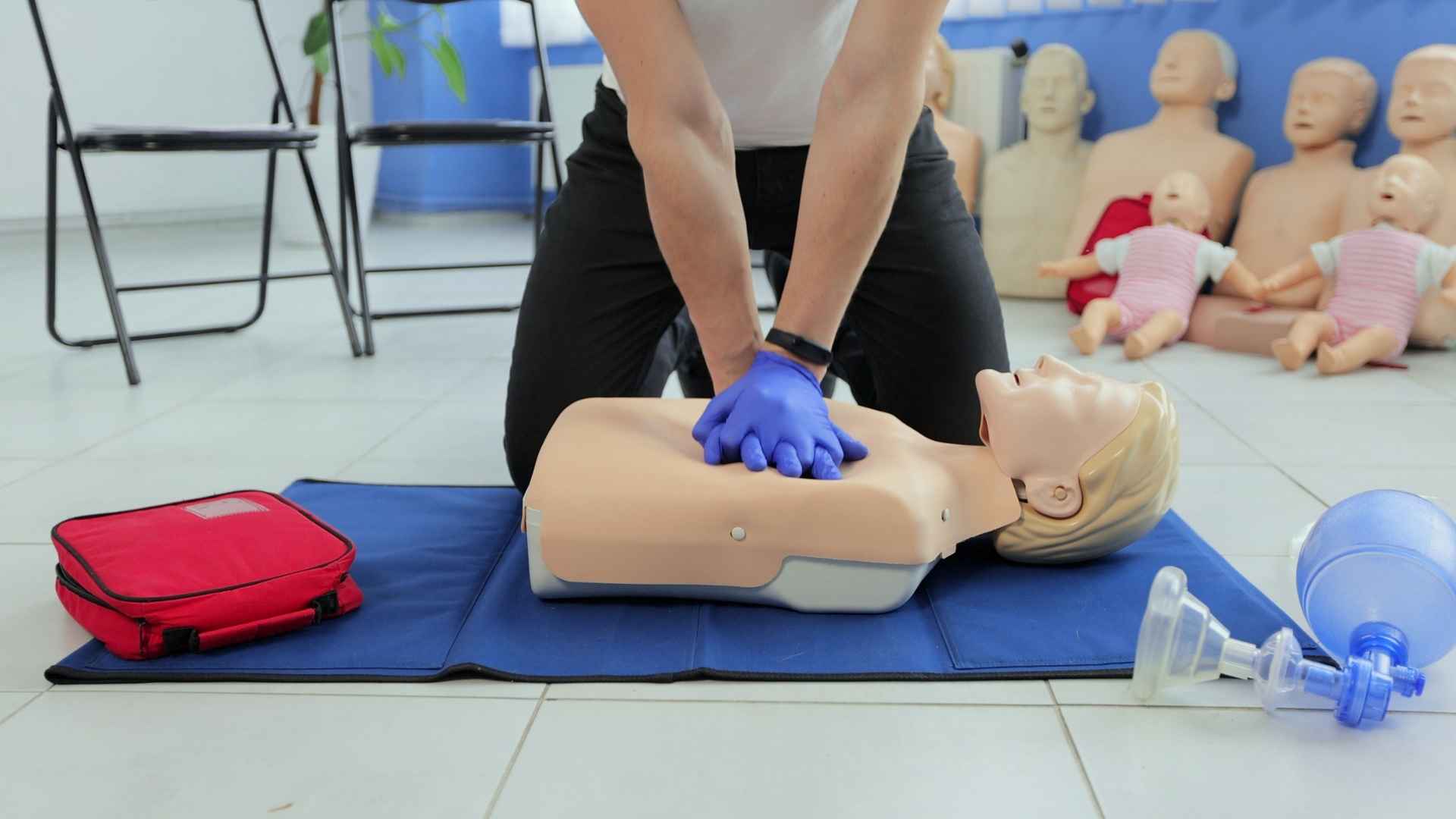
Participants receive real-time feedback during practice on mannequins equipped with feedback devices that measure compression rate, depth, and recoil. This ensures every graduate can deliver high performance CPR that meets clinical standards.
Advanced Airway Management
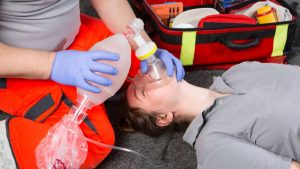
While CPR HCP covered basic BVM use, the BLS course provides more extensive training in airway management techniques relevant to healthcare settings. This includes proper bag-valve mask technique for single rescuer and two-rescuer scenarios, the use of oropharyngeal and nasopharyngeal airways, suction technique, oxygen delivery systems, and recognition of obstructed airways. Once an advanced airway is established, BLS protocol stresses maintaining continuous compressions without pausing for breaths, a critical distinction from basic CPR.
Specialized Clinical Protocols
BCLS protocols dictate the use of specialized clinical tools and techniques, such as deploying bag-valve masks and airway adjuncts, unlike standard CPR which relies on basic barrier devices. BLS also tracks advanced protocols for specialized situations including trauma response, opioid overdose with naloxone administration, and the management of cardiovascular emergencies in pre-arrest patients.
Watch: BLS Training Overview
CPR HCP vs BLS: Direct Comparison
For clarity, here is exactly how the new BLS course compares to the old CPR HCP designation:
Both CPR and BLS courses require recertification to ensure skills remain current. In BLS vs CPR comparisons, BLS is the more advanced certification, intended for healthcare professionals and first responders, while CPR is designed for the general public and non-healthcare roles.
BLS vs Standard CPR Courses: Choosing the Right Training
The CPR HCP vs BLS comparison only covers healthcare-level training. However, it is also important to understand that BLS differs from standard CPR and AED courses designed for the general public. For example, standard CPR Level C teaches single rescuer CPR, basic AED use, and choking management, and it also includes AED training commonly required for early childhood educators and security personnel. CPR Level A is designed for those who need to administer CPR only to adults, while CPR Level C is more comprehensive because it includes adults, children, and infants.
In particular, CPR training suits a wide range of individuals including parents, teachers, coaches, and workplace responders who need basic life-saving skills for emergencies across different work environments. By contrast, BLS certification is geared toward healthcare professionals and first responders such as nurses, paramedics, and emergency medical technicians, who need advanced life-saving skills.
Therefore, individuals seeking CPR training should consider their professional requirements or personal interests. Generally, CPR Level C is sufficient for laypersons while BLS is necessary for those in clinical settings. Ultimately, if you work in healthcare, are entering a health science program, or want the most comprehensive CPR training available, BLS is the right training.
Validity and Recertification: The 1-Year Rule
This is one of the most important differences between BLS and CPR for laypersons:
- CPR Level C certifications are valid for three years before requiring renewal
- BLS certification is valid for one year and must be renewed annually to maintain proficiency
Standard workplace CPR certificates often carry a multi-year validity according to regional safety regulations, while BLS requires strict adherence to institutional standards with annual re-certification strongly recommended or required by many employers. This ensures healthcare providers maintain “muscle memory” for life-saving interventions in the high-stakes environment in which BLS is used.
Who Specifically Requires BLS Certification in 2026?
The list of professionals requiring BLS has expanded significantly. BLS certification is essential for a wide range of professionals and aspiring professionals in healthcare and related fields.
Healthcare Professionals and Health Care Providers
Nurses, physicians, paramedics, respiratory therapists, dentists, dental hygienists, physiotherapists, chiropractors, and other regulated healthcare providers typically need BLS certification as a condition of employment and professional licensing. In fact, many regulatory colleges mandate current BLS certification for all practitioners.
Pharmacists
Under new expanded scopes of practice in Ontario and Alberta, pharmacists now mandate BLS for compliance, particularly those administering injections, providing minor ailments assessments, or working in community pharmacy environments where cardiac emergencies may occur.
Dental Professionals
Dentists, dental hygienists, dental assistants, and orthodontists must maintain current BLS certification under Royal College of Dental Surgeons of Ontario (RCDSO) requirements and similar provincial regulations. Likewise, dental support staff in surgical or sedation practices follow the same standard.
Personal Support Workers (PSWs)
Personal support workers in long-term care, home care, and assisted living settings increasingly require BLS-level training. The aging Canadian population means PSWs frequently encounter cardiac and cardiovascular emergencies, and BLS prepares them to act decisively before EMS arrives.
Healthcare Students
Students in nursing, medicine, paramedicine, dental hygiene, respiratory therapy, and other health science programs generally must hold current BLS certification before beginning clinical placements. Specifically, paramedic students must have BLS before their first clinical placement. Additionally, obtaining BLS certification early in your program demonstrates professionalism and preparedness.
First Responders
Firefighters, police officers, lifeguards, and other emergency responders benefit from BLS-level training because they may need to provide advanced resuscitation support before paramedics arrive. BLS complements other certifications such as Intermediate / Standard First Aid and Emergency Medical Responder (EMR) training.
Fitness and Recreation Professionals
Personal trainers, fitness instructors, swim coaches, and recreation facility staff often need healthcare-level CPR certification due to the physical nature of the environments they work in. BLS provides these professionals with advanced skills for managing cardiac emergencies in athletic and aquatic settings.
CPR HCP vs BLS: Misconceptions Addressed
Despite the clear regulatory shift, several misconceptions still circulate about the CPR HCP to BLS transition. Therefore, here are the facts:
Misconception 1: “My employer still requires CPR HCP, so BLS won’t be accepted”
BLS exceeds CPR HCP in every measurable way. Employers who haven’t updated their policy language still accept BLS certification because it covers all HCP content plus additional clinical skills.
Misconception 2: “BLS is harder to pass than CPR HCP”
BLS is more comprehensive, but the structured team-based practice and real-time feedback make it more practical and confidence-building. Pass rates are comparable when participants attend a quality, hands-on program.
Misconception 3: “I can get a discounted online CPR HCP course”
Any online course still selling “CPR HCP” certification in Canada is using outdated terminology and may not be recognized by employers or regulatory colleges. Always verify that your training body offers current BLS certification through the Canadian Red Cross or another accredited provider. Blended learning, online theory combined with in-person skills assessment, is acceptable; fully online CPR/BLS without an in-person component is not.
Course Format, Blended Learning, and Certification
The BLS course at Coast2Coast is typically completed in a single day and includes both classroom instruction and extensive hands-on practice on feedback-enabled mannequins. The course concludes with a written test and practical skills assessment.
Blended learning options combine online theory at your own pace with mandatory in-person practical skills assessment. This format works well for busy healthcare professionals who can complete the online cognitive component on their schedule before attending the in-person component to demonstrate competency.
Upon successful completion, participants receive a BLS certification card valid for one year. Annual renewal courses are available when your certification approaches expiration, allowing you to refresh your skills and stay current with any updates to resuscitation guidelines.
Practical Skills Assessed
The BLS practical assessment verifies your ability to perform:
- High performance CPR for adults, children and infants
- AED operation and integration into the resuscitation sequence
- BVM ventilation as single rescuer and two-rescuer
- Multi rescuer team CPR with role rotation
- Pulse checks at correct intervals (not exceeding 10 seconds)
- Recognition and response to opioid overdose
- Choking response for conscious and unconscious victims
- Activating the emergency response system
How CPR and BLS Complement Each Other
Both CPR and BLS prove essential for responding to cardiac emergencies and other medical emergencies. Specifically, CPR (Cardiopulmonary Resuscitation) is a life saving CPR technique used during emergencies when someone’s heart has stopped beating. Meanwhile, BLS (Basic Life Support) includes CPR along with additional skills for healthcare professionals, airway management, team dynamics during resuscitation efforts, and integration of clinical tools.
In practical terms, CPR training helps people learn CPR and learn life saving skills such as chest compressions, rescue breaths, and how to respond to conscious and unconscious choking victims, focusing on keeping blood circulating to vital organs until emergency responders arrive. Furthermore, BLS extends this foundation with the advanced protocols that healthcare environments need, including knowing when basic CPR uses a barrier device for rescue breathing and when BLS uses bag-valve mask ventilation, where the next step in the chain of survival is happening within the same building.
As a result, many Coast2Coast students complete both: CPR Level C for personal and family preparedness, then BLS when entering a healthcare career or program. Together, the two courses reinforce each other and produce confident, capable responders.
Get Your BLS Certification Today
Need healthcare-level CPR certification? The BLS course from Coast2Coast exceeds the old CPR HCP standard and prepares you for real-world resuscitation scenarios.
Frequently Asked Questions: 2026 CPR HCP vs BLS
Q1: What replaced the CPR HCP course?
A: Basic Life Support (BLS) certification has replaced the CPR HCP course in Canada. BLS covers all CPR HCP content, single rescuer and two-rescuer CPR, AED use, bag-valve mask technique, and management of obstructed airways, and adds high performance CPR metrics, multi rescuer team dynamics, and closed-loop communication training for healthcare environments.
Q2: Why was CPR HCP discontinued?
A: CPR HCP was replaced because resuscitation science evolved. The healthcare community needed stronger emphasis on team-based resuscitation, measurable high performance CPR, and clinical airway management, improvements built directly into the modern BLS curriculum by major Canadian training bodies to reflect a standardized medical training approach.
Q3: Will my employer accept BLS instead of CPR HCP?
A: Yes. BLS meets and exceeds every CPR HCP requirement. Even employers whose policies still reference “CPR HCP” accept BLS certification because it covers all HCP content plus additional healthcare-specific skills.
Q4: What is the difference between CPR and BLS?
A: CPR (Cardiopulmonary Resuscitation) is a lifesaving technique focused on chest compressions and rescue breaths to keep blood flowing to vital organs. BLS (Basic Life Support) includes CPR plus advanced skills for healthcare professionals, bag-valve mask ventilation, advanced airway management, team-based protocols, and pulse checks. BLS is intended for clinical settings; CPR is aimed at the general public.
Q5: Who needs BLS certification?
A: BLS is mandatory for healthcare professionals including doctors, nurses, paramedics, dental staff, respiratory therapists, pharmacists with expanded scopes, and personal support workers. Healthcare students need BLS before clinical placements. First responders, lifeguards, and fitness professionals often require it as well.
Q6: How long is BLS certification valid?
A: BLS certification is valid for one year and must be renewed annually. This is shorter than CPR Level C (3 years) because the high-stakes clinical environment in which BLS is used demands stronger skill retention and current protocol knowledge.
Q7: How long is CPR Level C valid for?
A: CPR Level C certifications are valid for three years before requiring renewal. Standard workplace CPR certificates often carry this multi-year validity in line with regional safety regulations like CSA Z1210:24.
Q8: Is BLS harder than CPR HCP was?
A: BLS is more comprehensive, but not necessarily harder. The team-based practice scenarios, real-time feedback on mannequins, and structured role assignments actually make BLS more practical and confidence-building than the old HCP format. Most participants pass on first attempt.
Q9: Can I take BLS online?
A: Fully online BLS is not recognized in Canada. Blended learning, online cognitive theory combined with mandatory in-person practical skills assessment, is acceptable and works well for busy healthcare professionals. Any provider offering 100% online BLS certification should be avoided.
Q10: What does BLS training cover?
A: Basic Life Support training includes advanced skills such as pulse checks, airway management with bag-valve mask, AED integration, multi rescuer team CPR techniques, closed-loop communication, opioid overdose response, and management of obstructed airways. All skills are practiced for adults, children and infants.
Q11: Do I need to take CPR Level C before BLS?
A: No. BLS can be taken without prior CPR certification. Many healthcare students go directly to BLS as their first CPR-related certification. That said, taking CPR Level C first can build a strong foundation if you are new to resuscitation training.
Q12: What is high performance CPR?
A: High performance CPR is the evidence-based methodology emphasized in modern BLS training. It includes a compression rate of 100–120 per minute, depth of at least 5 cm for adults, full chest recoil, minimized interruptions, avoidance of excessive ventilation, and structured team dynamics. The Heart & Stroke Foundation reports it can increase survival rates by up to 40%.
Q13: Is BLS the same as BCLS?
A: Yes. BLS (Basic Life Support) and BCLS (Basic Cardiac Life Support) are different terms for the same level of training. Most Canadian training bodies now use “BLS” as the standard term, replacing both “BCLS” and the older “CPR HCP” designations.
Q14: Does BLS include AED training?
A: Yes. BLS includes comprehensive automated external defibrillator (AED) training integrated into team-based resuscitation scenarios. BLS involves more intensive training on integrating AEDs into high-stress clinical environments, alongside the management of team dynamics during resuscitation efforts.
Q15: How often should healthcare providers renew BLS?
A: BLS certification must be renewed annually. Both CPR and BLS certifications require recertification to ensure skills remain current, with CPR typically needing renewal every three years and BLS annually due to the high-stakes environment in which it is used.
Content reviewed by the Coast2Coast First Aid & Aquatics certified instructor team. Regulatory and curriculum information sourced from the Canadian Red Cross, the International Liaison Committee on Resuscitation (ILCOR) Guidelines, the Heart & Stroke Foundation of Canada, CSA Z1210:24 First Aid Training Standard, and the Royal College of Dental Surgeons of Ontario (RCDSO) CPR/BLS requirements. Coast2Coast First Aid Inc. is an active Canadian Red Cross Training Partner with certified BLS Instructor Trainers on staff. Last reviewed: May 2026. For corrections or additional information, contact info@c2cfirstaidaquatics.com or 1-866-291-9121.