



Summary: Being prepared for a medical emergency in Mississauga is both a community responsibility and a strict legal requirement under Ontario’s WSIB Regulation 1101. By securing Canadian Red Cross certification under the updated 2026 CSA Z1210:24 standards, residents and employees learn to administer High-Performance CPR, utilize AEDs, and manage severe trauma. From corporate offices near Square One to the massive logistics hubs near Pearson Airport, formal CPR and AED training bridges the critical “Platinum Minutes” before Peel Regional Paramedics arrive.
Comprehensive CPR Training: Essential Guide to Certification in Mississauga
Mississauga is the sixth-largest city in Canada, with a rapidly diversifying population of over 800,000 people and a thriving economy that spans heavy manufacturing, technology, healthcare, and professional services. In a busy urban center of this size and complexity, sudden medical emergencies are a daily occurrence. Whether at home, in the office, at a community event in Celebration Square, or on the street, the ability to perform high-quality first aid and CPR can literally be the deciding factor in whether someone survives a cardiac emergency.
If you live or work in Mississauga and have been considering getting certified, this 2026 guide covers everything you need to know. From understanding the rigorous practical skills assessment to meeting strict workplace safety requirements, choosing the right training location in Mississauga is the first step toward becoming a confident, highly capable first responder.

Why CPR Training Matters in Mississauga’s Fast-Paced Environment
Cardiac arrest can strike anyone at any time, regardless of age, fitness level, or medical history. When it happens, the heart suddenly stops beating effectively, and without immediate physical intervention, irreversible brain death can occur within minutes. In Mississauga, where Peel Regional Paramedic Services handles an exceptionally high volume of emergency calls across a massive geographic area, ambulance response times can be affected by heavy 401/403 traffic, severe weather, and call volume.
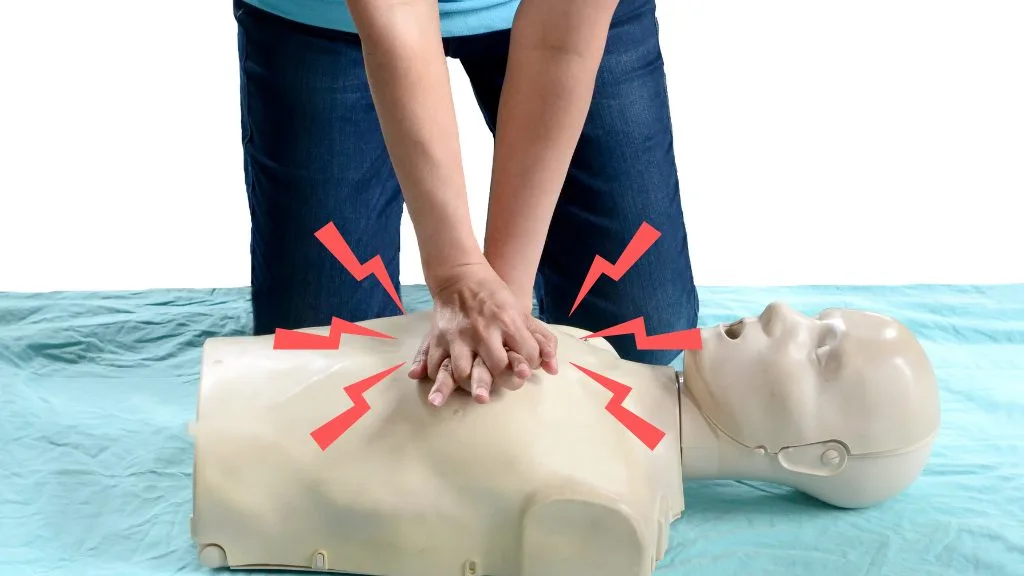
During the critical “Platinum Minutes” before paramedics arrive, bystander CPR is the absolute most effective way to keep a cardiac arrest victim alive. High-quality chest compressions act as a manual pump, maintaining vital blood flow to the brain and organs. Research from resuscitation councils shows that bystander CPR can double or triple survival rates from out-of-hospital cardiac arrests.
Mississauga’s diverse population also means that medical emergencies can present unique logistical challenges, including language barriers and varying levels of health literacy. Quality CPR training from a certified provider like Coast2Coast First Aid and Aquatics prepares you to take command of these chaotic scenes, designate bystanders to call 911, and deploy barrier devices to safely perform rescue breathing.
The Science of Survival: High-Performance CPR and CCF
Modern Canadian Red Cross training goes far beyond basic chest compressions. In 2026, the curriculum emphasizes High-Performance CPR, which heavily focuses on maximizing the Chest Compression Fraction (CCF). CCF is the percentage of total resuscitation time that is spent actively compressing the chest. By learning to minimize pauses—such as when applying AED pads or giving breaths—you drastically improve the patient’s hemodynamic pressure.
To ensure mastery of this clinical concept, our Mississauga classes utilize state-of-the-art, high-fidelity feedback manikins during the practical skills assessment. These devices provide real-time digital feedback on your compression depth and rate, ensuring you are physically prepared to meet the intense demands of a real-life rescue.
Watch: How To Perform CPR – Coast2Coast Official
Workplace CPR Requirements and WSIB Compliance in Mississauga
Ontario’s workplace safety legislation requires employers to provide adequate first aid coverage for their employees. In Mississauga, where the business community includes everything from massive logistics warehouses near Pearson Airport to corporate high-rises in the City Centre, understanding and meeting these requirements is essential for WSIB Regulation 1101 compliance.
The specific requirements depend entirely on the size of the workplace per shift. Generally, workplaces with 1 to 5 employees must have an Emergency (Basic) First Aid responder. Workplaces with 6 or more employees must have at least one certified Standard (Intermediate) First Aid responder available during all working hours, alongside a fully stocked Type 2 or Type 3 first aid kit that meets the new CSA Z1210:24 standards.
Coast2Coast makes it completely effortless for Mississauga businesses to meet their legal obligations by offering private group training. Our instructors bring all necessary equipment to your facility, customizing the emergency scenarios to address the specific hazards of your manufacturing plant, retail store, or office space.
Granular Niche Targeting: Career Advancement in Peel Region
Holding a valid CPR and First Aid certificate is a massive competitive advantage in Mississauga’s diverse job market. Many specific roles have strict certification prerequisites that must be met before an applicant can even be interviewed:
- Security Guards & Loss Prevention: Personnel patrolling malls like Square One must hold Standard First Aid to maintain their provincial security licenses and handle public medical crises.
- Construction Foremen & Logistics Staff: High-risk environments demand leaders trained in severe bleeding control, crush injuries, and scene safety.
- Daycare Staff & Education: Early childhood educators must possess CPR Level C to safely address pediatric emergencies like severe anaphylaxis and choking.
- Healthcare Professionals: Clinic staff, dental hygienists, and pharmacists require Basic Life Support (BLS) to master rapid pulse checks, team dynamics, and oxygen administration using Bag-Valve-Masks.
- Hospitality & Non-Aquatic Staff: Hotel and restaurant managers must be prepared to protect patrons and staff alike from sudden cardiac events.
Reducing Corporate Liability and Insurance Premiums
For Mississauga business owners, investing in CPR training goes beyond basic compliance; it is a vital strategy for reducing corporate liability. If a severe workplace incident occurs, Ministry of Labour investigators and private liability insurers will heavily scrutinize your training records. Ensuring your staff has successfully passed their written examination and skills testing proves legal due diligence.
Furthermore, many commercial insurance providers offer lucrative premium reductions to companies that can demonstrate a proactive, highly trained safety culture, offsetting the initial cost of the group training courses.

Flexible Learning: Blended Online Training Options
Coast2Coast understands that Mississauga residents face demanding schedules and long commutes. To make certification as accessible as possible, we offer a highly popular blended online learning format. This allows you to complete the heavy theoretical modules online at your own pace from your home or office. Once completed, you attend a significantly shorter, fast-track in-person session focused entirely on your hands-on skills practice and final evaluation.
When your certification approaches its mandatory three-year expiration date, you can seamlessly take a recertification course to renew your legal credentials without repeating the full, multi-day certification program.
Get CPR Certified in Mississauga Today
Be prepared to make a lifesaving difference in a cardiac emergency. Register for a WSIB-approved CPR or first aid course with Coast2Coast and secure your 2026 Canadian Red Cross certification.
Frequently Asked Questions
Question 1: Where can I take CPR training in Mississauga?
Answer: Coast2Coast operates multiple premier training facilities accessible throughout Mississauga and the GTA. Visit our course locations page to find the most convenient session for you.
Question 2: How long does a standard CPR course take?
Answer: A standalone CPR/AED Level C course takes about 4 to 6 hours. Emergency First Aid takes one full day, and Standard First Aid takes two days. Blended online options cut the in-person time in half.
Question 3: How much does CPR training cost in Mississauga?
Answer: Course pricing varies based on the specific level of certification (e.g., CPR-only vs. Standard First Aid). We offer highly competitive rates and group discounts for businesses training multiple employees.
Question 4: Is my CPR certification valid outside of Ontario?
Answer: Yes. Canadian Red Cross certifications are federally recognized across all provinces and territories in Canada, and are widely respected internationally.
Question 5: Does WSIB Regulation 1101 apply to my small retail store?
Answer: Yes. Any workplace with 1 to 5 employees per shift is legally required to have at least one staff member holding an Emergency First Aid certificate and an accessible Type 1 kit.
Question 6: What is the difference between Level A and Level C CPR?
Answer: Level A focuses exclusively on adult resuscitation. Level C is much more comprehensive, covering adult, child, and infant techniques, which is required for daycare and educational staff.
Question 7: Do healthcare workers take standard CPR?
Answer: No. Healthcare professionals, such as nurses and dental staff in Mississauga, must take Basic Life Support (BLS), which covers advanced clinical protocols like oxygen administration and BVM usage.
Question 8: Is AED training included in the course?
Answer: Absolutely. Comprehensive Automated External Defibrillator (AED) training is a mandatory component of all our CPR and First Aid certification courses.
Question 9: Can I fail the practical skills assessment?
Answer: While our instructors provide extensive coaching, you must demonstrate the physical ability to perform effective compressions. If you cannot meet the strict physical standards, certification cannot be issued.
Question 10: What happens if my CPR certification expires?
Answer: In Ontario, there is zero grace period. If your certificate expires, you are no longer WSIB compliant and must retake the full original course instead of a shorter recertification class.
Question 11: Are barrier devices provided during training?
Answer: Yes. To ensure strict hygiene, Coast2Coast provides single-use barrier devices and training pocket masks for all students to practice rescue breathing safely during the evaluation.
Question 12: Do security guards in Mississauga need CPR certification?
Answer: Yes. Security guards must maintain a valid Standard First Aid and CPR Level C certificate to legally keep their Ontario provincial security licenses active.
Question 13: Is there a written examination required?
Answer: Yes, a multiple-choice written examination is required to verify your theoretical understanding of the 2026 CSA Z1210:24 guidelines and protocols.
Question 14: How quickly do I receive my Red Cross certificate?
Answer: Upon successful completion of both the practical and written exams, you will receive your official digital Canadian Red Cross certificate via email, typically within 24 to 48 hours.
Question 15: Is workplace CPR training tax deductible?
Answer: For businesses, employee safety training is a deductible corporate expense. For individuals, it may be deductible if it is a strict requirement for your employment. We recommend consulting a tax professional.
About the Author
Ashkon Pourheidary, B.Sc. (Hons) — Co-Founder, Coast2Coast First Aid & Aquatics
Ashkon has been a certified First Aid and CPR instructor since 2011 and an Instructor Trainer since 2013. He is also a certified Emergency Medical Responder (EMR) instructor, Psychological First Aid instructor, and BLS (Basic Life Support) instructor. Ashkon graduated with honours with a Bachelor of Science in Neuroscience from the University of Toronto in 2016. As co-founder of Coast2Coast First Aid & Aquatics, he has helped grow the organization to over 30 locations across Canada and into the United States. Ashkon has served on the First Aid Council for the Canadian Red Cross. He spends his time coaching the team of over 100 instructors at Coast2Coast to ensure that students training at Coast2Coast locations receive the best training experience. Connect on LinkedIn