
Is First Aid Training Mandatory?

is first aid training mandatory

People often put off First Aid training until they are faced with an emergency where they feel helpless. Others put it off until they must get the training for their school or work. Several reasons cause people to keep putting it off, saying that they don’t have the time, they don’t know where to go for their training, they don’t think they will ever face an emergency, or that they already have all the knowledge required.

Currently, First Aid Training is only mandatory for people in specific careers or school programs. These are typically people who work in healthcare, rescue services, schools, as sports trainers, etc. Also, depending on the workplace environment and the number of employees, the law requires a specific amount of people per shift who must be First Aid certified.

In workplaces with five or fewer workers per shift, at least one requires an Emergency First Aid First Aid certificate. In workplaces with six people or more on any shift, at least one worker requires a Standard First Aid certificate.

So is First Aid training mandatory? No, First Aid training is not mandatory for everyone, but it is mandatory for many professions.

Why First Aid is Important

There are several reasons why First Aid is important:

Undoubtedly, the most critical reason for First Aid training is to assist someone during an emergency or accident confidently, whether that is a relative, friend, colleague, or even a stranger.

Besides helping save a life, First Aid enables you to offer someone in pain emotional support and comfort as you assist or until emergency services arrive.

Emergencies happen on a daily basis which is why you need to be prepared. With your knowledge, you can assist an injured person as well as help prevent a situation from becoming worse.

First Aid training gives you the ability to help out in any situation, expanding your confidence to share your skills wherever they are needed. Finally, the training makes you more aware of how important it is to practice keeping yourself safe and healthy.
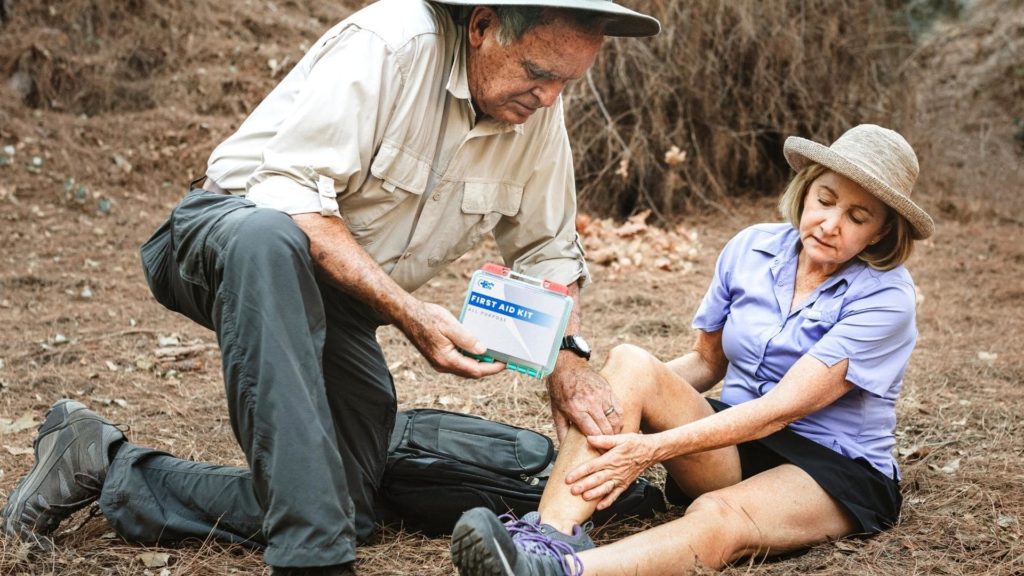
A man kneels on the ground holding a first aid kit and examines a woman's leg as she sits with a hat on. They are outdoors on a dirt path, surrounded by dry vegetation.

Register for First Aid Training

Register today for a First Aid training course and learn how to deal with emergencies and keep your loved ones safe! Check out our facilities and book your spot now.

Who Needs First Aid?

The two primary levels of First Aid training are aimed at people with various qualification needs. Whether you take Emergency First Aid Training or Standard First Aid Training will depend on your personal needs and career choice.

Emergency First Aid is suitable for most people who work in an office or business with low risks and for anyone wanting to help others during an emergency. It is also ideal for caregivers, parents or anyone who wants some basic knowledge in First Aid.

On the other hand, Standard First Aid Training is suitable for anyone planning a career in healthcare, education, etc. since the course content is more intense and includes training in environmental and medical emergencies.

Community Safety

We are all susceptible to injuries and illness as we run around daily performing several tasks. The faster we get help from someone trained in First Aid, the better, especially in critical situations. Every minute counts when it comes to saving a life!

First aid training increases the safety of a community, helps people feel more secure, can save lives, relieve pain, and prevent situations from getting worse.

Therefore, First Aid training provides communities with a safer environment to carry out their daily activities, knowing that there is someone at hand to help if needed.
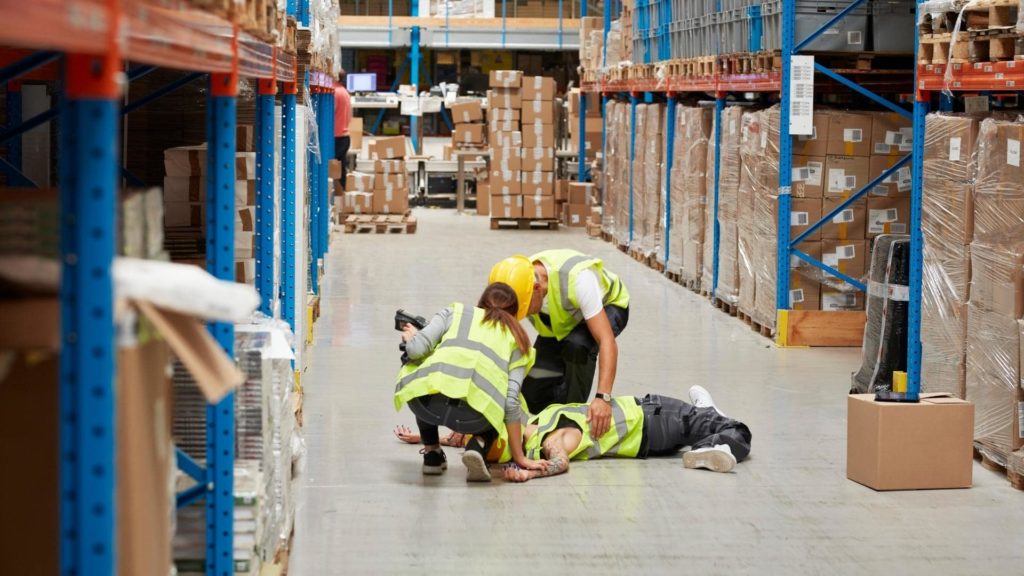
Two workers in high-visibility vests and helmets attend to a person lying on the floor in a warehouse aisle. Shelves loaded with boxes line both sides, and a few cardboard boxes are on the ground nearby.

Should First Aid Training Be Mandatory?

In Canada, people are encouraged to take First Aid training in specific jobs and mandatory workplace regulations. However, it is not compulsory for everyone.

Many people argue that First Aid training should become mandatory for everyone, quoting the example of some countries requiring it. For instance, in Germany, someone cannot get their driver’s license without completing a First Aid course.

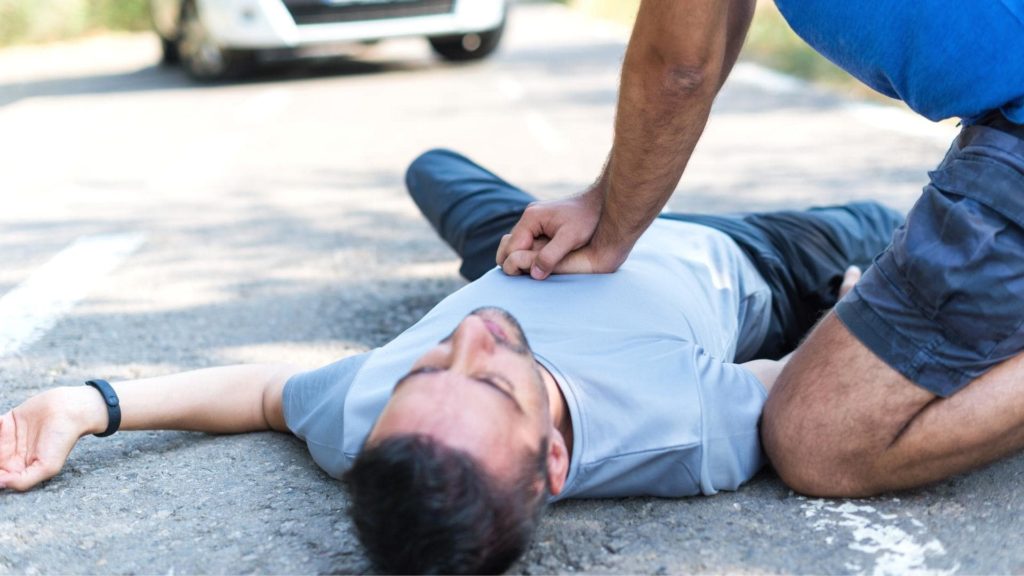
First Aid prepares participants to act swiftly in an emergency. Some of the everyday occurrences where First Aid can help include providing CPR during a cardiac arrest incident, applying back blows and chest thrusts to a choking victim, stopping excessive bleeding until help arrives, etc.

Learning how to save another person’s life is a small investment toward being a responsible citizen. After all, we all have a moral obligation to help each other.
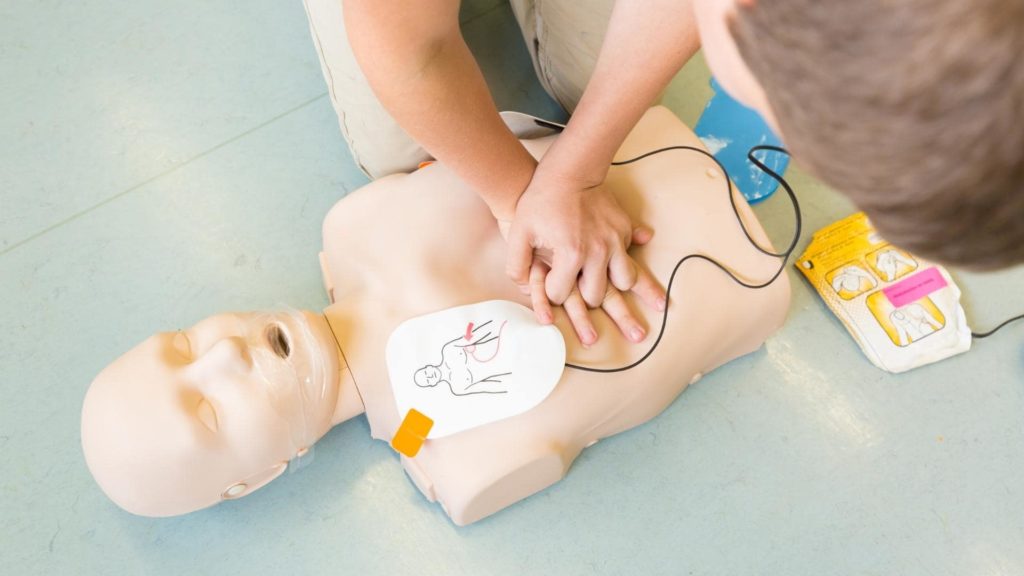
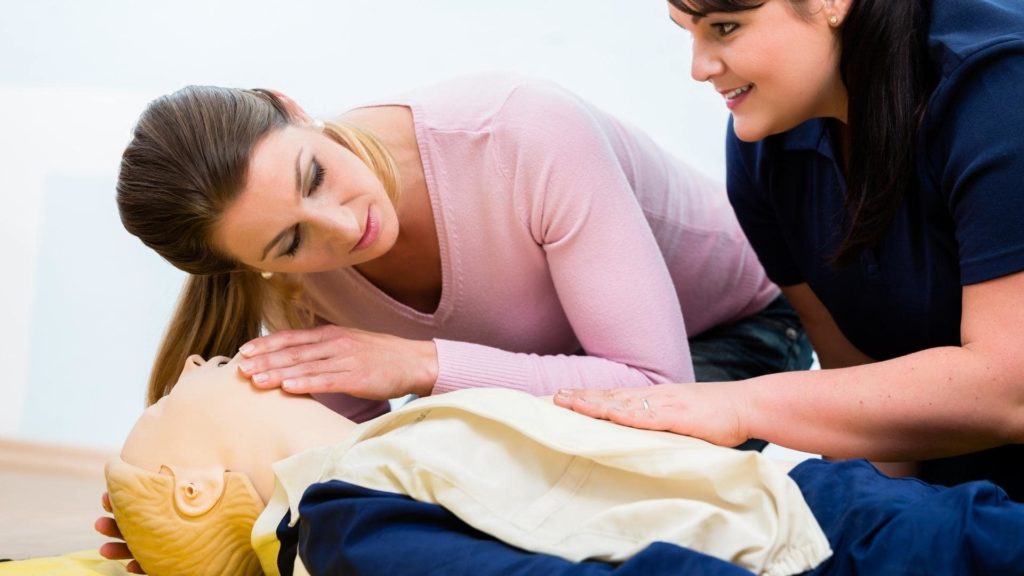
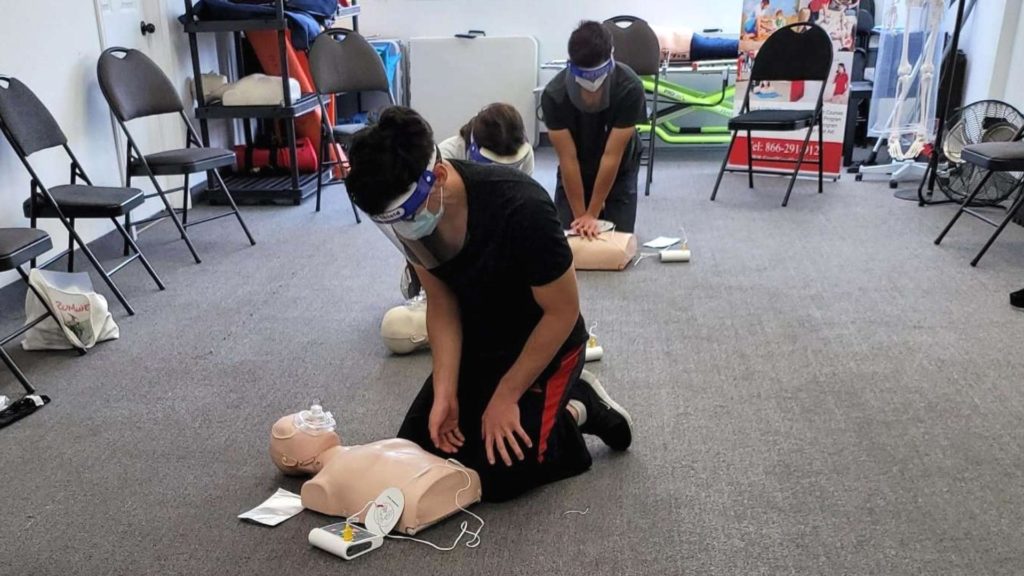
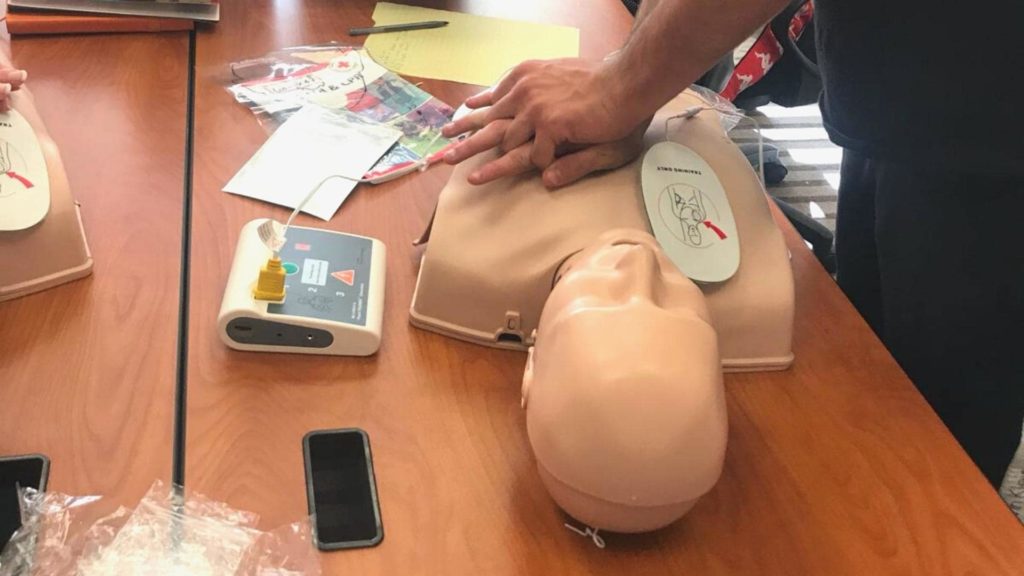
A person is performing CPR on a practice mannequin. The mannequin has adhesive pads on its chest, connected to an automated external defibrillator (AED). The person is applying chest compressions on the mannequin's torso.

Where To Get Your First Aid Training

First Aid training in Canada is so accessible that no one can claim they don’t have the time or don’t know where to get it. Our online blended courses at Coast2Coast save you time and money, allowing you to learn the theory online at your own pace before attending a one-day in-class training.

At Coast2Coast, we offer Emergency First Aid, Standard First Aid, Marine Basic First Aid, and Child Care First Aid (for private clients only). Each of these courses includes CPR/AED training. As a participant, you have a choice of either all in-class training or online blended training, making it easier to decide which format suits you best.

Our First Aid training is available at several locations in the Greater Toronto area, Western and Eastern Ontario, making it easier to find a location near you. We also provide First Aid workshops for eight or more participants.

Register for your Coast2Coast Canadian Red Cross and WSIB approved First Aid Training today.

Questions About Your Course?

Our team is ready to help you with your questions. Don’t hesitate and contact us today.
First Aid Training Vs. CPR

first aid training vs cpr

First aid and CPR are both procedures administered in emergencies to help save lives. The difference between first aid and CPR is that first aid covers a broad spectrum of life-saving skills, including CPR. On the other hand, CPR training primarily focuses on how to perform CPR, use an AED and more to resuscitate unconscious victims that have no pulse.

What Is the Difference Between First Aid Training And CPR?

Both CPR and first aid are essential procedures that can help save lives. You can take a CPR class without first aid, but a first aid course through the Canadian Red Cross always includes CPR.

First Aid Training

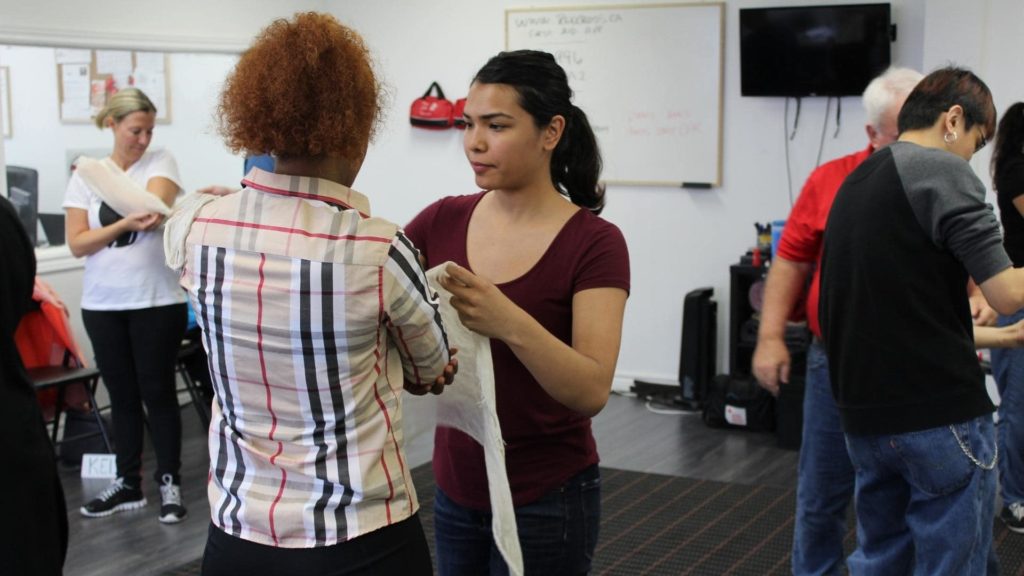
During first aid training, you will learn a wide variety of procedures needed to help someone who is feeling ill or has suffered trauma from an accident. These procedures include treating deep cuts, burns, stopping bleeding, choking, allergic reactions, how to put a splint on a fractured bone, etc. You are trained to offer assistance to victims by relieving their pain and preventing them from suffering further injuries until professional medical assistance arrives.

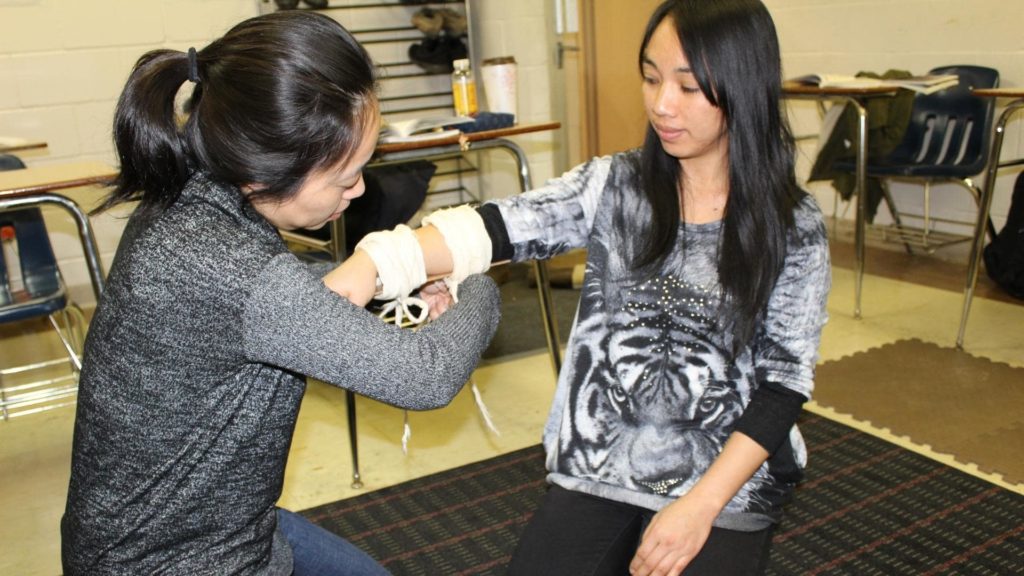
A group of people in a room practicing first aid techniques. One person is helping another wrap a bandage around their arm. Several others are engaged in similar activities in the background. A whiteboard and TV are mounted on the wall.

CPR Training

During cardiopulmonary resuscitation (CPR) training, you are taught how to focus on someone who is experiencing cardiac arrest. Cardiac arrest is caused by sudden heart dysfunction. Any person suffering the condition will be unconscious and not able to breathe. CPR is also a form of first aid but applies only to cardiac arrest.

CPR is the only treatment that can help a victim of cardiac arrest because their heart has already stopped beating, and their condition is critical. The faster CPR is administered, the better the chance of the person’s revival and survival. Once revived, the person must be taken to a medical specialist immediately for further assessment of their condition and the cause.

A patient suffering from cardiac arrest cannot breathe. Therefore, the oxygen supply needed by the body is cut off. Since cells within the body rely on oxygen within the blood, damage starts taking place immediately when it is suddenly cut off. CPR training teaches you how to provide artificial heartbeat and restore blood circulation (also with the help of an AED), helping prevent damage to other vital organs. CPR training teaches you how to monitor the patient’s pulse and the importance of performing CPR until professional responders arrive.

CPR is Based on Specific Procedures

CPR training teaches you the correct procedures that must be carried out when helping a person suffering from cardiac arrest. During the training course, you are taught how each step follows the other and how to administer CPR without injuring the patient. Students will also learn how to use an Automated External Defibrillator (AED), a specific tool used on victims of cardiac arrest.

Inquire about CPR Training

Do you have questions regarding CPR training? Contact us today! Our customer service representatives are ready to assist you.

Is BLS The Same as CPR And First Aid?

There are several levels of CPR training. Namely, CPR A, CPR C, and CPR BLS.  If you are unsure which level is the right one for you, here is a short explanation of each. Of course, before deciding, you should know that if you are getting CPR training for your job, you must choose the level that meets the requirements.

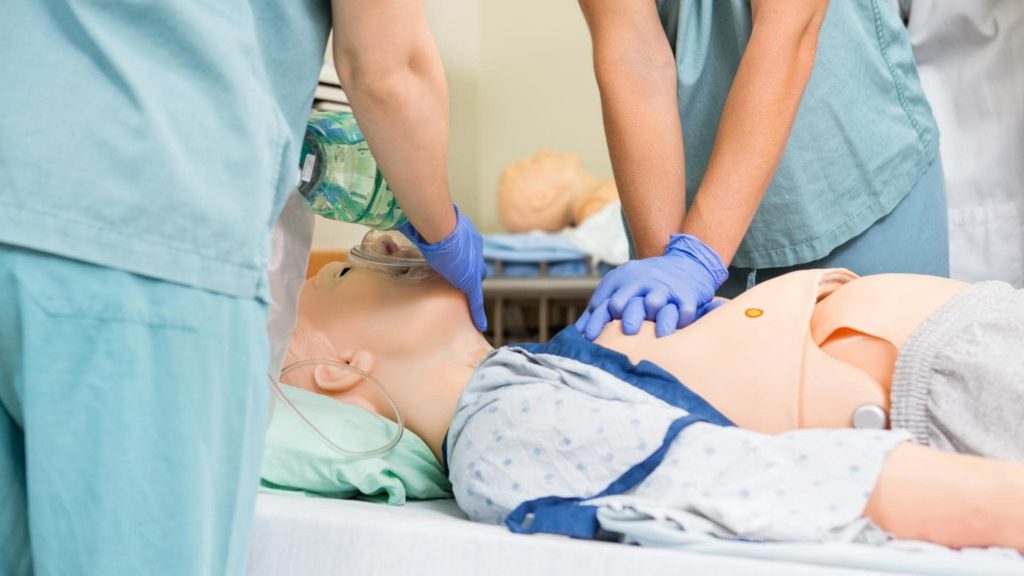
Medical training scenario with a mannequin. A person in blue gloves performs chest compressions while another holds an oxygen mask over the mannequin's face. Both are wearing scrubs, simulating an emergency medical procedure.

Basic Life Support (BLS)

Basic life support (BLS) is the level required if you are planning to become a professional first responder, paramedic, firefighter, or healthcare provider (doctor or nurse). Up until early 2019, the Canadian Red Cross taught the HCP (Health Care Provider) level of CPR, but then it was replaced with BLS.

The training only takes a few hours, and certification is valid for one year.

CPR C Training

CPR C training is very popular because it includes techniques to assist choking/unconscious adults, children, and infants. During the training, you are also taught how to apply two-rescuer CPR and use an AED. The training is required for all people working with children, those working in healthcare, and for most workplaces. Recertification is required every three years.

CPR A Training

Some workplaces just require CPR A training. During CPR A training you learn to assist adults who are choking or require CPR.

Is It Better to Take A CPR And First Aid Training Online or In-Person?

Online courses are very good if you want to learn the basics of first aid and CPR but don’t want to commute and want to complete it at your own pace. However, an all-in class or blended course is often the better option if you are learning first aid and CPR for your workplace or care for children and the elderly. By attending training, you get to practice everything you learn, especially the use of the equipment. This not only enhances your skills but gives you the added confidence to practice everything you learned during the course.

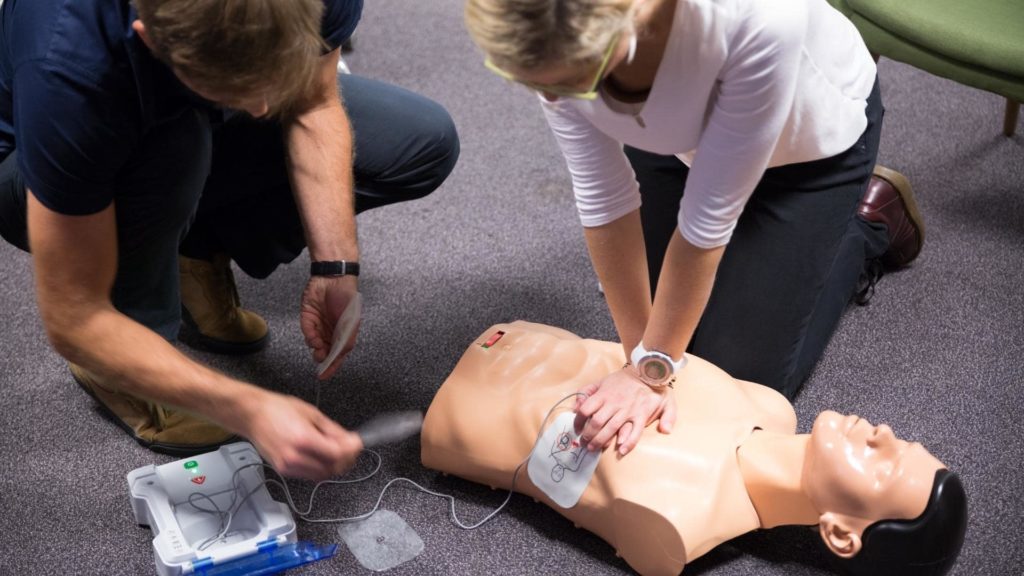
Two people are kneeling on the floor practicing CPR on a training mannequin. One person is performing chest compressions, while the other is using an AED. The mannequin is placed on a gray carpeted surface.

The Online Only training does not provide you with a WSIB approved certificate, but an all-in-class or online blended training does.

Make sure that the course you use is offered by an accredited training agency with high standards and highly qualified Canadian Red Cross instructors. Find a training facility near you!

Register to Earn CPR Certification!

Find which CPR certification is best for you!

Register for our first aid courses, you are one click away.

What do You do in First Aid Training?

what do you do in first aid training

First aid training courses vary, but they give participants the chance to learn important skills to confidently help people in emergencies. In Canada, there are several levels of First Aid training, including Emergency First Aid and Standard First Aid.

For individuals who are not redoing a course to maintain their certification, these courses are designed to offer complete preparation on various important aspects of first aid training, including CPR. What do you do in First Aid training, though?

What You Should Know Before Attending a First Aid Course

First aid training courses welcome everybody and teach you important life-saving skills, giving you the knowledge and confidence to deal with any type of emergency. Whether you need to learn the skills for your workplace or personal reasons, they prove invaluable training.

There are several techniques you can expect to learn from the course, and you need no prior knowledge to learn everything required to get your first aid certification.

Preparing For the Course

You may feel that the course will prove too challenging for you to take everything in, and may be tempted to learn a few things beforehand. However, you don’t need to do anything to prepare for the course, because if you choose a good Red Cross training partner, you will learn everything required and how to practice it correctly.

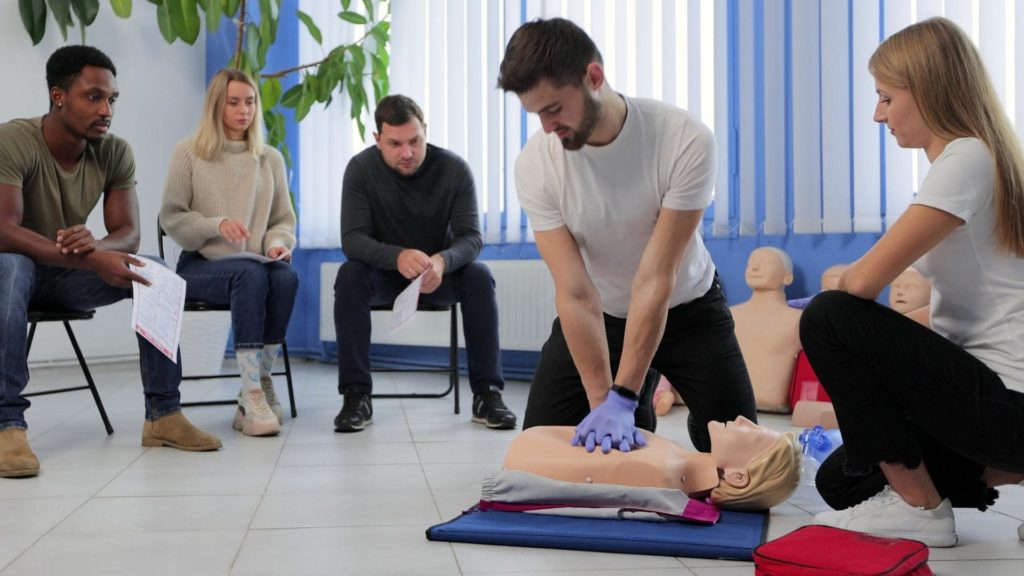
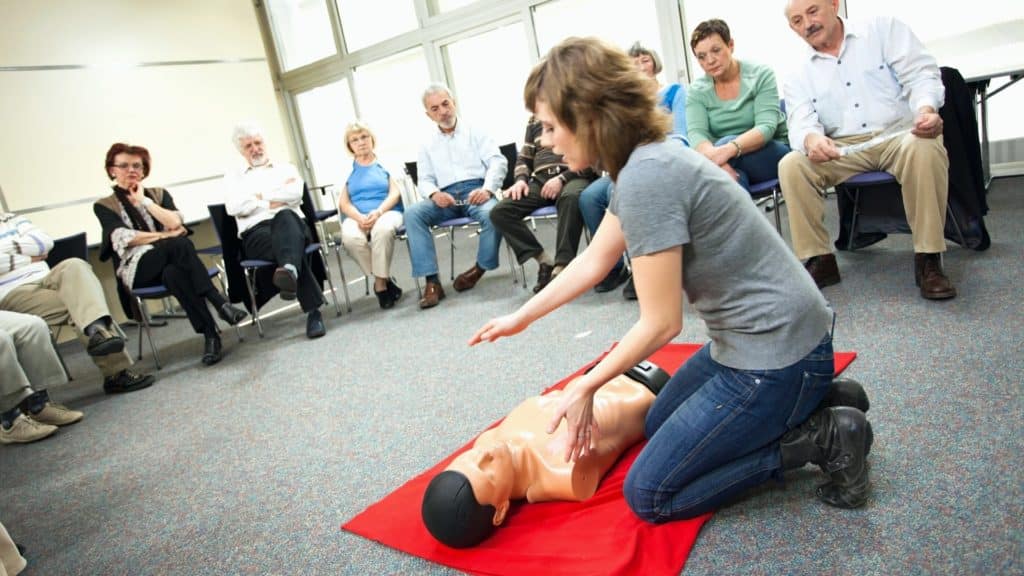
A group of people in a classroom setting are practicing CPR on a mannequin. A man in a white shirt and gloves demonstrates chest compressions, while others watch, holding instruction sheets. A red bag is on the floor nearby.

Wear Appropriate Clothing

At the course, you will participate in practical demonstrations, requiring you to kneel on the floor. We recommend you wear comfortable clothing and flat shoes. Read the requirements for the course you are interested in, because some disabilities may make it impossible for you to participate. You must be able to perform the hands-on skills to earn your certification.

Course Training

Depending on the course and the level you choose, there will be a mixture of practical and theory modules covered during the hours required to complete the first aid course.

You will learn to examine a victim, use a defibrillator, perform CPR, and how to control bleeding and trauma. These basic skills are important for you to deal with any potentially life-threatening situation until medically trained first responders arrive.

Students will learn how to treat scalds and burns, and assist someone who is choking. You will also be taught the importance of recording everything about the patient, and how to pass on this information to other responders. 100% attendance is required for the courses, and you need to get 75% or higher on your knowledge test. Your certification will be valid for three years.

Two women are in a classroom. One is demonstrating a technique on the other's arm using a white wrap. They are seated on chairs, and desks are visible in the background. The woman on the right is wearing a tiger-print shirt.

Inquire about CPR Training

Do you have questions regarding CPR training? Contact us today! Our customer service representatives are ready to assist you.

Training Providers

All course instructors are Red Cross trained and qualified, with extensive experience in passing on their knowledge and skills to you. They keep their qualifications up-to-date in order to teach.

What About Free Courses?

You can take advantage of free first aid courses in your area, and they are great to help you learn a few basic techniques. However, these are only an introduction to first aid, and the things you will learn are limited. Therefore, if you want in-depth knowledge and the peace of mind that you passed an assessment, choose a first aid course that meets the latest teaching standards and first aid protocols. This way, you will be geared to offer the right assistance in any emergency. If you require an official certificate that’s WSIB approved, free courses will not meet this expectation.

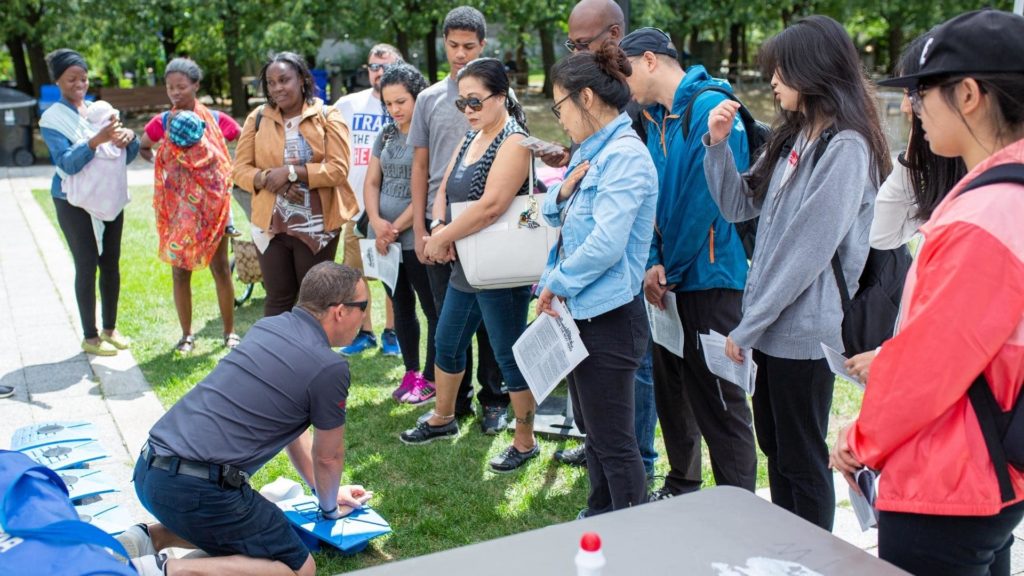
A man kneels on the grass demonstrating CPR to a group of attentive people. They are outdoors, surrounded by trees, holding pamphlets. A table with a water bottle is in the foreground.

Who Can Enroll in a First-Aid Course?

Anyone can enroll in first-aid training and CPR courses as long as they are able to perform the hands-on training and complete a multiple choice exam on their own. The American Heart Foundation even advocates children from as young as nine learn to perform CPR, even though they still don’t have the strength to perform adequate compressions on an adult. The skills learned at this age are easily retained for life, and can be used to save a life.

As adults, the type of course chosen will depend on if it’s needed to enhance your general knowledge to treat emergencies, needed for your workplace, or you want a career in first response or as a paramedic. You have to meet the particular course requirements and the course must be compliant with your local regulations.

What Can I Expect to Learn in a CPR or First Aid Course?

Whether you choose to take an all online, blended (with some online instruction), or a traditional instructor-led course, you will acquire the knowledge to save a life. For those participants who feel hands-on training is best, highly qualified instructors teach all the basics and use of the equipment. Course completion requires passing all levels of the course taken, and certificates are valid for up to three years.

Course Topics

The topics covered in the various first aid course include:

  • Role of the first aider
  • Check, call, care
  • Identifying the signs of sudden cardiac arrest, stroke, and angina
  • Understanding chain of survival behaviors
  • Lowering infection risks
  • Performing CPR/AED (Level C has additional training for children and infants)
  • Compression-only CPR
  • The importance of personal safety and standard precautions
  • Steps to assess an unresponsive person
  • Recovery position (including an unresponsive person)
  • Treatment for a choking adult, child, or infant
  • Assisting with medications
  • Internal and external bleeding
  • Caring for wounds

First aid certification courses are designed to teach you how to recognize most symptoms in medical emergencies and to treat people after various accidents or natural disasters. You also learn about the importance of offering help. You learn how to conduct an initial assessment in any situation, whether the individual is responsive or not. The training includes how to safely move injured people, and the importance of maintaining all the standard precautions, determining the best treatment, and offering the necessary protections.

What Do You Need to Do as a CPR or First Aid Provider?

The basic CPR and First Aid knowledge provide you with the skills needed to perform both CPR and First Aid. Depending on the course, you will learn to perform one-person CPR, rescue breaths and CPR, CPR with hands only, administering CPR as part of a team of two, and administering a shock from an AED.

On completing any First Aid course, certified individuals know how to:

  • Control bleeding
  • Handle someone with head, neck, or back injury
  • Assess and treat limb injuries
  • Respond to burns
  • Treat minor injuries
  • Identify and assess a patient when their mental status is altered
  • Helping someone experiencing breathing difficulty or shortness of breath (also how to use an EpiPen)
  • Respond to chest pain and discomfort
  • How to control increased or lowered blood pressure
  • Treating poisoning
  • Respond to environmental emergencies like hypothermia or heat stroke.

Practicing Everything Learned in CPR and First Aid Lessons

All training is excellent, but the best way for someone to reinforce the course work is with hands-on training. Instructors have the opportunity to watch trainees, correct them, and review their First Aid and CPR knowledge.

Gaining the Confidence to Help

First aid and CPR training give you the knowledge, skills, and experience to help people in all types of situations with confidence. The training also teaches you about what boundaries you must maintain and to understand any limits in your abilities.

Ready to complete your First Aid training? Join us at one of our 18 locations in Ontario! We provide training multiple days a week for your convenience. Get registered now and gain the confidence you need to save a life.

Register for First Aid Training!

We have 24 locations across Canada, find out which facility is closest to you and enroll today!

Why is First Aid Important?

why is first aid important

First aid knowledge and certification are important for you, your family and your community. Injuries and sudden illnesses are not uncommon, and first aid enables you to assist anyone in need. Basic first aid certification is easy to get, allowing you to offer initial assistance to people, whether the emergency is in your home, workplace, or a public space.

The simple techniques and procedures you are taught are invaluable when it comes to helping others. You are taught to offer assistance with limited equipment until professional medical assistance arrives.

First aid training is often put off by people who say they don’t have the time, are unsure where to get the basic training, don’t believe they will ever need it or feel they already have enough first aid knowledge.

Learning about the three P’s is what everyone learning to administer first aid is taught. These essentials are to preserve life, prevent further injury and promote recovery. Don’t put off learning these important life-saving skills.

A man sits on the ground next to a fallen bike, holding his knee with a pained expression. A woman in athletic gear tends to him with a first aid kit. Both wear helmets, and they're surrounded by lush greenery.

Why Is It Important to Know and Use the Fundamentals of First Aid?

The fundamentals of first aid training allow trained people to assist an injured or ill person during several types of emergencies.

These situations include the ingestion of a harmful substance, someone suffering a heart attack, seizure or stroke, and several types of accidents, whether in the workplace or a motor vehicle accident. Additionally, first aid training prepares you on how to react if anyone needs assistance during a natural disaster.

  • As a trained and knowledgeable person, even if it’s just in the basics of First Aid, you can assist an injured person until the arrival of emergency responders. Communities and workplaces benefit when a large majority of people within them have first aid training.
  • First Aid knowledge also benefits the injured or ill party and all those around them. Whether people are directly or indirectly involved in an emergency, first aid diminishes its severity.
  • First Aid knowledge and training are beneficial to everyone, but it is even more valuable for anyone who lives or works with individuals requiring ongoing special attention or treatment, including children, chronic illness sufferers, those with physical or mental disabilities, the elderly, persons with disorders such as epilepsy, anyone working in a dangerous environment (like factories and construction sites) or at recreational facilities.

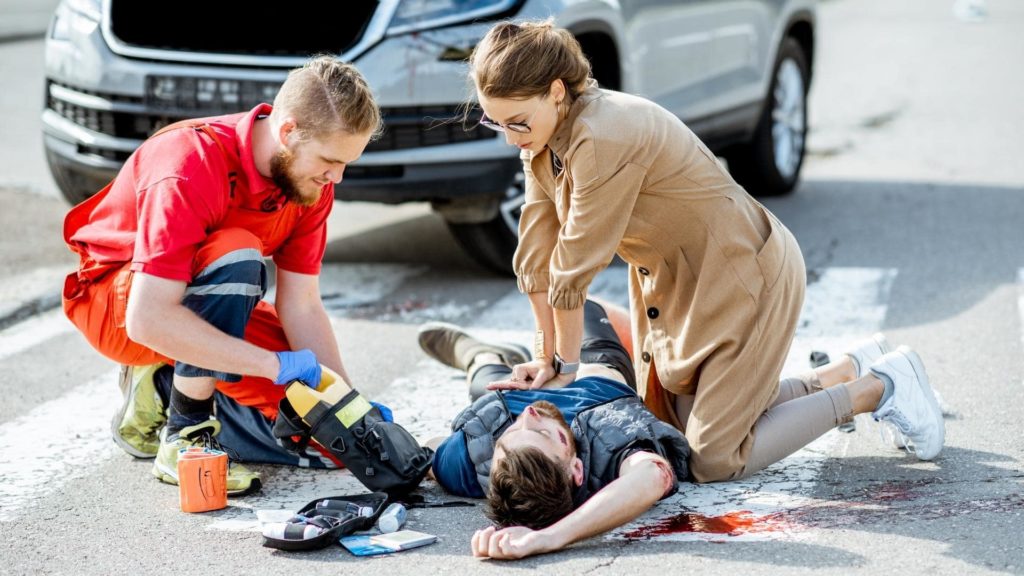
A paramedic and a woman attend to an injured person lying on a crosswalk near a car. The paramedic is checking the injured person's arm, while the woman is supporting their head. Medical supplies are scattered on the ground.

Inquire about CPR Training

Do you have questions regarding CPR training? Contact us today! Our customer service representatives are ready to assist you.

What Makes First Aid in Schools So Important?

Children are at the most active phase of their lives and are often the victims of medical emergencies. That’s why first aid training is essential for everyone in a school setting, even the children.

Schools are the ideal setting for minor and major accidents like falls, tripping, children colliding, and swimming pool accidents. Whether the injuries from these are slight or severe, first aid is vital to helping the victims by helping the first aider assess the situation, handle any injuries, and to call for emergency assistance if needed. First aid can not only prevent the injured child’s condition from getting worse but can save their life.

Staff and students at schools should be equipped with basic first aid skills and CPR training to prevent injury-related mortality rates, promote safety and prevent student disabilities caused by injuries.

School first aid training also helps students become better-equipped adults, both in their homes and their communities.

An adult applies a bandage to the knee of a young girl sitting on a counter. The girl, wearing a pink shirt and denim shorts, looks at the bandage with a concerned expression. The adult is dressed in a light-colored top.

These are the essential first aid basics for school children:

  • Learning the skills of staying safe and healthy
  • Checking the safety of the area of an emergency
  • Learning to keep calm in an emergency
  • Keeping the injured person alert while calling for professional emergency help
  • Properly learning how to get details from the injured person about their condition, and describing it to others
  • Learning how to perform CPR
  • Treating burns, cuts, and scrapes
  • Applying pressure to a wound to stop bleeding
  • Basics of wound bandaging
  • Relieving an allergic reaction
  • Stopping a nosebleed

What Should You Put in Your First-Aid Kit at Home?

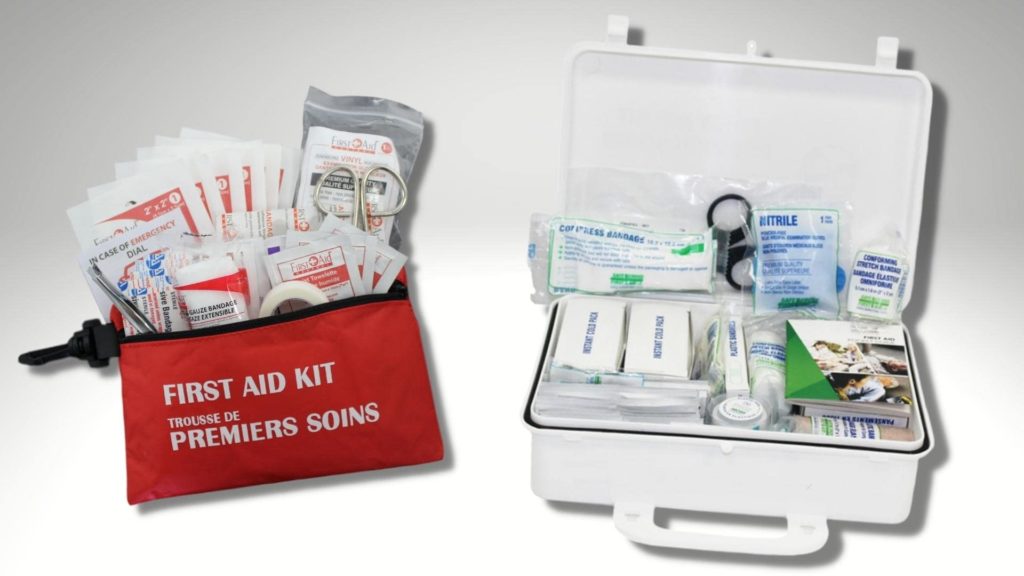
Offering first aid to someone who is ill or injured brings them immediate relief. The training itself is the first tool required, but a well-stocked first-aid kit is also important. Whether this is for the home, a business, school, vehicle, or community environment, it should always be kept somewhere easy to find.

For your home first aid kit, you can either buy one or prepare a container with all the essentials yourself. Remember, it must be sturdy, have dividers for better organization, and should be easy to carry and open.

Include the following in your first-aid kit:

  • Up-to-date first-aid manual
  • List of emergency phone numbers
  • Different sizes of sterile gauze pads
  • Medical adhesive tape
  • Several sizes of adhesive bandages
  • Elastic bandage
  • Splint
  • Antiseptic wipes
  • Antibiotic wipes
  • Antiseptic solution
  • Anti-itch wipes
  • Ibuprofen and acetaminophen to treat minor and severe fever and pain
  • Tweezers
  • Sharp scissors
  • Safety pins
  • Instant cold packs
  • Calamine lotion
  • A bottle of ethyl alcohol or alcohol wipes
  • Thermometer
  • Some latex gloves
  • CPR mouthpiece

You can also include a tooth preservation kit and a flashlight with extra batteries. Make sure everyone at home knows where to find the kit, including babysitters and caregivers, and replace the ointments and medications when they expire. Also, replace other items that are used up or missing.

Conclusion

First aid training gives you the confidence to deal with any emergency. Since first aid techniques do change, make sure you keep up to date with them, ensuring you can properly deal with any situation. Lastly, first aid saves both lives and money, and its proper administration reduces recovery times, prevents serious infections, and makes places safer.

If you’re ready to register for a First Aid & CPR/AED training course in Ontario, you may register at one of our 18 locations. Gain the confidence and skills required to save a life.

Register for First Aid Training!

We have 24 locations across Canada, find out which facility is closest to you and enroll today!

5 Benefits of the Virtual Babysitting Program

5 benefits of virtual babysitting

The Red Cross Virtual Babysitting Program is available to pre-teens and teens, ages 11 to 15 years old. There is also a course for children ages 9 to 13 called Stay Safe. Both the Babysitting and Stay Safe training courses are available online in a virtual format. These youth courses are designed to allow participants to complete their training at home. There are multiple benefits of the Virtual Babysitting program which will teach you (or your child) important life skills.

Babysitting training prepares participants to become responsible caretakers of children. Once the virtual Babysitting program is completed, applicants will have a full understanding of how to care for a young child and treat common emergencies. They also know all about complete child safety and how important routine is in children.

Those who complete the full virtual babysitting program earn a Canadian Red Cross certificate proving their skills. Let’s talk about 5 Benefits of the Virtual Babysitting program!

5 Benefits of the Virtual Babysitting Program For Your Business

The Virtual Babysitting Program is between 7 and 8 hours long and is held over four days. Each day will consist of a 90 minute online session, followed by 30 minutes of at-home work.

These are the five huge benefits of completing the Red Cross Virtual Babysitting Program if you are looking into building a babysitting business:

1. Succeeding in the Interview Process

Getting a good babysitting job doesn’t only depend on your skills but also on how you conduct yourself in an interview. One of the benefits of completing a virtual babysitting course is that you learn about how important it is to conduct yourself in the interview while also asking all the right questions. Participants are taught how to create a resumé and create business cards so that they can successfully manage their babysitting business. Don’t forget that you will receive a babysitting certificate from the Canadian Red Cross which already is a huge plus for you.

A young woman in a teal shirt sits on a sofa, smiling and talking to an older woman who is holding a pen and notepad. The older woman, seated on another chair, is listening attentively. A lamp is on the table between them.

2. Meeting Customer Expectations

Learning to meet customer expectations is another vital benefit of the course. Besides being dressed correctly when arriving for the job, other customer expectations include being on time and having clear communication with the parents about their children’s needs. You are taught to ask the right questions about what to expect, find out if there are any special circumstances (allergies, medications, etc.). Participants of the course also learn how to survey the home at first, helping them to understand where dangers may lie.

Become a Certified Babysitter!

Join our Babysitting Course and learn essential skills for caring for children safely and responsibly. From basic first aid to engaging activities, our training prepares you to be the best babysitter you can be!

3. Learning the Needs of Every Age Group

You always need to have a genuine interest in the children you are going to look after, and the course teaches you how. Each age group you are likely to care for has different needs and challenges, and the virtual program is geared to teach you how to communicate with them and to organize the appropriate and fun activities. Once the course is completed, young babysitters know how to deal with crying and tantrums and how to care for children from babies to school-age children.

A young girl with a pink bow in her hair sits on an outdoor patio, lovingly holding and looking at a baby in a striped onesie. The baby lies on her bent legs, and both appear content in a serene setting.

4. Confidently Meeting the Challenges of the Job

For younger babysitters, the lessons of the program teach them how to give others direction and to deal with situations confidently. Babysitters face several challenging issues, and these include mealtime, structured playtime, and bedtime. The program teaches them to support younger children emotionally to ensure these challenging issues are dealt with successfully. Every participant learns how to react confidently to any emergency, including bleeding, burns, choking, and poisoning.

5. Understanding the Value of Money Earned

Teens and younger children becoming babysitters can earn a substantial allowance. Learning the value of money, how to spend it, and how to budget is essential as they become part of the economy.

A young girl in a pink dress is placing a coin into a pink piggy bank, while an older woman smiles and holds another coin. They are sitting on a couch, engaged in a playful and educational activity.

Conclusion

Providing a safe environment for younger children is essential to every parent, and ensuring they have the correct care is often a challenge. By encouraging younger children to follow a babysitting program, children can provide a safer environment for younger children in their care. Babysitting is a profitable and rewarding job, and the correct training makes it enjoyable.

Register for First Aid Training

Register today for a First Aid Training course and learn how to deal with emergencies and keep your loved ones safe! Check out our facilities and book your spot now.

How to Recertify Your First Aid Training in Canada

how do i recertify my first aid training

A valid first aid certificate is very important if you require it for your workplace, school program, or just want to help people in any emergency. Recertification helps to keep your training updated and ensures that you don’t forget the skills already learned. If you want to continue practicing your first aid skills confidently if someone is hurt or feeling ill, then recertification is vital.

A common question we receive is, “how do I recertify my first aid training?”

Validity of First Aid Certificates in Ontario

Canadian Red Cross First Aid Certificates are valid for 3 years, but others may expire in less. It is vital to ensure that the recertification training is completed before your certificate expires to maintain your certification. It is important to keep your first aid and CPR/AED certificate up-to-date in order to keep your job, continue a schooling program or for your own personal knowledge.

In Ontario, recertification courses are available for some training levels. These include CPR/AED Level C, Standard First Aid & CPR/AED Level C, First Responder and Emergency Medical Responder.

Other certificates, such as CPR/AED Level A or Emergency First Aid & CPR/AED Level C, require that you register for a full training course because recertification courses are not allowed.

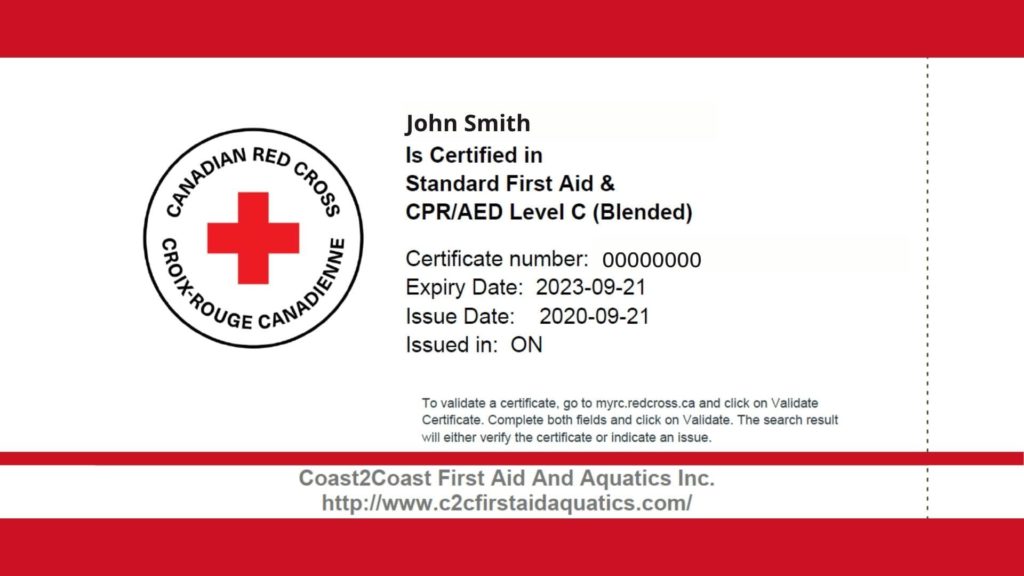
A Canadian Red Cross certificate for John Doe, certified in Standard First Aid & CPR/AED Level C (Blended). Includes certificate number, expiry date, issue date, and issuer location (ON). Coast2Coast First Aid and Aquatics Inc. website is listed.

First Aid Recertification

Any approved first aid provider in Ontario can offer recertification courses. There are several types of courses available, depending on the type of recertification required.

Coast2Coast partners with Canadian Red Cross to offer several first aid and CPR/AED courses and recertification in over 15 locations in Ontario, including Toronto. Recertification is a very easy process. Once you have completed the course, you will receive your recertification which is valid for 3 years.  

Stay Certified, Stay Prepared!

Renew your skills with our recertification courses at Coast2Coast! Keep your knowledge up to date and ensure you’re ready to respond in emergencies. Our expert instructors will guide you through the latest techniques and best practices.

Online Blended

CPR/AED Level C Recertification and Standard First Aid & CPR/AED Level C Recertification can both be done in an online blended format of the course which allows you to do the theory online and the practical training in class.

This is a great way to get your recertification because you can have access to the theory within a few hours of registering. It reduces the amount of time you spend in class and allows you to study at your own pace.

A person wearing a bracelet and a ring types on a laptop keyboard. Their hands rest on the keyboard, and a smartphone is partially visible in the background. The person is wearing a light-colored jacket.

CPR/AED Level C Recertification

Duration: This course requires 2 hours of online and 2.5 hours of in-class training.

Recertification Requirements:  For recertification, you need proof of your valid Red Cross Certification. Your current certificate must be CPR/AED Level C or higher to be eligible. You will also need 100% attendance and a score of 75% in the test consisting of multiple choice questions.

Validity of Recertification: Once issued, the certificate is valid for 3 years.

Standard First Aid & CPR/AED Level C Recertification

Duration: This course requires 4 hours of online and 4 hours of in-class training.

Recertification Requirement: Proof of valid Canadian Red Cross Certification from a full training course is required (your current certificate cannot be from a recertification course). You also must have 100% attendance of the course and pass the multi-choice knowledge test with a score of at least 75%.

Validity of Recertification: The recertification is valid for 3 years.

All-In-Class

This recertification course is ideal for those who wish to complete their training fully in-class. A Canadian Red Cross instructor helps you refresh your first aid skills.

a person doing cpr on a mannequin

CPR/AED Level C Recertification

Duration: This is a 4-hour course.

Recertification Requirements: You require proof of valid Canadian Red Cross Certification to participate in the course. Your current certificate must be CPR/AED Level C or higher to be eligible. Recertification requires 100% attendance of the course and that you score 75%, or more, on the multiple-choice knowledge test

Validity of Certification: Your recertification is valid for 3 years.

Standard First Aid & CPR/AED Level C Recertification

Duration: The course takes 8 hours.

Recertification Requirements: You must already have a valid Canadian Red Cross Certification from a full training course to prove you are eligible for the recertification (current certificate cannot be from a recertification course). As with all courses, 100% attendance of the course is essential. You require a score of 75% for the multiple choice exam.

Validity of Certification: Your recertification certificate is valid for 3 years.

Conclusion

It takes just a few minutes to register for the Canadian Red Cross recertification that is valid for 3 years. Simply provide your current Canadian Red Cross certificate when you attend your training! Registration is easy: select a training location and choose the option for Recertification. We have training facilities in Toronto, Mississauga, Scarborough, London, Ottawa and more! You may also call our main office at our toll-free number: 866-291-9121.

We hope this blog answers “how do I recertify my first aid training?” If you have any questions, please do not hesitate to contact us. We can’t wait to see you!

Register for First Aid Training

Register today for a First Aid training course and learn how to deal with emergencies and keep your loved ones safe! Check out our facilities and book your spot now.

5 Reasons First Aid Is A Must For All Canadian

5 reasons first aid training is a must for every canadian

First Aid is the immediate care given to an injured or sick person, ensuring the victim is kept alive. This immediate response also makes sure they avoid future disabilities and minimize the effects of their injury or illness.

In Canada – every workplace – depending on the types of hazards, number of employees, and its distance from a place where proper medical assistance can be offered is required to provide a certain level of first aid training to its employees.

Despite the workplace regulations, here are the 5 reasons first aid training is a must for every Canadian:

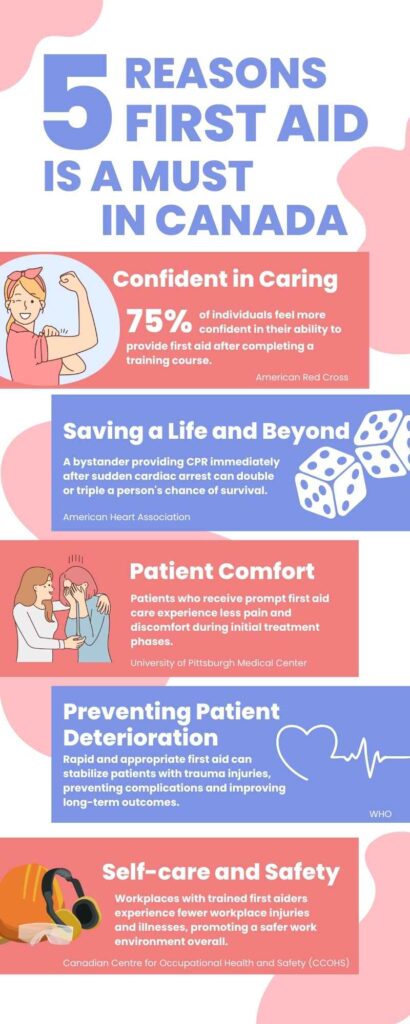
infographic displaying the different reasons first aid is a must in canada

1. Becoming Confident in Caring

When faced with a work-related or other emergency, people with first aid training are better equipped to take charge of a situation to help prevent a deterioration in the condition of the victim. Even basic first aid knowledge provides enough abilities and skills to administer first aid in most emergencies. Additionally, first aid training also offers every person the boost required to get them through their daily lives in non-medical related work.

2. Training to Save a Life and Beyond

First aid training helps save lives by allowing trained people to immediately give appropriate treatment, helping to reduce the recovery time. For victims, this can mean the difference between a shorter or longer recovery time.

A first aid course teaches people to remain calm in emergencies. They also learn simple acronyms, helping them recall the steps required to ensure the victim is given the treatment required in the right order. First aid training makes everyone more confident and comfortable, giving them effective control in any situation.

An elderly woman looks at her smartphone, appearing concerned. Next to her, an elderly man is leaning back on a couch, eyes closed, with one hand on his chest.

Inquire about First Aid & CPR Training Course

Certify for First Aid training  learn skills that increase their confidence and willingness to respond to others in a crisis as you complete the course with us. Call our toll-free number to know more.

3. Offering Patient Comfort

Pain and suffering are not only felt by those patients requiring hospitalization after the first aid treatment. In some accidents, or when a patient is injured or feeling ill, knowing how to respond provides immediate relief and comfort. First aid training includes simple techniques to help relieve discomfort. Some examples of these include the correct application of an ice pack, using appropriate bandages, providing emotional support with a calm demeanor that allows patients to feel secure and less anxious.

4. Preventing Patient Deterioration

Some types of accidents and illnesses require immediate first aid care to prevent the situation from deteriorating (in some instances rapidly). People trained in first aid can provide immediate basic care by helping to stabilize a patient until the arrival of emergency medical services. During a first aid training course, trainees are taught to use basic household items in the absence of a first aid kit.

One of the most important aspects of first aid training is the collection of information about the cause of the incident and the patient’s condition. Once emergency services arrive, this information is valuable in saving time and ensuring the patient receives the correct treatment immediately. This makes someone with first aid knowledge an important person in the survival link.

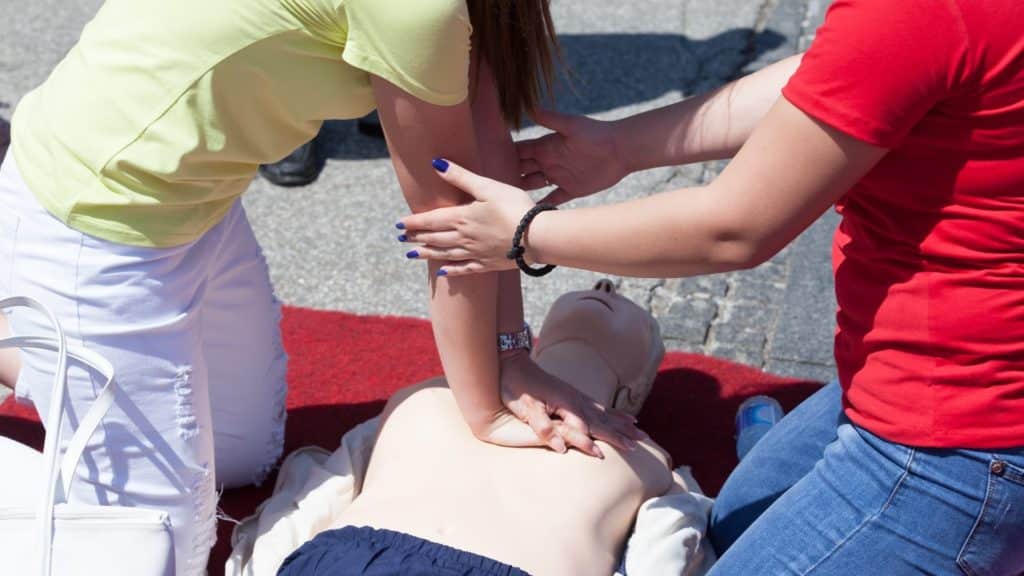
Two people demonstrate CPR on a manikin lying on a red mat outdoors. One person in a yellow shirt performs chest compressions, while another in a red shirt observes closely, adjusting the technique if needed.

5. Self-care and Safety

Besides caring for others, a first aid course also teaches participants to look after themselves and to make safety a priority. This means they can keep safe while placing themselves in a position to help others.

Healthy living and lifestyle habits are ingrained, helping first aiders make the correct choices to help decrease potential risks to illnesses like heart disease. They are also taught to look out for potential hazards in their environment.

Be Prepared

The choice of first aid training depends on the course required by the individual or their employer. Whatever the course, trainees are prepared to face various situations involving emergencies, allowing them to provide rapid and knowledgeable treatment with the confidence required.

Now you are ready to register for a first aid training course! At Coast2Coast, we provide multiple training courses throughout Ontario. Take a look at our training facilities and find one close to you.

Register for a First Aid & CPR Training Course

Choose from any of our locations across Ontario and gain the knowledge and skills to save a life!

What Qualifications do I need to be a Security Guard?

what qualifications do i need to be a security guard

There are many reasons why you may choose a career as a security guard in Canada, and it certainly is an exciting and rewarding job. But you may ask yourself, “what qualifications do I need to be a security guard?” Becoming a licensed security guard requires you to meet specific criteria.

What work does a security guard do?

Depending on the industry you are hired in, your role as a security guard may vary. Tasks include:

  • Securing premises by patrolling and monitoring. Often you may need to monitor the premises via closed-circuit television (CCTV).
  • Guarding cash or valuables in transit in a security vehicle, moving between locations.
  • Securing airports, hospitals, and other public and private places by guarding boundaries, searching aircraft, monitoring passengers and luggage.
  • Supervising entrances of large organizations.
  • Private bodyguards, protecting one or a group of people.

What do you need to get a security guard license?

Throughout Canada, training is one of the most important components for getting a security guard license. Once you complete the required hours of training, you write a test which you must pass. On receiving your results, you can apply for a security license. The requirements are almost the same for each province but check before taking the steps to obtain your license.

1. Requirements for becoming a security guard

You don’t need any specific academic qualifications to become a security guard, but you do need a good standard of education. Your role as a security guard will require that you are more than just being fit since you need to meet certain responsibilities that require basic math, reading, and writing skills. Therefore, a high school diploma is a basic requirement if you are seeking an entry-level security job.

To qualify, you need to be over the age of 18 and must pass criminal record and identity checks. You must also be able to work legally in Canada.

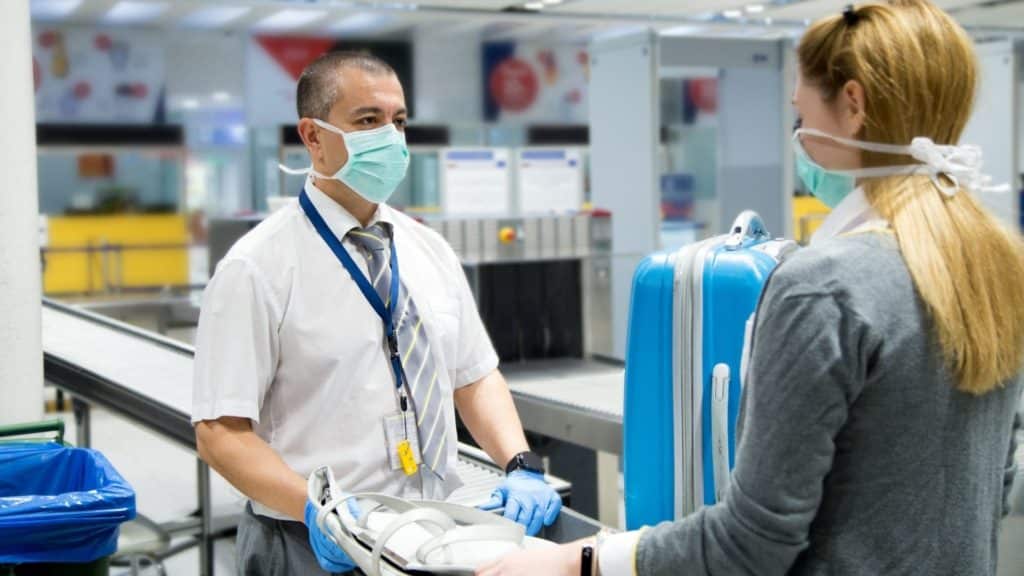
A security officer wearing a mask and gloves speaks with a traveler, also wearing a mask, at an airport security checkpoint. The traveler is holding a suitcase and a laptop tray. Conveyer belts and security equipment are visible in the background.

2. Training requirements

If you are an applicant for a security and bodyguard license, you must complete a proper training course for security guards. This training is available in an online format through Coast2Coast, several colleges, and private law enforcement schools.

According to the Ministry of Community Safety and Correctional Services, a 40-hour Security Guard Preparation Course is mandatory. This can also be taken online. The course must contain 12 modules, including an introduction to the security company world, the code of conduct, and other basic procedures. The course also includes report writing, health and safety, emergency response, Canadian legal system, legal authorities, effective communications, sensitivity training, use of force theory, and first aid certification.

In addition to your Security training course, you must also be certified in Emergency First Aid & CPR/AED Level C. Enroll in a Security License training with Coast2Coast and receive a $10 discount on your First Aid training!

3. Applying for and writing the test

Once you complete your required training hours, you will receive a Training Completion Number (TCN) which you will use to book and write the Ministry approved Security License test. The key to passing the exam is to go there prepared, so use all the resources available to you to study for the test. Every province has a website where you can see what the passing grade requirements are for each one. At the exam, you must provide valid identification, and the test is typically 75 minutes long.

A man in a white shirt is seated at a desk, monitoring security footage on multiple screens. He holds a walkie-talkie, appearing focused on the surveillance images displayed in front of him.

4. When can you start working as a security guard?

You will be notified immediately after you pass the exam, and a copy of your security guard license is mailed to you. We recommend that you ask for a digital copy of the license, allowing you to work immediately. The mailed copy usually takes about eight weeks to arrive.

5. Career prospects

As a security guard, you have plenty of opportunities to progress in your career by obtaining credentials that will reinforce your knowledge in various areas. Most certifications require a certain number of work hours before writing the test to qualify. Additionally, there are also requirements for renewing a license every two years, always on your birthday.

Remember: It is important to always carry your license with you when on duty.

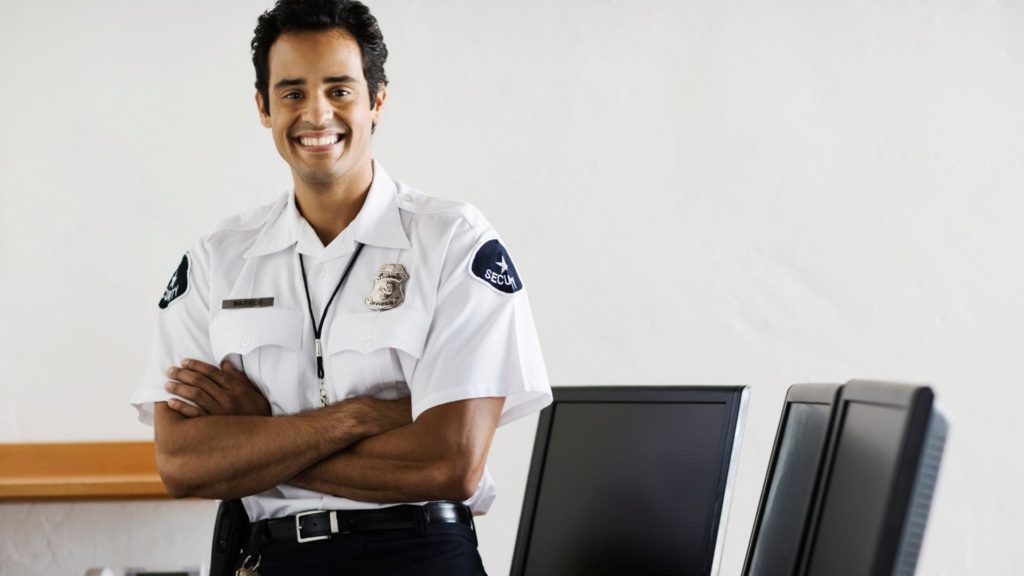
A security guard in a uniform with a badge stands smiling inside an office, arms crossed. Two computer monitors are on a desk beside him. The background is a plain, light-colored wall.

Register for a Security Guard License

Coast2Coast First Aid & Aquatics offers Security License training in Ontario in association with one of our ministry approved training partners! Start your path to becoming a security guard and enroll in the necessary training today!