

First aid courses are important because they empower individuals to respond to life-threatening emergencies before professional medical help arrives. Roughly 80 percent of out-of-hospital cardiac arrests happen in private residences, and every minute without CPR reduces survival odds by 7 to 10 percent. First aid training builds the skills, confidence, and muscle memory needed to act decisively in cardiac arrest, choking, allergic reactions, and environmental emergencies. In Ontario, WSIB Regulation 1101 also requires certified first aiders in most workplaces.
✓ WSIB Approved Certification
First Aid Training in Toronto
Emergency First Aid, Intermediate / Standard First Aid, CPR Level C, Child Care First Aid, and BLS at multiple GTA locations. Weekday, weekend, and evening formats available.
Why First Aid Courses Are Important: The Core Case
In a city as large and active as Toronto, medical emergencies are an unavoidable part of daily life. From the bustling downtown core to the quiet suburban streets of North York, Scarborough, and Etobicoke, accidents, injuries, and sudden medical crises happen every day to people of all ages and backgrounds. The question is not whether you will ever encounter such a situation, but whether you will be prepared to respond when it happens.
First aid training is important because it saves lives, prevents further injury, and promotes recovery in the critical minutes before professional medical help arrives. First aid training in Canada teaches participants how to recognize emergencies, provide immediate care, and support a person until professional help arrives, covering skills such as CPR, AED use, and managing severe bleeding. With over 35,000 out-of-hospital cardiac arrests in Canada annually, and data showing that roughly 80 percent of out-of-hospital cardiac arrests happen in private residences, the case for widespread first aid knowledge has never been stronger.
Effective and prompt first aid stabilizes patients and prevents complications, minimizing the strain on local emergency services and hospital resources. Administering correct basic care avoids unnecessary emergency room visits and optimizes public hospital resources. Quick intervention stops injuries from deteriorating and reduces permanent disability risks. Treating wounds quickly prevents severe infections, and immediate care for sprains and strains can significantly reduce a patient’s overall recovery time.
When a large portion of the population is trained, communities become inherently safer. Having trained individuals in first aid within a community enhances overall safety and preparedness, allowing for immediate assistance until professional help arrives. Trained individuals can also manage chaos during large-scale emergencies, providing coordinated support before emergency medical services arrive. The first few minutes following a major medical event are the most critical. Immediate CPR or choking interventions prevent brain death within minutes.

Aid Training and the Bystander Effect: Breaking the Freeze Response
One of the most significant barriers to emergency response is the Bystander Effect. In a high-density city like Toronto, people often assume someone else will call 911 or step in to help. This hesitation is rarely due to a lack of compassion. Without training, the human brain often freezes under the pressure of a medical crisis.
First aid training fundamentally rewires this response. By practicing on high-fidelity manikins and running through realistic scenarios, you develop muscle memory. Training builds cognitive resilience, providing the mental clarity needed to act decisively during stressful events. First aid training enhances critical thinking and problem-solving skills, as participants learn to assess situations quickly and make decisions under pressure, which is valuable in emergencies and everyday life.
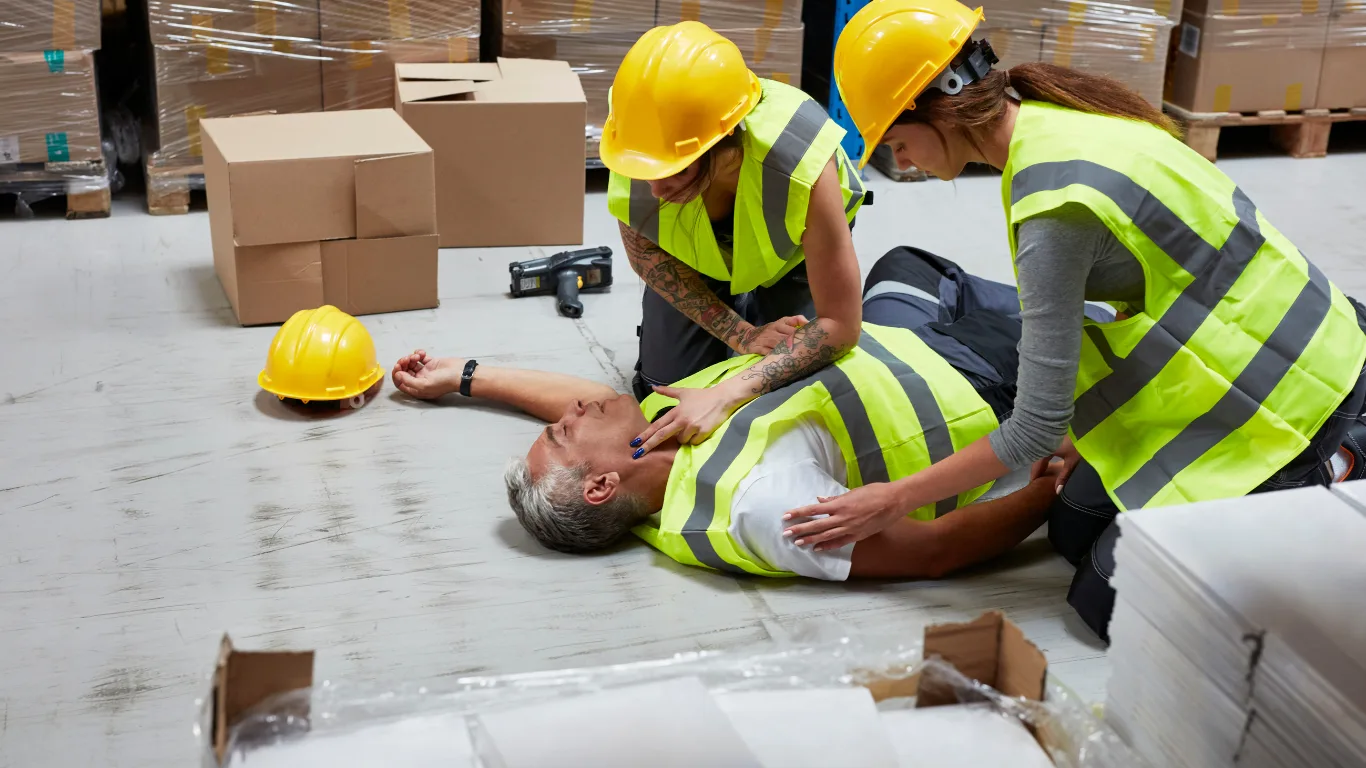
When an emergency occurs, trained individuals take charge. They direct bystanders to call 911, locate the nearest AED, and maintain high-quality CPR until professional rescuers arrive. This rescuer mindset transforms a bystander into a lifesaver and ensures that even strangers receive immediate care in a public emergency.
Basic First Aid Skills Every Person Should Know
Basic first aid skills include performing CPR, managing choking incidents, treating burns and fractures, and recognizing signs of medical emergencies like heart attacks and strokes. Emergency First Aid courses cover essential topics such as CPR, choking response, and wound care, making them ideal for low-risk workplaces and personal preparedness. Intermediate / Standard First Aid courses include comprehensive training on head, neck, and spinal injuries, sudden medical emergencies, and environmental emergencies, and are often required for many workplaces and childcare providers.
First aid training promotes safer behavior by educating individuals about potential risks and how to prevent further harm during emergencies, leading to a more safety-conscious environment. Proper early care prevents injuries from worsening over time. Immediately available first aid can significantly reduce permanent disability risks.
Cardiopulmonary Resuscitation and CPR AED Training
Cardiopulmonary resuscitation is one of the most critical skills taught in any first aid course. When a person experiences sudden cardiac arrest, the brain begins to suffer irreversible damage within four to six minutes. Immediate CPR keeps blood moving to the brain and vital organs until an AED or paramedics arrive.
CPR and AED training teaches participants to recognize cardiac arrest, deliver high-quality chest compressions at 100 to 120 per minute, deliver rescue breaths, and use an Automated External Defibrillator. AEDs are now installed in many public buildings, transit stations, and sports facilities across Toronto. Knowing how to use one quickly in the first minutes after cardiac arrest is one of the most life-saving skills any person can have.
Choking Incidents: Responding to Airway Obstruction
Choking incidents are among the most common life-threatening emergencies in everyday settings. A partial or complete airway obstruction can become fatal within minutes if not addressed. First aid training teaches participants to distinguish between a mild and severe obstruction, deliver back blows and abdominal thrusts for conscious choking victims, and manage unconscious choking with CPR. These skills are especially critical for parents, caregivers, and anyone who regularly spends time with young children or older adults.
Allergic Reactions, Burns, and Environmental Emergencies
First aid training covers a broad range of emergencies beyond cardiac arrest. Allergic reactions, including anaphylaxis, require immediate recognition and epinephrine auto-injector assistance to prevent a fatal outcome. Burns require proper cooling and dressing to prevent infection and reduce recovery time. Environmental emergencies including hypothermia, heat exhaustion, and heatstroke are particularly relevant in Toronto’s climate, where temperatures range from extreme cold in winter to dangerous heat in summer. Intermediate / Standard First Aid courses cover all of these scenarios with hands-on practical skills sessions.
Learn This Skill in a Real Classroom
Intermediate / Standard First Aid with CPR Level C
Two-day comprehensive Canadian Red Cross course covering CPR, AED, choking, spinal injuries, environmental emergencies, and multiple casualty management. Meets WSIB Regulation 1101 for most Ontario workplaces.
Aid Certification and Workplace Safety in Toronto
First aid training enhances safety in schools and workplaces by equipping individuals with the skills to respond effectively to emergencies, thereby reducing the severity of injuries and improving outcomes. Trained individuals in first aid can act as community protectors, providing immediate assistance in emergencies which contributes to safer environments in schools and workplaces.
Many workplaces require employees trained in first aid as a condition of employment or regulatory compliance. For employees, having a current first aid certification means you are eligible to serve as your workplace’s designated first aid responder. For employers, investing in group first aid training for their Toronto workforce ensures compliance, reduces liability, and creates a safer environment for everyone. First aid courses can be delivered in various formats including blended learning options that combine online theory with hands-on skills sessions, allowing for flexible training schedules that accommodate busy workplaces.
Aid Courses and Regulatory Bodies: What Ontario Requires
Ontario’s Workplace Safety and Insurance Act and WSIB Regulation 1101 establish clear requirements for first aid coverage in the workplace. Employers must ensure that certified first aiders are on staff, properly equipped first aid stations are maintained, and emergency procedures are documented. Regulatory bodies including WSIB and the Ministry of Labour conduct workplace inspections and can issue fines for non-compliance.
First aid certification in Canada is typically valid for three years, after which renewal is required to stay current with updated guidelines and best practices. The Canadian Red Cross is recognized by regulatory bodies across all Canadian provinces including Ontario and Nova Scotia as a trusted certification provider.
First Aid Certification for Students and Schools
First aid certification enhances student resumes by demonstrating a commitment to safety and personal development, making them more attractive candidates for part-time jobs and internships. Students trained in first aid can provide immediate care in emergencies, which can significantly improve outcomes for injured individuals and potentially save lives within the school community.
First aid training enhances safety in schools by equipping students and staff with the skills to respond effectively to emergencies. Students trained in first aid become assets to their school community, capable of responding to medical emergencies affecting classmates, teachers, and visitors.
Builds Confidence and Critical Thinking in Younger Students
First aid certification builds confidence and preparedness in students, enabling them to handle emergencies calmly and effectively, which can lead to improved self-esteem and personal development. Younger students who learn first aid develop a lifelong sense of responsibility toward others. Organizations provide straightforward training paths to acquire foundational first aid skills, and many Toronto schools now include first aid awareness in their safety curriculum.
Train Your Whole Team
Private Group Training for Toronto Workplaces
Coast2Coast brings certified instructors and all equipment directly to your Toronto workplace. Ideal for offices, construction firms, daycares, schools, and healthcare facilities. Weekday, evening, and weekend scheduling available.
Aid Skills for Families: Protecting the People You Love
The most compelling reason to take a first aid course is the ability to protect the people you care about most. Roughly 80 percent of out-of-hospital cardiac arrests happen in private residences, which means family members are the people most likely to need your help. A parent who knows how to respond when a child chokes, a spouse who can perform CPR during a cardiac arrest, or an adult child who can manage a fall injury for an aging parent: these are the real-world scenarios that first aid training prepares you for.
Toronto families face a wide range of potential emergencies depending on the season and their activities. Winter brings risks of hypothermia, frostbite, and falls on icy surfaces. Summer introduces heat-related illnesses, water safety concerns, and sports injuries. Year-round, choking incidents, allergic reactions, cardiac events, and household accidents remain constant risks. A Intermediate / Standard First Aid course covers all of these scenarios and equips you to act quickly, stay calm, and provide immediate care even when professional medical help is minutes away.
For parents with young children, Child Care First Aid provides focused training on pediatric emergencies. Knowing how to differentiate between a mild cough and a partial airway obstruction in a toddler can prevent a terrifying outcome.
Aid Certification Renewal and Staying Current
First aid certification in Canada is typically valid for three years, after which renewal is required to stay current with updated guidelines and best practices. The renewal process usually involves taking a refresher course that covers the latest guidelines and techniques in first aid. Renewal courses are shorter and less expensive than initial certification courses.
While the standard renewal cycle is three years, students should refresh their knowledge regularly to remain competent in handling emergencies. Many employers in healthcare, childcare, and construction require annual skills refreshes even within the three-year validity period. Setting a calendar reminder three months before expiry ensures you find a convenient course date before your credentials lapse. Blended learning options make renewal accessible for busy schedules.
Key Takeaway
First aid courses are important because they empower individuals to save lives before emergency medical services arrive. Roughly 80 percent of cardiac arrests happen at home. Every minute without CPR reduces survival by 7 to 10 percent. First aid training builds muscle memory, cognitive resilience, and the rescuer mindset needed to act decisively. Basic first aid skills cover CPR, choking incidents, allergic reactions, and environmental emergencies. WSIB Regulation 1101 requires certified first aiders in most Ontario workplaces. Certification is valid for three years and renewable through refresher courses.
Canada’s Top-Rated Training Partner
Join 150,000+ Canadians Who Are Certified
Coast2Coast is Canada’s largest Canadian Red Cross Training Partner.
4.9 stars across 20,491 Google reviews. Register online in 2 minutes.
Frequently Asked Questions: Why First Aid Courses Are Important 2026
Q1: Why are first aid courses important for everyone, not just healthcare professionals?
A: Emergencies can occur in everyday environments such as homes, schools, and workplaces, making first aid training essential for everyone. Roughly 80 percent of out-of-hospital cardiac arrests happen in private residences where the first responder is a family member or neighbor, not a paramedic. First aid training empowers individuals to respond quickly and effectively in emergencies, significantly improving outcomes for those in need of immediate care before emergency medical services arrive.
Q2: What basic first aid skills does a course teach?
A: Basic first aid skills include performing CPR, managing choking incidents, treating burns and fractures, and recognizing signs of medical emergencies like heart attacks and strokes. Intermediate / Standard First Aid courses add head, neck, and spinal injuries, sudden medical emergencies, allergic reactions, environmental emergencies, and multiple casualty management. Hands-on skills sessions with high-fidelity manikins ensure participants can perform under pressure.
Q3: How does first aid training help in the workplace?
A: First aid training enhances safety in workplaces by equipping employees with the skills to respond effectively to emergencies, reducing the severity of injuries and improving outcomes. Many workplaces require employees trained in first aid under WSIB Regulation 1101. Trained individuals can act as designated first aiders, satisfy regulatory body requirements, and create a safer environment for colleagues and customers.
Q4: What is the Bystander Effect and how does first aid training overcome it?
A: The Bystander Effect is the tendency for people in a group to assume someone else will respond to an emergency. Without training, the human brain often freezes under pressure. First aid training builds cognitive resilience, muscle memory, and the rescuer mindset needed to act decisively and direct others in an emergency. Trained individuals take charge, delegate tasks, and begin life-saving interventions without hesitation.
Q5: How does CPR and AED training save lives?
A: Immediate CPR and early AED use prevent brain death within minutes of cardiac arrest. Every minute without CPR reduces survival odds by 7 to 10 percent. CPR and AED training teaches participants to recognize sudden cardiac arrest, deliver high-quality chest compressions, and use an Automated External Defibrillator to restore a normal heart rhythm. This combination is the most effective treatment for out-of-hospital cardiac arrest.
Q6: What choking response skills are taught in first aid courses?
A: First aid courses teach participants to distinguish between a mild and severe airway obstruction, deliver back blows and abdominal thrusts for conscious choking victims, and manage unconscious choking with CPR. These skills are critical for parents, caregivers, teachers, and anyone who regularly spends time with young children or older adults where choking incidents are more common.
Q7: What allergic reaction and environmental emergency skills are covered?
A: First aid courses cover recognition and management of anaphylaxis including epinephrine auto-injector assistance, burn care, fracture management, hypothermia, heat exhaustion, heatstroke, and frostbite. Environmental emergencies are particularly relevant in Toronto’s climate where extreme cold and heat both pose serious risks. Intermediate / Standard First Aid provides the broadest coverage of these scenarios with hands-on practical skills sessions.
More FAQs: Certification, Students, and Family Safety
Q8: How long is first aid certification valid?
A: First aid certification in Canada is typically valid for three years, after which renewal is required to stay current with updated guidelines and best practices. BLS certification for healthcare professionals is valid for one year and must be renewed annually. The renewal process involves a refresher course covering the latest guidelines and techniques in first aid.
Q9: Is first aid certification valuable for students?
A: Yes. First aid certification enhances student resumes by demonstrating a commitment to safety and personal development, making them more attractive candidates for part-time jobs and internships. Students trained in first aid can provide immediate care in emergencies within their school community. First aid certification builds confidence and preparedness, enabling students to handle emergencies calmly and effectively.
Q10: What first aid skills are most important for parents and families?
A: For parents and families, the most important first aid skills are infant and child CPR, choking response for all ages including babies, anaphylaxis recognition and epinephrine auto-injector assistance, management of severe bleeding, and recognition of cardiac arrest and stroke. Roughly 80 percent of cardiac arrests happen at home, making family members the most critical first responders.
Q11: What does Emergency First Aid cover?
A: Emergency First Aid courses cover essential topics such as CPR, choking response, wound care, severe bleeding management, and recognition of common medical emergencies. They are ideal for low-risk workplaces and personal preparedness and can be completed in a single day. Under the 2026 CSA Z1210:24 update, Emergency First Aid is now referred to as Basic First Aid, though legacy certificates remain valid.
Q12: What does Intermediate / Standard First Aid add beyond Emergency First Aid?
A: Intermediate / Standard First Aid courses include comprehensive training on head, neck, and spinal injuries, sudden medical emergencies, environmental emergencies, bone and joint injuries, multiple casualty management, and poisoning response. Intermediate / Standard First Aid is required by most Ontario workplaces with 6 or more employees per shift under WSIB Regulation 1101 and is the most widely recognized certification across Canada.
Q13: How does first aid training benefit the broader community?
A: When a large portion of the population is trained, communities become inherently safer. Trained individuals can manage chaos during large-scale emergencies, provide immediate assistance to even strangers, and minimize the strain on emergency services and hospital resources. Effective and prompt first aid stabilizes patients and prevents complications, reducing pressure on Toronto’s emergency medical services.
Q14: Can I take a first aid course if I work in an office environment?
A: Yes. First aid courses are designed for everyone regardless of professional background. Office environments still carry risks including cardiac arrest, choking incidents, and minor injuries. Having employees trained in first aid satisfies WSIB requirements and ensures someone can provide immediate care before emergency medical services arrive. Blended learning options make certification accessible for busy schedules.
Q15: Where can I take a first aid course in Toronto?
A: Coast2Coast First Aid and Aquatics offers Canadian Red Cross certified Emergency First Aid, Intermediate / Standard First Aid, CPR Level C, Child Care First Aid, and BLS courses at multiple locations across the Greater Toronto Area including Toronto, North York, Scarborough, Etobicoke, Brampton, Mississauga, and Richmond Hill. Weekday, weekend, and evening formats are available. Blended learning and private group training options are also offered.
The information in this article is for educational and informational purposes only and does not constitute medical or occupational health and safety advice. First aid certification requirements vary by province, industry, and employer. Always verify current requirements with WSIB or your provincial occupational health and safety authority. In any medical emergency, call 911 immediately. Coast2Coast First Aid Inc. assumes no liability for outcomes resulting from reliance on information in this article.
Written and reviewed by Ashkon Pourheidary, B.Sc. (Hons) Neuroscience, Co-Founder, Coast2Coast First Aid and Aquatics. Ashkon has been a certified First Aid and CPR instructor since 2011 and an Instructor Trainer since 2013. He is a certified EMR instructor, Psychological First Aid instructor, and BLS instructor, and has served on the First Aid Council for the Canadian Red Cross. Cardiac arrest statistics sourced from the Heart and Stroke Foundation of Canada. Workplace requirements sourced from WSIB Regulation 1101 and the Ontario Occupational Health and Safety Act. Canadian Red Cross First Aid Guidelines and CSA Z1210:24 standards applied throughout. Coast2Coast First Aid Inc. is Canada’s largest Canadian Red Cross Training Partner. Last reviewed: March 2026. Contact info@c2cfirstaidaquatics.com or 1-866-291-9121.