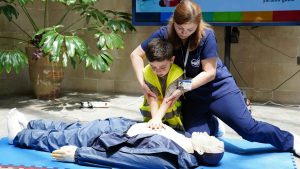

Quick Answer
Knowing how to prepare for a hike means building fitness before you go, packing the Ten Essentials, carrying at least one litre of water per hour in hot conditions, and having the first aid skills to respond in the first two minutes of a trail emergency. Southern California’s combination of desert heat, high-altitude peaks, and remote terrain makes physical preparation, navigation tools, and certified first aid training essential for any hiker, from day hikers on popular trails to long-distance hikers tackling multi-day routes.
59M+
Americans hike every year
3,000+
Search and rescue incidents in California in 2023
120 sec
Critical response window in trail emergencies
What You Will Learn
- How to build the physical fitness and leg strength needed for day hikes and multi-day routes before you reach the trailhead
- What the Ten Essentials are and how to build a complete packing list around them
- How much water to carry, what footwear to choose, and how the 3-layer clothing system protects against changing weather conditions
- Which trail hazards are most common in Southern California and how to respond to heat illness, altitude sickness, and uneven terrain injuries
- Why certified first aid training is the most important preparation step for any hiker spending time in remote terrain
Learning how to prepare for a hike is the single most effective thing any hiker can do to stay safe on the trail. Each year, more than 59 million Americans go hiking, and California alone recorded over 3,000 search and rescue incidents in 2023. The majority of those incidents involved hikers who underestimated the demands of their chosen trail, carried insufficient water, or lacked the first aid knowledge to respond when something went wrong. The essential tips in this guide apply equally to day hikes on popular trails and to longer, more demanding hiking adventures across Southern California’s varied terrain.
How Do You Build the Physical Preparation Needed for Hiking?
Physical preparation is the foundation of a safe hiking trip. The cardiovascular fitness and leg strength demands of hiking on uneven terrain, particularly with any pack weight, are significantly higher than those of flat-surface walking. Research from sports medicine indicates it can take the body between three weeks and three months to achieve significant fitness improvements from a new training routine, so starting well ahead of your planned trip matters. Whether you are preparing for short hikes near the city or a multi-day hiking adventure, the training principles are the same.
Building Leg Strength
Leg strength is the most important physical attribute for hikers. The lower legs, quadriceps, and glutes absorb impact on descents and generate power on climbs. Lunges, squats, calf raises, and step-ups onto a raised surface are the most transferable exercises for trail hiking. Adding these to your routine three times per week in the weeks leading up to your trip builds the specific muscle resilience you need to handle a big climb or an extended descent without injury. Single-leg squats improve the balance and proprioception that uneven terrain demands of each foot independently. Jumping jacks and stair climbs add cardiovascular load to leg-strength sessions when you want to combine both qualities in less time.
Cardiovascular Fitness
Cardiovascular fitness determines how efficiently your body delivers oxygen to working muscles during sustained effort. The American College of Sports Medicine recommends at least 150 minutes of aerobic activity per week for adults, with individual sessions of at least 30 minutes. For hiking preparation, sessions should progressively increase in duration and intensity through the week leading up to the trip. Incorporating high-intensity interval training, or HIIT, improves both aerobic and anaerobic fitness, which translates to the variable effort pattern of trail hiking, where short steep sections alternate with moderate grades. Brisk uphill walking on a treadmill incline is one of the most efficient ways to simulate hiking effort without needing access to trails during the training period.
Core Muscles and Upper Body
A strong core stabilizes the spine and pelvis under a loaded pack, reducing fatigue and lower-back strain on longer hikes. Planks, dead bugs, and single-leg balance holds develop the core muscles most relevant to carrying a heavy backpack on uneven terrain. Upper body conditioning, including push-ups and rows, improves posture under a loaded pack and makes a real difference in trekking pole efficiency on steep or technical sections. Upper body strength becomes especially important on multi-day hikes where cumulative fatigue compounds across consecutive days on the trail.
Practice Hikes
Practice hikes are essential for translating gym fitness into trail-specific readiness. Before a big hike or a multi-day hiking trip, complete at least two to three progressively longer hikes wearing your actual pack, boots, and clothing. Practice hikes accomplish three things: they build trail-specific fitness, they allow you to break in new boots before they cause blisters on a long hike, and they reveal any gear or nutrition gaps while you still have time to address them. Treat each practice hike as a full dress rehearsal of the actual trip, not a casual walk.
What Should Be on Your Hiking Packing List?
A complete packing list for a hiking adventure is organized around the Ten Essentials, a framework developed through decades of wilderness education to ensure hikers can survive an unplanned overnight and respond to the most common trail emergencies. The Ten Essentials are: navigation tools, illumination, sun protection, first aid, a knife or multi-tool, a fire starter, a shelter layer, extra food, extra water, and extra layers of clothing. Everything else in your pack is built around these ten categories.
Navigation
Knowing where you are is the single most important safety factor on any trail. Carry multiple navigation tools: a downloaded offline trail map on your phone, a physical map of the trail area, and a compass. Cell service is unreliable or absent on most Southern California backcountry routes. A Garmin inReach or comparable satellite communicator provides two-way messaging and SOS capability in areas without cell service, making it a worthwhile addition for any remote hiking trip. Set your phone to airplane mode when not actively needed to preserve battery life. Before leaving, check local park and forest ranger websites for recent trail closures, fire bans, or bear activity on your planned route.
Sun Protection
Sun protection is non-negotiable in Southern California, particularly during the summer months and at higher altitudes where UV exposure increases significantly. Pack sunscreen with at least SPF 30, lip balm with SPF, UV-blocking sunglasses, and a wide-brimmed hat. On exposed ridgelines and desert trails, apply sunscreen before leaving the trailhead and reapply every two hours regardless of cloud cover. Spending time above the treeline on sunny days significantly increases burn risk even when temperatures feel cool.
First Aid Kit
A pre-packed or custom first aid kit should include adhesive bandages in multiple sizes, antiseptic wipes, blister tape or moleskin, painkillers, tweezers, sterile gauze pads, medical tape, and a triangular bandage for slings. Add any personal medications, including an epinephrine auto-injector for known allergies. Position the aid kit where you can access it without removing your full pack. Gear without the skills to use it has limited value on the trail. Completing a certified first aid course ensures you can deploy the contents of your kit effectively in the field.
Extra Layers and Rain Gear
California mountain weather changes rapidly. Temperature can drop 20 to 30 degrees Fahrenheit between the trailhead and a summit. A 3-layer clothing system provides the flexibility to respond: a moisture-wicking base layer worn directly against the skin (avoid cotton, which retains moisture and chills the skin when wet), an insulating mid-layer for warmth, and a waterproof and windproof outer layer. Rain pants are worth adding for multi-day hikes or routes above the treeline. Always pack extra layers even on sunny days, as forecasts at the trailhead elevation can differ substantially from conditions at higher altitudes.
Water, Food, and Food Storage
Carry at least one litre of water per person per hour of hiking in hot or exposed conditions. For moderate temperatures, the minimum is half a litre per hour. Use water bottles or a hydration bladder in your pack. Bring a portable water filter or purification tablets if your route passes near natural water sources. For food storage on multi-day hikes in bear-active areas, a bear canister or hang system is required in many California wilderness zones. High-energy, non-perishable snacks including trail mix, protein bars, and dried fruit provide sustained energy without significant pack weight. Drink lots of water consistently throughout the hike rather than waiting until you feel thirsty.
Emergency Communication
Carry a fully charged smartphone in a waterproof bag. For remote or backcountry routes where cell service is absent, a Garmin inReach or personal locator beacon provides coverage that cell networks cannot match. Always leave your hiking itinerary, trailhead location, planned route, and an estimated check-in time with a trusted person at home before you leave. This single step ensures someone will alert search and rescue on your behalf if you do not return as planned.
How Do You Choose the Right Footwear to Avoid Blisters and Ankle Injury?
Footwear is the most consequential gear decision any hiker makes. The wrong choice causes blisters, reduces ankle support on uneven terrain, and can end a great hike far earlier than planned. The right choice depends on trail type, pack weight, trip length, and personal foot mechanics.
Hiking Boots vs. Trail Runners vs. Hiking Shoes
Full hiking boots with high ankle support are the most protective option for trails with significant elevation change, loose rock, or technical terrain. They reduce the risk of ankle rolls on uneven terrain and provide the stiffness needed for comfortable footing on a big climb. Hiking shoes are a lower-cut option suited for established day hike trails with moderate terrain, offering lighter weight at some cost to ankle support. Trail runners are lightweight and flexible, preferred by experienced long-distance hikers and thru-hikers who want to move fast and whose developed foot and ankle strength allows them to rely less on boot support. For most Southern California day hikers, a mid-cut hiking boot or supportive hiking shoe provides the best balance of protection and comfort.
Breaking In New Boots
Never wear new boots for the first time on a long hike. New boots require at least several practice hikes on progressively longer routes to soften the material and conform to the shape of your feet. Wearing new boots on short hikes first reveals pressure points before they cause serious blisters on a longer route. If hot spots develop during break-in, apply moleskin or blister tape before each subsequent hike to protect the affected area while the boot continues to shape to your foot.
Hiking Socks
Hiking socks are as important as the boots themselves. Choose moisture-wicking wool or synthetic hiking socks with cushioning at the heel and ball of the foot. Avoid cotton socks, which hold moisture and dramatically increase friction on long hikes. For long-distance hiking, carry an extra pair of socks and change mid-hike if your feet feel damp. A thin liner sock worn underneath a heavier hiking sock further reduces friction across the lower legs and toes over extended distances, making a meaningful difference to comfort and blister prevention on a multi-day hike.
Trekking Poles
Trekking poles are one of the most underused pieces of gear among casual hikers. On descents, poles redistribute load from the knees to the upper body, meaningfully reducing joint stress over a long descent. On muddy conditions, stream crossings, or loose rock, they provide additional balance points that significantly reduce the risk of a fall. For long-distance hikers covering consecutive days of terrain, poles reduce cumulative fatigue in the lower legs and improve overall stability on uneven terrain. Many hikers who are skeptical about poles before a trip become reliable converts after experiencing a big climb down with them.
What Are the Most Common Trail Hazards and How Do You Respond?
Southern California’s climate and terrain create a specific hazard profile that every hiker should understand before leaving the trailhead. The best advice from experienced hikers and wilderness educators is consistent: know how to identify each hazard and know your response before you ever face it in the field.
Heat Illness
Heat exhaustion and heat stroke are serious risks during the summer months on exposed Southern California trails. Heat exhaustion presents with heavy sweating, pale or clammy skin, weakness, nausea, and a fast but weak pulse. The person is still sweating, which means their cooling system is working. Move them to shade, loosen clothing, and have them drink lots of cool water. Heat stroke is a medical emergency: the person stops sweating, skin becomes hot and red, and confusion or loss of consciousness may follow. Call 911 immediately and begin active cooling with cold water or ice applied to the neck, armpits, and groin while waiting for emergency services. Plan hike start times to avoid the peak heat window between 10 a.m. and 3 p.m. during summer months.
Altitude Sickness
Altitude sickness is a real risk at higher altitudes, particularly on peaks above 8,000 feet such as Mount Baldy and San Jacinto. It occurs when the body ascends faster than it can adapt to reduced oxygen levels. Symptoms include headache, dizziness, nausea, and shortness of breath. The only reliable immediate treatment is descent. Rest without descending does not resolve altitude sickness. Symptoms should begin improving within 30 to 60 minutes of descending to a lower elevation. If symptoms include loss of coordination or altered consciousness, treat it as a medical emergency and initiate descent and an emergency call immediately. For a high-elevation hiking adventure, spending a night at an intermediate altitude before the summit attempt significantly reduces risk.
Ankle Sprains on Uneven Terrain
Ankle sprains are among the most frequent injuries on Southern California trails, particularly on routes with loose rock, root networks, or muddy conditions after rain. If a sprain occurs, apply the R.I.C.E. protocol: Rest the ankle, apply Ice from your kit if available, apply a Compression wrap from your first aid supplies, and Elevate the limb. Rest for 10 to 15 minutes and then test weight-bearing on one foot. If the hiker cannot bear weight, seek emergency assistance rather than attempting to walk out. Attempting to hike out on a structurally unstable ankle risks converting a sprain into a fracture. Trekking poles can prevent these injuries from occurring by improving balance on uneven terrain before a fall happens.
Getting Lost
If you lose the trail or become disoriented, use the STOP protocol: Stop moving immediately, Think through your last confirmed position, Observe landmarks and topographic features, and Plan your next action based on available information. Continuing to walk when uncertain about your route almost always makes the situation worse. Use your offline map or compass to re-establish position. If you cannot re-orient within a reasonable time, activate your Garmin inReach or personal locator beacon and remain stationary. Emergency services locate stationary subjects far more efficiently than moving ones.
Note for Outdoor Professionals and Group Leaders
Professional outdoor guides, camp counselors, and group trek leaders in California are typically required by their employer or liability insurer to hold a valid Intermediate First Aid and CPR certification. Certifications meeting CSA Z1210:24 standards are accepted for professional outdoor roles. View available first aid courses.
How Do You Choose a Trail That Matches Your Fitness Level?
Selecting a trail that honestly matches your current fitness level is one of the most important decisions you make before a hiking trip. When evaluating any trail, assess three factors: total distance, total elevation gain, and current trail conditions. A useful rule of thumb is to add approximately one hour for every 1,000 feet of elevation gain to your flat-walking time estimate. A 6-mile trail with 2,000 feet of gain takes substantially longer than a flat 6-mile walk, and significantly more energy.
Check trail conditions the morning of your hike. Muddy conditions after rain can make otherwise moderate routes technically demanding. Some trails, including high-elevation routes in the San Gabriel and San Bernardino ranges, may only be accessible during certain seasons due to snow or fire closures. Always check forecasts specifically at your trail’s elevation, as mountain weather conditions can differ dramatically from the weather in the city below.
For hikers building toward longer distances, the progression from short hikes on popular, well-marked trails to more remote and technically demanding routes should be gradual. Mental preparation is part of this process. Visualizing the route, the terrain, and the effort required before you leave builds confidence and reduces the anxiety that causes poor decision-making when you are tired and far from the trailhead.
Which First Aid Certification Level Is Right for Hikers?
The best advice any experienced hiker will offer a beginner is to complete first aid training before a major hiking trip. Two certification levels are available depending on the type of hiking you do and whether you lead others in the field. Both are valid for two years and recognized by American Red Cross and AHA standards.
| Course Level | Skills Covered | Duration | Best For |
|---|---|---|---|
| Basic (Emergency) First Aid | Blisters, stings, minor cuts, sprains, basic CPR | 1 day | Day hikers on established trails |
| Intermediate (Standard) First Aid | Bone and joint injuries, head trauma, environmental emergencies, advanced CPR | 2 days | Backcountry hikers, group leaders, long-distance hikers |
| CPR and AED | Cardiac arrest response, chest compressions, AED use | 4-5 hours | All hikers, especially group and multi-day leaders |
The Intermediate level is recommended for anyone planning backcountry routes, multi-day hikes, or any hike where fellow hikers may be hours from road access. The additional training in bone and joint injuries, environmental emergencies, and spinal trauma management directly addresses the scenarios most likely to arise far from emergency services. CPR and AED certification is recommended for all hikers regardless of experience level. Find a course location near you before your next hiking trip.
Key Takeaway
Knowing how to prepare for a hike comes down to five things done before the trailhead: building leg strength and cardiovascular fitness, packing the Ten Essentials including a proper first aid kit, choosing footwear that has been broken in through practice hikes, understanding trail conditions and weather forecasts at your specific elevation, and completing certified first aid training. The 120-second response window means that in a trail emergency, the most important responder is standing right there in the group. Training is what makes that person effective.
Be Ready Before You Hit the Trail
Get Certified in First Aid and CPR
Hands-on First Aid and CPR courses at 30+ locations. Certifications valid for two years and recognized by American Red Cross and AHA standards.
Frequently Asked Questions: 2025 Hiking Preparation and Trail Safety
Sources & Regulatory References
- California Governor’s Office of Emergency Services (Cal OES) — Search and Rescue Statistics 2023
- California Health & Safety Code Section 1799.102 — Good Samaritan Act (bystander CPR protection)
- American Heart Association (AHA) — CPR and ECC Guidelines, current edition
- American Red Cross — First Aid, CPR, and AED program standards
- American College of Sports Medicine (ACSM) — Physical Activity Guidelines for aerobic fitness
- International Liaison Committee on Resuscitation (ILCOR) — Evidence Evaluation Process for resuscitation guidelines
- CSA Z1210:24 — Standard for First Aid Training in the Workplace (applicable to outdoor professional roles)
- National Park Service — Wilderness safety and Ten Essentials recommendations for backcountry travelers
Content reviewed for accuracy and currency by a certified First Aid Instructor Trainer. All course information should be verified with the training provider prior to registration.