
Why Natural Disaster Preparedness Is a Matter of Life-Saving Skills
California faces a combination of natural hazards found almost nowhere else in the United States. The state sits along the Pacific Ring of Fire and the San Andreas Fault system, making it highly vulnerable to powerful earthquakes. Rising temperatures and prolonged dry conditions have made wildfires increasingly aggressive across Southern and Northern California alike, while valley and coastal regions face seasonal flooding and mudslides that can cut off entire communities from emergency medical help within hours.
According to the Federal Emergency Management Agency (FEMA), California consistently ranks among the states with the highest number of federally declared major disaster declarations each year. That statistical reality transforms emergency preparedness from a personal preference into a practical necessity for every resident, employer, and worker in the state.
When catastrophic events occur, 911 dispatch centers experience massive call volumes and physical infrastructure such as roads and bridges may be entirely impassable. Response times that typically measure a few minutes can stretch into hours or even days. In these situations, community members armed with practical first aid knowledge become the first line of defense, providing critical immediate assistance before paramedics can safely reach the scene. Building that public health capacity across households, workplaces, and community members statewide is the foundation of genuine disaster resilience.
What Life-Saving Skills Do You Need for Natural Disasters?
Medical emergencies during natural disasters range from minor lacerations to life-threatening traumatic injuries. Having a practiced set of intermediate first aid skills prepares you to remain composed and respond effectively to save lives, whatever the situation demands. The following are the most critical competencies every California resident should develop.
How to Perform CPR When Emergency Medical Services Arrival Is Delayed
Sudden cardiac arrest can be triggered by the extreme stress, physical exertion, or electrical hazards associated with natural disasters. Knowing how to perform CPR correctly keeps blood flow circulating to the brain, sustaining an injured person’s health until advanced medical help arrives. The American Heart Association confirms that high-quality, immediate CPR can double or even triple a cardiac arrest victim’s chance of survival. In a disaster scenario where an ambulance may take over 30 minutes to arrive, your hands are their only lifeline and the most direct way to save lives on scene.
Push hard and fast in the center of the chest at 100 to 120 compressions per minute to maintain blood flow. If you are trained in rescue breathing, deliver two breaths after every 30 compressions. If others are present, rotate every two minutes to maintain compression quality and reduce fatigue. Continue until an AED is available, a trained responder takes over, or Emergency Medical Services arrival makes your efforts redundant.
CPR and AED training is available through certified in-person courses for residents and CPR/AED certification programs in California that meet workplace compliance requirements.
How to Control Severe Bleeding in an Injured Person
Traumatic injuries from falling debris, broken glass during an earthquake, or structural collapses can cause rapid, massive blood loss. Uncontrolled bleeding is the leading cause of preventable death in trauma situations; without immediate medical help, an injured person can bleed out in less than five minutes. Restricting blood flow from the wound source through direct pressure, commercial tourniquets, and wound packing are vital intermediate first aid skills taught in certified hands-on courses. First aid knowledge in this area is the difference between life and death when the fire department or EMS cannot reach you quickly.
For limb injuries with arterial spurting, apply a commercial tourniquet two to three inches above the wound, never directly over a joint. Tighten until bleeding stops and record the exact time of application. For deep wounds that cannot be tourniqueted, pack the wound firmly with gauze and maintain continuous pressure. Never remove a blood-soaked dressing; add more material on top and continue pressing to preserve blood flow to surrounding tissue.
How to Treat Burns and Manage Medical Conditions in the Field
Wildfires, chemical spills, and ruptured gas lines create significant burn risks across California communities. Cool any thermal burn immediately with cool running water for 10 to 15 minutes. Do not apply ice, butter, or any oil-based substance, as these trap heat, restrict blood flow to the wound margin, and worsen tissue damage. Cover the area loosely with a sterile dressing and avoid breaking blisters, which serve as a natural barrier against infection. Vulnerable individuals with pre-existing medical conditions including asthma, heart disease, or compromised immunity face heightened public health risks during wildfire smoke events and require particular attention from anyone responding on scene.
For smoke inhalation, move the affected person to clean air immediately. Use N95 or better respiratory protection for yourself before approaching a heavy smoke environment. If the person is unconscious, unresponsive, or has stopped breathing, begin CPR and call for medical help at once. Knowing the difference between a responsive and unresponsive injured person is one of the most important assessments you can make in the first seconds of any emergency to save lives effectively.
How to Splint Fractures and Provide Immediate Care for Orthopedic Injuries
Earthquakes and structural failures frequently produce bone fractures, dislocations, and sprains. Immobilizing a compromised limb protects nerves and blood vessels from secondary injury and preserves blood flow to the extremity. Use rigid environmental materials such as sturdy boards, rolled magazines, or thick branches as a makeshift splint. Secure the splint above and below the fracture site using cloth strips or medical tape, and always splint the limb in the position found rather than attempting to straighten or realign it.
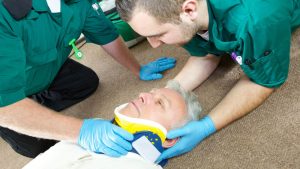
If you suspect a spinal injury due to the nature of the impact, do not move the injured person unless they are in immediate danger from fire or secondary collapse. Keep them calm, minimize movement, and wait for Emergency Medical Services arrival or more advanced medical help. Standard First Aid certification includes hands-on practice with fracture management and spinal precautions that are directly applicable in disaster scenarios.
Learn These Life-Saving Skills in a Real Classroom
Hands-on practice is the only way to build the muscle memory needed to respond effectively during an actual emergency. Online-only courses cannot replicate the physical skills required.
OSHA Compliance: What Workers Need to Know About Workplace Disaster Readiness
Disaster preparedness is not limited to the home. When a natural disaster impacts a commercial zone, employers are legally and morally responsible for the immediate safety of their workers and anyone on the premises. California employers must understand how OSHA 1910.151 applies specifically in disaster conditions, when standard medical infrastructure collapses around them and the fire department is responding to dozens of simultaneous emergencies across a wide area.
Workers in industrial facilities, construction sites, warehouses, and large office complexes face compounded risk during seismic events, as structural damage can trap injured workers far from outside medical help. An example of best practice is designating at least two certified workers per shift and equipping each floor or zone with a stocked emergency kit that is audited every six months. This approach ensures that immediate assistance is available wherever an injury occurs, not just at a central first aid station. When the fire department faces a mass-casualty incident, internal response capacity is what protects your workforce in those critical first minutes.
For organizations looking to train groups of eight or more, private group training can be scheduled at your workplace with instructors who bring all necessary equipment and certification materials on-site.
Train Your Whole Team for OSHA Compliance
Group training at your facility ensures every worker on every shift can respond effectively when disasters strike and EMS cannot reach you immediately.
How to Build a Natural Disaster Emergency Plan That Works
Life-saving skills reach their maximum effectiveness when integrated into a comprehensive household or workplace emergency plan. Every individual living or working in a high-risk California zone should have a written and rehearsed strategy that outlines redundant communication methods, secondary evacuation routes, and designated meeting points for when mobile networks go down. Community members who coordinate plans in advance are far better positioned to provide immediate assistance to neighbors and disaster survivors when widespread disruption makes organized public health response slow.
Federal emergency guidelines recommend maintaining at least 72 hours of potable water, non-perishable food, and essential medical supplies for each family member or employee in a properly prepared emergency kit. Keep in mind that power grids and municipal water systems can fail instantly during major seismic events. Physical, waterproof copies of important documents including identification, medical records, and insurance information should be stored in your go-bag alongside your kit prepare checklist so nothing is left behind under pressure.
Conduct disaster drills at least twice a year. When a real emergency strikes, practiced muscle memory reduces the impact of panic and allows workers and household members to respond effectively without hesitation. Include a section in your emergency plan specifically covering how to contact emergency services when standard channels are unavailable, such as using a battery-powered radio to receive FEMA emergency alerts and locate the nearest operating medical facility.
What Should Be in a Disaster First Aid Kit?
A standard household first aid kit is adequate for minor daily injuries, but a disaster-ready emergency kit must be capable of handling severe trauma when hospitals and clinics are unreachable. The following items are essential for any California household or workplace kit designed to support immediate assistance during a major emergency. Taking the time to kit prepare properly before a crisis is the most cost-effective investment any household or employer can make for public health and worker protection.
Include commercial tourniquets, heavy-duty trauma shears to cut through debris-covered clothing, sterile trauma pads, rolled gauze, moldable splints, emergency thermal blankets, airtight safety goggles, N95 respirators, antiseptic wipes, a pocket CPR resuscitation mask, and a seven-day supply of any prescription medications. Workers at industrial sites should add a chemical burn irrigation kit and extra eye wash solution, given the potential for hazardous material releases during structural damage events. A well-stocked emergency kit can save lives when the fire department is overwhelmed and medical help is still en route.
Psychological First Aid: How to Respond Effectively After a Disaster
Physical injuries are not the only public health concern during natural disasters. The psychological impact can be equally disabling and far longer-lasting. Disaster survivors, including those who rendered aid, frequently experience shock, acute anxiety, and the early signs of post-traumatic stress. Responding effectively to emotional distress is itself a form of life-saving intervention that any community member can provide.
Psychological first aid involves providing immediate, grounding comfort: active listening without judgment, offering thermal blankets and water, shielding individuals from additional distressing sights, and helping to reunite separated family members or workers. Simple human contact and a calm presence can significantly reduce the severity of acute psychological responses. Older adults and children both benefit from being quickly connected to familiar caregivers and shielded from the ongoing sensory chaos of a disaster environment. Aid knowledge in the psychological domain is as important as physical first aid knowledge when it comes to supporting disaster survivors through the acute phase.
Certified first aid training at the Standard First Aid level includes foundational psychological first aid principles alongside physical emergency response skills, giving responders a complete toolkit for the full spectrum of disaster health crises.
California-Specific Disaster Risks: How to Respond by Region
Each region of California carries a distinct primary disaster profile. Southern California, including Los Angeles and Long Beach, is highly vulnerable to explosive wildfires driven by Santa Ana winds and to significant seismic events from multiple fault systems. Workers and community members in this region should prioritize burn management training, smoke inhalation response, and earthquake-specific first aid knowledge as their core preparedness focus. When the fire department is stretched thin across multiple active wildfire fronts, individuals with solid first aid knowledge can save lives in their immediate neighborhoods before organized medical help arrives.
The Bay Area and Silicon Valley sit near several major active faults capable of producing devastating earthquakes, making structural collapse response and CPR to maintain blood flow a higher priority for that population. The Central Valley and Sacramento region face severe flooding during atmospheric river storm periods, where hypothermia, waterborne illness, and wound infection from contaminated floodwater are the dominant public health risks. Regardless of your zip code, the capacity to respond effectively to trauma before Emergency Medical Services arrival is the single most transferable skill across all of these scenarios. Investing in that training today protects you, your family, and your community members from the next disaster.
Our California course locations serve communities across the state with in-person, hands-on certification programs designed to equip both individual residents and organized worker groups with practical emergency response capabilities.
Key Takeaway
Natural disasters in California regularly delay Emergency Medical Services arrival by hours. The life-saving skills that close that gap (CPR to maintain blood flow, bleeding control, burn management, and fracture immobilization) are learnable by anyone through certified hands-on training. Community members with first aid knowledge and a properly assembled emergency kit are the public health backbone that protects neighborhoods when the fire department is overwhelmed and medical help is hours away. Workers are additionally protected under OSHA 1910.151, which requires trained first aid responders in every workplace where professional medical facilities are not immediately adjacent. Preparing now, before the next disaster strikes, is the most effective action any individual or employer can take to save lives.
Join 150,000+ Certified Graduates Across North America
Get the training your household or workplace needs to respond effectively when disasters strike and help is hours away.
Frequently Asked Questions: Natural Disaster First Aid 2025
Q1: How do I treat severe cuts from broken glass immediately after an earthquake?
A: Apply firm, direct pressure to the wound using a sterile trauma pad or clean cloth. Broken glass lacerations can sever blood vessels quickly, so controlling blood flow from the wound is the immediate priority. If bright red blood is spurting and direct pressure fails to stop it, apply a commercial tourniquet two to three inches above the wound, never on a joint. Tighten it until the bleeding stops and note the exact time of application for paramedics. Uncontrolled arterial bleeding can cause death within five minutes, so acting immediately is critical for any injured person in a disaster setting.
Q2: What mask should I use to prevent smoke inhalation injuries during a California wildfire?
A: Surgical masks and cloth coverings do not protect against the microscopic particulate matter (PM2.5) found in wildfire smoke. Use a well-fitted N95, KN95, or P100 elastomeric respirator to filter out hazardous ash and toxins while you evacuate or administer immediate assistance to an affected person. These respirators are a critical component of any emergency kit used in wildfire-prone areas. Checking the fit seal before entering a smoke-affected area is essential; a mask that gaps at the sides offers little to no protection for your public health or the health of those around you.
Q3: How long should I perform CPR if EMS is delayed by a disaster?
A: When roads and infrastructure are compromised, Emergency Medical Services arrival can be delayed from minutes to hours. Continue performing high-quality CPR at 100 to 120 compressions per minute to keep blood flow going to the brain until an AED is ready to use, professional paramedics take over, or you become too physically exhausted to continue safely. If others are present, rotate compressors every two minutes to maintain compression quality. The American Heart Association confirms that immediate, uninterrupted CPR can double or triple a cardiac arrest victim’s survival odds.
Q4: Can I use tap water to clean burn injuries if a wildfire has compromised the local water supply?
A: No. If municipal authorities have issued a boil-water advisory due to infrastructure damage, do not use raw tap water to clean burns or open wounds on an injured person, as this introduces significant bacterial infection risk. Use bottled water, sterile saline solution from your emergency kit, or water that has been at a rolling boil for at least one minute and allowed to cool completely. Protecting wound health during a disaster requires treating water quality as a medical variable and is a basic public health principle every community member should understand.
Q5: What first aid items are essential for a California earthquake go-bag?
A: A California-specific trauma bag should include commercial tourniquets such as a CAT, heavy-duty trauma shears, moldable splints, sterile burn dressings, airtight safety goggles, N95 respirators, and a seven-day supply of any prescription medications. Standard bandages alone are insufficient for the blast and crush injuries common in seismic events. Workers in industrial facilities should additionally carry a pocket CPR mask and a chemical burn irrigation kit, since structural failures can release hazardous materials during an earthquake. A well-equipped kit prepares you to save lives before the fire department can respond.
Q6: How do I immobilize a broken bone if furniture falls on someone during an earthquake?
A: First ensure the surrounding area is safe from further collapse. Remove the compressive weight if it is safe to do so. Create a makeshift splint using rigid materials such as rolled magazines, sturdy cardboard, or wooden boards, and secure it above and below the fracture site using cloth strips or medical tape. Never attempt to realign or straighten the bone yourself, as this can sever major blood vessels and disrupt blood flow to the limb. Splinting in the position found protects the injured person from secondary injury until paramedics arrive with medical help.
Q7: Is it safe to run outside during an earthquake to avoid falling debris?
A: No. Running outside during active seismic shaking is highly dangerous. Most earthquake-related injuries occur when individuals are struck by falling exterior masonry, broken glass, or collapsing units as they attempt to exit a building. The correct action is to immediately Drop, Cover, and Hold On under a sturdy desk or table and remain there until the shaking stops completely. Waiting until movement ceases before evacuating dramatically reduces your risk of becoming an injured person in need of medical help yourself.
More FAQs: Workplace Compliance, Psychological First Aid & Supplies
Q8: How should I store temperature-sensitive medications during a disaster-related power outage?
A: Use an insulated cooler packed with chemical cold packs or phase-change materials. Never place temperature-sensitive medications directly against ice, as freezing destroys the active proteins and renders them ineffective. Monitor the temperature closely and keep the cooler in the coolest, most shaded area available. Vulnerable individuals with pre-existing medical conditions who depend on refrigerated medications should include a dedicated medication cooler in their workplace disaster kit, separate from general water and food supplies.
Q9: What is the correct way to treat a first-degree burn from a wildfire or electrical fire?
A: Cool the burn by holding it under cool running water for 10 to 15 minutes to dissipate retained heat in the tissue. Do not apply ice, as this restricts blood flow and deepens tissue damage. Never apply butter, oil, or ointments to a fresh burn, as these trap heat and raise infection risk. Cover loosely with a dry, sterile dressing. For burns covering a large area, or any burn to the face, hands, or airway, treat it as a medical emergency and seek medical help as soon as Emergency Medical Services arrival is possible.
Q10: What is psychological first aid, and how is it applied to children after a major disaster?
A: Psychological first aid involves stabilizing emotional distress immediately after a catastrophic event. For children, lower yourself to their eye level, speak in a calm and reassuring tone, and confirm clearly that they are safe. Limit their exposure to chaotic scenes and emergency radio updates. Provide basic comfort items such as a blanket or familiar toy, and keep them with known caregivers. Older adults and children both show stronger recovery outcomes when reunited with familiar people quickly and shielded from the ongoing sensory chaos of a disaster environment.
Q11: Are commercial tourniquets necessary, or can I make one from household materials?
A: You should always use a medically approved commercial tourniquet as your first choice. While a makeshift tourniquet using a belt or torn cloth and a stick can be used in an absolute emergency, improvised versions are prone to slipping and frequently fail to compress the artery adequately, making it impossible to stop blood flow from the wound. The differences in material width and tension control make them far less reliable for stopping arterial bleeds. Every household disaster kit in California should include at minimum one certified commercial tourniquet to support immediate assistance for traumatic bleeding injuries.
Q12: What are the first signs of heat exhaustion when evacuating from a wildfire zone?
A: Primary signs of heat exhaustion include profuse sweating, cold and clammy skin, a rapid but weak pulse, nausea, and dizziness. Evacuating a wildfire involves high physical exertion in extreme heat, which raises risk significantly for both workers and the general public. Move the affected person to a shaded area, have them sip cool water slowly, and apply wet cloths to the neck, armpits, and groin. If symptoms worsen or the person stops sweating and the skin becomes hot and dry, this signals heat stroke, a life-threatening emergency requiring immediate medical help from paramedics or the fire department.
Q13: How frequently should I replace the medical supplies in my disaster preparedness kit?
A: Audit your disaster first aid kit every six months. Replace any expired items, focusing on antibiotic ointments, sterile saline wash, chemical cold packs, and prescription medications. Confirm that adhesive bandages have not degraded in heat storage and verify that AED pads and batteries are fully functional. Workplaces regulated under OSHA 1910.151 should document these inspections as part of their compliance records, since inadequate kit maintenance can constitute a violation if workers are harmed due to expired or missing supplies.
Q14: Does OSHA 1910.151 require disaster-specific first aid training for California workplaces?
A: Yes. OSHA 1910.151 requires that when an infirmary, clinic, or hospital is not in near proximity to the workplace, an adequately trained person must be available to render first aid. During a natural disaster, professional medical help is effectively nullified by impassable roads and overwhelmed dispatch systems, including the fire department. California employers must ensure certified workers with current first aid knowledge are present on every shift to maintain public health standards. Cal/OSHA enforces this standard alongside federal requirements, and businesses can face substantial fines for non-compliance following a disaster-related workplace injury.
Q15: What is the role of an AED during a natural disaster, and will it work without grid power?
A: An Automated External Defibrillator operates entirely on its own internal battery and does not require grid power to function. During a disaster, the extreme surge of stress and physical exertion can trigger sudden cardiac arrest in vulnerable individuals, making an AED a critical piece of equipment for any workplace or community setting. The device analyzes heart rhythm automatically and delivers a shock if needed, restoring blood flow to the body, making it effective even for workers and bystanders with no medical background. Ensuring your AED battery and pads are current is part of responsible disaster preparedness and helps save lives when medical help is delayed.
About the Author & Reviewer
Ashkon Pourheidary, B.Sc. (Hons) Neuroscience, Co-Founder, Coast2Coast First Aid & Aquatics. Certified First Aid and CPR Instructor since 2011, Instructor Trainer since 2013. Also certified as an Emergency Medical Responder (EMR) Instructor, Psychological First Aid Instructor, and BLS Instructor. Graduate with honours from the University of Toronto, 2016. Co-founder of Coast2Coast First Aid & Aquatics, with over 30 locations across Canada and the United States. Former member of the First Aid Council for the Canadian Red Cross.
Regulatory Sources & Citations
- OSHA Standard 1910.151, Medical Services and First Aid: osha.gov
- Federal Emergency Management Agency (FEMA), California Disaster Declarations Data: fema.gov
- American Heart Association, CPR and ECC Guidelines (2020): heart.org
- Cal/OSHA, California Occupational Safety and Health Administration: dir.ca.gov/dosh