


TL;DR Executive Summary: There is no upper age limit for National Lifeguard certification in Canada. Adults who can pass the physical standards are highly sought after by facilities. By completing a CSA Z1210:24 compliant program, mature candidates ensure adherence to the 120-second response rule, bringing unparalleled reliability to workplace safety.
Embarking on a new professional journey later in life can feel daunting, particularly in fields traditionally associated with youth. However, the aquatics industry is experiencing a massive demographic shift. Facilities across the nation are actively recruiting mature candidates to fill vital supervisory and deck roles. The modern pool deck requires steadfast leadership, exceptional communication, and unwavering reliability—qualities that mature professionals possess in abundance. As an authorized training partner, Coast2Coast First Aid & Aquatics has trained over 150,000 students since its establishment in 2014. We consistently witness adult learners excelling in our state-of-the-art rescue modules.
With 10+ years of experience as a leading Red Cross partner, ensuring health, safety, and quality of life for Canadians, we know that success in emergency response is not dictated by birth years. Instead, it is measured by one’s ability to maintain composure under pressure. Whether you are in your thirties, forties, or fifties, transitioning into this field is highly achievable. Adult candidates routinely bring a level of dedication that transforms the safety culture of entire aquatic facilities.
The Surprising Reality of Adult Aquatics Professionals
Answer Block: Adult professionals are increasingly dominating the aquatics sector because facility managers value their extensive life experience and stable schedules. There are absolutely no maximum age restrictions preventing capable individuals from obtaining or renewing their rescue credentials.
The perception that guarding a pool is solely a summer job for teenagers is entirely outdated. Today, municipal recreation centres, private clubs, and commercial waterparks actively seek mature individuals who treat the position as a serious profession. Older candidates usually provide daytime availability, which is crucial for filling early morning and midday shifts while younger staff are in school.
Furthermore, adult learners approach training with a profound sense of responsibility. When taking a comprehensive first aid course, they understand that the skills they acquire will literally save lives. They actively participate in hands-on scenarios, contrasting sharply with traditional, passive learning styles. This dedication translates directly into safer swimming environments for the public.
Physical Standards and National Certifications
Answer Block: The true barrier to entry is not age, but the ability to meet rigorous physical benchmarks. Candidates must demonstrate stamina through a 400-metre timed swim and prove their strength by successfully recovering heavy submerged objects from the pool bottom.
Fitness is paramount in the realm of water safety. The certification process is inherently physical, requiring a baseline of cardiovascular health and muscular endurance. However, these physical requirements are achievable for adults who maintain an active lifestyle or dedicate time to conditioning prior to their examination. Many master swimmers and triathletes easily surpass the required times.
The federal government announced its decision to standardize workplace emergency training in Canada at the end of 2012, which heavily influenced the structured, measurable nature of today’s physical assessments. Evaluators do not grade based on aesthetic technique; they grade on effectiveness, speed, and safety. If you can efficiently retrieve a 20-pound brick from deep water and safely tow a victim to the edge, your date of birth is completely irrelevant to the certifying body.
| Course Category | CSA Z1210:24 Level | Target Audience | Validity |
|---|---|---|---|
| Basic First Aid | Basic (Formerly Emergency) | Low-risk workplaces, fitness instructors | 3 Years |
| Intermediate First Aid | Intermediate (Formerly Standard) | Lifeguards, high-risk environments, supervisors | 3 Years |
| Basic Life Support (BLS) | Healthcare Provider Standard | Nurses, advanced rescue teams, physicians | 1 Year |
How Life Experience Benefits Emergency Rescue Teams
Answer Block: Mature individuals bring unparalleled conflict resolution skills, emotional intelligence, and calm decision-making to chaotic environments. Their lived experiences allow them to quickly assess dangerous situations and coordinate high-performance teams effectively.
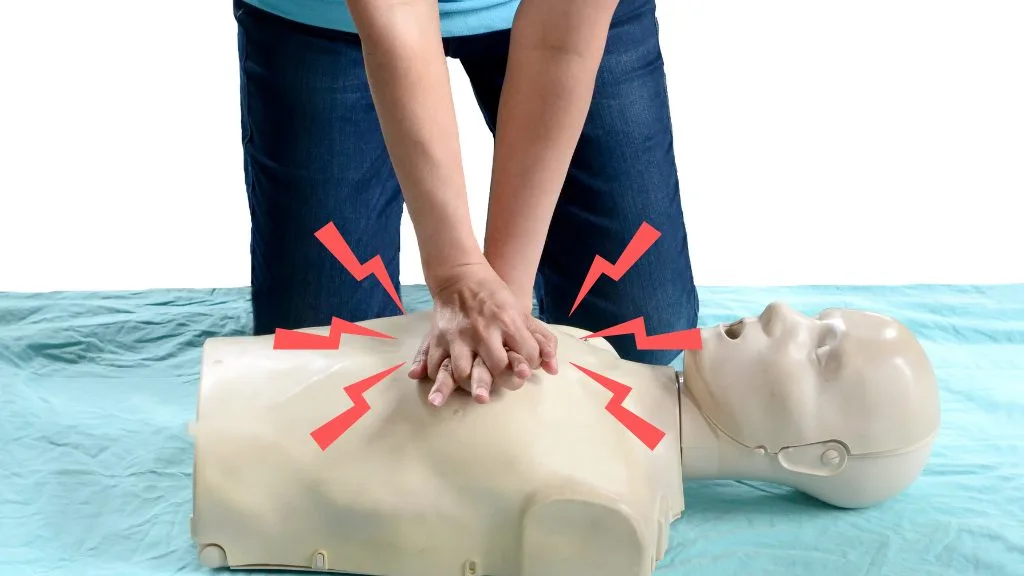
When an emergency strikes on the pool deck, panic is the enemy of efficiency. Adult rescuers typically exhibit a psychological resilience that younger, less experienced guards may not yet possess. This calm demeanor is vital when executing High-Performance CPR, where maintaining a high Chest Compression Fraction (CCF) dictates the victim’s chance of survival. Managing a chaotic scene requires authority and clear communication.
Clinical data dictates that high-quality resuscitation is essential for cardiac arrest and involves performing hard, fast chest compressions at a rate of 100 to 120 per minute. Furthermore, using an AED (Automated External Defibrillator) provides clear voice instructions and can restart a heart in cardiac arrest. Older adults often process these protocols with analytical precision, ensuring that crucial steps are never missed in the heat of the moment.
Communication and High-Performance Situations
Beyond the technical application of medical skills, mature staff members excel in preventative guarding. They confidently enforce facility rules, mediate disputes among patrons, and offer clear, authoritative instructions. Whether they are dealing with a scraped knee or a major medical event, their reassuring presence comforts victims and bystanders alike. Enrolling in a dedicated cpr certification program amplifies this inherent confidence with up-to-date, evidence-based medical science.
Mandatory First Aid Requirements for Lifeguard Roles
Answer Block: All Canadian aquatic professionals must possess valid, current medical credentials. Specifically, this entails Intermediate First Aid paired with CPR Level C or Basic Life Support, ensuring they can treat everything from minor abrasions to catastrophic cardiac events.
⚠️ Compliance Alert for Employers
To remain fully compliant with the CSA Z1210:24 standard, ensure you register for the correct level: Basic (formerly Emergency) for low-risk environments, or Intermediate (formerly Standard) for high-risk or larger workplaces. Aquatic environments strictly require Intermediate certification to meet WSIB Ontario Regulation 1101 mandates.
Adopting CSA Standard Z1210-17 (and its 2024 iterations) ensures all curriculums adhere to rigorous national criteria. This standard guarantees that every aquatic rescue professional receives uniform, high-quality instruction regardless of their geographic location. WSIB-approved training meets workplace safety requirements for various sectors, and these specific certificates are valid for a duration of 3 years.
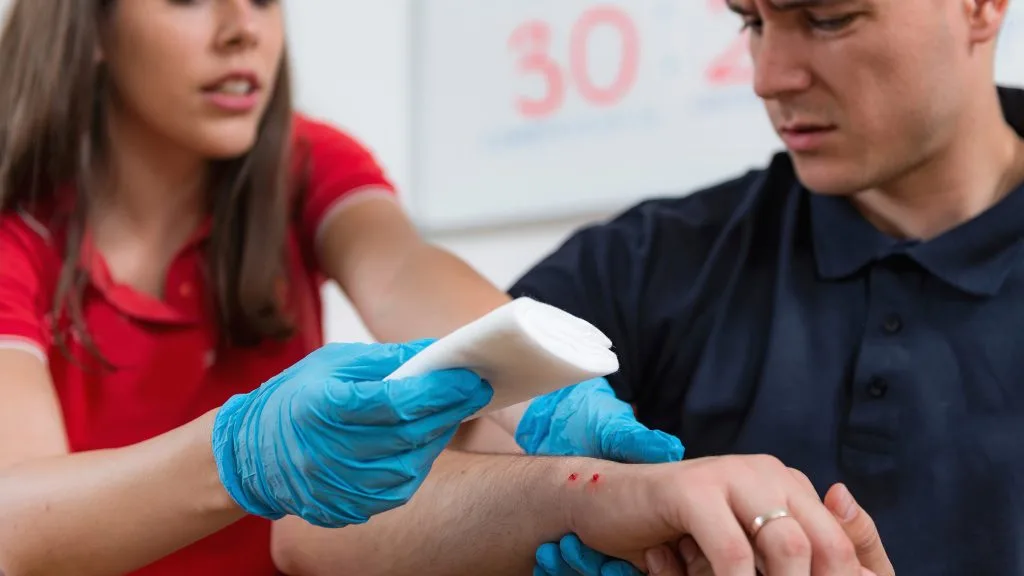
During these intensive courses, trainees learn that burns should be cooled immediately with cool (not cold) running water for at least 10 to 20 minutes. They are taught that to control severe bleeding, one must apply direct, firm pressure to the wound or use a tourniquet if necessary. Rescuers must always obtain consent before providing care and should check the scene for safety first, reinforcing a systematic approach to hazard management.
The 120-Second Response Rule in Aquatic Environments
A critical component of modern facility safety is the 120-second response rule. Employers must ensure certified personnel can reach any victim within two minutes anywhere in the workplace. In expansive waterparks or sprawling recreation centres, strategic positioning of mature, highly aware staff ensures that this stringent metric is met consistently. The Heimlich maneuver can clear airway obstructions and prevent suffocation in adults and children within this critical window.
Overcoming Common Hurdles for Career Switchers
Answer Block: Transitioning careers often brings logistical and financial worries. Fortunately, the aquatics industry offers flexible scheduling and cost-effective entry pathways. Blended learning formats allow busy adults to complete theory work online before attending a streamlined practical session.
Time constraints are frequently cited as the primary obstacle for those seeking new qualifications. However, modern educational frameworks have adapted beautifully. Blended learning allows students to complete online theory at their convenience, followed by an efficient 1-day practical skills session. This drastically reduces the time spent commuting and sitting in a traditional classroom environment, making it ideal for busy parents or individuals transitioning from a typical corporate schedule.
Financial investment is another consideration, though it remains remarkably accessible. Costs for comprehensive programs typically range from $80 to $140 for Standard First Aid paired with specialized resuscitation modules. Considering the immense employability and immediate job prospects upon graduation, this represents a phenomenal return on investment for any career switcher looking to secure an official bls certification or equivalent credential.
Flexibility and Ongoing Training Benefits
Once certified, the learning does not stop. Recertification courses primarily use hands-on practice and scenarios, typically taking only one day to complete. This ensures that skills remain sharp without demanding weeks of absence from work. Staying current is deeply rewarding, both professionally and personally, as you become a designated safety leader within your community and your household.
Steps to Achieving Your Certification Later in Life
Answer Block: Begin by assessing your current swimming ability and enrolling in an adult stroke improvement clinic if necessary. Simultaneously, secure your fundamental emergency response credentials by registering for a comprehensive, WSIB-approved intermediate medical class with a reputable provider.
Your journey begins with an honest evaluation of your aquatic proficiency. Do not let initial struggles discourage you; stamina is built systematically over time. Join a local master’s swim club or consult a coach to refine your technique. As your physical endurance grows, tackle the mandatory academic and clinical requirements by booking your emergency response classes.
Coast2Coast First Aid & Aquatics stands ready to support your transition. Our instructors are knowledgeable, engaging, and highly supportive of adult learners. We celebrate the unique perspectives you bring to our classrooms and ultimately to the pool decks of Canada. Join the ranks of thousands who have discovered a fulfilling, dynamic, and life-saving profession regardless of the candles on their birthday cake.
Executive Summary: There is absolutely no maximum age limit to begin a career in aquatics. Mature adults are highly prized for their reliability, excellent communication, and strong decision-making skills under pressure. By meeting the physical benchmarks and securing CSA Z1210:24 compliant Intermediate First Aid, older candidates readily fulfill strict workplace mandates, including the 120-second response rule, ensuring supreme safety for all Canadian facility patrons.
Frequently Asked Questions
Question 1: Is there a maximum age for lifeguard certification?
Answer: No, there is no upper age limit in Canada. As long as you can pass the mandatory physical and written examinations, you can be certified.
Question 2: Do older lifeguards have to pass the same physical test?
Answer: Yes. Every candidate, regardless of their birth year, must meet the exact same provincial and national physical benchmarks to ensure public safety.
Question 3: What is the minimum age to start aquatics training?
Answer: While basic rescue courses often start around age 13, the full National qualification typically requires candidates to be at least 15 or 16 years old.
Question 4: How difficult is the 400m swim requirement?
Answer: It requires moderate to high cardiovascular endurance. However, with consistent practice and proper stroke technique, adult swimmers can achieve the required time comfortably.
Question 5: Why are adult lifeguards highly sought after?
Answer: Employers highly value mature candidates for their reliability, excellent communication skills, and ability to work daytime shifts when younger staff are at school.
Question 6: Does life experience help in emergency rescue?
Answer: Absolutely. Mature individuals typically possess better conflict resolution skills and remain much calmer when coordinating High-Performance CPR during stressful incidents.
Question 7: How does the 120-second response rule apply?
Answer: Workplaces dictate that trained responders must reach an injured patron within two minutes. Mature guards utilize excellent preventative scanning to ensure this standard is met.
Question 8: What first aid levels are required for lifeguards?
Answer: Aquatic professionals require Intermediate First Aid (formerly Standard) to comply with WSIB and CSA Z1210:24 regulations for high-risk environments.
Question 9: Is CPR certification strictly mandatory for aquatics?
Answer: Yes, all aquatic rescue personnel must hold valid Level C or Basic Life Support (BLS) credentials to perform high-quality resuscitation.
Question 10: Can I recertify easily if I let my previous credentials lapse?
Answer: If your Canadian Red Cross certificate is completely expired, you must retake the full course. Valid certificates can be renewed in a swift 1-day session.
Question 11: How long is first aid training valid in Canada?
Answer: WSIB-approved Basic and Intermediate certificates remain legally valid for 3 years, though annual renewal of the resuscitation module is highly recommended.
Question 12: What are the costs involved in getting certified?
Answer: Costs generally range between $80 to $140 for foundational medical training, representing a highly accessible investment for a completely new career path.
Question 13: Is blended learning available for adult trainees?
Answer: Yes, blended learning combines convenient online theory modules with a single, intensive day of in-person practical skills assessment.
Question 14: Does WSIB approval matter for lifeguarding?
Answer: It is essential. Facilities in Ontario operate under WSIB Regulation 1101, which strictly mandates that staff hold approved, valid emergency qualifications.
Question 15: How do I start a career switch into aquatics?
Answer: Begin by conditioning your swimming stamina, completing a WSIB-approved emergency response course, and enrolling in the Bronze medal aquatic progression.
About the Author
Ashkon Pourheidary, B.Sc. (Hons) — Co-Founder, Coast2Coast First Aid & Aquatics
Ashkon has been a certified First Aid and CPR instructor since 2011 and an Instructor Trainer since 2013, passionately equipping Canadians with life-saving skills. His profound understanding of both theoretical frameworks and practical applications ensures comprehensive safety education. Connect on LinkedIn