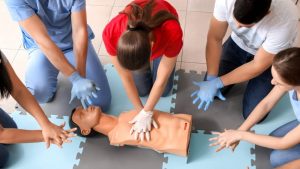

Taking an Emergency Medical Responder course before entering a paramedic college program gives aspiring paramedics a measurable advantage in first-semester practical exams, patient assessment labs, and anatomy-heavy coursework. Many Ontario colleges either require or strongly recommend EMR certification as part of their admission criteria, and students who arrive with EMR training are significantly better prepared for the workload intensity that causes failure rates as high as 40% in some programs. Whether your program requires it or not, EMR certification is the single most effective preparation step a pre-paramedic student can take before college.
What Is EMR and How Does It Fit Into the Primary Care Paramedic Career Path in Canada?
Emergency Medical Responder (EMR) is the entry-level certification in Canada’s paramedicine hierarchy, sitting directly below Primary Care Paramedic (PCP) on the National Occupational Competency Profile as defined by the Paramedic Association of Canada. The four recognized levels are EMR, PCP, Advanced Care Paramedic (ACP), and Critical Care Paramedic (CCP). For anyone planning to enter a paramedic college program, EMR is the most logical first step in that progression.
EMR training runs 80 to 120 hours and covers patient assessment, airway management, oxygen therapy, spinal immobilization, and trauma response, giving students an early foundation for work in emergency medical services. The curriculum is built on the same National Occupational Competency Profile that governs paramedic education across Canada, meaning the skills and clinical thinking framework you develop are directly continuous with what paramedic college demands. It is not a basic first aid course. In several provinces including parts of Ontario, a certified EMR can work alongside a paramedic in an ambulance, giving the credential genuine professional standing well beyond CPR or Intermediate First Aid (formerly Standard First Aid) while also creating early career opportunities in roles valued by fire departments or ski patrol.
What Is the Difference Between EMR and First Responder?
This is one of the most common points of confusion for students researching the paramedicine pathway. In Canada, the term “first responder” is used in two ways. Broadly, it refers to any trained individual first to arrive at an emergency scene, including firefighters, police officers, and paramedics. More specifically, First Responder (FR) is a certification level offered by some training organizations that covers foundational emergency care skills but may differ in scope, delivery format, and provincial recognition compared to EMR.
EMR is the designation formally recognized within the Paramedic Association of Canada’s National Occupational Competency Profile as the entry level of the paramedicine career ladder. The EMR scope of practice includes oxygen administration, spinal immobilization, glucose administration, cardiopulmonary resuscitation, and patient transport. For students preparing specifically for paramedic college, EMR carries the most direct weight in both admission processes and clinical preparation, while also aligning more clearly with the provincial licensing process for those who later move into paramedicine. If your goal is a PCP program, EMR is the more targeted credential.
What Do You Need Before Applying to Paramedic Programs in Ontario?
While requirements vary by institution, the following are commonly expected across Ontario paramedic college programs. A high school diploma with a minimum average in biology, chemistry, and English is the baseline. A valid Class G driver’s licence is typically required. A clean criminal record check and vulnerable sector screening are standard given the patient care environment. Current CPR and first aid certification is expected at minimum, with EMR certification either required or strongly recommended depending on the program. Some programs include physical fitness assessments reflecting the demands of pre-hospital care, including readiness for safe patient lifting.
Beyond the checklist, admissions committees look for demonstrated commitment to the field. EMR certification, relevant volunteer experience, and prior work in healthcare or emergency services all strengthen a competitive application. Ontario colleges offering the paramedic diploma include Algonquin, Centennial, Cambrian, Durham, Fanshawe, Georgian, Conestoga, Confederation, and St. Clair among others. Requirements change between intake years, so checking directly with each program’s admissions office is always the most reliable approach.
Is Ontario Paying for Paramedic School?
Yes, in certain circumstances. The Ontario Learn and Stay Grant provides eligible students in paramedic programs at participating colleges with funding covering tuition, books, and fees. In exchange, graduates commit to working in the region where they studied for a minimum period after graduation. The grant has been expanded to address paramedic workforce shortages, particularly in northern Ontario, and Ontario has added more than 300 new paramedic college program spaces across participating institutions. Paramedic students may also be eligible for OSAP funding depending on their financial circumstances. Eligibility requirements change between intake years, so confirming current grant availability directly with your target college is strongly recommended before making decisions based on funding assumptions.
How Does EMR Training Prepare You for First-Semester Paramedic Coursework?
The first semester of a paramedic college program is where the highest concentration of withdrawals and academic failures occur. Failure and attrition rates in Ontario paramedic programs can reach 40% in some cohorts. The combination of anatomy and physiology theory, clinical skills labs, and scenario-based assessments creates a workload that catches many students off guard, particularly those arriving with no prior medical training.
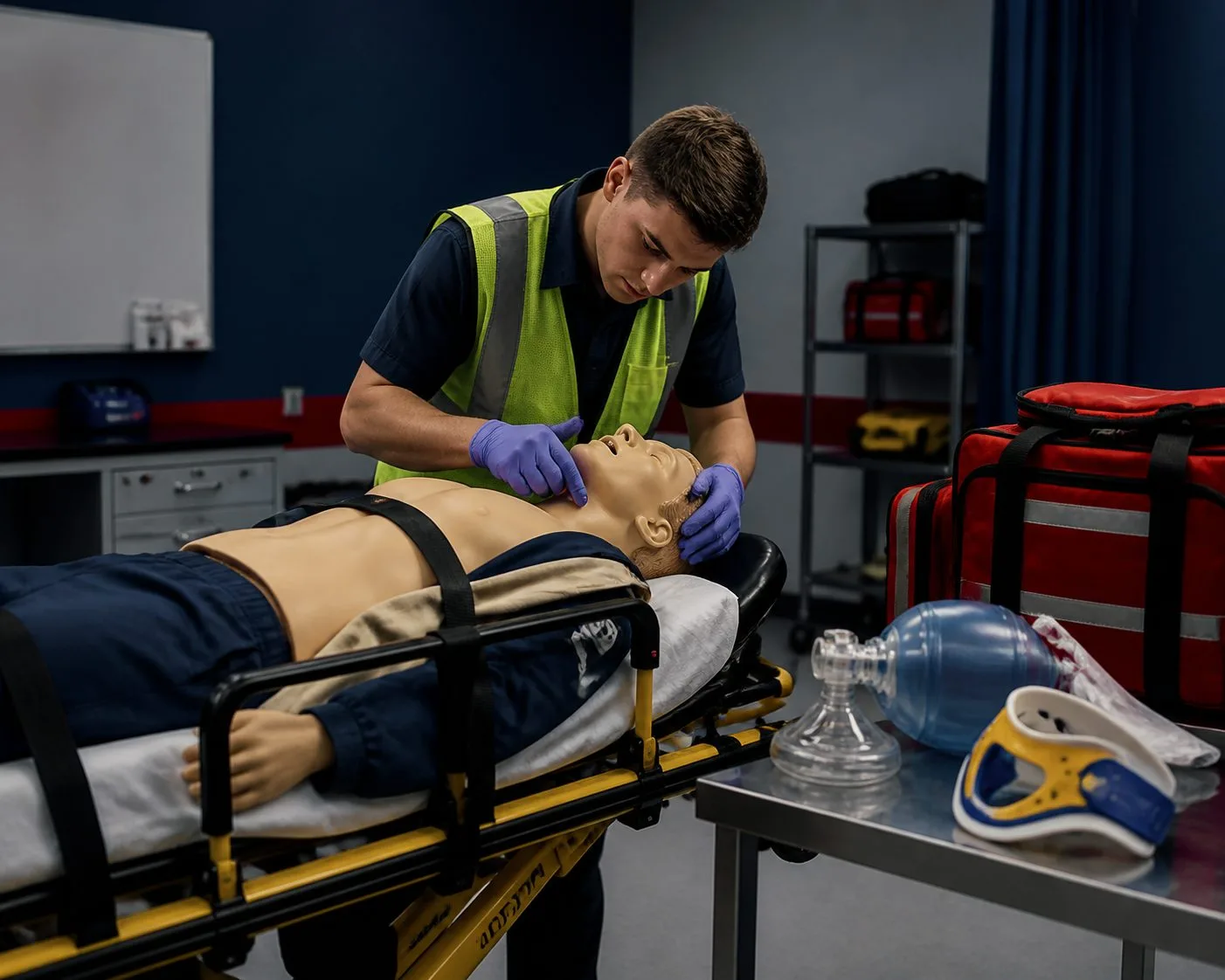
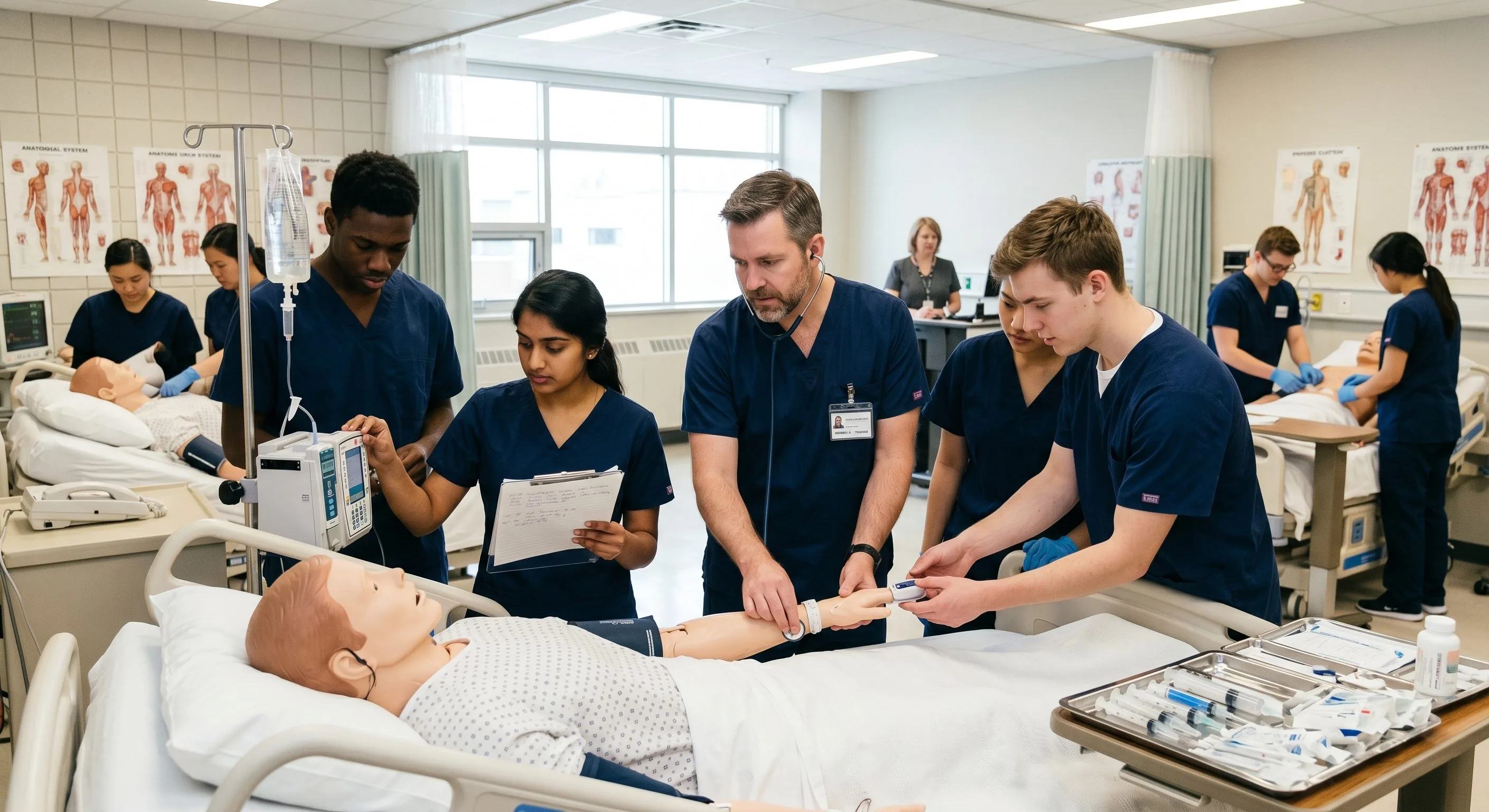
EMR training addresses that gap directly. When you complete an EMR course you learn to perform primary and secondary patient surveys, take and interpret vital signs, manage airways, support breathing management, apply cervical collars, administer oxygen, and document patient findings accurately. Through practical training, these skills are practiced with hands-on experience until they are procedural. When they reappear in your paramedic college lab in week one, you are reinforcing existing knowledge rather than learning under time pressure for the first time.
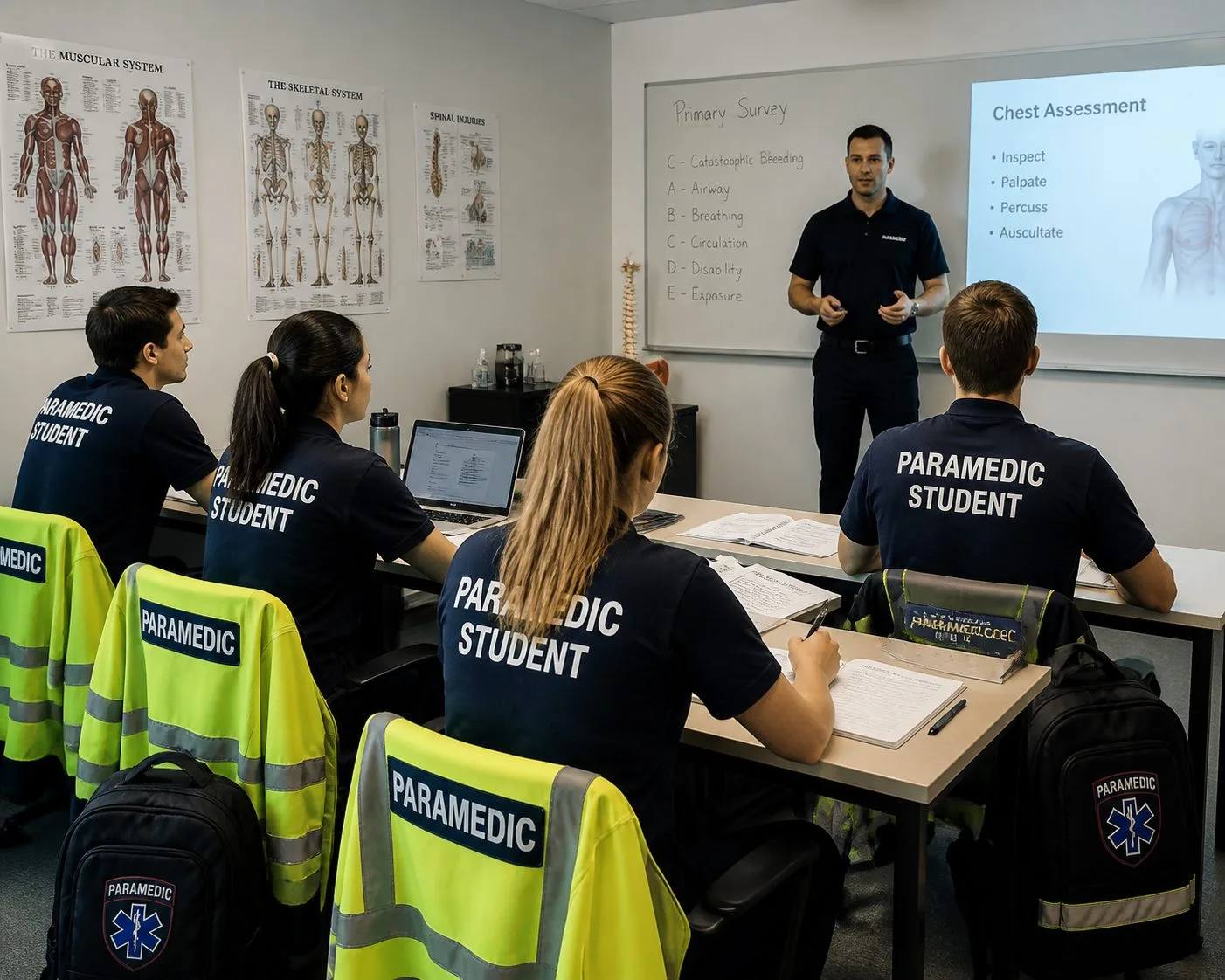
Patient assessment is one of the core competencies of the paramedic program, and students who arrive already fluent in that framework have more cognitive capacity available for anatomy, pharmacology, and pathophysiology content that intensifies as the semester progresses. Early exposure also improves patient engagement during scenario-based labs. Medical terminology is another compounding advantage. Terms like hypoxia, tachycardia, Glasgow Coma Scale, and perfusion status feel like review rather than a new language when you have already worked through them in an EMR course, which also supports later health sciences coursework.
Build Your Clinical Foundation Before College
Coast2Coast EMR courses are delivered by certified Canadian Red Cross instructors and follow the Paramedic Association of Canada’s National Occupational Competency Profile.
Does EMR Strengthen Your Application and Is It Worth It Without a Requirement?
Yes on both counts. EMR certification is a concrete, verifiable credential that addresses three application dimensions at once. It demonstrates academic preparation through a written exam and practical testing at a professional clinical level. It fulfills a formal prerequisite at programs that require it. And it signals genuine commitment to paramedicine in a way a high school diploma and personal statement alone cannot match.
Even at colleges where EMR is not a formal requirement, the preparation it provides justifies completing it. Ontario paramedic programs represent a two-year commitment that can reach $20,000 or more in tuition and living expenses. Arriving underprepared for a program with up to a 40% failure rate puts that investment at serious risk. EMR is a comparatively small investment of time and money that substantially improves the likelihood of successful completion.
Working as a certified EMR before or during your paramedic studies is also possible in industrial sites, event medical coverage, and private group training environments, building real-world clinical confidence that carries directly into college lab performance and supports longer-term career growth.
How Long Does EMR Take and When Should You Do It?
EMR training runs 80 to 120 hours depending on the provider and format. Full-time delivery takes approximately two to four weeks. Part-time options spread the coursework over a longer period. The course combines classroom theory, skills labs, and a final written and practical examination.
The optimal timing is six months to one year before your intended program start date. That window allows skills to consolidate while keeping content fresh when college begins. If you are in your final year of high school and targeting a September paramedic intake, completing EMR in the spring or summer of your graduating year is ideal. It gives you a current certification for your application and enough time to gain hands-on experience before the program starts.
Coast2Coast offers EMR training across Ontario through certified Canadian Red Cross instructors, with options across Greater Toronto, Eastern Ontario, and Western Ontario, all aligned with the Paramedic Association of Canada’s National Occupational Competency Profile. View available course locations across Ontario to find a schedule that fits your timeline.
Is 30 Too Late to Become a Paramedic?
No. There is no upper age limit for entering a paramedic college program in Ontario or across Canada. Programs admit students based on academic qualifications, prerequisite certifications, and physical fitness, not age. Many successful paramedics have started their college programs in their 30s and beyond, bringing professional maturity and life experience that younger applicants may not yet have developed.
Physical conditioning matters at any age, and programs do include fitness assessments. EMR training is particularly valuable for career-changers and healthcare professionals entering later in life, as it provides a structured reintroduction to clinical skills and the pace of a professional medical training environment before the intensity of paramedic college begins, while also broadening future career opportunities for older applicants entering the field later.
Train Your Team for Emergency Response
Coast2Coast delivers private group EMR and first aid training for organizations across Ontario, including healthcare teams, schools, and industry employers.
Key Takeaway
EMR certification is the single most effective step a pre-paramedic student can take before entering college. It reduces the risk of failure in a program where attrition runs as high as 40%, strengthens your application in a competitive admissions environment, and gives you the procedural fluency in patient assessment and clinical skills that determines how well you perform in first-semester labs. Whether your program requires it or not, arriving at paramedic college with EMR training already completed means you start with an advantage that carries through the entire two years.
Get Certified
Join 150,000+ Canadians Who Are Certified
Coast2Coast has helped thousands of students across Ontario gain the certifications they need to get into paramedic college and thrive once they arrive.
Frequently Asked Questions: EMR Before Paramedic College 2025
Q1: Is EMR required to get into paramedic college in Ontario?
A: Not universally, but many programs either require it or strongly recommend it. Some colleges list EMR as a mandatory prerequisite while others treat it as a competitive asset in the application review. Requirements vary by institution and intake year, so checking directly with each program’s admissions office is the most reliable approach. Regardless of whether it is formally required, students who arrive with EMR certification are better prepared for the academic and practical demands of the program from the first week of classes.
Q2: Is 30 too late to become a paramedic in Canada?
A: No. There is no upper age limit for paramedic college programs in Canada. Programs assess applicants on academic qualifications, prerequisites, and physical fitness. Many paramedics begin their college programs in their 30s and beyond, bringing maturity and real-world experience that are genuine assets in pre-hospital care. Physical conditioning is important at any age, and completing EMR before applying is particularly valuable for career-changers as it provides a focused reintroduction to clinical training before the full intensity of the paramedic program begins.
Q3: What is the fastest way to become a paramedic in Canada?
A: The standard pathway is a two-year Primary Care Paramedic college diploma followed by a provincial licensing examination. For a new entrant with no prior medical training, completing EMR first and entering a two-year PCP program is the fastest credible route, as arriving well-prepared eliminates the risk of repeating semesters due to attrition. Some bridging pathways exist for individuals with prior credentials such as military medical training or international paramedic certification, but these vary significantly by province and are managed through provincial regulatory bodies.
Q4: Is Ontario paying for paramedic school?
A: Yes, in certain circumstances. The Ontario Learn and Stay Grant provides eligible students in paramedic programs at participating colleges with funding that covers tuition, books, and fees in exchange for a commitment to work in the same region after graduation. The grant has been expanded to address workforce shortages, particularly in northern Ontario. Paramedic students may also be eligible for OSAP depending on their financial situation. Eligibility requirements and participating institutions change between intake years, so confirming current availability directly with your target college is strongly recommended.
Q5: What is the difference between EMR and First Responder in Canada?
A: EMR is the formal entry-level designation in Canada’s paramedicine career hierarchy as defined by the Paramedic Association of Canada’s National Occupational Competency Profile, with a defined scope of practice covering oxygen administration, spinal immobilization, glucose administration, patient transport, and the management of medical emergencies. First Responder (FR) is a certification offered by some training organizations covering foundational emergency care skills, but it may differ in scope and provincial recognition. For students preparing for paramedic college, EMR carries the most direct weight in both the admissions process and clinical preparation for first-semester coursework.
About the Author
Ashkon Pourheidary holds a B.Sc. Honours in Neuroscience and has been a certified Canadian Red Cross instructor since 2011. As co-founder of Coast2Coast First Aid and Aquatics, he has trained thousands of students across Ontario in EMR, first aid, and CPR programs aligned with the Paramedic Association of Canada’s national competency standards.
Reviewed by: Ashkon Pourheidary, B.Sc. Hons Neuroscience, Canadian Red Cross Certified Instructor
Sources and Citations
- Paramedic Association of Canada: National Occupational Competency Profile (NOCP)
- Ontario Ministry of Colleges and Universities: Paramedic Program Standard (MTCU 51637)
- Justice Institute of British Columbia: Emergency Medical Responder Program Overview
- Government of Canada Job Bank: Paramedic Emergency Medical Technician requirements (NOC 32102)
- Government of Ontario: Learn and Stay Grant program information