We offer courses in Canada and the US. If you are experiencing issues with our website and need help to register, or if you have questions, please call us at 866-291-9121.
If you are facing any issues with your online course, registration, or training, please click here to submit a help request.
If you are facing any issues with your online course, registration, or training, please click here to submit a help request.
Once completing a first aid course, your skills can help you save the life of someone in an emergency. However, these skills can be lost with time, especially when not practiced frequently. Another consideration is that first aid training evolves with time and incorporates several new techniques.
Any construction business, with or without employees, must have Workplace Safety Insurance Board WSIB coverage. Known as expanded compulsory coverage, all operators must register with the WSIB within ten calendar days.
When you are in a life-threatening situation, a 911 call can save your life. However, what happens if you can’t call for help or need to call 911 discreetly?
Smartphones have a feature that many people are not aware of that can call 911 without someone having to dial the number. Known as Emergency SOS, this shortcut can do more than just dial the number discreetly; it also gives emergency services and family the exact location of the person seeking help.
The importance of first aid kits cannot be overstated. In the face of an emergency, first aid can provide vital assistance to those in need by offering swift and effective relief. Thus, it is critical to comprehend the appropriate use of a first aid kit.
Without a doubt, CPR is a life-saving technique that has been prevalent since 1956; however, with each cardiac arrest situation being unique in its own way and the standard procedure having been around for so long, innovators throughout the years have sought ways to enhance these tried and true practices. As a result of their efforts we now see various methods developed specifically for specific scenarios.
Mouth-to-mouth resuscitation is performed by rescuers when they need to assist respiration in a victim who can’t breathe independently. Although countless Canadians possess the knowledge and skills of Cardiopulmonary Resuscitation (CPR), they may be reluctant to use them on a stranger due to their concern of contracting illnesses, especially if mouth-to-mouth resuscitation is required.
Mechanical ventilation is a more effective way to perform mouth-to-mouth resuscitation. Forming part of CPR protocols, mouth-to-mouth resuscitation is also known as rescue breaths.
When to Give Mouth-to-Mouth Resuscitation
In some situations, mouth-to-mouth resuscitation is an initial first aid/CPR procedure to help individuals who have stopped breathing. The rescue breaths help the incapacitated person as the person helping them get air into their lungs.
Some situations requiring rescue breathing include cardiac arrest in babies and children caused by non-cardiac conditions, near-drowning victims, drug overdoses, asthma attacks, and various types of poisoning (including monoxide poisoning).
Mouth-to-mouth resuscitation skills are essential for safely performing the procedure, and you can get these by receiving CPR training.
Inquire about First Aid & CPR Training Course
Certify for First Aid training learn skills that increase their confidence and willingness to respond to others in a crisis as you complete the course with us. Call our toll-free number to know more.
Before performing the mouth-to-mouth resuscitation, you must determine if the patient is unconscious and check for a pulse. Also, call 911 or get someone else to call.
First, call or tap the victim; if they don’t respond, immediately start the mouth-to-mouth resuscitation.
Place them on a flat surface.
Tilt the person’s head back gently with your hands. Then, place one hand on their forehead, and use your two fingers to lift their chin with the other hand.
Bend your ear closer to the victim to feel the air exhaled from their mouth.
You also need to observe the person’s chest to see if it’s rising and falling.
Next, check for any obstructions in their airway; if you see anything, clear it away.
Pinch the victim’s nose and take a deep breath before covering their mouth with yours and give them breaths, pausing to exhale and inhale. You need to place your mouth over the mouth and nose of infants.
Depending on the victim’s size, blow two quick breaths, checking to ensure their chest rises. In infants, the breaths administered are shallow and gentler.
Continue the rescue breaths steadily, taking short intervals now and then to rest.
Constantly observe that the victim’s chest rises and falls to ensure your rescue breathing is effective.
Keep checking for a pulse while continuing the rescue breaths.
You can also use a bag valve mask to perform the procedure.
The uninterrupted procedure must continue until the person’s breathing and circulation return.
People with no CPR training should allow a trained rescuer to provide the rescue breaths, preferring to give hand compressions.
How Effective is the Mouth-to-Mouth CPR
According to researchers, chest compressions are more effective than mouth-to-mouth resuscitation, primarily when performed by untrained people. Studies have also shown that cardiac arrest victims are two times less likely to suffer brain damage with hands-only CPR.
Why Mouth-to-Mouth CPR has Adverse Effects
Several factors lead to adverse effects, including that bystanders often fear giving mouth-to-mouth resuscitation, reducing their victim’s chances of survival. Rescue breaths also interrupt chest compressions which have proven more efficient in moving oxygen within the body.
Studies have shown that cardiac arrest patients still have oxygen in their bloodstream. Therefore, the priority should be to restart the heart. However, for children and infants with cardiac arrest, the situation changes.
Do I Have to Give Mouth-to-Mouth During CPR?
In some cases, yes. Mouth-to-mouth resuscitation in some cardiac arrest victims caused by medical emergencies may have insufficient oxygen in their bloodstream. These victims include those from drowning, drug overdose, etc.
That’s why the procedure of mouth-to-mouth resuscitation can help save their lives. However, the process requires trained individuals, especially when using a mask. Professionals learn to insert a tube in the victim’s windpipe to ensure that the oxygen provided goes directly into the patient’s lungs.
Other types of mouth-to-mouth resuscitation include mouth-to-nose breathing for patients with maxillofacial injuries and in the presence of vomit in the victim’s mouth. Mouth-to-mask resuscitation is another standard method used, helping to prevent cross infections.
Where You can Learn the New Ways of Performing CPR
CPR continues to evolve. Since the 1960s, when both mouth-to-mouth and closed-chest cardiac massages both proved helpful with ventilation, we now have better evidence that prescribes chest compressions as a better way to help adults in most cases of cardiac arrest.
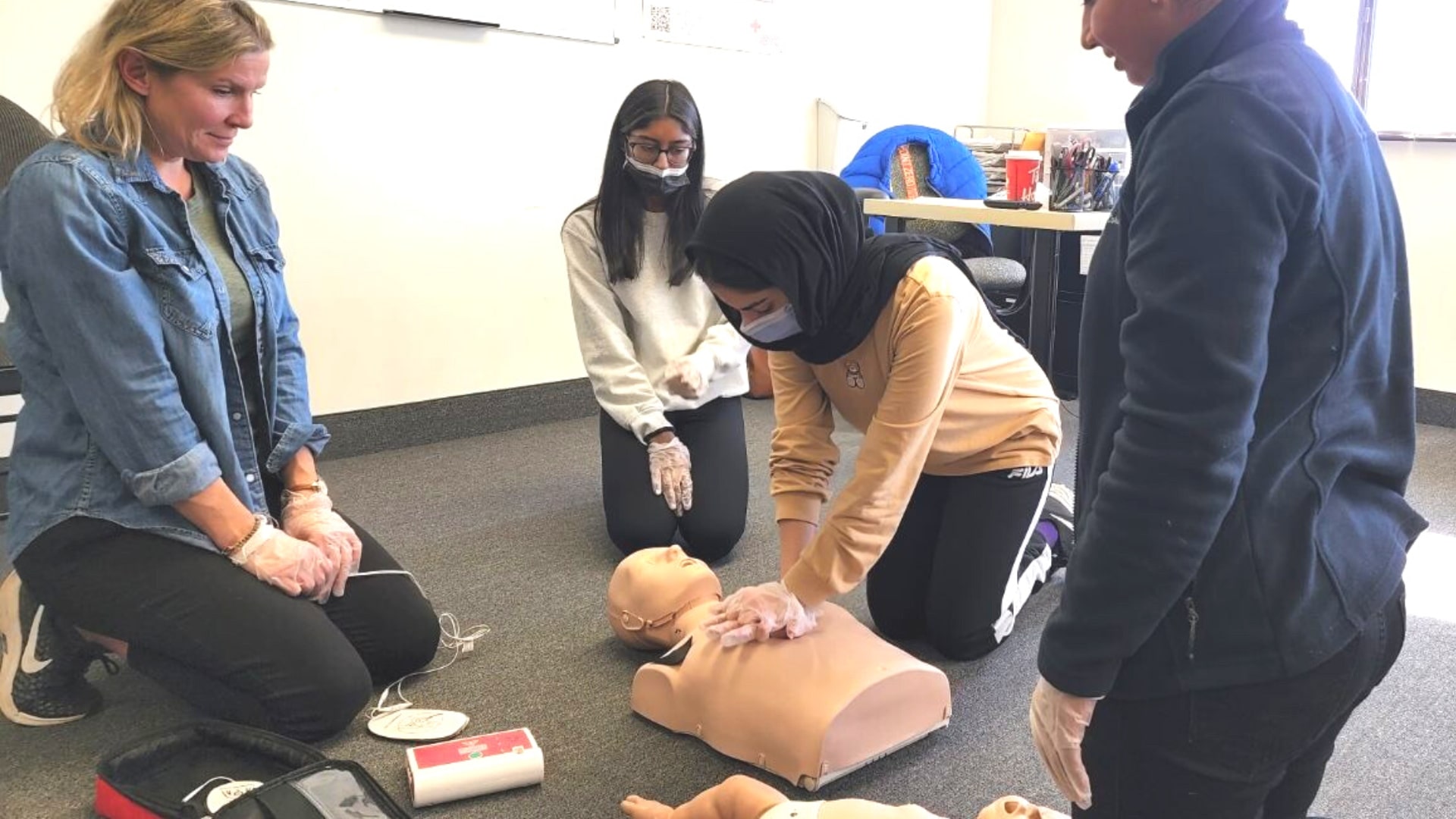
You can help someone in a medical emergency with the right CPR with proper training. Whether you need specific CPR training for your workplace or to help others, Coast2Coast offers lessons in several areas across Ontario. Learn the latest techniques for performing the various forms of cardiopulmonary resuscitation, including using an AED, and be there for others in medical emergencies.
Register for a First Aid & CPR Training Course
Choose from any of our locations across Ontario and gain the knowledge and skills to save a life!
First aid training might not be your top priority, but consider that everyone should have the skills to assist others calmly in an emergency. All types of medical emergencies and accidents can happen in the home, workplace, school, and public places, and first aid training prepares you to provide the right treatment, call for help, and even save a life.
Besides helping to save lives, when a patient gets adequate help, their recovery time decreases, and for many patients, it can even save them from permanent or partial disability. Furthermore, when someone has First Aid training, they have the confidence to react in time, collect the right information, and help relieve the person’s discomfort until professional responders arrive to take over.
Who Needs First Aid Training?
We all know that some people need First Aid Certification for their professions, studies, or workplace safety requirements.
However, this does not mean that children, adolescents, and even older people who don’t require the certification should not know how to react in an emergency.
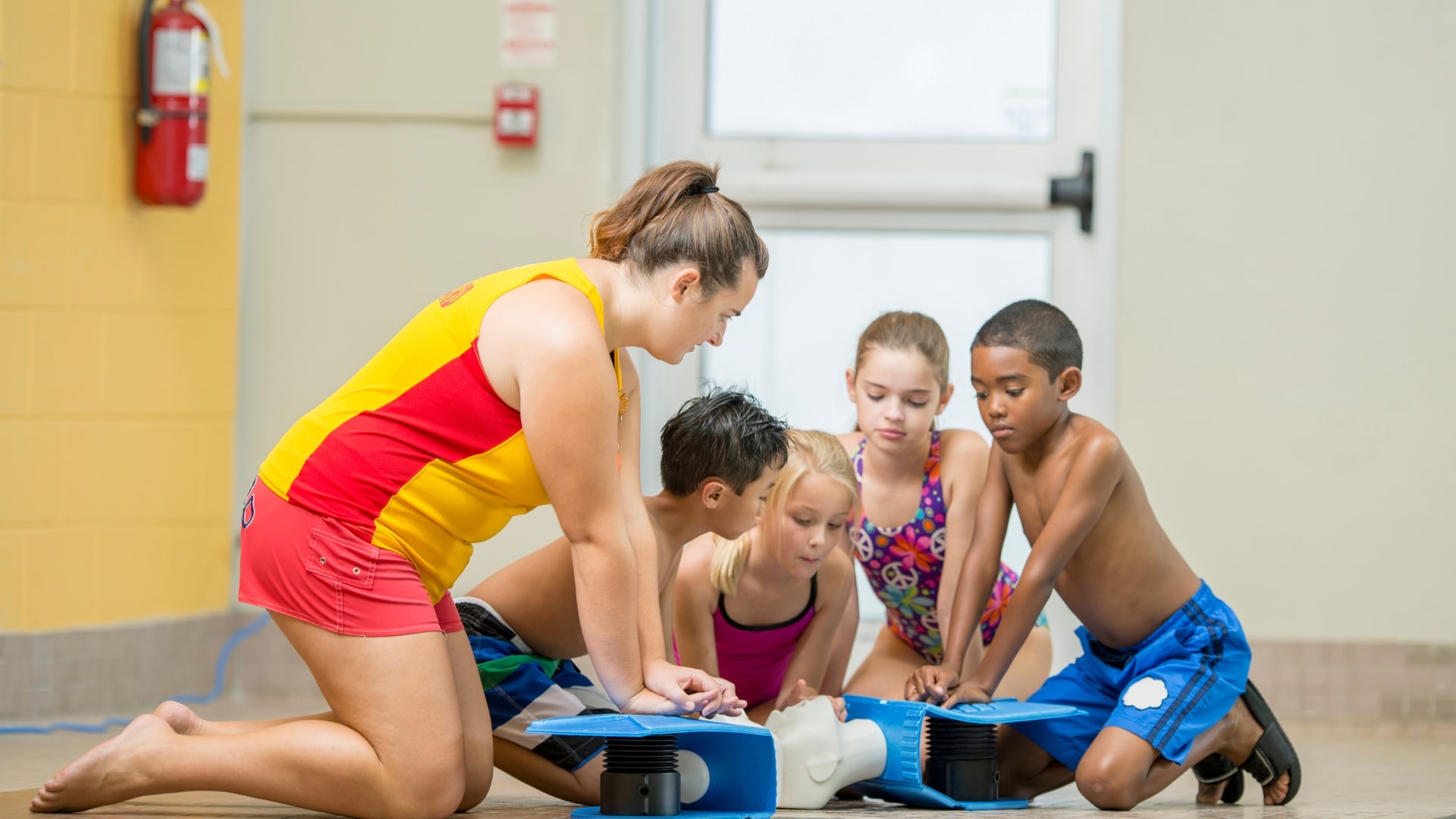
From the moment children attend school, they are ready to learn several things concerning safety, understanding an emergency, calling for help, locating first aid kits, and saving a life.
Therefore, from Grade One onwards, children can quickly progress through all levels of First Aid training until they can competently apply their knowledge in any situation and get their certification.
Since it’s so easy for children to learn First Aid, there is no reason why people of all age groups, including students and adults, should not know Emergency or Standard First Aid.
Inquire about First Aid & CPR Training Course
Certify for First Aid training learn skills that increase their confidence and willingness to respond to others in a crisis as you complete the course with us. Call our toll-free number to know more.
Nobody is too young or too old to learn First Aid. Adults can learn the training in just a few hours, whereas children and teens require more time.
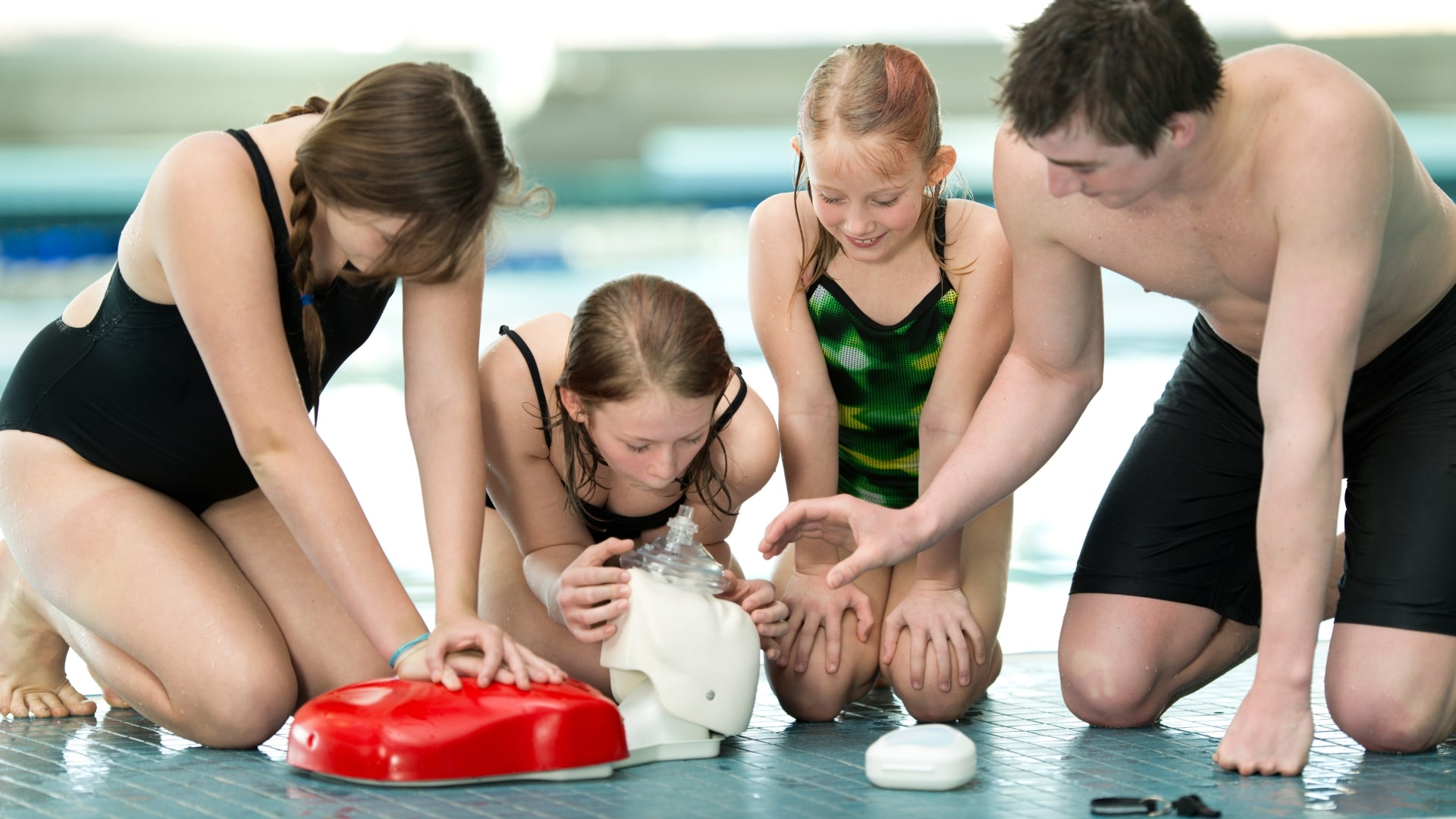
Children are ready to start learning the most fundamental First Aid skills at around six years. These include learning their home address and telephone number, how to call 911, and identifying the different types of emergencies. In addition, First Aid courses provide safety training and teach children where to find the first aid kits in their homes and schools.
Children can quickly progress to learning about recovery positions and move on to other First Aid skills like stemming bleeding, helping someone who is choking, CPR, and using an AED.
First Aid Training Courses for all Ages
Very few people survive cardiac arrest because not enough people have the skills to perform the required hands-on CPR that would help them live. First Aid training courses for all ages helps to give people the confidence to eliminate what is known as the “bystander effect.”
However, that is just one of the various First Aid skills taught in First Aid courses. In addition, learning sessions are created to help people at all levels pick up the required knowledge that will equip them to assist others. At Coast2Coast, we offer youth programs to help youngsters acquire lifesaving skills they will use in the future.
First Aid skills can prepare everyone to deal with emergencies. However, these skills can help children to take a more active role in the home, like helping to care for a baby. Moreover, this form of youth training can also help them understand the importance of safety in their environment and when called to help others during an emergency. In addition, the skills they acquire are invaluable if they want to earn extra money by babysitting or within youth organizations and clubs.
Adults usually take Emergency or Standard First Aid courses according to their social and work needs. However, children and adolescents are also very capable of learning both Emergency First Aid and Standard First Aid.
The Importance of First Aid Training
Like adults, learning life-saving skills at a young age benefits children in several ways. First, they learn skills that increase their confidence and willingness to respond to others in a crisis.
First Aid courses allow people of all ages to save a person’s life by performing CPR in a cardiac arrest emergency. Cardiopulmonary resuscitation (CPR) offered immediately provides these patients a better chance of survival.
The younger a person learns First Aid, the better they become at responding to emergencies. Therefore, starting with the basics, beginning from a young age, children can progress to more advanced training as they grow.
These versatile skills build the confidence and communication skills required to give young people leadership qualities. Therefore, the more we encourage young people to work under pressure and adapt to a critical environment, the more we teach them about positive influences and how to create a better world for future generations.
Find a Training Center Near You
Coast2Coast has a vast selection of First Aid and CPR courses to meet your personal or professional needs in Ontario. As a proud partner of the Canadian Red Cross and with WSIB approval, it has never been easier to access First Aid training nearby in the Greater Toronto Area, Western and Eastern Ontario. Act now and equip yourself with the certification that will enable you to support others.
Register for a First Aid & CPR Training Course
Choose from any of our locations across Ontario and gain the knowledge and skills to save a life!
Mental health remains a vital component of your complete well-being, including the health of your heart. The facade of happiness during the holiday season often masks the challenging emotions that come with celebrations. In fact, 52% of Canadians report increased levels of anxiety, depression and isolation during the holiday season. The holidays may intensify negative emotions if you already experience depression or anxiety.
The term, “First Aid” refers to the emergency care given to a person who has been injured or has suddenly taken ill. This early response decreases their chances of developing future disabilities and limits the damage done by their current injury or illness.
While learning CPR may feel intimidating at first, it is a crucial skill to have in case you ever find yourself in a medical emergency situation.
Although CPR training is essential, it’s just as crucial that it is performed correctly. The key to effective CPR training is learning how to tailor the procedure according to the age of the patient.
Knowing CPR is not only a necessity for parents and caregivers, but anyone who spends time around children regularly.
CPR for adults and children may share some similarities, but some significant differences exist, especially when performing it on younger children and infants. The correct CPR training considers age group differences, preparing you to take action in a medical emergency.
What is Adult CPR?
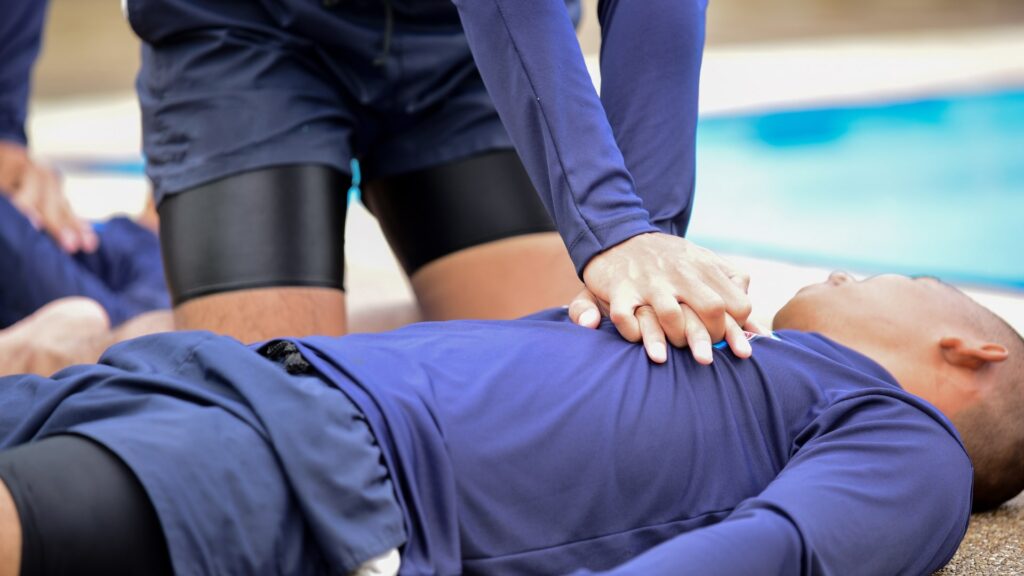
Cardiopulmonary resuscitation (CPR) combines 30 rhythmic chest compressions and two rescue breaths used as an emergency lifesaving procedure in patients with no heartbeat. During CPR, the rescuer uses both hands to compress the chest center at a depth of two inches at a rate of 100 to 120 compressions per minute, a procedure that helps stimulate the heart physically. They then give rescue breaths using the correct quantity of air to raise the patient’s chest.
Adult CPR Example
Imagine witnessing an adult suddenly collapse in a park. You check for responsiveness—no response. You call for emergency help and position the person on their back. Starting chest compressions, you place your hands interlocked in the center of the chest, pressing down at least 2 inches deep at a rate of 120 compressions per minute. After 30 chest compressions, you tilt the head back, seal your mouth over theirs, and deliver two rescue breaths, watching for chest rise. You continue this cycle until help arrives.
Learn about First Aid & CPR/AED Course you might need
Certify for First Aid & CPR/AED training to assist someone with your life-saving skills as you complete the course with us. Call our toll-free number to know more.
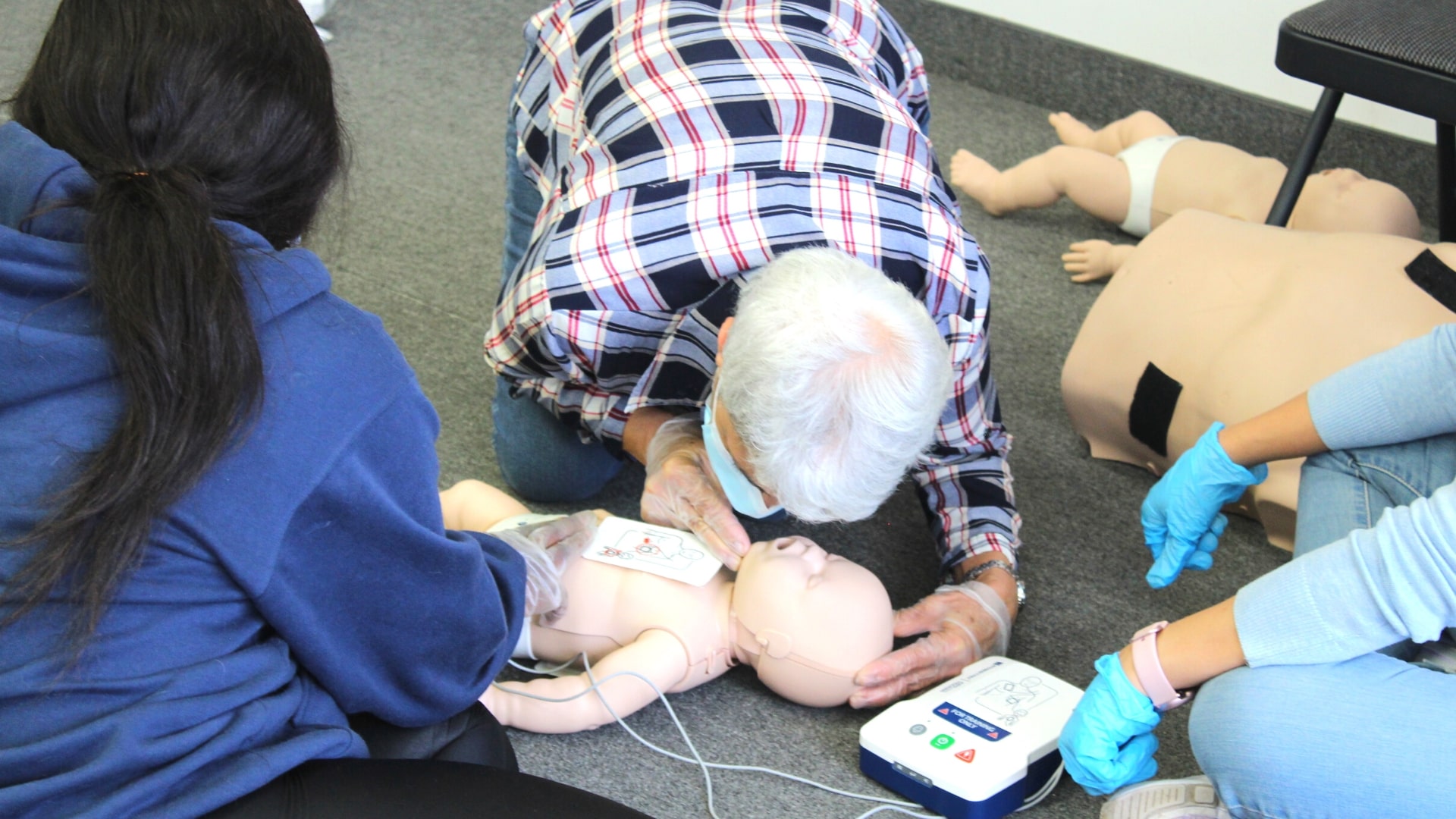
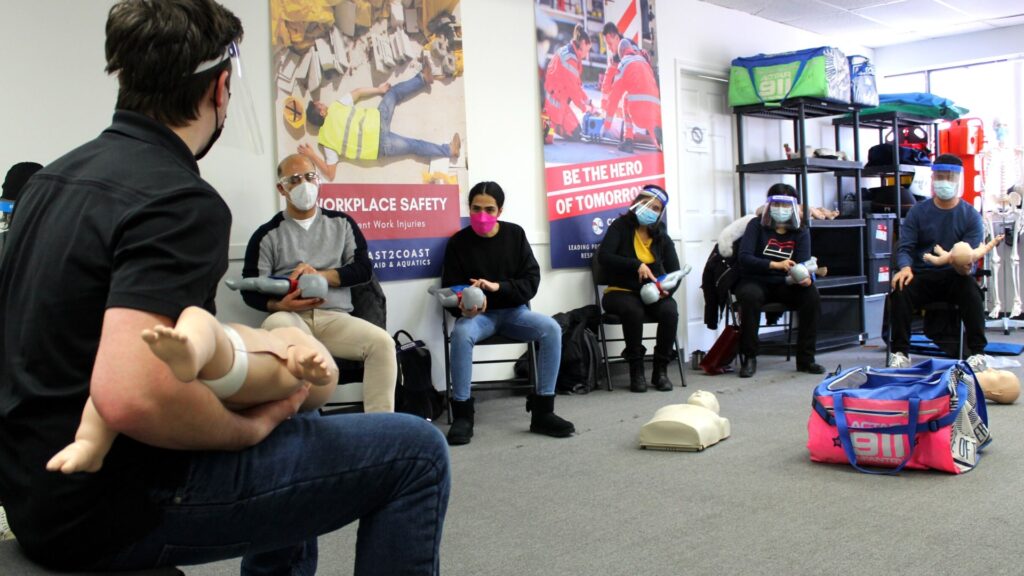
Children have flexible bones, ensuring they don’t get hurt when CPR is required. When performing CPR on an infant, it is crucial to make a complete seal over both the infant’s mouth and nose while administering rescue breaths. However, infants require special care because they are more delicate because of their lighter weight and bone density. Therefore, children and infant CPR teaches you to check for responsiveness and a pulse in different age groups and perform rescue breaths and chest compressions.
Child CPR Example
Now, consider a scenario where a child, about 7 years old, collapses at a family gathering. You ensure the scene is safe and call for emergency assistance. The cardiopulmonary resuscitation process starts with laying the child on a firm surface; you use one hand for chest compressions, pushing down about 2 inches deep at the same rate of 120 compressions per minute. After 30 compressions, you give two rescue breaths, covering both the mouth and nose, ensuring to see the chest rise. You repeat until professional help arrives.
Recognizing Cardiac Arrest
Recognizing cardiac arrest is crucial for performing CPR effectively. Cardiac arrest occurs when the heart suddenly stops beating or fails to beat effectively. Key signs of cardiac arrest include:
No breathing or abnormal breathing
No pulse or a weak pulse
Unresponsiveness
Pale or blue-tinged skin
Confusion or loss of consciousness
If you suspect someone is experiencing cardiac arrest, it’s vital to call the emergency response system immediately. Once you’ve alerted emergency services, start CPR if you are trained to do so. Quick action can significantly increase the chances of survival.
Checking for Responsiveness in Children and Infants
You can gently shake a young child to see if there is any responsiveness, but you can’t do this with an infant. Since a gentle shake is unsafe for babies, the correct way to check is to tap its foot or speak loudly to see if it responds.
Checking for a Pulse
In young children, you can check for a pulse in the same way that you would for an adult at the carotid artery. However, the best way to check for their pulse in infants is on the inner upper arm, known as the brachial artery.
Giving Rescue Breaths
To perform CPR on an adult, full lung-strength rescue breaths are required for better effectiveness. However, children need gentler puffs, and baby breaths even more so. Filling your cheeks with air usually suffices for infant rescue breaths. You must always ensure that the chest rises and falls during rescue breaths to achieve adequate chest rise.
Additionally, the head is always tilted back gently when performing rescue breaths on a young child or infant.
Giving Chest Compressions
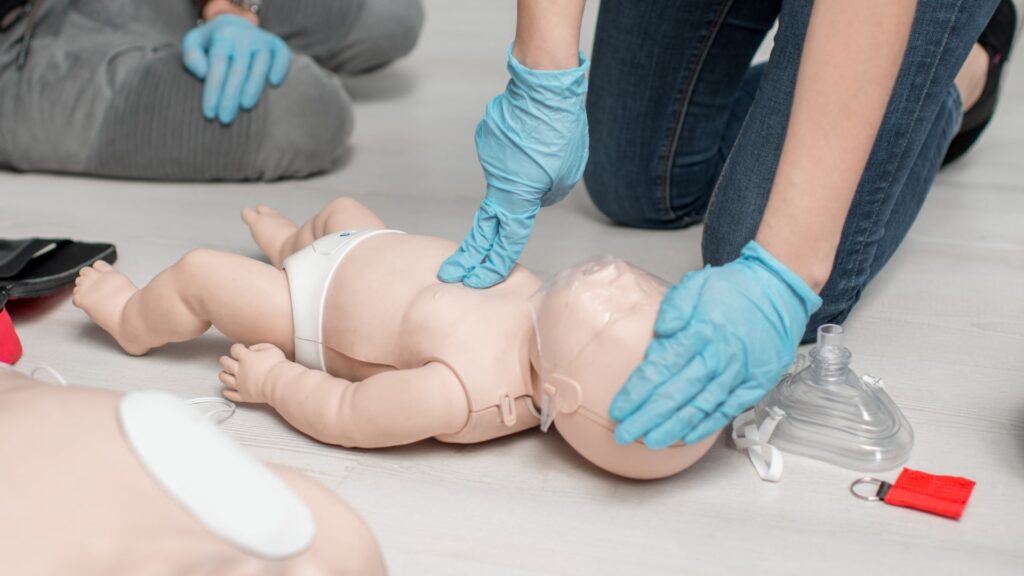
When giving chest compressions to infants, the CPR techniques differ; you should only use two fingers because of the size of their bodies. The depth of the compressions also changes; they are shallower than those given to adults and young children.
With infants and children, always begin CPR immediately and call 911 after a few minutes or when it regains consciousness. Why is this important? Because children and infants have a better chance of survival when performed immediately, therefore you need to start chest compressions immediately. Of course, in cases where two people are present, one can perform CPR, and the other should call in all cases, whether they are adults, children, or infants.
Benefits of Learning CPR
CPR is a lifesaving procedure performed when someone’s heart stops beating. Pediatric CPR is especially important as it involves specific techniques tailored for children and infants. Research has shown that CPR increases the chances of survival for cardiac arrest victims by more than double.
CPR keeps the blood flow active in someone who has stopped breathing and has no pulse, allowing blood and oxygen to maintain the function of vital organs like the brain.
How to Prepare for Providing CPR
Training remains the best way to prepare for CPR and maintain your certification. However, logic says that even if you are untrained, it’s always best to try and do something to save someone’s life than to do nothing.
Always make sure of the following as you prepare to offer CPR:
Ensure a safe environment.
Check if the person is unconscious.
Call 911 first if dealing with an adult and then perform CPR, or do the opposite if it’s a child or infant. Knowing child CPR is crucial as it involves specific procedures and distinctions for children aged 1-12.
Use an AED only if it instructs you to proceed with delivering the shock.
Remember the order of CPR: compressions, airway, breathing.
Survival Rate Statistics for CPR
Brain damage occurs within minutes from a lack of oxygen. Therefore, if a person does not receive CPR immediately in an emergency like a cardiac arrest, it is improbable that they will survive if they wait for emergency services.
Recent statistics show that quickly performing CPR increases their chances of survival by nearly 45 percent in out-of-hospital situations for cardiac arrest victims helped by bystanders or relatives.
Find a CPR Training Near You
Not only do medical emergencies happen at work, but they also take place in more familiar settings like around the house. Being certified in First Aid and CPR means that you can step up and help in any emergency situation. The more training you have, the better equipped you are to handle unforeseen situations which might come your way.
Help improve the outcomes for people in out-of-hospital situations by completing CPR training so that you are ready to take immediate action. Coast2Coast provides CPR Level A, CPR Level C, and Basic Life Support classes across Ontario in several locations, making it highly convenient for you.
Register for a First Aid & CPR Training Course
Choose from any of our locations across Ontario and gain the knowledge and skills to save a life!
The increasing number of people diagnosed with cardiac health issues means millions are at risk of heart attacks and cardiac arrest. Since most of these occur outside of a hospital, Basic Life Support provides the training to help increase survival rates, particularly for cardiac arrest victims who would otherwise have minimal recovery and survival chances without help.