
5 Benefits of the Virtual Babysitting Program

5 benefits of virtual babysitting

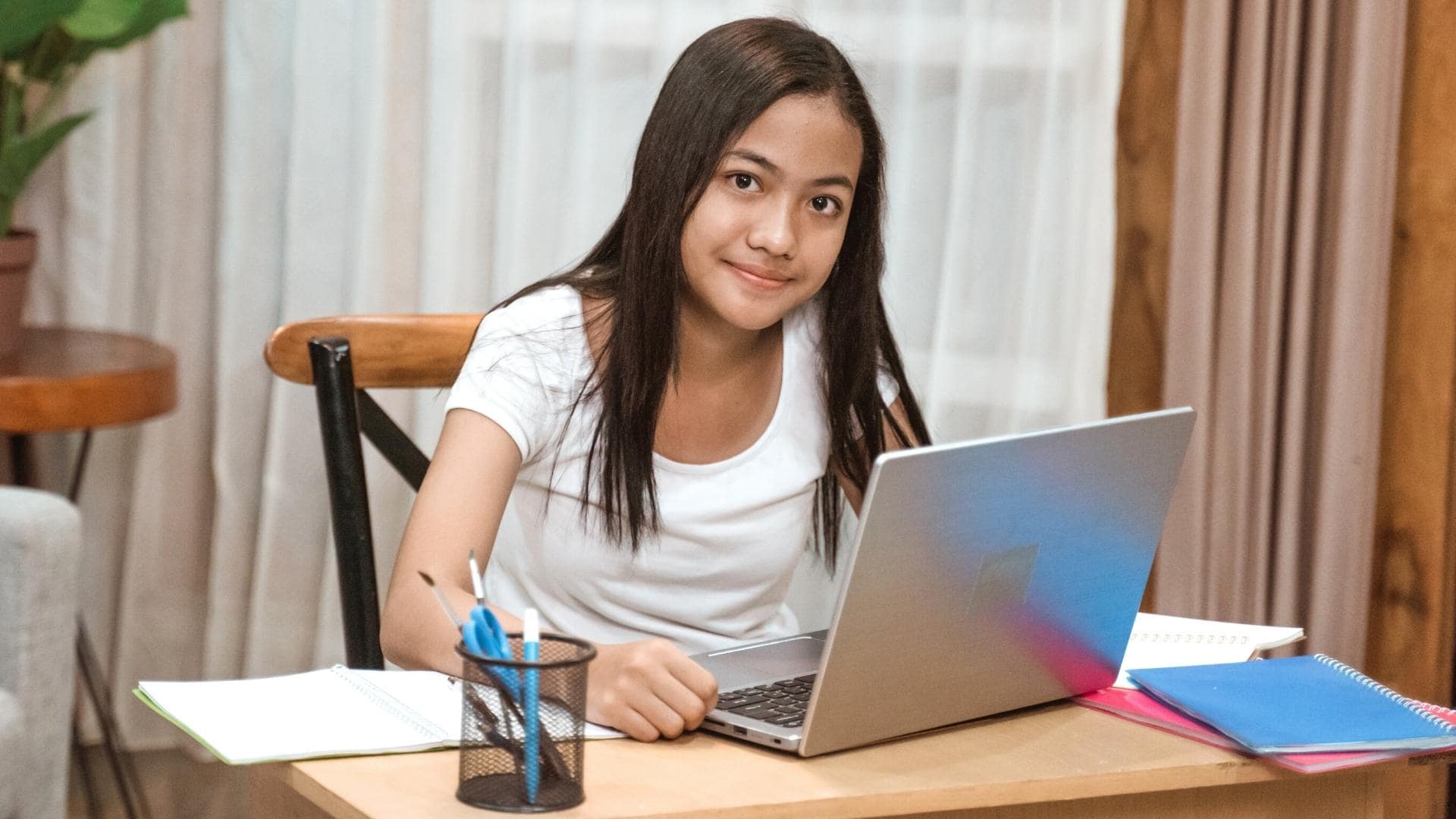
The Red Cross Virtual Babysitting Program is available to pre-teens and teens, ages 11 to 15 years old. There is also a course for children ages 9 to 13 called Stay Safe. Both the Babysitting and Stay Safe training courses are available online in a virtual format. These youth courses are designed to allow participants to complete their training at home. There are multiple benefits of the Virtual Babysitting program which will teach you (or your child) important life skills.

Babysitting training prepares participants to become responsible caretakers of children. Once the virtual Babysitting program is completed, applicants will have a full understanding of how to care for a young child and treat common emergencies. They also know all about complete child safety and how important routine is in children.

Those who complete the full virtual babysitting program earn a Canadian Red Cross certificate proving their skills. Let’s talk about 5 Benefits of the Virtual Babysitting program!

5 Benefits of the Virtual Babysitting Program For Your Business

The Virtual Babysitting Program is between 7 and 8 hours long and is held over four days. Each day will consist of a 90 minute online session, followed by 30 minutes of at-home work.

These are the five huge benefits of completing the Red Cross Virtual Babysitting Program if you are looking into building a babysitting business:

1. Succeeding in the Interview Process

Getting a good babysitting job doesn’t only depend on your skills but also on how you conduct yourself in an interview. One of the benefits of completing a virtual babysitting course is that you learn about how important it is to conduct yourself in the interview while also asking all the right questions. Participants are taught how to create a resumé and create business cards so that they can successfully manage their babysitting business. Don’t forget that you will receive a babysitting certificate from the Canadian Red Cross which already is a huge plus for you.
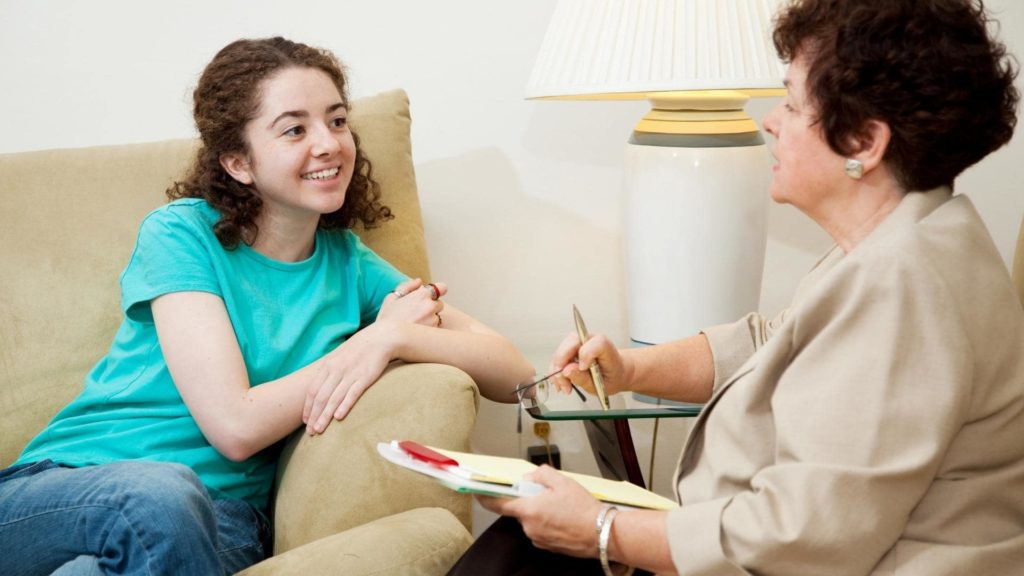
A young woman in a teal shirt sits on a sofa, smiling and talking to an older woman who is holding a pen and notepad. The older woman, seated on another chair, is listening attentively. A lamp is on the table between them.

2. Meeting Customer Expectations

Learning to meet customer expectations is another vital benefit of the course. Besides being dressed correctly when arriving for the job, other customer expectations include being on time and having clear communication with the parents about their children’s needs. You are taught to ask the right questions about what to expect, find out if there are any special circumstances (allergies, medications, etc.). Participants of the course also learn how to survey the home at first, helping them to understand where dangers may lie.

Become a Certified Babysitter!

Join our Babysitting Course and learn essential skills for caring for children safely and responsibly. From basic first aid to engaging activities, our training prepares you to be the best babysitter you can be!

3. Learning the Needs of Every Age Group

You always need to have a genuine interest in the children you are going to look after, and the course teaches you how. Each age group you are likely to care for has different needs and challenges, and the virtual program is geared to teach you how to communicate with them and to organize the appropriate and fun activities. Once the course is completed, young babysitters know how to deal with crying and tantrums and how to care for children from babies to school-age children.

A young girl with a pink bow in her hair sits on an outdoor patio, lovingly holding and looking at a baby in a striped onesie. The baby lies on her bent legs, and both appear content in a serene setting.

4. Confidently Meeting the Challenges of the Job

For younger babysitters, the lessons of the program teach them how to give others direction and to deal with situations confidently. Babysitters face several challenging issues, and these include mealtime, structured playtime, and bedtime. The program teaches them to support younger children emotionally to ensure these challenging issues are dealt with successfully. Every participant learns how to react confidently to any emergency, including bleeding, burns, choking, and poisoning.

5. Understanding the Value of Money Earned

Teens and younger children becoming babysitters can earn a substantial allowance. Learning the value of money, how to spend it, and how to budget is essential as they become part of the economy.

A young girl in a pink dress is placing a coin into a pink piggy bank, while an older woman smiles and holds another coin. They are sitting on a couch, engaged in a playful and educational activity.

Conclusion

Providing a safe environment for younger children is essential to every parent, and ensuring they have the correct care is often a challenge. By encouraging younger children to follow a babysitting program, children can provide a safer environment for younger children in their care. Babysitting is a profitable and rewarding job, and the correct training makes it enjoyable.
Register for First Aid Training

Register today for a First Aid Training course and learn how to deal with emergencies and keep your loved ones safe! Check out our facilities and book your spot now.

Can You Teach Yourself How To Swim?

can you teach yourself how to swim

As Canadians, most of us like to visit beaches, lakes, and swimming pools especially in summer time. Afterall, we don’t get too much of the warm weather so we would like to take full advantage of it. 

Here at Coast2Coast swim, we are extremely passionate about swimming and all water activities; and we encourage everyone to also get involved with these activities. Swimming has always been one of the best ways to stay in shape for people of all ages, to stay active, and finally a fun activity to enjoy no matter if you are by yourself or with friends and family. That is why we take pride in teaching our community how to swim and stay safe in and around water. 

Coast2coast Swim offers a variety of options from public swimming classes, to private at home (mobile) swimming lessons. This allows our customers to find the most convenient and cost efficient. 

However, the question we get from time to time is “can you teach yourself how to swim?”

In short, yes. But you should know that we strongly suggest for you to sign for a training or class either at Coast2Coast swim or another reputable swimming school. This is to make sure you learn the fundamentals of swimming in the right way and that you can enjoy the water in a safe manner at all times.

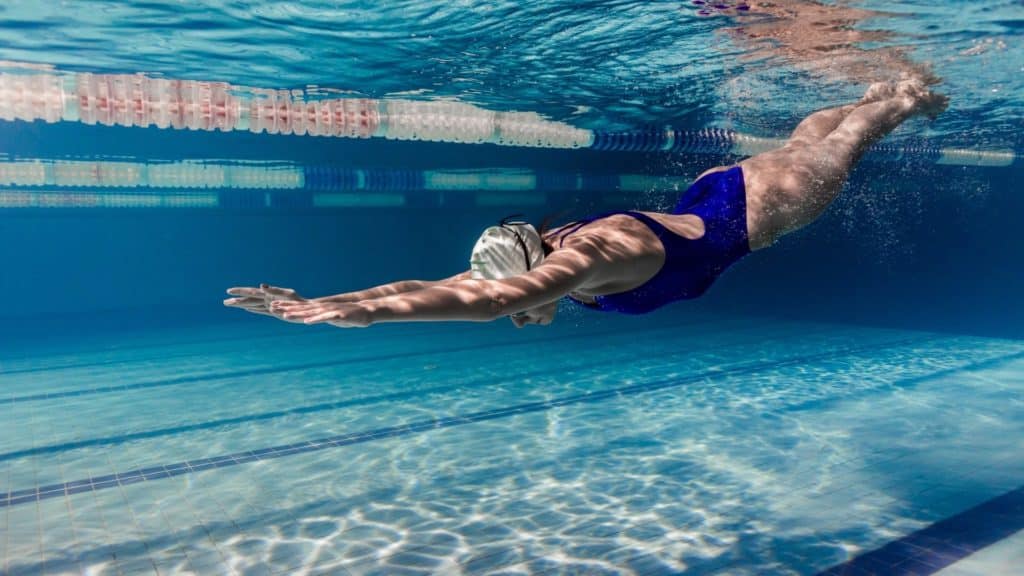
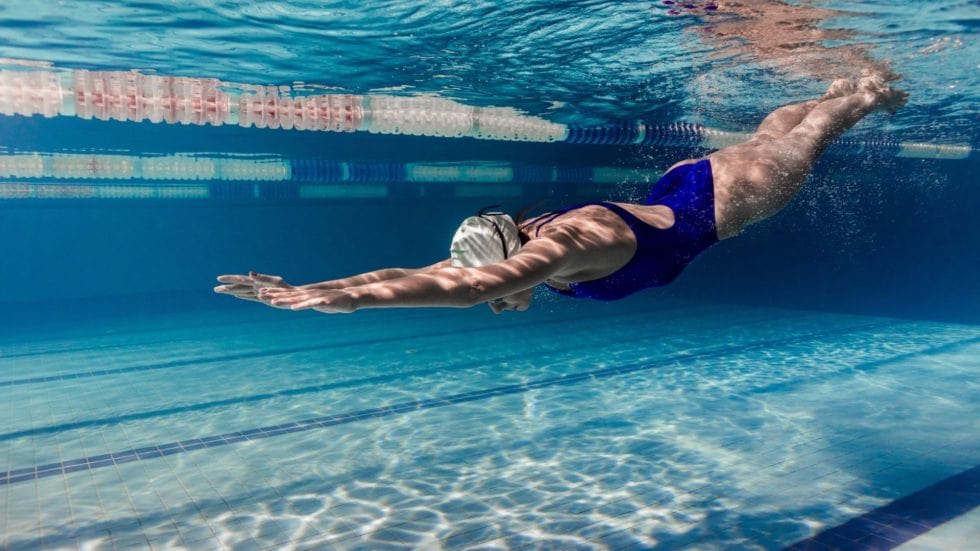
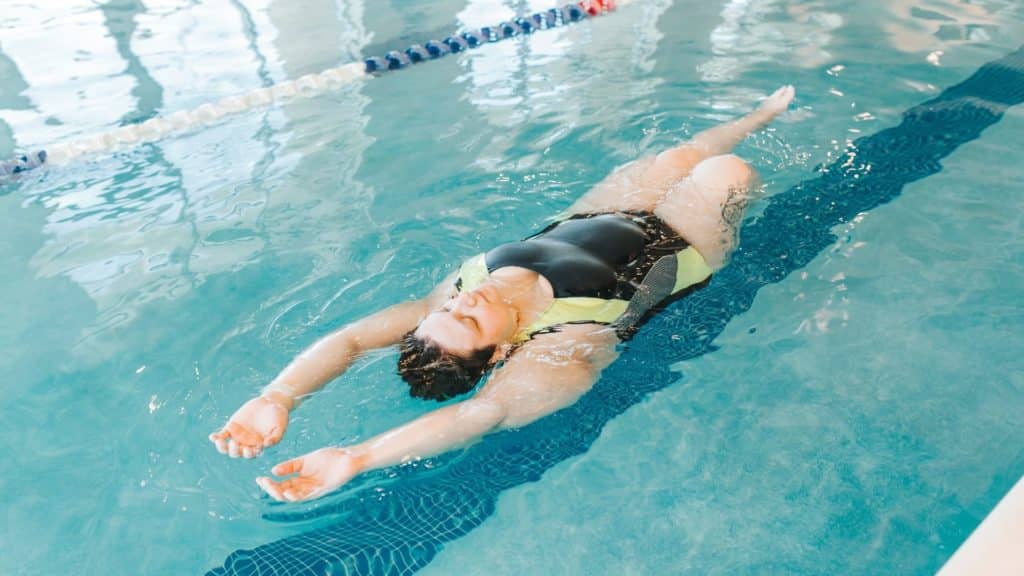
A person in a black and yellow swimsuit is swimming on their back in a clear indoor pool, with arms extended overhead. The water is calm, and lane markers are visible in the background.

Teaching Yourself to Swim

Here is our suggestion on how you can try to teach swimming to yourself. Please be aware these are only suggestions and we can not guarantee your safety or skills. Swimming can be challenging. Here we go:

Start practicing your swimming in a safe environment like the shallow end of a supervised swimming pool. Never go to the deep end of the pool or swim in moving water without supervision. If you are tired, don’t practice.

The easiest stroke to learn is the front crawl. Once mastered, you can learn the three other strokes – backstroke, butterfly, and breaststroke.

1. The First Step

Standing with your back against the pool, take a deep breath, lean your waist until your face is completely in the water and your ears are at the waterline. You must hold this position for 2 seconds before turning your head to one side, exhaling into the water. Now you can return to the starting position. Practice doing this a few times.

2. Learning to Inhale and Exhale

Start by holding your arms out to your side, fingers together and palms down. Now, take a deep breath, lean forward, and placing your face in the water, bring your right arm up and out of the water to your front.

As your hand contacts the water, pull your arm straight down, making a circular motion underwater and taking your hand behind you and to your right side. At this point, your palm should be facing up. Without lifting your head, turn it to the right and draw a new breath through your mouth. Now turn your head back and exhale through your mouth or nose with your face in the water.

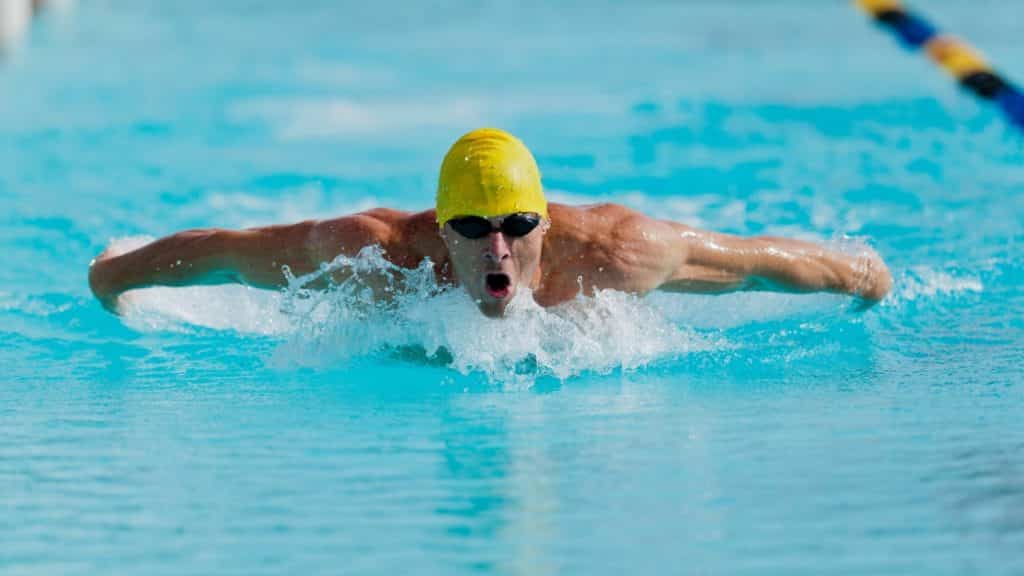
A swimmer wearing a yellow cap and goggles is performing the butterfly stroke in a bright blue swimming pool. Water splashes around as they advance, showcasing dynamic motion and focus.

3. Practicing the Strokes and Breathing

Aim to practice the stroke and breathing exercise until you can complete one stroke with each arm and one complete breath without needing to lift your head out of the water. The idea is stroke – stroke – breath. When swimming, your arm movements propel your body, while kicking your legs prevent you from sinking.

Keep your strokes regular, and avoid looping underwater because once you are swimming, you will have to work harder to cover the same distance. The closer your body is to the surface, and the flatter it is, the less work you must do. Additionally, when you bring your arms out of the water, a flat circular motion helps save more energy than bringing them overhead.

4. Learning to Kick

Facing the side of the pool, place both your hands on the edge and extend your arms. Lift both your legs together until your arms, body, and legs are facing away from the edge in a straight line. Turning your head to one side, draw a breath through your mouth without lifting your head straight up.

With your knees held straight, kick your legs quite fast from the hip, making the smallest possible splashes. At no point should your feet come out of the water. While you are doing this, exhale underwater, as you learned earlier. Continue practicing kicking and breathing until you are comfortable doing both simultaneously.

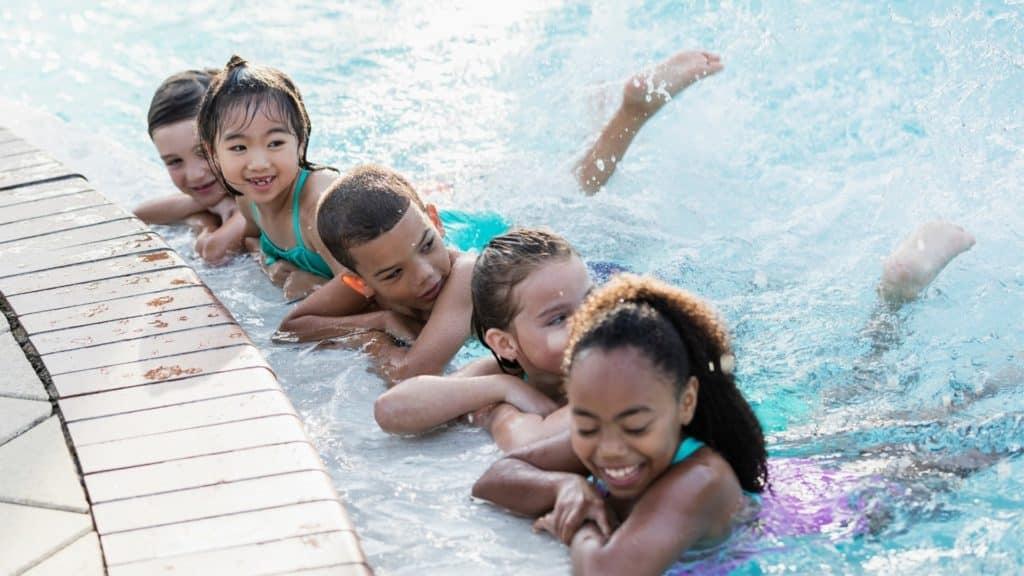
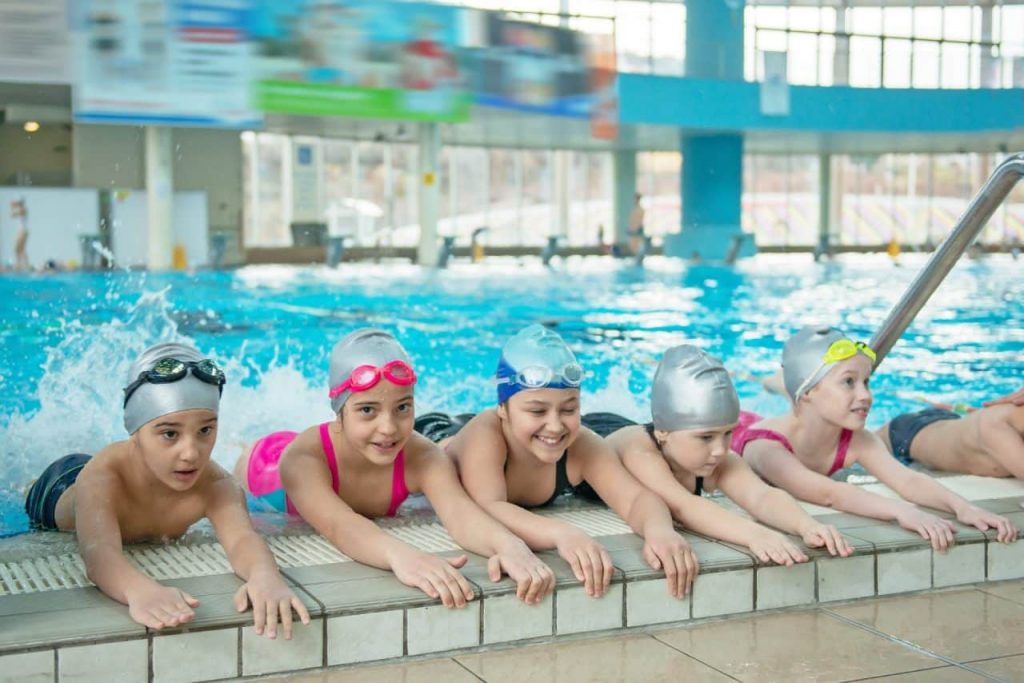
Five children smiling and playing at the edge of a swimming pool, with water splashing around them. They are lying on their stomachs in the shallow water, showing joy and excitement in a bright, sunny setting.

5. Going to the Opposite End

You are now ready to go across the shallow side of the pool. Facing across the shallow end, stand with your back to the side of the pool. With bent knees, extend your left arm to the front, and taking a deep breath, let your legs help push you from the side. At the same time, put your head in the water, taking a forward stroke with your right arm as your legs start kicking.

6. Achieving Width Lengths

Now you can continue kicking, while also concentrating on your strokes and breathing. Make sure you are bringing each hand back to your side as you reach out to make a stroke with your other hand. As mentioned earlier, your swimming pattern should be a stroke with each arm and then a breath. Practice this until you can swim the whole width of the pool without needing to stop.

We hope this was helpful to you. If you are looking to learn these skills faster and better, contact Coast2Coast Swim to find out more about all our options. Our dedicated instructors have been teaching for close to 20 years and have taught thousands of students throughout the years.

Once again, be aware that the practices mentioned in this blog are only suggestions and we can not guarantee your safety or skills. 

Enjoy your Swim.

Dive into fun with Coast2Coast's Mobile Swimming Course!

Whether you’re a beginner or looking to improve your strokes, we bring the pool to you! Sign up today and make a splash this summer!

Learn Swimming: Step-by-Step Guide

learn to swim

How To Learn To Swim?

Summer is quickly approaching which means it’s almost time to go swimming! Many of us look forward to these summer months so we can spend more time outdoors enjoying the weather with our family and friends. This summer, us at Coast2Coast want to make sure you’re prepared to have a safe summer. In today’s blog post, we will be discussing:

  • Can you learn how to swim by yourself?
  • What are the steps to learn how to swim?
  • How do I get over my fear of swimming?

Register for Mobile Swimming Lessons

At Coast2Coast, we provide Mobile Swimming lessons in the Greater Toronto Area! Inquire about our Mobile Swimming program today and gain confidence in your swimming skills.

How to learn to swim by yourself?

One of the most asked questions in swimming is: can you learn how to swim by yourself? Although it is possible to learn by yourself, we do recommend that you learn how to swim with a trained instructor for safety purposes. If you have no prior swim knowledge, you will increase your risk of drowning.

Options to learn swimming

  • Take a course with a trained instructor

The safest and highly recommended way to learn how to swim is by signing up for swimming lessons with a swim school and have an instructor teach you the proper skills. Swimming instructors will not only teach you different swim strokes, but also teach you lifesaving skills such as treading water. To learn faster, you can ask your instructor for homework to practice more on your own time in a safe environment.

If you want to learn how to swim with an instructor, Coast2Coast offers swimming lessons for all ages. We offer public swimming lessons, mobile swimming lessons and integrated swimming lessons.

  • Practice with a friend or family member

Another way to learn how to swim is with a friend or family member who is a strong swimmer and knows the techniques and strokes. In case of an emergency, you will likely be able to get help from them. Although this is a safer option than swimming by yourself, we still strongly recommend to attend a swimming school with certified lifeguards and instructors always on deck. Coast2Coast offers swimming classes with professionals always on scene who are experienced and trained at the highest levels of aquatics and drowning prevention. Remember to practice in the shallow end of the pool at all times.

  • Practice on your own

The least safe way to learn how to swim would be to practice on your own. If you are taking this risk, it is recommended to practice in the shallow end of a pool with an innertube or another floatation device on hand. Reading or watching videos on how to swim would be a way to prepare yourself before entering the pool. Please be aware that this is not a recommended option, though.


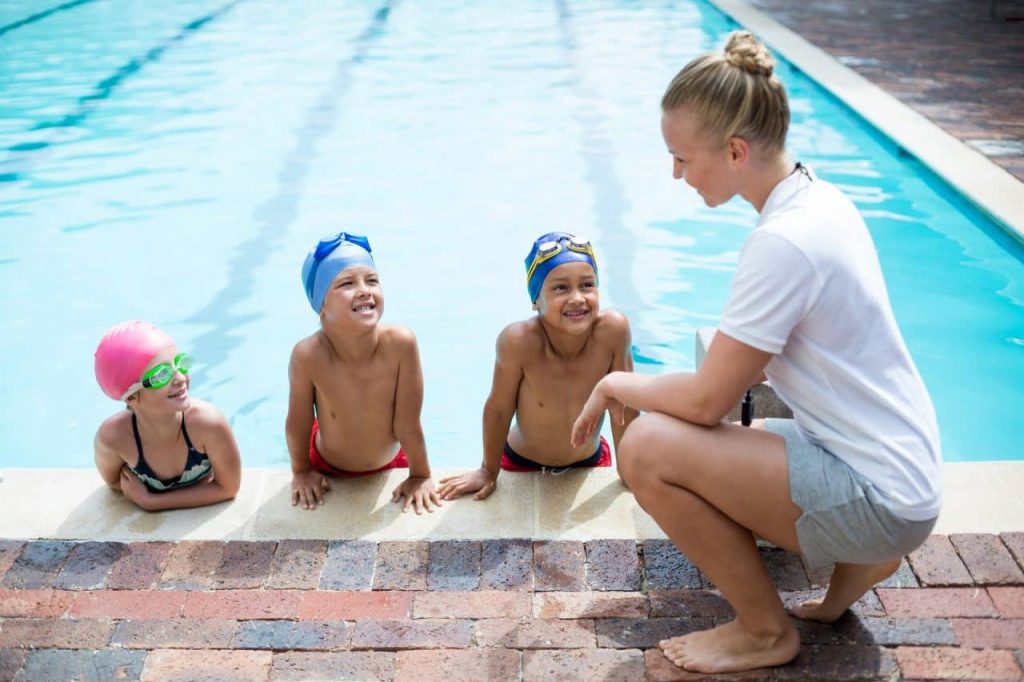
A swimming instructor kneels by the edge of a pool, smiling at three young children in swim caps and goggles sitting on the poolside. The children are laughing and appear to be enjoying their swimming lesson.

Swimming Lessons for All Ages!

It’s never too late to learn how to swim. If you have access to a pool, we can teach you! Contact us today to set up your mobile swimming lessons.

What are the steps to learn how to swim?

Knowing how to swim is a great skill to have. Keep in mind that everyone learns at different levels, so these steps may not work for you. If you are fearful of water, scroll down to read how to get over your fear of swimming.


1) Become comfortable with the water

Begin practicing in the shallow end of a pool with your swimming instructor. You want to be sure you can stand up comfortably if you lose your balance or need to take a break.


2) Practice floating

Keep in mind, our body is naturally a pretty buoyant as we fill our lungs with air. All our bodies are different, though. You can practice floating, first, by holding onto the edge of a pool and lifting your legs off the ground. Practice both on your stomach and on your back while holding onto the edge of the pool. Once you feel comfortable floating while holding onto the edge, you can practice floating in the shallow end of a pool alone or with the assistance of your swimming instructor or another person.


If you ever panic while swimming in deep water, resort to floating on your back and try to relax. Give yourself time to calm down before beginning swimming again.

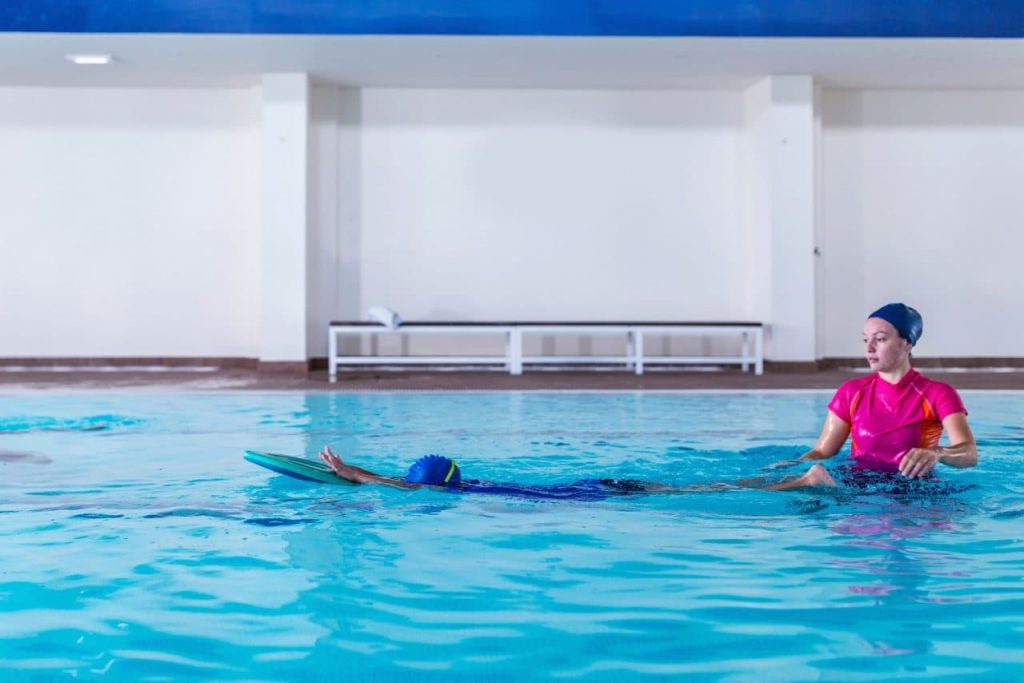
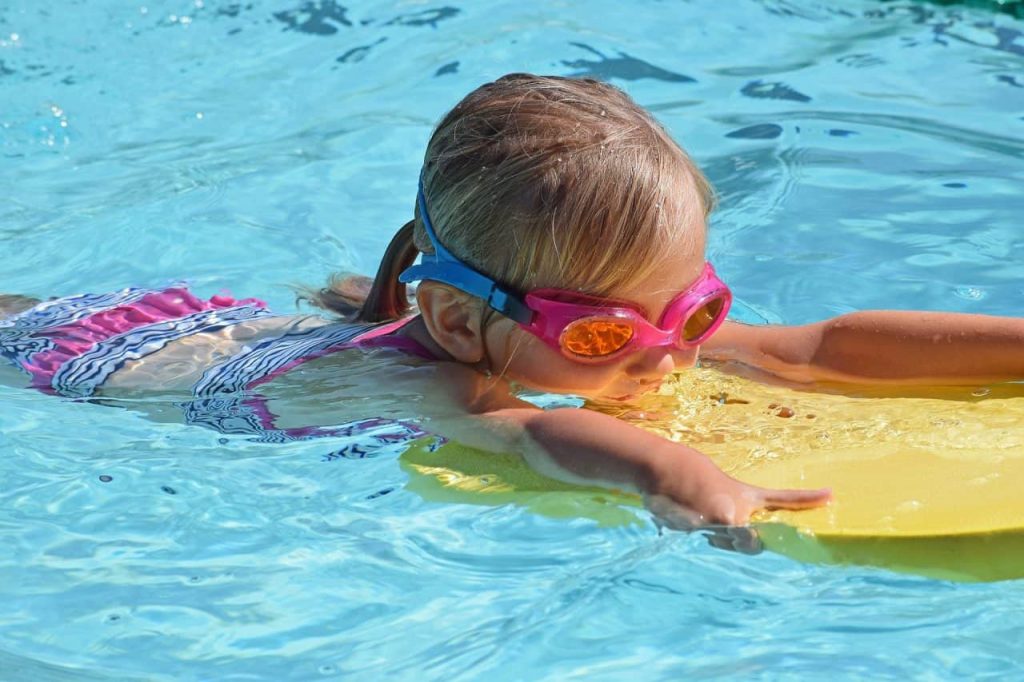
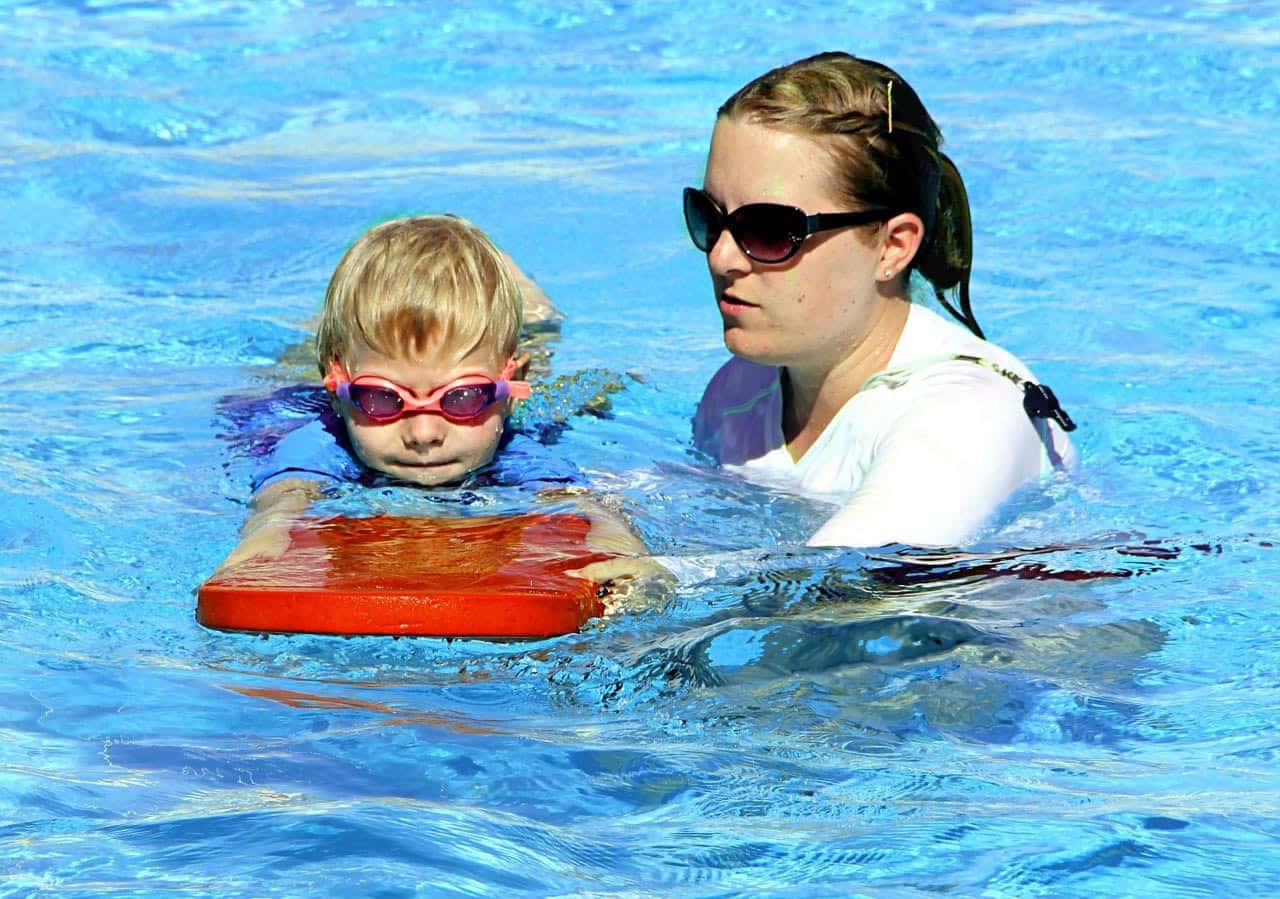
A swimming instructor in a pink shirt guides a child in a blue swimsuit using a kickboard in an indoor pool. The child is floating on their stomach, and the instructor is providing support while standing in the water.


3) Practice blowing bubbles underwater

In the shallow end of the pool, take a deep breath before submerging your face underwater. Exhale fully with your nose. Small bubbles will form. You can also practice by exhaling through your mouth.

If you’re uncomfortable blowing bubbles through your nose, you can wear a nose plug or hold your nose closed with one hand and exhale through your mouth.

It also may be helpful to wear goggles while going underwater. Make sure the goggles fit properly or else water may enter them.


4) Practice kicking

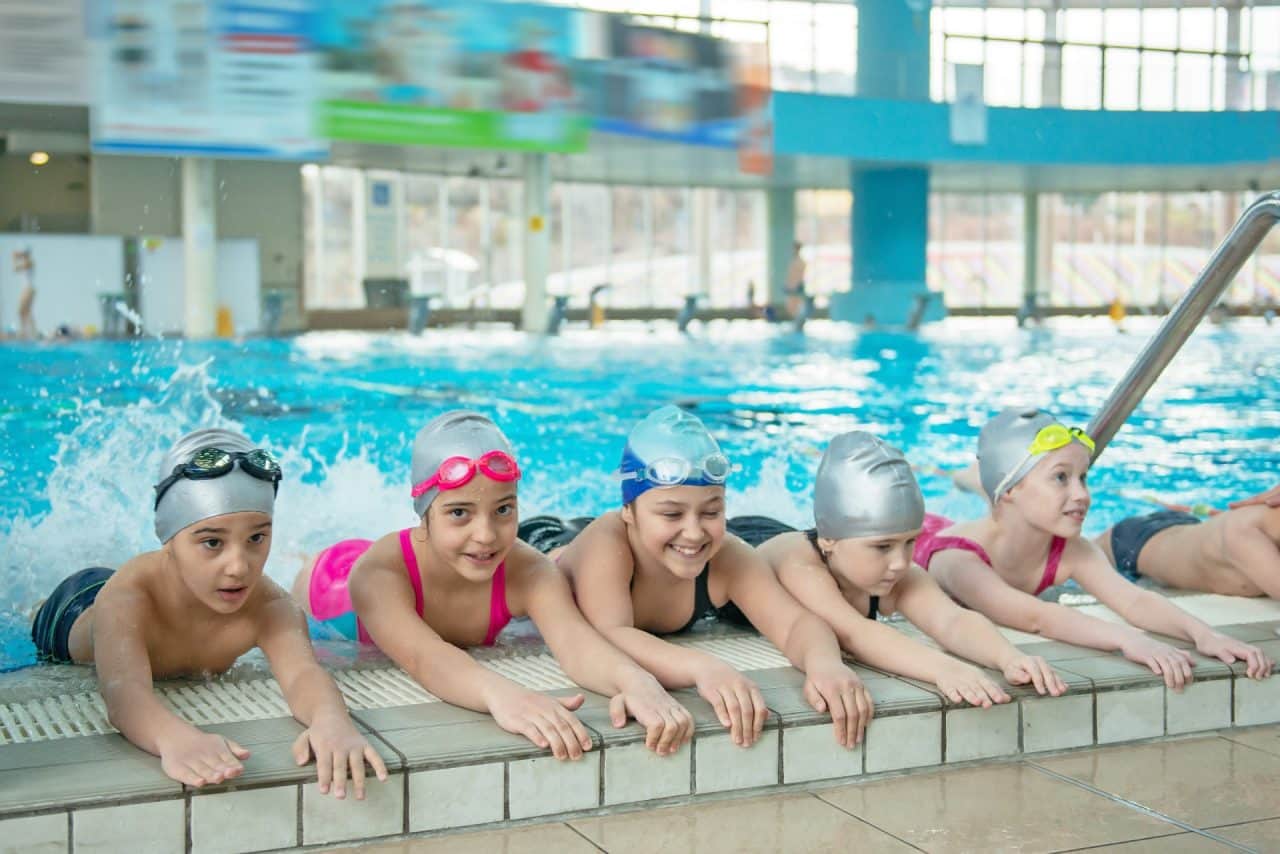
The safest way to practice kicking is by holding onto the edge of a pool like in the picture below. The most typical kick to practice is a flutter kick. You will keep your legs fairly straight while alternating which leg is kicking. This is a great, and safe, way to practice kicking techniques while staying afloat.

Once you feel comfortable kicking while holding onto the edge of a pool, you can try practicing while floating on your back in shallow water.


Five children in swim caps and goggles line up at the edge of an indoor swimming pool. They are smiling and lying on their stomachs with their hands on the pool deck, ready to enter the water. One child splashes water behind them.


5) Practice arm strokes

Once you feel comfortable kicking your feet, you can begin practicing arm stroke techniques. To begin, start with backstroke. Not only is it one of the easier strokes to learn, but it will also keep your face above water. To perform a backstroke, start by floating on your back. You will then lift one arm straight out of the water, palm forward, fingers together. While keeping that arm straight, bring it back towards the side of your head, then underwater. Continue moving your arm in a circular motion along the side of your body and repeat. You will do this with both arms, alternating them.

You will also need to add in kicking with your legs. Flutter each of your legs with a slight bend in both knees. Keep your toes pointed.


WARNING: While learning to swim alone, use a pool with a lifeguard. It is never recommended to swim alone unless you are a strong swimmer.

Practice Swimming Skills With a Certified Instructor

Whether you’re a beginner, intermediate or an expert, our swimming instructors are here to help you! Practice any of your swimming skills with a trained swimming instructor. Our swimming programs are tailored to YOU!

How do I get over my fear of swimming?

Many people are afraid of water and swimming simply because they were never taught how to swim. Others may be afraid because of a previous traumatic experience (e.g. almost drowning). How do you get over this fear and enjoy the water?


Take it slow and build confidence:

  • Mentally prepare yourself: Accept that you’ll be entering a pool and begin learning to swim. Fear is psychological and can be overcome. A swim instructor can be a great resource to help you face this fear.


Gradual acclimation to the water

  • Get comfortable around water: Start by simply sitting on the edge of the pool with your legs in the water. This will help you build water confidence at your own pace.

  • Gradually submerge your body: Slowly submerge more of your body into the water, eventually reaching chest-deep water.


Desensitize yourself to water on your face:

  • Splash your face: Once comfortable in chest-deep water, try splashing your face. You don’t need to go completely underwater unless you’re ready. This will help you get used to water touching your face.


Practice basic skills with support:

  • Go underwater (optional): When comfortable, take a deep breath and try going under the water for a few seconds each time. Wearing goggles and plugging your nose can help. Once underwater, blow bubbles out your mouth or nose.

  • Hold onto the pool edge and practice floating and kicking: This is a great way to get comfortable with these fundamental swimming techniques.


Invest in proper instruction:

  • Use flotation devices: If your child is nervous about the water, a pool noodle, swim board, or other flotation devices can offer a sense of security. These tools let your child get comfortable in the water while giving them extra support. They can be great for practicing kicking and basic arm strokes in a safe and enjoyable way, especially during those first swimming lessons.

  • Take swimming lessons: The best option is to learn how to swim with a trained instructor. Not only will they teach you proper swimming skills, like freestyle swimming and breathing exercises for swimming, but they will also help you face your fear and keep you safe during water safety training. Inquire about swimming classes to begin your journey towards enjoying the water! Remember, consistent practice swimming is key to improving your skills and building confidence.


Important Safety Tips for Swimming with Children

Learning to swim is fun, but safety should always come first! Here are some important tips to keep in mind when children are in the water:

  • Adult Supervision:  Never let children swim alone. Constant adult supervision is essential to ensure a safe enjoyable experience and make them feel confident. 

  • Shallow End: Beginner swimmers should stay in the shallow end where they can stand up and never go near the deep end. This builds confidence and reduces risks. Being near the shallow end allows the children to regain their footing in water if ever they lose their balance.

  • Life Jackets: Experts suggest that life jackets and flotation devices should be worn by everyone, not just young children and inexperienced swimmers. These provide extra support and buoyancy for those still mastering their swimming skills.

  • Buddy Up: Encourage children to swim with a buddy for extra safety. This system enhances safety and makes swimming fun. Ensure that the companion is always within the reach of the child and both of them are aware of each other’s location at all times.

  • Breathing Techniques: Breathing techniques are as important as floating techniques. Start teaching children basic breathing techniques early on. Even simple practice like blowing bubbles helps familiarize them with breath control in the water. Constantly practicing these basic techniques could help them familiarize with the process and prepare them for more advanced skills later on.


Learning how to swim may seem like a daunting task to some, but it’s a great skill to have. You need to take time to practice your swimming skill in order to get better. Once you’re comfortable with your swimming abilities, you’ll be able to enjoy the pool, beach, lake and more with your friends and family safely. Enjoy the process, you’ll be swimming laps like a fish.


Invest In Yourself

Knowing how to swim is an essential and sometimes life-saving skill! Register for mobile swimming lessons with one of our experienced instructors today.
Coast2Coast-logo
canadian-red -cross-logo-Coast2Coast

What is the Coast2Coast Mobile Swim School?

mobile swimming or public swimming

Coast2Coast Swim School teaches everyone of all abilities, from beginners to advanced! We offer a unique and diverse program that allows many to swim who otherwise might not have the opportunity to do so.

Our Mobile School brings our certified and highly experienced Canadian Red Cross instructors to your door! Our instructors are trained to teach anyone and everyone of all abilities, as we have an evaluation lesson first so we can get to know the comfort level of the swimmer, as well as their ability, and their swimming goals.

For young swimmers, we offer the Canadian Red Cross Swim Kids program, as well as our Coast2Coast Swim School program. Both programs work closely together with you as a parent, relative or caregiver, and together with our instructors, we make sure your child receives the most rewarding swim training in the Greater Toronto Area!For adults who want mobile lessons, we offer a similar program with combining Canadian Red Cross programming geared towards teens and adults.  

Our mobile swimming instruction starts your residence, whether it be a condominium pool, a backyard pool, or a community pool that is close to your location. We bring the fun to you!


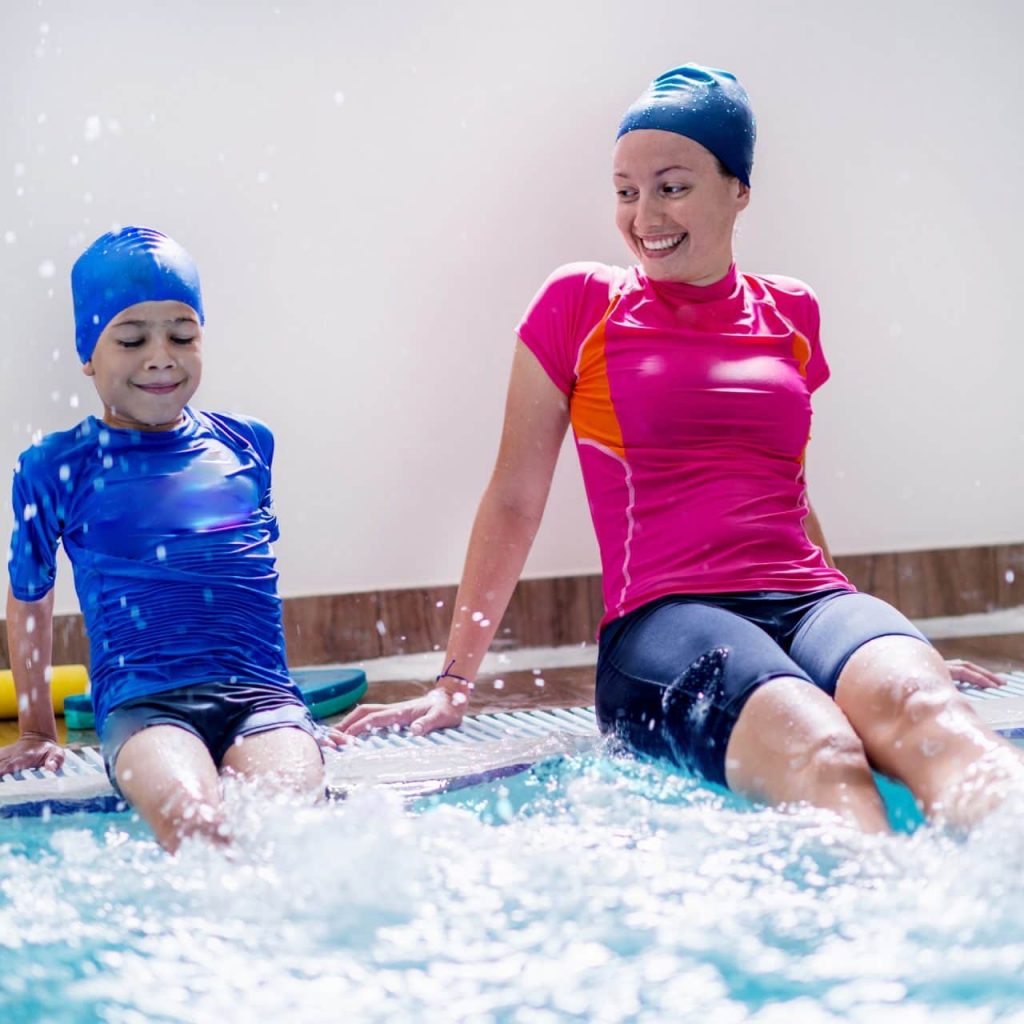
A child and an adult sit at the edge of a pool, splashing water. The child wears a blue swim cap and outfit, while the adult wears a pink and orange top with black shorts. Both are smiling and enjoying the water.

Dive into Personalized Swimming Lessons!

Enhance your skills with private swimming sessions tailored just for you! Our experienced instructors provide one-on-one guidance to help you build confidence and improve your technique in the water.

Why Mobile Swimming?

Our program is based on research which concludes that many are hesitant to enroll in swimming lessons for themselves, or for their children, as it includes transportation issues (dealing with public transit, far away swimming centres, long commutes in traffic), and many are uncomfortable swimming in unknown settings.

Our Mobile program can be rid all of issues by bringing our instructors to you. No longer will you have to worry about the inconvenience of taking your children to and from lessons, or for yourself, having to use transportation to get to and from a pool not in your area.

Our program strives to make anyone an active and forgoing swimmer! The combination of the Red Cross and Coast2Coast program trains all of our students regardless of age and ability to be the best in technique and efficiency. With our evaluation lesson, the instructor bonds with the pupil and understands the needs of the swimmer, what is to be expected from the mobile course, and what goals are to be obtained from our program. We make sure everyone is in their correct level to begin their road to expertise swimming!

The Red Cross Swim Program and Coast2Coast Swim School teaches all five strokes (front crawl, back crawl, breaststroke, elementary backstroke, and sidestroke), promotes fitness and endurance, and gives swimmers lifelong skills to safely enjoy other swimming and water activities.

We not only encourage our swimmers to be proactive in the water, but in all aspects of their physical well-being. Swimming is an an essential skill builder that contributes well over to any physical activity. From being a rock-climber, to a hockey player, to surfing the waves on vacation, one’s strength and personal athletic skills climb with the expertise of one on one swimming training.


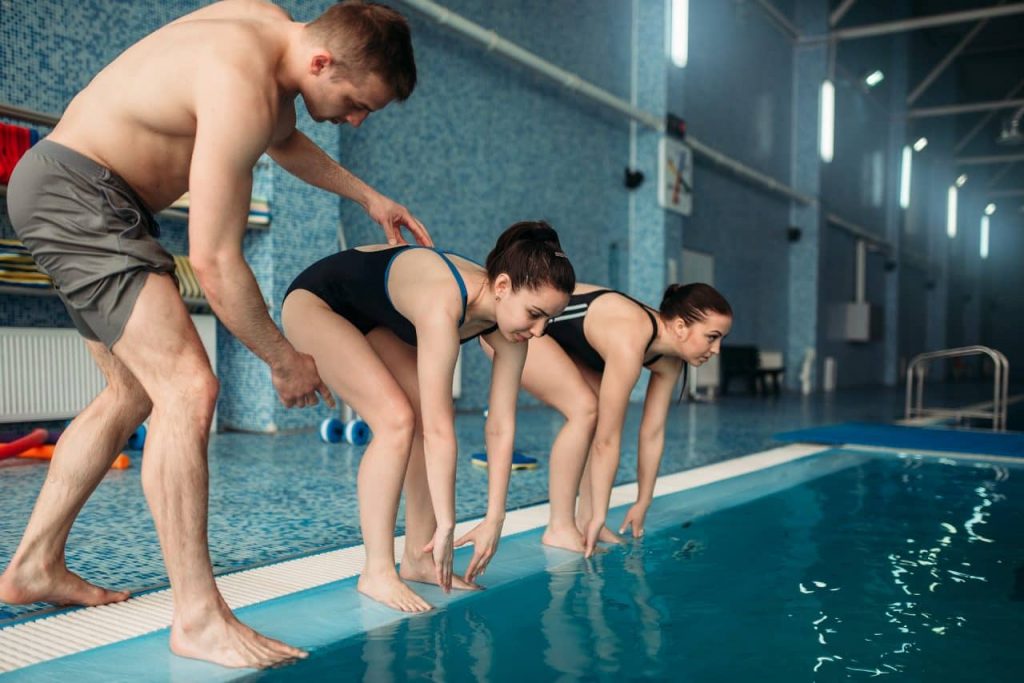
Three people in swimsuits stand at the edge of an indoor pool in a diving pose. A man on the left appears to be coaching two women, both bent over with arms extended and toes at the pool's edge, ready to dive. The pool area is well-lit.

Why Coast2Coast?

The Red Cross is one of the most recognized brands in the world. Your parents, caregivers, friends, and co-workers have probably all learned to swim under the Red Cross banner. You may already understand our programs, and what value they hold for you and your own children.The Coast2Coast Swim School program is based on a foundation of having highly experienced Canadian Red Cross trained instructors matched with enthusiastic swimmers who challenge each other to go beyond their goals they have desired.   

Many of us living in the Greater Toronto Area (GTA) have the luxury of having access to a pool, whether it been in our backyard in the suburbs, or our condominium pools that don’t require us to leave the building (hint** for winter enrollment). Yet, many of us who have access to these pools do not properly use them, simply because we are afraid to try something new and maybe look ‘foolish’, or for our children’s sake, we are scared for their safety that something may happen if they choose to swim.

At Coast2Coast, our number one priority is training swimmers to their best ability to prevent drowning and water-related accidents. Our Mobile Swim Instructors are immensely prepared in situations where drowning or accidents may occur, and are constantly supervising their pupils throughout their lessons.

Along with swimming technical training, our training is also water safety and how to handle water situations such as lakes, oceans, outdoor public pools, ponds, and even over frozen water, where many drowning incidents take place each year. We strongly advise that all children should be supervised while in any water-related facility, even your own backyard pool!

In Canada, 1 in 5 drowning fatalities are age fourteen years and younger, mostly due to having zero to little training, as well as unsupervised play in the water. Coast2Coast is determined to lower that statistic with our distinguished swim lessons. We deeply care about the children of our communities, and want only the best for them to be eminently educated in swimming and water-related injury prevention.

Logo featuring two stylized blue swimmers and wavy lines, a red cross symbol, and the text "Red Cross Swim" in black and blue fonts.


So whether you are an inexperienced adult swimmer, or a parent or guardian wanting to protect your children, Coast2Coast is the option for your swimming desires.

Contact our office by calling 1-866-291-9121, or emailing us at contact@c2cfirstaidaquatics.com to begin the registration process, where we will ask you a series of questions to find you or your children the best instructor for your needs and preferences


Register for First Aid Training

Register today for a First Aid Training course and learn how to deal with emergencies and keep your loved ones safe! Check out our facilities and book your spot now.

What To Do If Your Pets are not Breathing?

Every public institution you send your child to, whether it is a school, after-school program, club sport, religious centre, or daycare; you want to know that they are safe at all times. With the recent story of a young boy choking to death in a mosque in England, it has many of us worried that not everyone who is looking after our children are CPR/AED or First Aid trained.

There were several reasons why this result ended morbidly, which included not knowing how to use a defibrillator, or the location of one, volunteers and staff not being trained in emergency first aid, but most of all, not knowing how to respond to infants and children in choking and breathing emergencies.

These stories are somber to read, but they must be reminders for those working with children to be updated in their CPR and first-aid knowledge, as well as being aware of the defibrillator locations in all facilities.

Although child care workers are required to have CPR and First-Aid training, there are many establishments we send our children to where volunteers and staff do not have the requirements to be first aid certified. Your child’s safety is the number one priority; it is up to you to make sure that whoever is in care of your son, daughter, or relative is certified in the appropriate way.

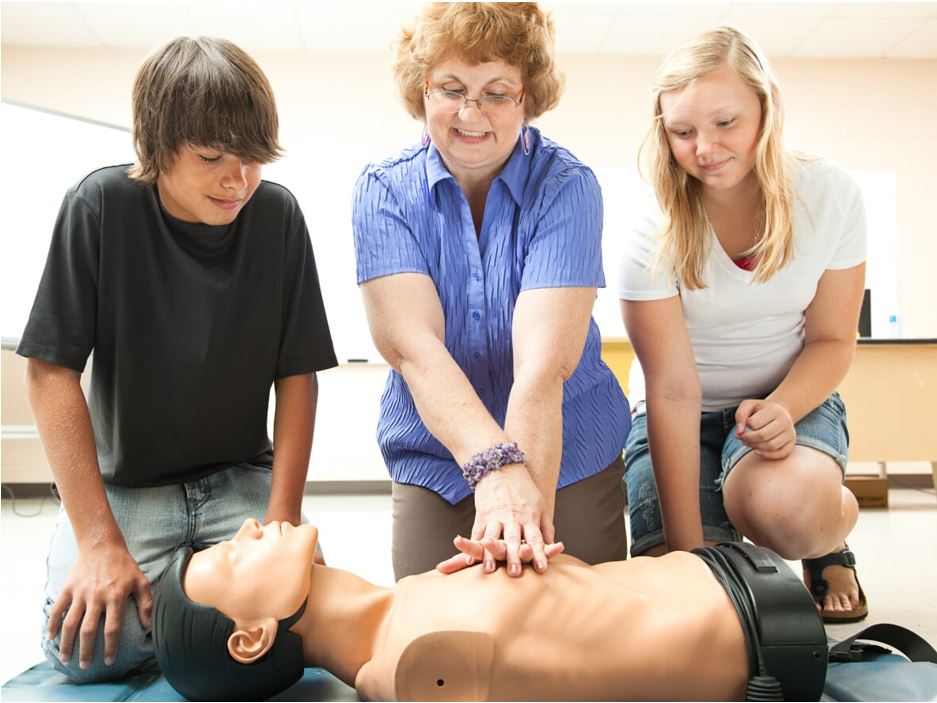
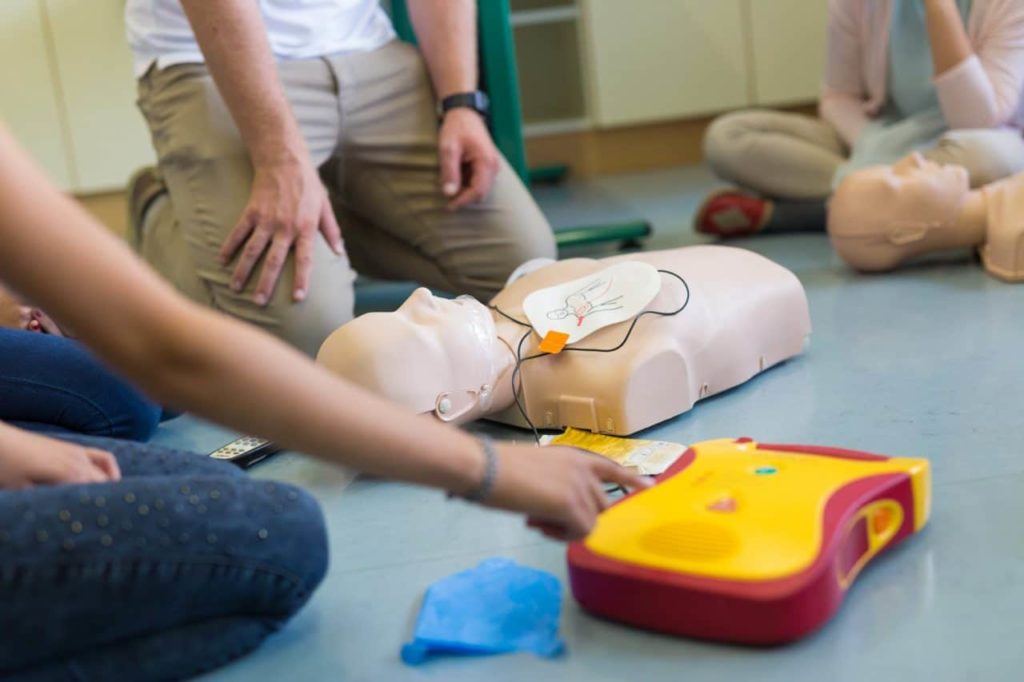
People in a first aid class practicing CPR on a dummy with an automated external defibrillator (AED) nearby. Participants are seated on the floor, focusing on the training session.


The first action is to know the whereabouts of the facilities’ defibrillator, or commonly known as an AED. The device is used to deliver electrical currents through the heart, via the defibrillation pads attached to the machine. Survival rates go from 5% with only cardiopulmonary resuscitation (CPR) to 75% with an automatic external defibrillator.

To learn more about what defib’s are, check out our blog post where we explain how to use one and where they are usually located.It is essential to be comfortable using a defibrillator in an emergency. In all our First-Aid and CPR courses at Coast2Coast, we provide the knowledge and practice of how to use a AED on infants, children, and adults (depending on your level of choice).

For most public centres, the AED would be located in the front foyer or staff room. When touring a new place, such as a church or sports facility, it is important to find out where the facility AED is located, and which staff members and volunteers know of its location, and how to use it.

Along with knowing about the facility’s AED location, it is also beneficial to find out how many first-aid kits are in the building, and where exactly they are located. Let your child know in what rooms or who has them, as he or she might be in a scenario where it is up to them to find one if there is no other supervisor around.


A man is assisting a child by wrapping a bandage around the child's knee. They are sitting on a wooden bench in a sunny outdoor setting, surrounded by grass and trees. The man is wearing a white shirt and blue shorts, and the child is in a green shirt.

As well as being trained in AED use, all staff workers and volunteers with children should be trained in Emergency First-Aid (EFA). Coast2Coast offers the EFA in a one day course that covers skills such as CPR, wound care, and emergency situations. We also offer our EFA course in an online blended curriculum, which allows the participant to study theory at home, and practice the skills in class for half the day.

Emergency first-aid covers many situations that your child may face, such as heat exhaustion, burns, choking, and intense bleeding. As well as your child’s caretaker, it is invaluable as a parent or guardian to obtain first aid training as well. Moreover, it gives you some skills that might be useful to save your pet’s life.

Last but not least, those in care of children should be fully educated in reacting and saving a child or infant from choking or breathing emergencies. Like many cases such as the young boy at the beginning of this blog, they rely on adults to help them when they are in pain and danger.

If a child does begin to choke, begin CPR immediately with thirty compressions, checking the airway, and repeating for two minutes. If you are the only person around, call 911. If there is a child or adult around, have them call 911 and find the AED while you are with the child in need.


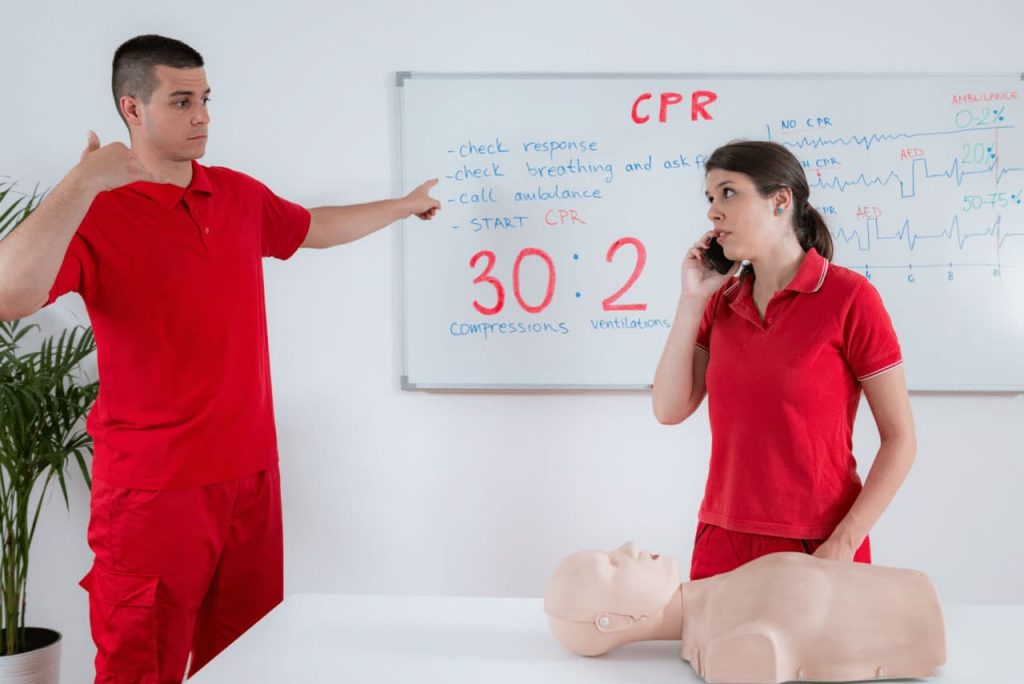
A man in red demonstrates a hand signal, standing near a woman on the phone, in front of a CPR instruction board. A CPR dummy is on the table. The board lists CPR steps and the compression-to-breath ratio, "30:2.

For children and infants, chest compressions are performed differently, as they only need two fingers (infants), or pressing down two inches (child). Make sure the neck is not tilted back too far for babies, as you do not want to cause head or neck injury as well. Continue doing compressions and checking for breathing until emergency medical responders come. When checking for breathing, and if no air is being released, put your mouth over the nose and mouth (infant) or cover the mouth with your mouth and hold the nose (child) to do rescue breathing.

These methods can be properly taught through our CPR/AED courses, especially in our level C course, where we show the exact techniques one must do for a baby or kid that is choking. Our classes go through step-by-step instructions and show the exact techniques for every situation possible.

Our kids are our most precious treasures, and we want them to feel safe and protected at all times. With their teachers, caregivers, youth group leaders, and any other worker or volunteer that is under their care, we hope that in any emergency situation they can preserve life and not cause a fatality because of their ignorance to first aid and CPR training.

With the school year coming up, youngsters all around will begin new activities and sports for enrichment purposes. Talk about first-aid and CPR experience when registering your child, and know that Coast2Coast First Aid is here for all your training needs!


Register for First Aid Training

Register today for a First Aid Training course and learn how to deal with emergencies and keep your loved ones safe! Check out our facilities and book your spot now.

Canadian Teen Proves All Are Capable to be Swimming Champions

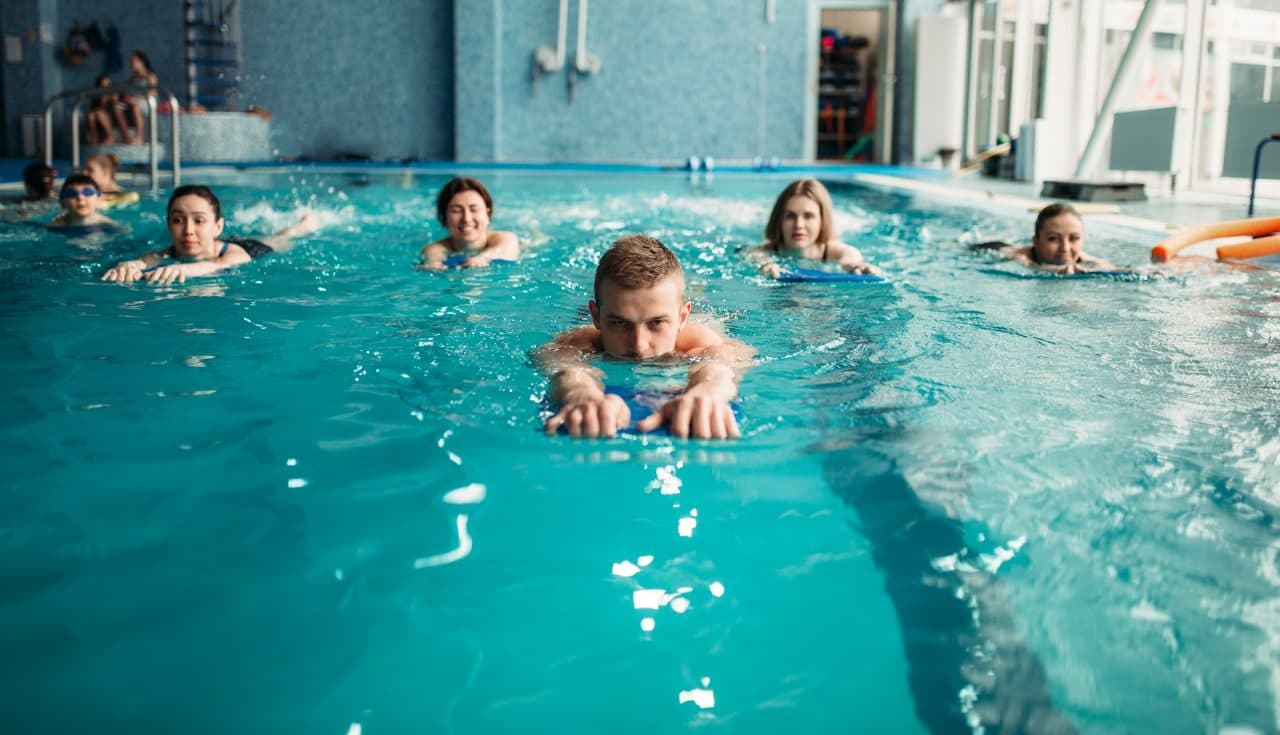
A group of people swimming in a pool, using kickboards. They are aligned in a row, each focusing on swimming. The pool area has blue tiles and a modern look, with some equipment visible in the background.

Julia Lane from Windsor, Ontario proves to Canada and the world that anyone can swim, no matter what obstacles one may face.

The 18-year-old competed with hundreds of youths and adults at the Down Syndrome World Swimming Championships in Truro, Nova Scotia in July, coming home with a silver medal and four bronze medals – a feat for any trained competitive swimmer. Lane was one of only twenty-two swimmers representing Canada, with over twenty-five countries representing themselves at the Championship.

Continue reading