We offer courses in Canada and the US. If you are experiencing issues with our website and need help to register, or if you have questions, please call us at 866-291-9121.
If you are facing any issues with your online course, registration, or training, please click here to submit a help request.
If you are facing any issues with your online course, registration, or training, please click here to submit a help request.
Safety procedures in the workplace are important because they protect workers in various industries from life-threatening falls. Falls do not only lead to economic losses but may also result in the loss of lives, long-term injuries, and the suffering that follows.
This has people asking, “Who needs a Working at Heights training program?” It has been proven that a comprehensive heights training program significantly reduces workplace injuries, increases employee morale, and benefits the reputation of companies.
Life has its ups and downs. Loss, trauma, and stress can knock us off our feet and leave us feeling lost. But what if we had a lifeline? Is there a tool that could help you navigate rough waters and empower others to do the same?
Learn the skills that can make a difference in maritime emergencies, from simple cuts to more serious incidents. With Marine Basic First Aid, you can be the confident and prepared responder when it matters most on the water.
It is normal and healthy for all of us to have some anxiety, but when it becomes excessive, it can be a problem. In small amounts, stress is beneficial because it keeps us alert to threats and dangers. People with severe anxiety need help and support because they may not be able to control their thoughts and fears, causing them to spin out of control.
How do you provide first aid for mental health conditions? If you see someone suffering from anxiety, depression, etc, help them with these easy steps!
A Complete Beginner’s Guide to Learning How to Swim
Learning to swim is one of the most valuable life skills a person can acquire. Swimming is not just a recreational activity or competitive sport — it is a fundamental survival skill that protects you and your family in and around water. Whether you are a child taking your first splash, a teenager preparing for a lifeguarding career, or an adult who never had the opportunity to learn, this step-by-step guide will walk you through the progression from complete beginner to confident swimmer. Combined with proper water safety education, learning to swim opens up a lifetime of aquatic enjoyment and fitness.
Drowning is one of the leading causes of accidental death in Canada, and the single most effective way to prevent drowning is to learn to swim. The Canadian Red Cross reports that the majority of drowning victims either could not swim or overestimated their swimming ability. By following a structured learning progression and practising consistently, anyone can develop the swimming skills needed to be safe and confident in the water.
Step 1: Getting Comfortable in the Water
The first and most important step in learning to swim is becoming comfortable in the water. For many beginners — particularly adults — water anxiety is a significant barrier. Take your time with this step and do not rush to the next one until you feel genuinely relaxed in the water.
Water Entry and Familiarization
Start in shallow water where you can stand comfortably with your head well above the surface. Walk around the pool, feeling how the water supports your body. Practice putting your face in the water and blowing bubbles — this helps you get used to the sensation of water on your face and teaches you to control your breathing. Cup water in your hands and pour it over your head. These simple exercises may seem basic, but they build the comfort and trust in the water that everything else depends on.
Submerging and Breath Control
Once you are comfortable with water on your face, practice submerging your entire head briefly. Take a breath, dip under the surface, and come back up. Gradually extend the time you spend underwater. Practice exhaling through your nose and mouth while submerged — this is a fundamental swimming skill that prevents water from entering your nose. Blowing bubbles underwater should become second nature before you move on to floating and swimming skills.
Step 2: Learning to Float
Floating is the foundation of swimming. When you can float, you can rest in the water without expending energy, which is both a swimming skill and a survival skill. There are two basic floats to master:
Back Float
The back float is the most important survival skill in swimming because it allows you to breathe while resting in the water. Start in shallow water with a partner or instructor supporting your back. Lean back, extend your arms to the sides, and let your legs float up. Keep your ears in the water, your chin slightly tilted up, and your belly at the surface. Relax completely — tension causes your body to sink. Take slow, deep breaths. Once you can float on your back without support for 30 seconds or more, you have mastered a life-saving skill.
Front Float
The front float (also called the prone float or dead man’s float) teaches you body position for swimming strokes. Take a breath, put your face in the water, and extend your arms forward. Let your legs float behind you. Your body should form a straight, streamlined shape at or near the surface of the water. When you need to breathe, lift your head or roll onto your back. Practice transitioning between front float and back float smoothly.
Safety Tip: Always learn to swim in a supervised environment with a qualified instructor or lifeguard present. Never attempt to learn in open water such as lakes, rivers, or oceans, where currents, depth changes, and cold water create additional hazards for beginners.
Step 3: Kicking and Propulsion
Once you can float, adding a kick gives you the ability to move through the water. The flutter kick is the most basic and widely used kick in swimming:
Flutter Kick
Hold onto the pool wall or a kickboard with your arms extended. Keep your legs straight but relaxed, with a slight bend at the knee. Kick from the hips in an alternating up-and-down motion, keeping your feet just below the surface. Your toes should be pointed and your ankles loose. The kick should be continuous and rhythmic — think of your legs as moving like scissors. Practice kicking across the pool until you can maintain a steady, efficient kick that propels you forward without excessive splashing.
Step 4: Learning Your First Stroke — Freestyle
Freestyle (also called front crawl) is the most common and efficient swimming stroke. It combines the flutter kick with alternating arm pulls and rhythmic side breathing:
Arm Movement
Reach forward with one arm, entering the water fingertips first in front of your shoulder. Pull your hand through the water in an S-shaped pattern beneath your body, pushing back toward your hip. As one arm finishes its pull, the other arm begins its reach forward. Your arms should alternate continuously in a windmill-like pattern. Keep your fingers together and slightly cupped to maximize the pulling surface.
Breathing Technique
Breathing in freestyle involves turning your head to one side during the arm recovery phase. As your arm lifts out of the water, rotate your head to the side just enough to take a quick breath. Your mouth should barely clear the water surface. Exhale steadily through your nose and mouth while your face is in the water between breaths. Most beginners breathe every two or three strokes, but find whatever rhythm feels most comfortable as you learn.
Watch: How to Swim Freestyle
Step 5: Learning Additional Strokes
Once you are comfortable with freestyle, expanding your stroke repertoire improves your versatility and fitness in the water:
Backstroke
Backstroke is essentially freestyle performed on your back. It is an excellent stroke for beginners because your face stays out of the water, making breathing easy. Float on your back and use an alternating flutter kick. Your arms alternate in a windmill motion over your head, entering the water pinky-first behind your shoulder and pulling through the water beside your body.
Breaststroke
Breaststroke is a symmetrical stroke where both arms pull simultaneously in a heart-shaped pattern while your legs perform a frog kick — bending at the knees and pushing outward and backward. Breaststroke is slower than freestyle but is useful for swimming with your head above water to see where you are going.
Treading Water
Treading water is the ability to stay in one place with your head above the surface. It combines a sculling motion with your hands and an eggbeater or flutter kick with your legs. This is an essential survival skill for deep water and should be practiced regularly until you can tread water comfortably for several minutes.
Step 6: Building Endurance and Confidence
Swimming is a skill that improves with consistent practice. Set achievable goals and gradually increase the distance and duration of your swims. Start with short distances — one or two pool lengths — and work your way up. Focus on technique first and speed second. A smooth, efficient stroke will always be faster and less tiring than a powerful but sloppy one. Swimming just two or three times per week will produce noticeable improvements in your endurance, technique, and confidence within a few weeks.
Water Safety: Essential Knowledge for Every Swimmer
Learning to swim is just one part of being safe in the water. Every swimmer should also understand the importance of never swimming alone, how to recognize and escape rip currents, the effects of cold water on the body, the proper use of personal flotation devices, how to recognize signs of drowning in others, and basic rescue techniques. Pairing your swimming skills with CPR and first aid training creates a comprehensive safety foundation that protects you and those around you in any aquatic environment.
Start Your Swimming Journey Today
Whether you are a complete beginner or looking to refine your technique, Coast2Coast First Aid and Aquatics offers swimming programs for all ages and abilities. Explore our courses and find a location near you.
Register Now
A
About the Author
Ashkon Pourheidary, B.Sc. (Hons) — Co-Founder, Coast2Coast First Aid & Aquatics
Ashkon has been a certified First Aid and CPR instructor since 2011 and an Instructor Trainer since 2013. He is also a certified Emergency Medical Responder (EMR) instructor, Psychological First Aid instructor, and BLS (Basic Life Support) instructor. Ashkon graduated with honours with a Bachelor of Science in Neuroscience from the University of Toronto in 2016. As co-founder of Coast2Coast First Aid & Aquatics, he has helped grow the organization to over 30 locations across Canada and into the United States. Connect on LinkedIn
Summary: Lifeguarding is a demanding, high-stakes profession that requires absolute clinical confidence. In Canada, securing your Canadian Red Cross Standard First Aid with CPR Level C is a mandatory prerequisite for almost all advanced aquatic certifications (like National Lifeguard). By mastering High-Performance CPR, AED application on wet surfaces, and trauma management under the new 2026 CSA Z1210:24 standards, you ensure you are legally and physically prepared to protect patrons at municipal pools, waterfronts, and private resorts.
Elite Lifeguard First Aid: How CPR Training Launches Your Career in Canada
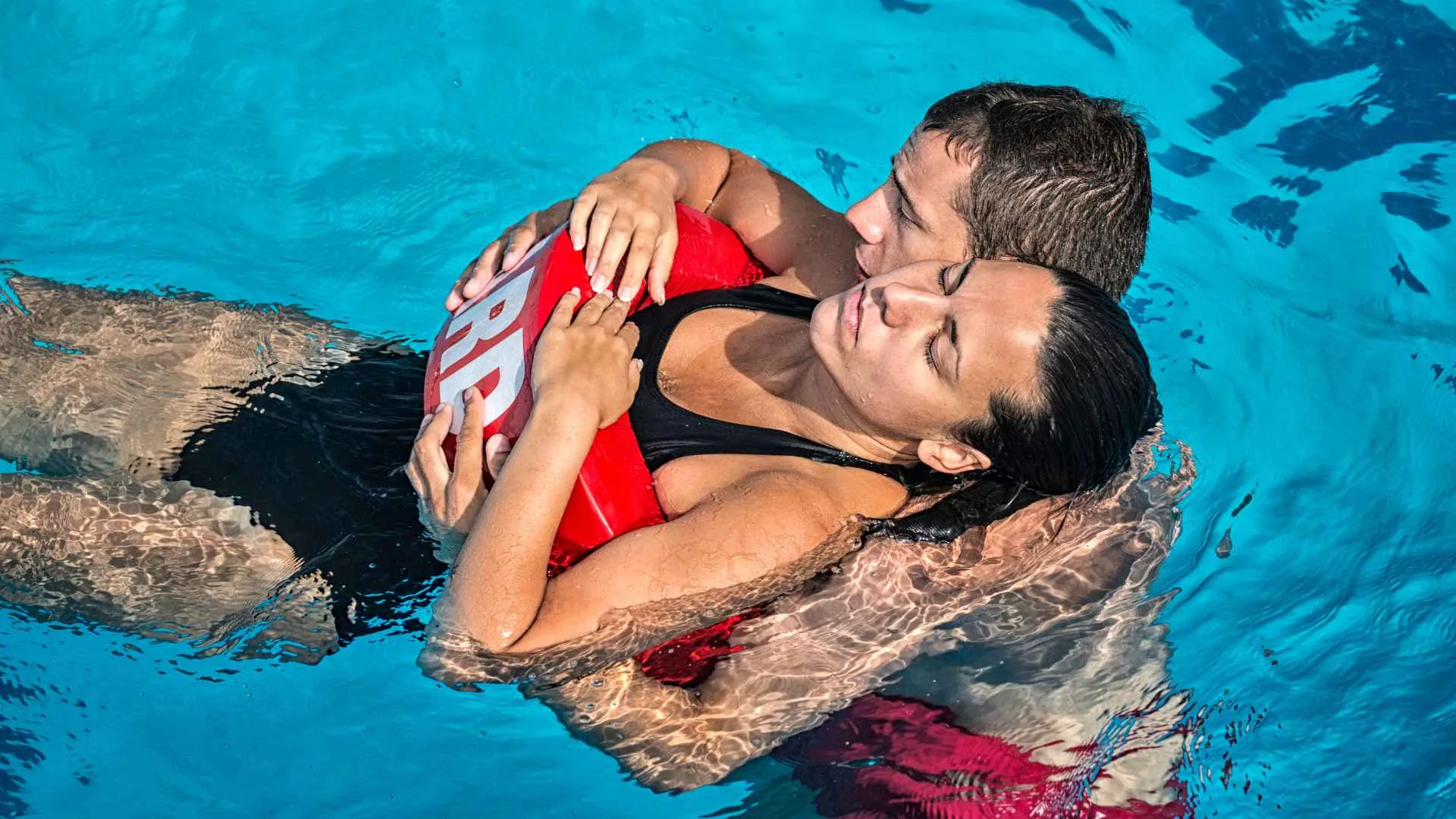
Lifeguarding is universally recognized as one of the most rewarding and respected careers in public and aquatic safety. Whether you dream of working the deck at a bustling municipal community pool, scanning a sprawling waterfront beach, supervising a luxury resort, or managing a massive summer water park, becoming a certified lifeguard starts with one non-negotiable, essential foundation: comprehensive CPR and first aid training. These foundational medical skills are not merely administrative checkboxes for lifeguard certification; they are the absolute core competencies that empower lifeguards to protect lives, mitigate risk, and respond effectively to severe aquatic emergencies every single day.
Across Canada, the demand for highly qualified, well-trained lifeguards remains incredibly strong. Municipalities, private recreation centres, and summer camps are consistently recruiting candidates who possess the clinical confidence to lead during a crisis. If you are seriously considering a career in aquatic safety, understanding the vital role of first aid certification in your training pathway is the definitive first step toward achieving your professional goals.
The Physiology of Drowning: Why First Aid and CPR Are Essential
Lifeguards act as the ultimate frontline emergency responders in aquatic environments. While their primary, overarching responsibility is proactive—preventing drowning and other water-related injuries through vigilant scanning and rule enforcement—they must be fully prepared to handle a wide range of medical emergencies when prevention fails. These emergencies include hypoxic (oxygen-deprived) near-drowning incidents, traumatic spinal injuries from shallow diving, sudden cardiac arrest, heat stroke on outdoor pool decks, severe arterial bleeding from slips or falls, anaphylactic allergic reactions, and sudden seizures in the water.
Each of these high-stress emergencies requires a highly specific set of clinical first aid skills. A lifeguard who cannot perform effective, uninterrupted CPR or flawlessly manage a suspected spinal injury is a massive liability to their facility rather than an asset. Because drowning is primarily an asphyxial (oxygen deprivation) event, the ability to perform high-quality CPR with effective rescue breaths is paramount.
When an unconscious person is pulled from the water after submersion, they are often in respiratory or cardiac arrest. Immediate, High-Performance CPR combined with the rapid deployment of an Automated External Defibrillator (AED) gives the victim the best possible chance of neurological survival. Lifeguards are rigorously trained for these specific scenarios, repeatedly practicing rapid water-based extractions followed by seamless, high-speed transitions to shore-based CPR.
The Lifeguard Training Pathway in Canada
Becoming a certified lifeguard in Canada involves completing a highly structured series of training courses that build upon each other in complexity. The typical pathway begins with raw swimming proficiency, progresses heavily through comprehensive first aid and CPR certification, and ultimately culminates in the rigorous National Lifeguard (NL) certification program.
The first step is demonstrating absolute aquatic competency. Most preliminary lifeguard programs (like Bronze Medallion and Bronze Cross) require candidates to demonstrate significant endurance, strong underwater swimming, and proficiency in various strokes. Once these basics are established, candidates must secure their medical credentials.
Obtaining your Canadian Red Cross Standard First Aid certification is the critical second step. This comprehensive two-day course acts as the mandatory certification prerequisite for almost all advanced aquatic leadership courses in the country. It covers CPR for adults, children, and infants (Level C), AED operation on wet surfaces, severe wound management, spinal immobilization techniques, environmental emergencies (like hypothermia), and multiple casualty management.
Safety Tip: Start your first aid and CPR certification as early as possible in your lifeguard training journey. Having your medical certification successfully completed and passing your written examination before you begin your final lifeguard course allows you to focus your mental energy entirely on complex water rescue techniques, rather than struggling to learn first aid basics simultaneously.
Advanced Training: BLS and Oxygen Administration
For lifeguards operating in specialized environments—such as hospital therapeutic pools, municipal wave pools, or facilities serving high-risk elderly populations—standard training may not be enough. Many advanced aquatic facilities now require guards to hold a Basic Life Support (BLS) certification.
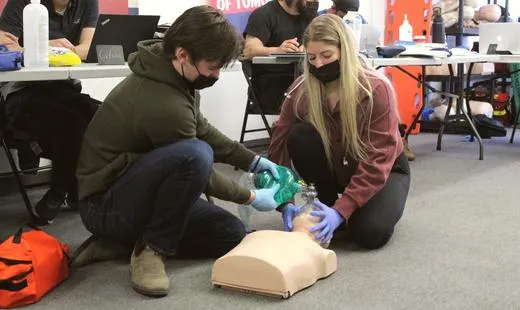
BLS is the clinical standard for healthcare providers and professional first responders. In this advanced tier, lifeguard candidates learn to execute complex team-based resuscitation, maximize their Chest Compression Fraction (CCF) to maintain blood pressure, and utilize advanced airway barrier devices like Bag-Valve-Masks (BVMs) to provide highly efficient oxygen administration to drowning victims.
Watch: How to Perform High-Quality CPR
Career Advancement, Resume Building, and Niche Opportunities
A National Lifeguard certification backed by a robust, unexpired Canadian Red Cross First Aid credential opens doors to a vast variety of lucrative career opportunities across Canada.
Municipal Pool Operators: Cities are the largest employers of aquatic staff, offering stable, well-paying part-time and full-time roles with union benefits for guards who have successfully passed their practical skills assessment.
Camp Counselors & Waterfront Staff: Summer camps heavily recruit waterfront-certified guards to supervise open-water swimming, kayaking, and canoeing activities in remote environments where EMS response is delayed.
Resort & Hospitality Workers: Luxury hotels, cruise ships, and massive indoor water parks aggressively hire certified aquatic staff, often providing incredible travel perks and accommodation.
Swim Instructors & Coaches: Teaching the next generation to swim requires the exact same first aid prerequisites, ensuring the instructor can handle pediatric emergencies.
Furthermore, lifeguarding is widely considered the ultimate stepping stone for careers in emergency services. Many of Canada’s top paramedics, police officers, firefighters, and emergency room nurses began their professional journeys on a pool deck, building their foundational crisis-management skills early on.
Facility Liability and Provincial Workplace Compliance
From a legal standpoint, aquatic facility operators face massive corporate liability. Drowning and poolside injuries are high-risk events. To comply with provincial health regulations (such as Ontario’s Health Protection and Promotion Act for public pools) and WSIB standards, employers absolutely must ensure that every lifeguard on duty holds a current, valid first aid and CPR certificate.
If a guard’s certification expires, they cannot legally be on the deck. Coast2Coast helps municipalities and private clubs maintain perfect compliance by offering streamlined private group training, bringing our expert instructors directly to your aquatic facility to train and recertify your entire staff during in-service training days.
Flexible Training Options with Coast2Coast
As a premier Canadian Red Cross Training Partner with locations across Canada, Coast2Coast offers the exact certifications required to launch your aquatic career. We emphasize intense, scenario-based learning that forces candidates to think critically and physically respond to simulated aquatic trauma.
To accommodate busy high school and university students, we offer a highly convenient blended online learning format. This allows candidates to complete the extensive first aid theory at their own pace online, followed by a condensed, action-packed in-person session dedicated entirely to hands-on practical skills.
Start Your Lifeguard Journey Today
Take the definitive first step toward becoming a certified lifeguard. Register for a WSIB-approved first aid and CPR course with Coast2Coast and build the foundation for a highly rewarding career in aquatic safety.
Question 1: Do I absolutely need first aid certification before starting lifeguard training?
Answer: Yes. Across Canada, possessing a valid Standard First Aid with CPR Level C certificate is a strict, non-negotiable prerequisite before you can enroll in the final National Lifeguard (NL) certification course.
Question 2: What exact level of CPR do lifeguards need?
Answer: Lifeguards are required to hold CPR Level C, which comprehensively covers adult, child, and infant resuscitation techniques, as aquatic facilities serve all age demographics.
Question 3: How old do you have to be to become a lifeguard in Canada?
Answer: You must be at least 15 years old to take the National Lifeguard course. However, you can begin your preliminary training, including Standard First Aid and Bronze Medallion, as early as 13 or 14 years old.
Question 4: Do lifeguards need Basic Life Support (BLS)?
Answer: While Standard First Aid (Level C) is the baseline, many advanced or specialized facilities (like wave pools, therapeutic clinics, or water parks) are now requiring guards to upgrade to BLS for advanced airway management skills.
Question 5: How long does it take to complete the required first aid training?
Answer: The Standard First Aid course takes two full days to complete in person. If you choose the blended learning format, you do half the work online and only spend one day in the physical classroom.
Question 6: Does lifeguard CPR training cover Automated External Defibrillators (AEDs)?
Answer: Yes. Using an AED is a core competency for lifeguards. You will learn specific protocols for using an AED in aquatic environments, such as rapidly drying the victim’s chest before applying pads.
Question 7: What happens if my first aid certificate expires while I am a lifeguard?
Answer: If your first aid or CPR certificate expires, your National Lifeguard certification is considered legally invalid. You cannot work on the pool deck until you successfully complete a recertification course.
Question 8: Does CPR on a drowning victim differ from a sudden cardiac arrest?
Answer: Yes. Because drowning is a hypoxic (lack of oxygen) event, the protocols prioritize delivering effective rescue breaths early in the sequence, whereas standard adult cardiac arrest emphasizes immediate compressions.
Question 9: Do I have to pass a written exam?
Answer: Yes. To receive your Canadian Red Cross certification, you must successfully pass a multiple-choice written examination to prove your understanding of medical theory, in addition to your physical skills test.
Question 10: Is Coast2Coast recognized by the Lifesaving Society?
Answer: Yes. Coast2Coast is an authorized Canadian Red Cross Training Partner, and our Standard First Aid certifications are fully recognized by the Lifesaving Society as valid prerequisites for their aquatic leadership programs.
Question 11: Are barrier devices provided during the class?
Answer: Yes. We provide all students with single-use barrier devices and training pocket masks to ensure you can practice safe, sanitary rescue breathing—a vital skill for water rescues.
Question 12: Do camp counselors need the same first aid training as pool lifeguards?
Answer: Yes. Waterfront lifeguards and camp counselors supervising open water must hold Standard First Aid, as EMS response times to remote camps are often significantly delayed.
Question 13: What is Chest Compression Fraction (CCF)?
Answer: CCF is the total percentage of a rescue spent actively performing chest compressions. Lifeguards are trained to minimize pauses during transitions to keep the CCF as high as possible.
Question 14: Can I take my first aid recertification online?
Answer: No. While you can do the theory online, you must complete the practical, hands-on skills assessment in person with an instructor to renew your Canadian Red Cross certificate.
Question 15: Does lifeguard first aid cover spinal injuries?
Answer: Yes. Standard First Aid covers extensive spinal immobilization techniques, which are critical for lifeguards responding to shallow-water diving accidents or water park slide collisions.
A
About the Author
Ashkon Pourheidary, B.Sc. (Hons) — Co-Founder, Coast2Coast First Aid & Aquatics
Ashkon has been a certified First Aid and CPR instructor since 2011 and an Instructor Trainer since 2013. He is also a certified Emergency Medical Responder (EMR) instructor, Psychological First Aid instructor, and BLS (Basic Life Support) instructor. Ashkon graduated with honours with a Bachelor of Science in Neuroscience from the University of Toronto in 2016. As co-founder of Coast2Coast First Aid & Aquatics, he has helped grow the organization to over 30 locations across Canada and into the United States. Ashkon has served on the First Aid Council for the Canadian Red Cross. He spends his time coaching the team of over 100 instructors at Coast2Coast to ensure that students training at Coast2Coast locations receive the best training experience. Connect on LinkedIn
Summary: For Canadian organizations, emergency preparedness is a dual mandate of legal compliance and moral responsibility. Under WSIB Regulation 1101 and the updated CSA Z1210:24 national standards, businesses and educational institutions must maintain rigorous first aid protocols. By implementing Canadian Red Cross first aid training and CPR and AED certification, leaders can bridge the “Platinum Minutes” before paramedics arrive, drastically reducing corporate liability and ensuring a safer environment for employees and students at our training locations across Canada.
Strategic Emergency Preparedness: How Training Helps Businesses and Schools in Canada
Medical emergencies do not follow corporate schedules or respect school hours. A sudden cardiac arrest can strike a high-performing employee during a high-stakes morning meeting. A severe anaphylactic reaction can affect a student in a crowded cafeteria. A traumatic slip-and-fall accident can happen in a bustling warehouse, a quiet office hallway, or a high-energy school gymnasium at any given second. The fundamental question every Canadian business owner, school administrator, and community leader must ask is not *if* an emergency will occur, but whether their team is clinically prepared to respond when it does.
Across Canada, the Canadian Red Cross has long championed the absolute necessity of emergency preparedness training for workplaces and educational institutions. At Coast2Coast First Aid & Aquatics, we share that vital commitment by delivering accredited first aid, CPR, and advanced emergency response programs specifically designed for the unique needs of the modern workforce and school boards. Our programs go far beyond basic regulatory compliance; they build a sustainable culture of safety that protects employees, students, and the general public while significantly mitigating organizational risk and liability.
The Legal Landscape: WSIB Regulation 1101 and CSA Standards
In Canada, maintaining first aid capabilities is not a choice—it is a strict legal mandate. Provincial legislation, such as the Ontario Workplace Safety and Insurance Act, requires employers to maintain first aid coverage proportional to the size of their workforce and the specific hazard profile of their environment. In 2026, these regulations have aligned with the CSA Z1210:24 national standards, which categorize first aid training into “Basic,” “Intermediate,” and “Advanced” tiers.
For a business operating in a city like Toronto or Mississauga, compliance with WSIB Regulation 1101 means having a specific number of certified responders on every shift. Failure to meet these certification prerequisites can result in devastating Ministry of Labour fines, increased workers’ compensation premiums, and massive corporate liability in the event of a preventable tragedy. Organizations that prioritize private group training ensure that their teams are always within the three-year renewal window, maintaining seamless legal protection.
School Safety: Protecting Vulnerable Populations in Canada
Educational institutions bear a unique, high-stakes responsibility for emergency preparedness because they are entrusted with the physical safety of children. Teachers, support staff, and coaches serve as the primary first responders when a student suffers a traumatic injury or a sudden medical crisis. In these settings, the quality of training can determine the difference between a successful recovery and a fatal outcome.
Modern school emergency plans must address more than just basic cuts and scrapes. In 2026, schools are increasingly focused on High-Performance CPR and the rapid deployment of Automated External Defibrillators (AEDs). Furthermore, the curriculum now includes Psychological First Aid concepts to help staff manage the mental trauma associated with lockdowns or natural disasters. By ensuring staff pass both a written examination and a practical skills assessment, school boards in regions like Edmonton or Ottawa can ensure a uniform standard of care across all campuses.
Safety Tip for Administrators: An emergency plan is only effective if it is practiced. Schedule term-based “Safety Audits” to check the expiry dates on your AED pads and ensure that your CSA Type 2 first aid kits are fully stocked with fresh barrier devices and bandages.
Who Needs This Certification in the Modern Workforce?
In Canada’s diverse economy, specific roles have strict medical training mandates that must be met to ensure public and workplace safety:
Security Guards & Loss Prevention: Must hold Standard First Aid to maintain provincial licensing and manage crowd-related trauma in malls or arenas.
Daycare Staff & ECEs: Legally required to possess CPR Level C to manage pediatric choking, anaphylaxis, and infant resuscitation.
Construction & Industrial Foremen: Required to manage industrial trauma, including severe bleeding control and tourniquet application.
Healthcare Professionals: Staff in school clinics or corporate health offices require Basic Life Support (BLS) to master oxygen administration and team dynamics.
Hospitality & Non-Aquatic Staff: Event planners and hotel managers who must protect patrons during sudden cardiac arrests in high-traffic venues.
Watch: How to Perform High-Quality CPR
The Science of Survival: High-Performance CPR and CCF
In 2026, the clinical standard for workplace response is High-Performance CPR. This methodology focuses on maximizing the Chest Compression Fraction (CCF)—the percentage of time during a rescue that active compressions are being performed. In a high-rise office building in Vancouver or Toronto, where “Vertical Response Delay” can slow paramedics by 10 minutes or more, a high CCF is the only way to maintain the hemodynamic pressure required to keep a victim’s brain oxygenated.
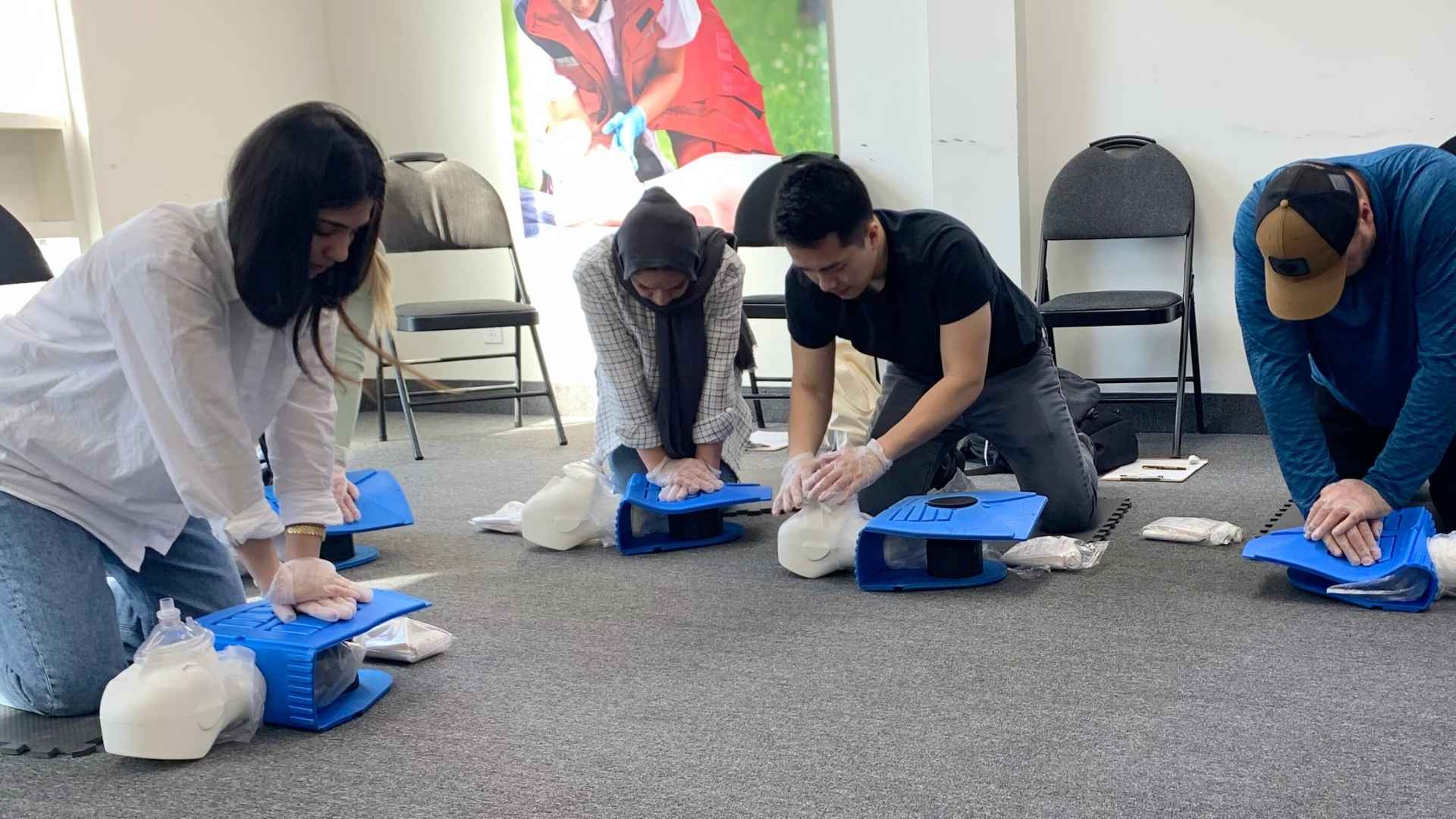
Our training utilizes high-fidelity feedback manikins that provide real-time digital data on compression depth and rate. This ensure that your employees or teachers are not just “guessing” but are providing life-saving intervention that meets international resuscitation guidelines. We also emphasize the use of barrier devices, such as one-way pocket masks, to protect staff from infectious diseases while delivering rescue breaths.
Risk Assessment: Identifying Hazards in Your Facility
An effective preparedness program begins with a rigorous, site-specific risk assessment. A manufacturing facility faces different trauma risks (crush injuries, chemical burns) than a university campus (sports injuries, mental health crises). Coast2Coast instructors help organizations identify these “Red Zones” and tailor their blended online learning or in-person sessions to address them.
For example, industrial sites in Windsor or Hamilton may prioritize severe bleeding control and oxygen administration, while a corporate office in downtown Calgary might focus on recognizing strokes (FAST method) and managing sudden cardiac arrest in a sedentary environment. This granular approach ensures that training is relevant, engaging, and directly applicable to the specific dangers your team faces daily.
Flexible Training Solutions for Busy Organizations
We understand that taking an entire department offline for training is a logistical challenge. To accommodate the demanding schedules of Canadian businesses and schools, we offer highly popular blended online learning formats. This hybrid model allows staff to complete the theoretical modules online at their own pace. Once finished, they attend a significantly shorter, fast-track in-person session at their facility or one of our training locations to complete their hands-on practical skills assessment.
This maximizes classroom efficiency and ensures that employees spend less time away from their core duties while still receiving full Canadian Red Cross certification that is recognized by all provincial OHS boards and the WSIB.
Prepare Your Team with Coast2Coast Today
Don’t wait for a workplace accident or school crisis to wish your staff was trained. Register for a WSIB-approved group course and secure the safety of your organization in 2026.
Question 1: Is first aid training mandatory for all Canadian businesses?
Answer: Yes. Under provincial occupational health and safety (OHS) laws and WSIB Regulation 1101, all employers must have a minimum ratio of certified first aid responders on duty during every shift.
Question 2: What is the difference between CSA Type 1, 2, and 3 kits?
Answer: CSA Type 1 is for low-hazard workplaces (offices), Type 2 is for medium-hazard, and Type 3 is for high-hazard environments (construction/industrial) with higher quantities of trauma supplies.
Question 3: How long is a business first aid certificate valid?
Answer: Canadian Red Cross first aid and CPR certifications are valid for exactly three years. After this, a recertification course must be completed before the card expires.
Question 4: Do schools need Automated External Defibrillators (AEDs)?
Answer: While requirements vary by province, AEDs are strongly recommended for all schools. Using an AED within the first 3 minutes of a cardiac event increases survival rates by over 75%.
Question 5: What is Chest Compression Fraction (CCF)?
Answer: CCF is the percentage of total resuscitation time spent performing compressions. 2026 High-Performance training focuses on keeping this percentage as high as possible to save lives.
Question 6: Can we train our school staff entirely online?
Answer: No. While the theory can be done online via blended learning, a physical practical skills assessment with a certified instructor is legally required for a valid WSIB certificate.
Question 7: What level of CPR do daycare teachers need?
Answer: Early childhood educators are legally required to hold CPR Level C, which covers adult, child, and infant resuscitation protocols.
Question 8: Do security guards need Standard First Aid?
Answer: Yes. In most provinces, security guards must hold a valid Standard First Aid and CPR Level C certificate to maintain their professional security license.
Question 9: Can Coast2Coast send instructors directly to our office?
Answer: Absolutely. We specialize in private group training and can bring all necessary manikins and equipment directly to your boardroom or school gymnasium.
Question 10: Are barrier devices like pocket masks included in training?
Answer: Yes. We train all participants on the correct use of barrier devices to ensure rescue breaths are delivered safely without the risk of disease transmission.
Question 11: Does first aid training lower business insurance premiums?
Answer: Yes. Many commercial insurers recognize a fully certified staff as a proactive risk-mitigation factor and may offer significant premium reductions.
Question 12: Is there a written examination required?
Answer: Yes, a multiple-choice written examination is required to verify the student’s understanding of the medical protocols and 2026 CSA standards.
Question 13: How many first aiders does a high-rise office need?
Answer: Best practices suggest at least one certified responder per floor to account for “Vertical Response Delay” and ensure help arrives within the 3-minute survival window.
Question 14: How quickly do we receive our digital certificates?
Answer: Digital Canadian Red Cross certificates are typically issued via email within 24 to 48 hours after the successful completion of the course.
Question 15: What should be in a school’s trauma kit?
Answer: Beyond standard bandages, a school kit should include epinephrine auto-injectors (EpiPens), tourniquets for severe bleeding, and barrier devices for CPR.
A
About the Author
Ashkon Pourheidary, B.Sc. (Hons) — Co-Founder, Coast2Coast First Aid & Aquatics
Ashkon has been a certified First Aid and CPR instructor since 2011 and an Instructor Trainer since 2013. He is also a certified Emergency Medical Responder (EMR) instructor, Psychological First Aid instructor, and BLS (Basic Life Support) instructor. Ashkon graduated with honours with a Bachelor of Science in Neuroscience from the University of Toronto in 2016. As co-founder of Coast2Coast First Aid & Aquatics, he has helped grow the organization to over 30 locations across Canada and into the United States. Ashkon has served on the First Aid Council for the Canadian Red Cross. He spends his time coaching the team of over 100 instructors at Coast2Coast to ensure that students training at Coast2Coast locations receive the best training experience. Connect on LinkedIn