
Choosing the Right First Aid Course in the GTA

Choosing the Right First Aid Course in the GTA

There are several reasons why everyone in the Greater Toronto Area (GTA) should consider taking a First Aid course. The first one is if it is a requirement for their work or school. However, First Aid is also important for everyone because the knowledge & skills obtained may help save the life of someone in an emergency in the future.

The first aid course has two levels which are Emergency First Aid and Standard First Aid. We recommend our students complete Standard First Aid as it focuses on practicing the skills and polishing the knowledge through hand on practice as compared to Emergency First Aid. This blog will guide you in choosing the right first aid course in the GTA.

Learn more about First Aid Courses in GTA

Enroll in the right first aid course for your career in GTA! Call our toll-free number to begin your registration.

Different Levels of First Aid Training

There are several reasons why someone will decide to take First Aid & CPR training in the GTA. Emergency and Standard First Aid are the two most popular First Aid levels. The main differences between the two courses are the time it takes to complete the training and how extensive the learning experience gets in each of the courses.

Most workplaces and schools state what level of training is required, but someone may want to do the course as they prepare to become a parent, caregiver, or to help someone in an emergency. Read on to find out the essential differences in First Aid training and choose the right course.
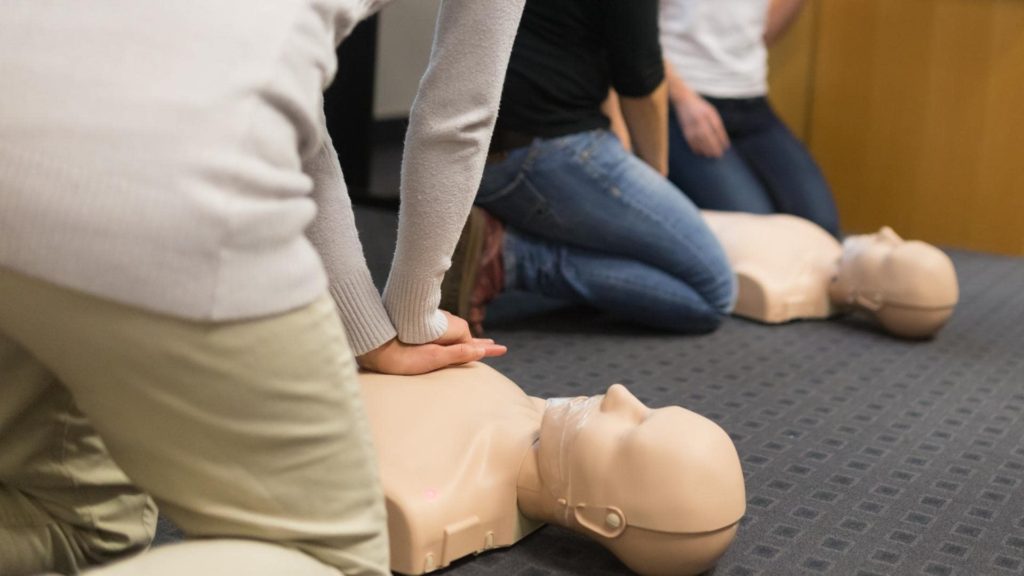
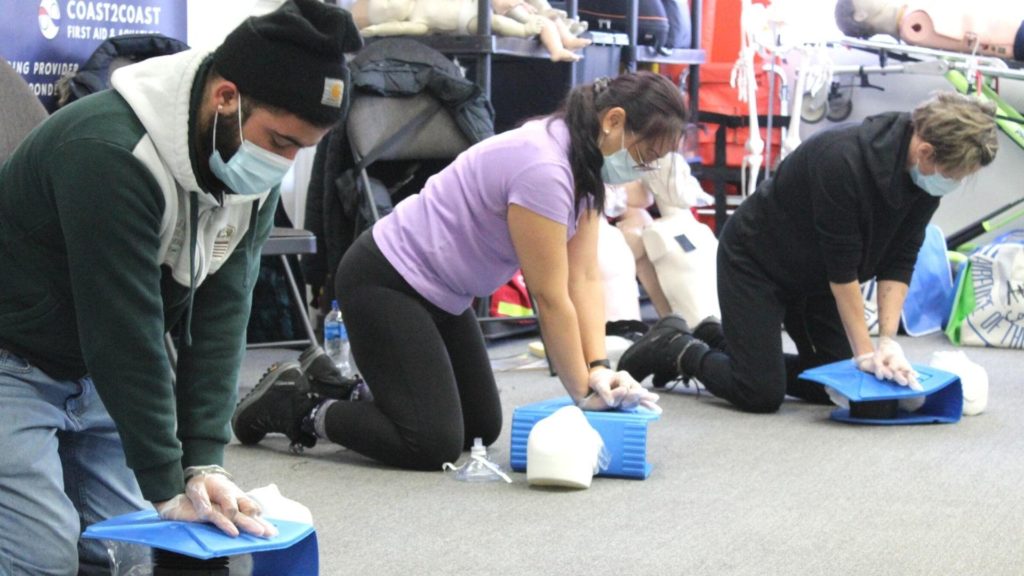
People practicing CPR on mannequins placed on a carpeted floor. The individuals are kneeling and performing chest compressions as part of a training session.


Which First Aid training is Right For You?

People requiring First Aid training should always verify which course is required before registering. Let’s discuss our most popular First Aid & CPR training courses:

Standard First Aid & CPR/AED

Standard First Aid CPR/AED training complies with the provincial workplace regulations of several careers. With this online blended course, there are two sections, and it includes a 7-8 hour online section and 8 hours of in-class training.

In addition to the online blended training format, there is also the traditional course which requires two days of in-class training. Participants learn all the skills to confidently help victims of life-threatening and non-life-threatening emergencies from accidents and illnesses.

At Coast2Coast, we combine Standard First Aid with CPR level C to ensure participants can provide CPR to adults, children, and infants.

Depending on the workplace, WSIB in Ontario may recommend employees complete Standard First Aid & CPR/AED. The requirement includes some employees at provincial and municipal levels with workplaces that have more than five employees per shift or floor. Employers must ensure that enough employees have the Standard First Aid training so that someone with the training is available at all times during work hours.

Some of the occupations requiring Standard First Aid & CPR/AED training include professionals and scholars in the following fields:

  • Daycare employees
  • All police and border control
  • Firefighters
  • Ski-patrol and lifeguards
  • Employees in personal support, babysitting, childcare, youth groups, and special needs persons
  • Construction workers
  • Healthcare workers, nursing students, and pharmacists

Emergency First Aid & CPR/AED

Some jobs just require Emergency First Aid & CPR/AED training. WSIB in Ontario recommends it for some workplaces and individuals that require less intense First Aid training. Once again, it’s necessary for employers to make sure that the requirements laid down by the WSIB Regulation 1101 must be met at all times. This includes having access to a First Aid Kit and employees depending on the size of the organization being first aid certified. It is essential that everyone checks with their school or job before registering.

Training for Emergency First Aid & CPR/AED varies according to the level chosen but is more or less an eight-hour course. Participants can choose an all-in-class course or the online, blended course.

These occupations usually need an Emergency First Aid & CPR/AED certificate:

  • Staff at recreational facilities and community centers
  • Taxi drivers
  • Provincial and municipal drivers
  • Councilors and youth workers
  • Parks and Recreation staff
  • Coaches and instructors
  • Technicians working in medical labs

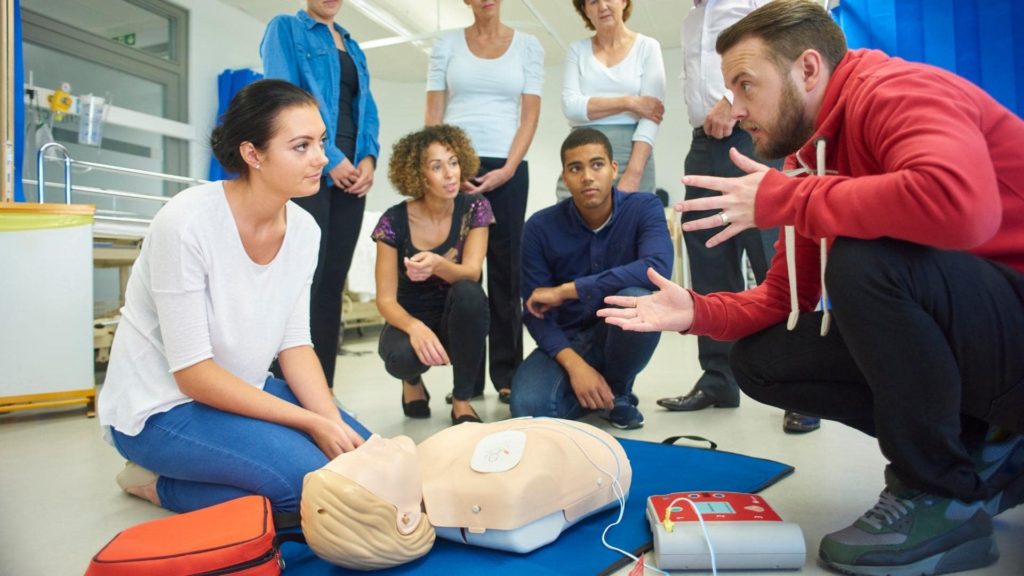
A group of people in a classroom setting are gathered around a CPR manikin. A man in a red hoodie is demonstrating CPR techniques, while a woman kneels beside the manikin. Others watch attentively.

Different Training Providers

The proper training and approval are vital in First Aid training. Coast2Coast is a Canadian Red Cross and Heart & Stroke training partner. The top-notch professional instructors also provide medical students with the following Heart & Stroke training:

WSIB Approved

It is essential that First Aid training for the workplace in Ontario is WSIB approved. The Workplace Safety and Insurance Board ensures all workplaces practice the required health and safety standards, and the board provides liability coverage for employees. Employers cover the fund entirely.

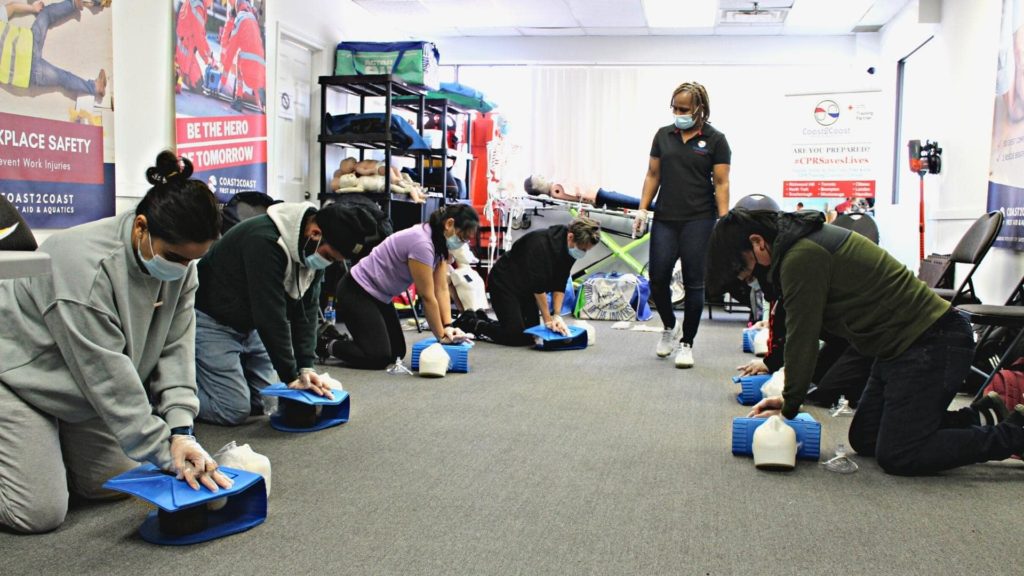
A group of people kneeling on the floor practicing CPR on mannequins in a classroom setting. An instructor stands nearby observing. They are all wearing masks, and safety posters are visible on the walls.


Choose Coast2Coast for Your Training

Choosing the right First Aid course in the GTA is easier than you think. Coast2Coast, a Canadian Red Cross training partner and WSIB approved First Aid training provider, offers several courses, making it easy to find the First Aid training required for any career in the province. Based in the GTA of Ontario, Coast2Coast makes it easy to register and participate in its First Aid courses provided by only experienced instructors.

Always be prepared to save a life, get certified today!


Register for First Aid & CPR Training

Choose from any of our locations across Ontario and gain the knowledge and skills to save a life!

Best First Aid and CPR Training in Kitchener

best first aid and cpr training in kitchener

Facing an emergency without First Aid training is daunting and leaves people feeling helpless. Many people in Kitchener put off First Aid training for various reasons, mainly that they don’t have time or don’t know where to take a course. Others believe that they don’t need training but don’t realize that some techniques, especially CPR, require specific training.

The level of First Aid training someone needs will depend on their personal circumstances and career. Someone looking after children or a sick relative may need a higher level of training than someone who wants to prepare for general emergencies.

People who work in educational facilities, community settings, sports training centers, and healthcare professionals typically require advanced levels of training. Standard First Aid prepares participants for common medical emergencies needed for these careers, including environmental crises.

First Aid is not mandatory in Canada, but everyone is encouraged to help others in everyday emergencies. Helping each other is a moral obligation, and knowledge gives you confidence. Ready to find the best first aid and CPR training in Kitchener? Look no further!

New Training Facility in Kitchener

Coast2Coast has opened up a new training facility in Kitchener, making First Aid and CPR training more accessible than ever before. Several levels of First Aid and CPR training courses are available, including Emergency First Aid, Standard First Aid and Basic Life Support (BLS-HCP). Coast2Coast recommends everyone complete first aid and CPR training even if you do not require it for work or school programs.

Teaching times for First Aid and CPR training in Kitchener depend on the course level you choose. Our Online Blended training format is the most popular for Emergency First Aid and Standard First Aid because it saves time, allowing participants to complete the 4-8 hours of online learning (in their own time). The practical segment of the course has 5.5-8 hours of in-class training.

Open door to conference room labeled “Kitchener IV” with a sign for Coast2Coast First Aid and Aquatics Inc. Inside, tables and chairs are arranged, with a projector screen in the background.

In-class training is an integral part of a first aid course because you learn the correct techniques firsthand from our experienced, Canadian Red Cross instructors. During this portion of your course, students will practice these techniques. Instructors are there to help you if you are struggling with any section of the course.

The in-class portion of our First Aid and CPR training in Kitchener starts at 9 AM. Once you complete the course and pass the multiple-choice exam, you will receive a WSIB-approved Canadian Red Cross certificate. All First Aid certification is valid for three years, after which you can recertify.

The in-class sections of First Aid & CPR require 100% attendance and a score of 75% or higher on the multiple-choice test.

Importance of First Aid & CPR

Since no one ever knows when an emergency will occur, First Aid training provides the confidence required to help save a life. Emergencies don’t always happen where first responders are available, so you might need to assist a loved one at home, a stranger on the road, or a colleague at work.

First aid training is not only for dealing with accidents. Depending on your course level, training may help you recognize illnesses, poisoning, cardiac arrest, and anaphylaxis. You also learn to call for emergency services, offering the correct assistance and comfort until professionals arrive.

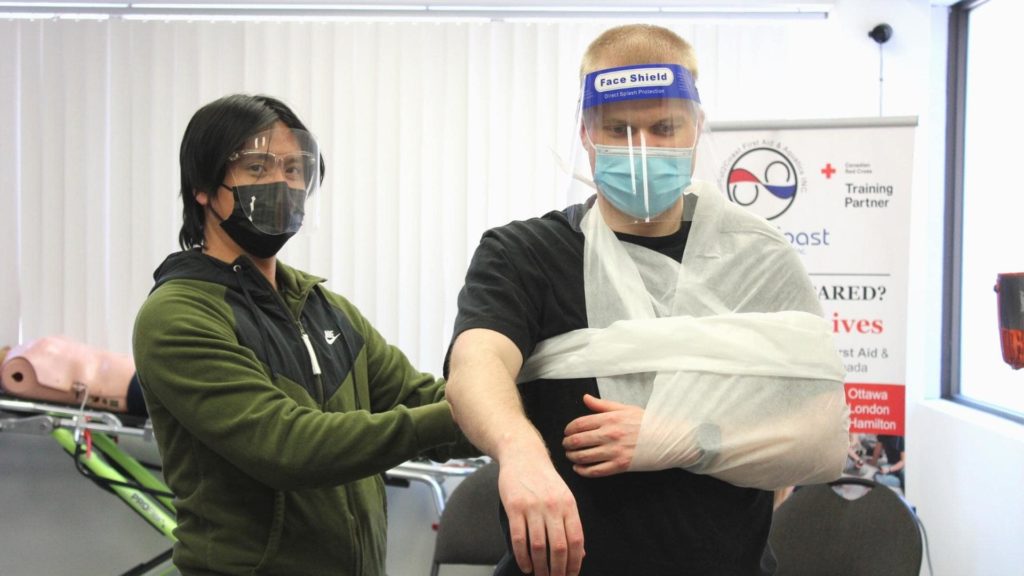
Two people in a training session practice applying a triangular bandage to create an arm sling. One person assists, while the other has their arm wrapped and secured. Both wear face masks and transparent face shields. A first aid poster is visible behind them.

Get Trained in Kitchener!

Join our First Aid Training in Kitchener and equip yourself with vital life-saving skills. Our expert instructors provide hands-on training to prepare you for emergencies in any situation.

Being prepared to assist in any situation is the first thing you learn, but First Aid training prepares you to share your skills and become more aware of personal safety and health.

Some of the things you can expect to learn during Emergency First Aid & CPR training in Kitchener:

  • The Red Cross
  • First Aider’s Role Chain of Survival Behaviors
  • Lowering Risk of Infection
  • Check, Call, Care
  • Placing Someone in the Recovery Position
  • Shock
  • Choking in Adults (Level C Includes Choking for Children and Infants)
  • Assisting with Medication
  • Angina and Heart Attack Stroke CPR/AED in Adults (Level C Training Includes Children and Infants)
  • Compression-Only CPR
  • Treating Life-threatening External Bleeding and Internal Bleeding
  • General Wound Care

In Standard First Aid, the training includes environmental emergencies, head, neck, and spine injuries, poisons, and other medical emergencies.

How to Register for First Aid & CPR in Kitchener

Three people wearing masks and gloves practice CPR on mannequins in a training session. They are kneeling and performing chest compressions. The setting appears to be a classroom or training facility with instructional materials visible.

Registering for First Aid and CPR training in Kitchener is easier than you ever thought. Check out our training locations under the “Find a Training” section on our website’s menu. From there, you can select the location of your choice. Each location has a page where you may select the course type you are interested in. Choose the First Aid & CPR option to see our upcoming course dates. Click on Register Now to book, fill in the Registration Form, and Submit.

Register for First Aid Training

Register today for a First Aid Training course and learn how to deal with emergencies and keep your loved ones safe! Check out our facilities and book your spot now.

How to Prevent Environmental Illnesses

how to prevent environmental illnesses

Exposure to the cold and extreme heat are the most common elements that cause environmental illnesses. In addition to these, there are also environmental poisons. The symptoms of environmental illnesses vary, depending on the chemical, pollution, allergen, toxin, virus, or climatic condition the victim is exposed to. Preventing environmental illnesses is not easy, but the faster people are removed from the danger and treated, the better.

Environmental hazards typically occur outdoors when people are exposed to extreme climatic conditions or poisons. Now, let’s learn how to prevent environmental illnesses!

What are environmental illnesses?

Hypothermia, heatstroke, frostbite, heat exhaustion, and poisoning are some of the most commonly seen environmental illnesses seen by first responders.

Cold-Related Illnesses

Hypothermia – When the body is exposed to frigid temperatures, it can’t produce heat as fast as it is lost. The result is that the body uses up all its stored energy, reaching an abnormally low body temperature. This is known as hypothermia. Hypothermia is very dangerous because the person’s ability to think clearly and move is dangerously reduced.

Preventing hypothermia requires that people heed the early warning signs and take the appropriate action. Know the early warning signs of hypothermia which include shivering, fatigue, loss of coordination, and disorientation or confusion. They should call for assistance if they cannot find a warmer place or shelter.

First Aid measures include moving the person to a warm space, removing wet clothing, and warming their body from the center outward. In the absence of an electric blanket, the best way to heat a person is with skin-to-skin contact under layers of dry clothing. You must only give the person a high calorie food or drink if they are conscious, alert and shivering, avoiding alcoholic beverages. If the person has no pulse, give CPR immediately.

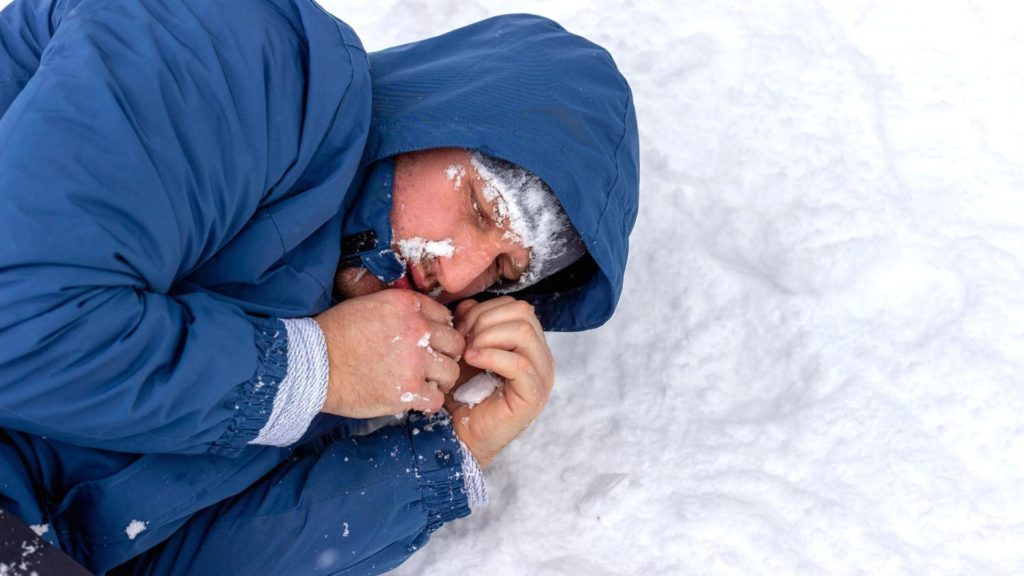
A person wearing a blue jacket is lying on their side in the snow. Their head is covered with the jacket's hood, and their face is partially covered with snow. They appear to be trying to keep warm.

Frostbite – Some body areas are more susceptible to freezing temperatures than others. These include the ears, nose, chin, cheeks, fingers, and toes. Frostbite is caused when these body parts freeze because of extremely low temperatures. The body tissue in that part of the body could become permanently damaged, often leading to amputation. Frostbite is prominent in people with poor blood circulation, but also among people working in the cold who haven’t dressed appropriately.

Wearing protective coverings on all extremities when spending time in freezing outdoor temperatures is critical. The symptoms of frostbite include numbness, tingling, and hardened skin. The skin may also turn pale or blue with a waxy appearance.

First Aid measures include going to a warmer area, immersing the affected area in warm water (never hot water) or body heat. Keep the skin protected with loose dressings, elevate thawed extremities, stay hydrated and get medical attention.

Heat-Related Illnesses

Heat Exhaustion – Excessive sweating during heat exposure causes the body to lose fluids. Because of this, the body’s blood flows to the skin to eliminate heat. This causes a lack of blood flow to vital organs.The warning signs include sweating, dizziness, weakness, headaches, vomiting and more.

The best way to prevent heat exhaustion is to ensure your body remains cool. Stay hydrated and avoid exertive work during the hottest times of the day.

First Aid measures include placing the person into a cool area and giving them lots of liquids, especially water, clear liquids, or a sports drink to replenish the body’s lost minerals. Loosen clothing as much as possible and pour cool water on their torso. You can also cool them down by applying a cool cloth or ice to the neck, head, and face.

A person in a black shirt and shorts lies on a large tractor tire, holding a blue water bottle. They are on a grassy field under bright sunlight, appearing to rest or relax.

Heatstroke – Heatstroke is a severe environmental illness. The signs of heatstroke are an extremely high body temperature of 104F (40°C) and higher and loss of consciousness (partial or complete). Not all heatstroke victims sweat, so it is not a good indication. Other signs include severe headache, altered behaviour, rapid breathing, seizures, and dry/hot skin.

Precautions to prevent heatstroke include protecting against sunburn, wearing loose clothing, drinking plenty of fluids on hot days, and staying indoors during the hottest part of the day.

Treat heatstroke by removing the person from the heat. Loosen tight clothing and immerse them in cool water. Ensure their forearms and hands are in cool water. You may also place ice packs in the person’s armpits and chest. Fan them as a way to increase evaporation. If they are conscious, let them sip on a cool sports drink, coconut water, milk or water.

First Aid and Environmental Illness

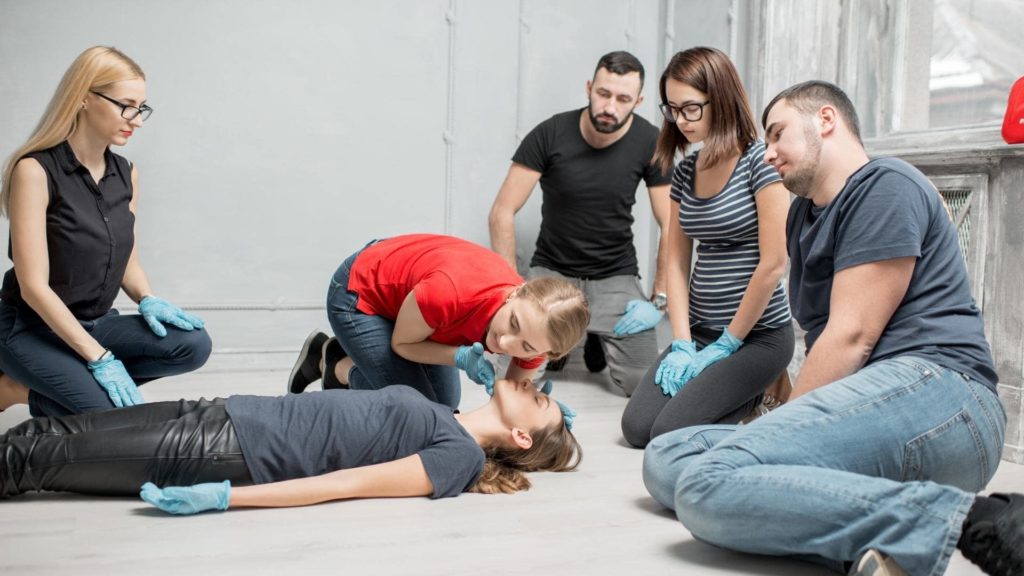
Group of people in a first aid practicing CPR on a person lying on the floor. One individual is administering chest compressions while others observe, all wearing gloves. The setting is a bright room with a large window.

First Aid training prepares you to treat victims of these and other environmental illnesses. At Coast2Coast, our Emergency and Standard First Aid courses are ideal, depending on the level of First Aid training you desire. This training is offered in a blended method to save you time and money. Pick your preferred location in the Greater Toronto Area, Western or Eastern Ontario, and register today.

Register for CPR or First Aid Training

Register today for a CPR or First Aid training course at one of our locations across Ontario! Check out our facilities and book your spot now.

Is First Aid Training Mandatory?

is first aid training mandatory

People often put off First Aid training until they are faced with an emergency where they feel helpless. Others put it off until they must get the training for their school or work. Several reasons cause people to keep putting it off, saying that they don’t have the time, they don’t know where to go for their training, they don’t think they will ever face an emergency, or that they already have all the knowledge required.

Currently, First Aid Training is only mandatory for people in specific careers or school programs. These are typically people who work in healthcare, rescue services, schools, as sports trainers, etc. Also, depending on the workplace environment and the number of employees, the law requires a specific amount of people per shift who must be First Aid certified.

In workplaces with five or fewer workers per shift, at least one requires an Emergency First Aid First Aid certificate. In workplaces with six people or more on any shift, at least one worker requires a Standard First Aid certificate.

So is First Aid training mandatory? No, First Aid training is not mandatory for everyone, but it is mandatory for many professions.

Why First Aid is Important

There are several reasons why First Aid is important:

Undoubtedly, the most critical reason for First Aid training is to assist someone during an emergency or accident confidently, whether that is a relative, friend, colleague, or even a stranger.

Besides helping save a life, First Aid enables you to offer someone in pain emotional support and comfort as you assist or until emergency services arrive.

Emergencies happen on a daily basis which is why you need to be prepared. With your knowledge, you can assist an injured person as well as help prevent a situation from becoming worse.

First Aid training gives you the ability to help out in any situation, expanding your confidence to share your skills wherever they are needed. Finally, the training makes you more aware of how important it is to practice keeping yourself safe and healthy.

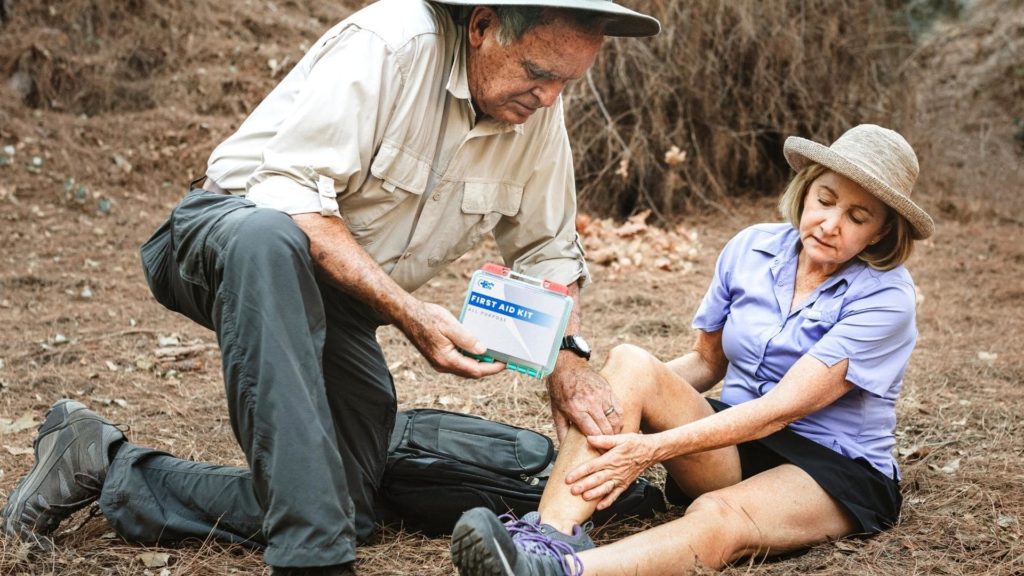
A man kneels on the ground holding a first aid kit and examines a woman's leg as she sits with a hat on. They are outdoors on a dirt path, surrounded by dry vegetation.

Register for First Aid Training

Register today for a First Aid training course and learn how to deal with emergencies and keep your loved ones safe! Check out our facilities and book your spot now.

Who Needs First Aid?

The two primary levels of First Aid training are aimed at people with various qualification needs. Whether you take Emergency First Aid Training or Standard First Aid Training will depend on your personal needs and career choice.

Emergency First Aid is suitable for most people who work in an office or business with low risks and for anyone wanting to help others during an emergency. It is also ideal for caregivers, parents or anyone who wants some basic knowledge in First Aid.

On the other hand, Standard First Aid Training is suitable for anyone planning a career in healthcare, education, etc. since the course content is more intense and includes training in environmental and medical emergencies.

Community Safety

We are all susceptible to injuries and illness as we run around daily performing several tasks. The faster we get help from someone trained in First Aid, the better, especially in critical situations. Every minute counts when it comes to saving a life!

First aid training increases the safety of a community, helps people feel more secure, can save lives, relieve pain, and prevent situations from getting worse.

Therefore, First Aid training provides communities with a safer environment to carry out their daily activities, knowing that there is someone at hand to help if needed.

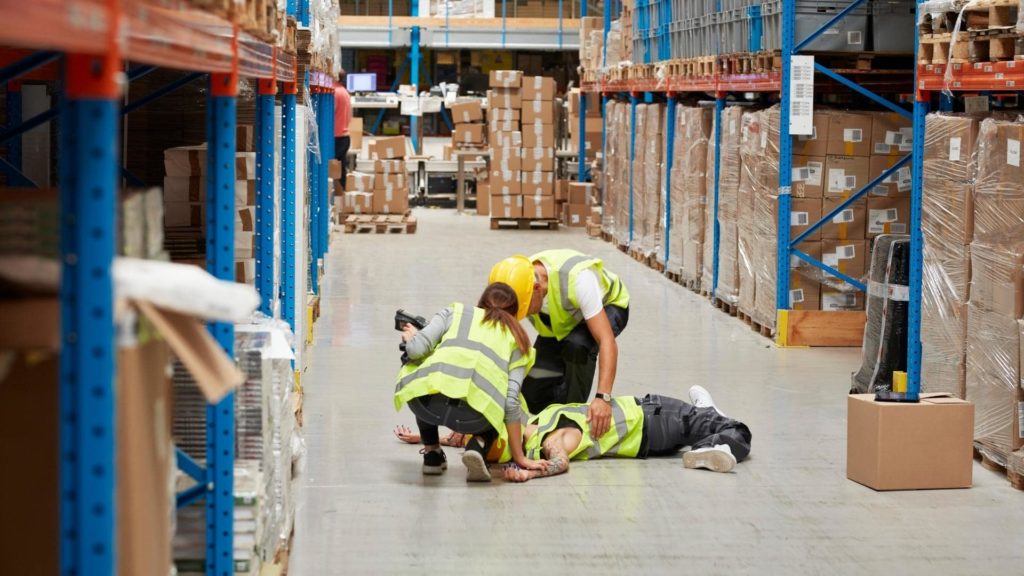
Two workers in high-visibility vests and helmets attend to a person lying on the floor in a warehouse aisle. Shelves loaded with boxes line both sides, and a few cardboard boxes are on the ground nearby.

Should First Aid Training Be Mandatory?

In Canada, people are encouraged to take First Aid training in specific jobs and mandatory workplace regulations. However, it is not compulsory for everyone.

Many people argue that First Aid training should become mandatory for everyone, quoting the example of some countries requiring it. For instance, in Germany, someone cannot get their driver’s license without completing a First Aid course.

First Aid prepares participants to act swiftly in an emergency. Some of the everyday occurrences where First Aid can help include providing CPR during a cardiac arrest incident, applying back blows and chest thrusts to a choking victim, stopping excessive bleeding until help arrives, etc.

Learning how to save another person’s life is a small investment toward being a responsible citizen. After all, we all have a moral obligation to help each other.

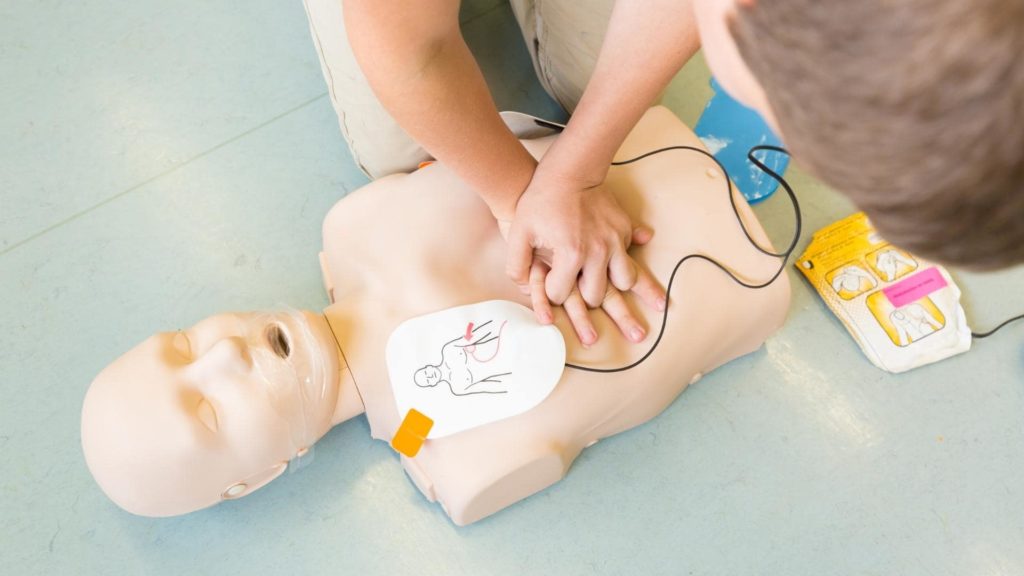
A person is performing CPR on a practice mannequin. The mannequin has adhesive pads on its chest, connected to an automated external defibrillator (AED). The person is applying chest compressions on the mannequin's torso.

Where To Get Your First Aid Training

First Aid training in Canada is so accessible that no one can claim they don’t have the time or don’t know where to get it. Our online blended courses at Coast2Coast save you time and money, allowing you to learn the theory online at your own pace before attending a one-day in-class training.

At Coast2Coast, we offer Emergency First Aid, Standard First Aid, Marine Basic First Aid, and Child Care First Aid (for private clients only). Each of these courses includes CPR/AED training. As a participant, you have a choice of either all in-class training or online blended training, making it easier to decide which format suits you best.

Our First Aid training is available at several locations in the Greater Toronto area, Western and Eastern Ontario, making it easier to find a location near you. We also provide First Aid workshops for eight or more participants.

Register for your Coast2Coast Canadian Red Cross and WSIB approved First Aid Training today.

Questions About Your Course?

Our team is ready to help you with your questions. Don’t hesitate and contact us today.

What Is Covered in Emergency and Standard First Aid?

10 topics covered in emergency standard first aid

First Aid certification offers the training required to save lives. These life saving skills are vital in situations where people are suddenly taken ill or are seriously injured, helping to ensure they are stabilized before professional help arrives.

Difference Between Emergency and Standard First Aid

Emergency First Aid is a comprehensive course designed to cover basic first aid. This course allows trainees to deal with various emergencies and can be completed in one day.

In a Standard First Aid course, the same emergencies are covered in greater depth, but some other skills are also added. Trainees complete the course in 2 days (or 8 hours online and 8 hours in-class for the Online Blended format), and each skill is practiced to ensure it can be carried out with confidence.

Both Emergency and Standard First Aid training certificates are valid for 3 years. When it comes to renewal, Emergency First Aid cannot be recertified; it requires full training again. Standard First Aid can be recertified once, thereafter, candidates alternate between a full and recertification course.

10 Topics Covered in Emergency and Standard First Aid

Both Emergency and Standard First Aid include these 10 topics:

1.  Lowering the risk of infection

Here, participants are taught to practice correct hygiene, how to use personal protective equipment (wearing and removing it) to prevent cross infections and the basic rules of wound care.

A person wearing a face mask and a light blue sleeveless top is putting on white gloves. They are standing indoors near a window with white blinds.

2.  Three Cs of Emergencies

During an emergency, it is often difficult to think clearly. First Aid training is based on the three P’s – preserve life, prevent patient deterioration, and promote recovery. To achieve this, participants are taught the three Cs of an emergency. These are Check (check surroundings for dangers and remove them and complete the ABCs), Call (call EMS or 911 for help), and Care (perform CPR or other necessary care).

Inquire about First Aid Training

Ready to complete a First Aid training course? Call our toll-free number to learn more about Emergency and Standard First Aid.

3.  Recovery position

Recovery care can include everything from moving the patient from harm to bandaging wounds. First aid training teaches participants how to apply the techniques to keep the person warm, dry, stop bleeding, etc. These are the steps that promote quicker recovery. If an ill or injured person is unresponsive, you can put them in the recovery position as long as it is safe to do so. This position protects the person’s airway. 

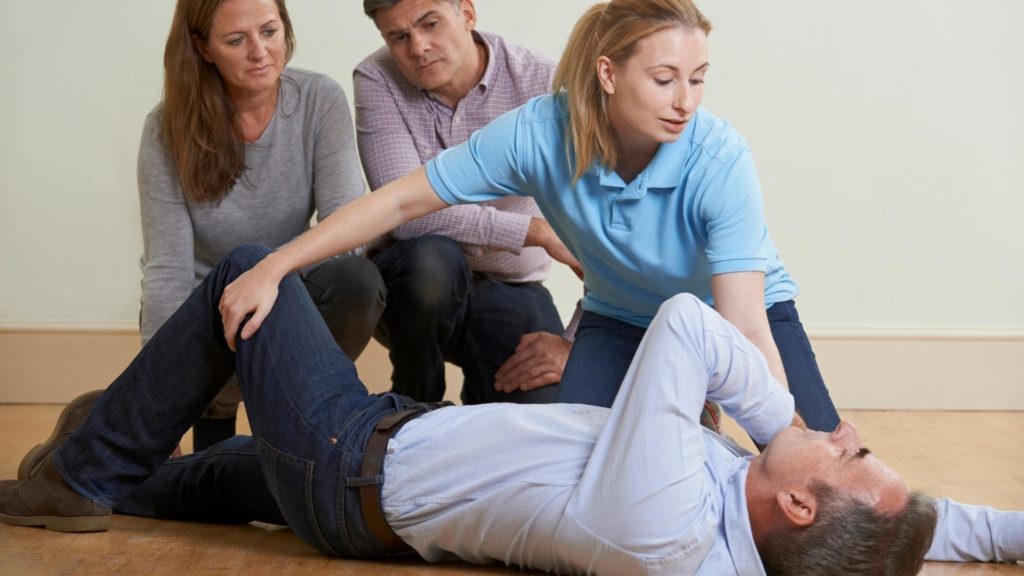
A woman in a blue shirt kneels beside a man lying on the floor, checking his condition. Two other people, a woman and man, watch with concerned expressions. The scene suggests a first aid or emergency situation indoors.

4.  Shock

Assessing a situation where the victim has suffered shock is important. In Emergency and Standard First Aid, participants are taught the importance of calling 911, monitoring ABCs and providing care for the cause of shock. They also learn the importance of keeping the person warm and how to keep them comfortable.

5.  CPR/AED & Choking (adults, children, and infants)

CPR/AED and Choking training are the most basic and important life saving procedures. First aiders are taught how to manually circulate blood around the body if the heart has stopped beating, how to apply CPR in patients with no pulse or respiration as well as choking interventions for adults, children and infants.

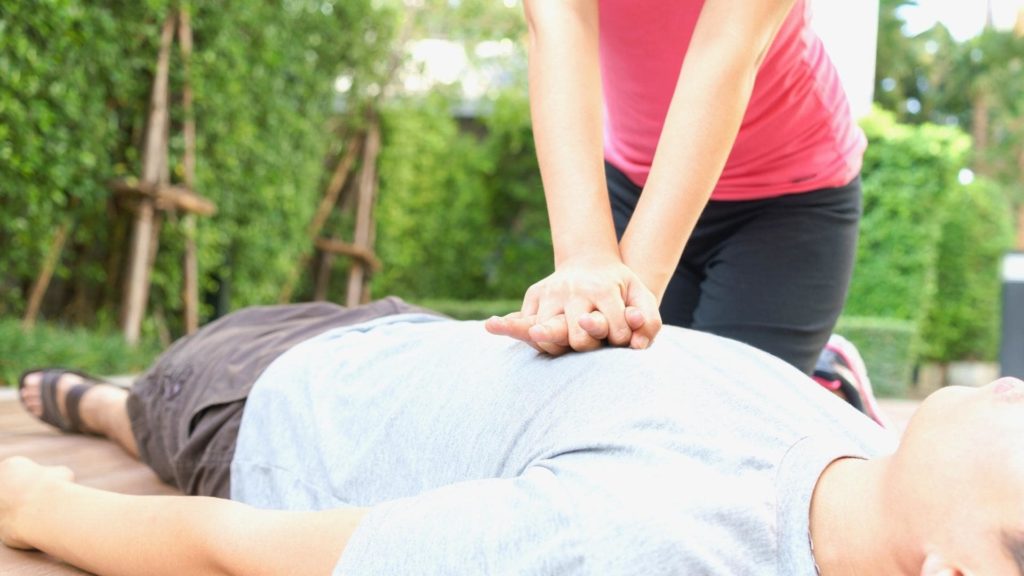
A person in a pink shirt is performing chest compressions on someone lying on their back outdoors. Lush green plants in the background.

6.  Assisting with medications

First aiders cannot dispense medications unless they are assisting someone who has asked for help. Training includes how to assist in preparing medications. Participants also learn how to ensure the right person is taking the right medication (and the correct dose) at the right time correctly.

Register for First Aid & CPR Training

Choose from any of our locations across Ontario and gain the knowledge and skills to save a life!

7.  Angina and heart attack

Heart disease is one of the leading causes of death in Canada. Learning how to recognize and assist someone having a heart attack is vital to ensuring they receive immediate help to increase chances of survival. They need to be made comfortable, before calling for help. The right steps can save their lives.

8.  Stroke

Just like with heart attacks, stroke victims need immediate assistance. First aid training helps participants learn the signs of a stroke and the immediate steps required. A great acronym to remember for stroke is FAST (face, arm, speech, time).

9.  Life-threatening internal and external bleeding

External bleeding is more obvious, but first aiders are taught to recognize the signs of internal bleeding too. Managing both these types of bleeding is vital to patient care until help arrives.

10.  Wound care

This topic teaches about the different types of wounds and their care. Learn how to bandage, stop a bleed, handle various types of burns and more.

Added Topics for Standard First Aid

Standard First Aid includes an additional five topics, allowing participants to learn how to deal with more emergency issues. These include:

  • Head and spinal injuries
  • Bone, muscle, and joint injuries
  • Medical emergencies
  • Environmental emergencies
  • Poisons

Should You Get First Aid Certified?

In short, YES! Here you can find 5 reasons why we highly recommend that everyone gets First Aid and CPR certified. You never know when someone will become injured or suffer from a life-threatening disease. By understanding how to provide proper First Aid and CPR, you could save the life of a family member or friend. Get certified today and gain confidence in your life-saving skills.

Non-certification First Aid and CPR Courses in London

Person practicing CPR on a mannequin, pressing down on the chest with interlocked hands. A first aid manual is visible on the side, and the setting appears to be an indoor training session.

First Aid and CPR Training in London, Ontario

First Aid and Cardiopulmonary resuscitation (CPR) training is something everyone should think about pursuing. Having this training means you could help save someone’s life or de-escalate an emergency situation so that the outcome is not as serious. There are many reasons to consider CPR First Aid training in London, Ontario, not the least of which is that the person you could be saving is likely someone close to you – a family member, friend or co-worker. Now First Aid and CPR training is available from Coast2Coast.

What First Aid and CPR training is available in London, Ontario?

This post will focus on the non-certification First Aid and CPR/AED training courses that are available in London. Coast2Coast offer both certification and non-certification CPR and First Aid courses, depending on your needs.

If you require a certification to assist in your employment, see this post about our Canadian Red Cross certification courses. You can greatly enhance your employable skills by becoming certified in Level A and C First Aid and CPR/AED. In fact, this training can be a requirement if you are pursuing a career in law enforcement and health care support, among other fields. Coast2Coast offers courses in Standard, Emergency and Marine First Aid. These courses are offered as a blend of online and in-class learning.

What non-certified First Aid and CPR courses are available in London, Ontario?

You may not require certification and wish to take a CPR and First Aid course in London for your own personal peace of mind. London, Ontario First Aid and CPR training from Coast2Coast is not limited to certification courses, thankfully. Many of our students are expectant or new parents, as well as grandparents, who will be caring for babies and small children. You may have elderly parents who you wish to be able to assist in the event of an emergency. Keeping loved ones safe is a priority for many who take our courses, and our students learn the necessary measures to ensure their safety. Given that heart disease is one of the most common causes of death in Canada, CPR is a valuable skill to have. For those caring for small children, choking is a real hazard and is very scary if you don’t know what to do.

Coast2Coast workshops are ideal for those who do not require an official WSIB approved First Aid and CPR certificate, but still wish to learn live-saving skills.

Coast2Coast also offers First Aid and CPR workshops for those who don’t wish to commit to the full-length or cost of a Red Cross certification course, but still want to learn these valuable skills. These courses are shorter and less in-depth than our other CPR and First Aid courses, while still giving you a solid foundation in the course work. Our workshops are great for those seeking a solid foundation in CPR and First Aid training, as well as those who are looking to expand their skill set for personal use. The London CPR/AED and First Aid workshops are available for public or private training and include the following: Know Your Baby, Baby Emergency Preparedness, and Build Your Own (private training only).

First Aid and CPR for pets is another non-certification that is available from Coast2Coast in London, Ontario. Keeping our pets safe is a top priority and this course is a great way to ensure you have the confidence to assist your pet in an emergency. CPR for pets is actually quite similar as it for humans, but our specific training will allow you to master this training for your cat or dog. Our Pet First Aid course in London is done in partnership with Walk N Wags’. In this course, we cover bone injuries, CPR, poisons, and much more.

Looking for private CPR and First Aid training in London, Ontario?

Look no further! Coast2Coast also offers private training for its London First Aid and CPR courses. A minimum of eight people can participate in the training of your choice with a Canadian Red Cross instructor. You choose the time and place, and Coast2Coast will do the rest, including bringing our top-notch equipment for your group to practice with. This is an ideal way to have staff trained in a workplace, club or family. Private First Aid and CPR/AED training is available for any of our courses, including non-certification courses. 

Online learning for all of our blended courses is done from the comfort of your own home, and our in-class First Aid and CPR training can be done at Western in London, Ontario and other locations. Please visit here for a full listing of courses offered in London (click the button below)

Which First Aid and CPR training program in London, Ontario is right for you?

Many students who take our courses need to be certified at their jobs, but if that isn’t necessary you can take advantage of one of Coast2Coast’s non-certification courses. You will receive training in amazing life-saving skills, while saving yourself time and money. Register today to expand your First Aid and CPR knowledge or ask one of our customer service representatives which course is right for you!

Emergency First Aid Training in London, Ontario

Emergency first aid training in London, Ontario

Options for Emergency First Aid Training in London

Coast2Coast offers several options for emergency first aid training in London, Ontario. Not only do we offer training in emergency First Aid and CPR/AED at various levels, but we also offer the Professional First Responder program for those who wish to take their training to the level of emergency responder.

The standard First Aid and CPR/AED training in London, Ontario includes courses for individuals that are required to have WSIB certified courses for work. Our CPR/AED Level A or C courses in Emergency, Standard and Marine Basic First Aid may all be required for employment. Some positions that might require this Canadian Red Cross certification include child youth workers, coaches and instructors, daycare workers, early childhood educators, aesthetician school programs, development services worker, and more. You can read more about our certification courses here (Click the button below).

Having First Aid and CPR training is useful for a number of jobs, to ensure you are able to respond to any emergency affecting people in your care. This type of training is also useful and essential to have in everyday life and should be undertaken by anyone who is able to do it. Having the confidence of this training means you could respond to a number of emergency situations that you could be faced with on a daily basis, both in your professional and personal life. Luckily, you can complete this CPR training in London, Ontario, close to your home.

A group of diverse women sit on the floor around a CPR manikin. One woman holds an instructional paper. They appear to be in a training session, focused on the paper and manikin, in a well-lit room with wooden floors.

We do have some people in our midst that are called to do further training and become professional emergency responders. These are the people we all rely on to respond to emergency situations, and their training goes beyond the standard First Aid and CPR courses.

First Aid Training Courses in London Emergency Responders

What does it take to be trained as a Professional Emergency Responder and what does this position entail? First responder is a term that typically refers to those who might respond to an emergency, including law enforcement officers, paramedics, Emergency Medical Technicians (EMTs) and firefighters. Emergency Medical Responder (EMRs) are responsible for providing immediate aid to patients before the arrival of EMTs and doctors, or while the patient is being taken to hospital.

EMRs save lives with quick interventions and immediate aid to their injured patients, often providing the first on the scene care that can be crucial to a patient’s survival. They have to provide fast assessments and determine treatment methods normally at the scene of an accident or emergency situation. The people who train as EMRs are able to handle difficult and stressful situations calmly. If that sounds like a position you would be interested in training for, please read on!

What does Coast2Coast’s Professional Responder Program entail? 

Coast2Coast’s Professional Responder Program is well suited to individuals in fields like health care, firefighting and law enforcement. The program is split into four sections that include: first responder, emergency medical responder (EMT), and emergency medical responder recertification/emergency medical responder upgrade. 

Each of these four courses have varying lengths and different content, and they all involve emergency scenario training. These practical scenarios help students to learn responses and the necessary skills involved in facing emergency situations.

The First Responder course involves 40 hours of training over about four days. Students must demonstrate mastery of the required skills and successfully complete a minimum of one practical scenario. They must also be able to score 75% on the multiple-choice knowledge test and attend 100% of the course. The topics covered in the First Responder course are varied and include everything from responding to a call, to assessment, to what to do in certain scenarios, to lifting and moving patients.

The Emergency Medical Responder course involves a greater commitment than the First Responder course at 80 hours of training over eight days. Similar to the First Responder course, students must successfully score 75% on the multiple-choice knowledge test and attend all of the course training. They must also demonstrate they have learned all the practical skills and complete a minimum of two practical scenarios, one medical scenario and one involving trauma. In addition, EMR students must already be certified in Standard First Aid and CPR. The course curriculum for the EMR covers more extensive topics than the First Responder course, such as pharmacology and transporting patients.

Coast2Coast offers various types of CPR training at their London, Ontario location in addition to the many other courses. Please see here for a full listing of the course catalogue available in London. For a full course listing, please click the button below.

In order to complete the Professional Medical Responder certification, students must also complete the Emergency Medical Responder upgrade course and the First Responder and Emergency Medical Responder recertification courses as needed. Each of these have their own similar requirements of class time, multiple choice test success, demonstration of skills, and 1-2 emergency scenarios.

The reward of being a Professional First Responder

First Aid and CPR training is extremely useful for most of the population, but a select few choose to continue their education and become certified in the Professional First Responder program. To complete this training is difficult and requires an individual that is able to keep calm under pressure and be adaptable to many different pressures and scenarios. The training is intense but rewarding, and ultimately empowers individuals to become excellent emergency responders. Enroll today to become certified in the Professional First Responder program at the Coast2Coast London, Ontario location.