We offer courses in Canada and the US. If you are experiencing issues with our website and need help to register, or if you have questions, please call us at 866-291-9121.
If you are facing any issues with your online course, registration, or training, please click here to submit a help request.
If you are facing any issues with your online course, registration, or training, please click here to submit a help request.
Life-threatening emergencies can happen at any time, and it’s crucial to know how to respond quickly and effectively. If you’re not trained in emergency response, terms like “BLS” and “CPR” might sound confusing and even interchangeable. However, understanding the difference between these two life-saving certifications will help you be prepared and meet workplace requirements.
The increasing number of people diagnosed with cardiac health issues means millions are at risk of heart attacks and cardiac arrest. Since most of these occur outside of a hospital, Basic Life Support provides the training to help increase survival rates, particularly for cardiac arrest victims who would otherwise have minimal recovery and survival chances without help.
Healthcare professionals play a vital role in their teams as they work in fast-paced environments. They should, as a result, be skilled in performing basic life support. CPR skills are essential in the everyday lives of healthcare workers because their profession focuses on saving lives. The potential for patients going into cardiac arrest is something they need to be aware of at all times and provide help if necessary. So, what is CPR for a healthcare provider?
Basic Life Support Certification is proof of completing the foundational BLS training. Participants of the BLS course learn the theoretical and hands-on skills required to ensure the best possible patient outcomes in breathing emergencies and cardiac arrest, particularly in fast-paced environments like hospitals and during emergencies. Healthcare professionals, first responders, rescuers, sports doctors, and dentists need BLS certification.
There are several ways Basic Life Support training can impact your career. Besides providing you with the latest life-saving protocols for breathing emergencies, advanced CPR training increases your confidence levels.
For those that are confused, there is a slight difference between BLS and HCP. Basic Life Support training was previously known as CPR-HCP. Certifications expired every three years. In April 2019, the Canadian government required healthcare professionals to update their training on an annual basis. Due to this change, the course is now called Basic Life Support and it provides students more information and skills required for their profession.
Continue reading to find out why healthcare professionals need BLS certification!
What is BLS?
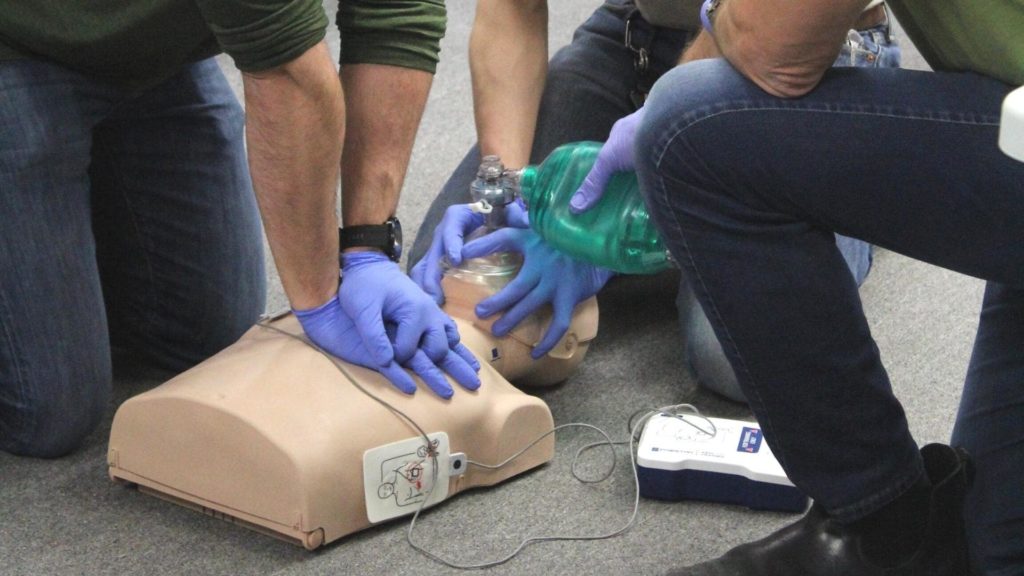
Basic Life Support training provides healthcare professionals and first responders with the skills required to help unresponsive people during breathing emergencies, trauma, etc. The course includes CPR/AED training for all age groups and various other skills.
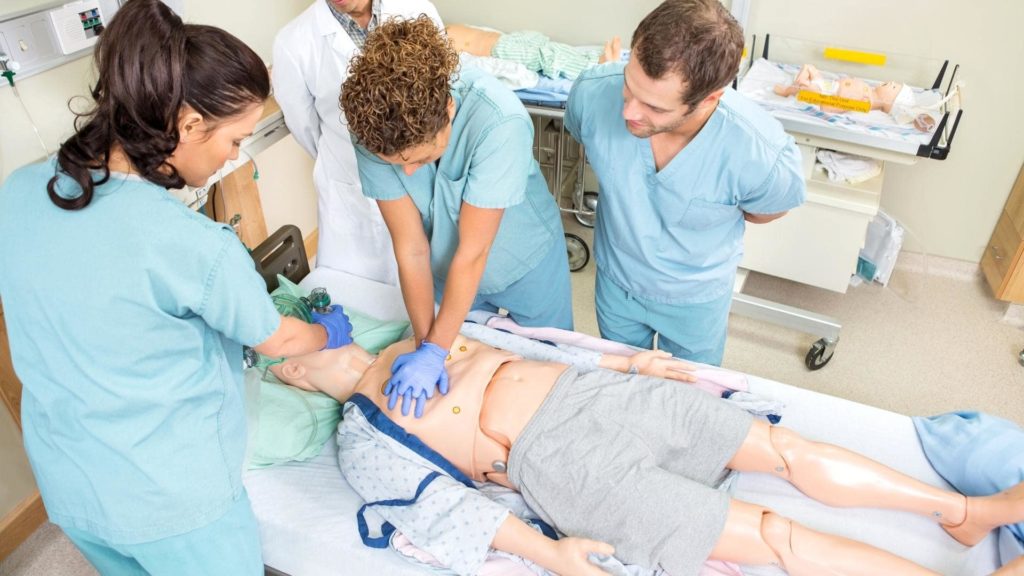
One of the most common conditions where BLS is required is cardiac arrest. Other cases where the patient is deprived of their vital oxygen supply include choking or drowning. Within a few minutes, a patient can suffer permanent brain damage from a lack of oxygen. In the absence of advanced equipment, BLS training allows healthcare professionals to maximize the chance of a possible outcome for the patient by administering resuscitation and chest compressions as a team.
During the training, participants learn the correct order of CPR and the cycles of CPR.
Expect to learn the following skills in BLS:
Advanced CPR algorithms (adults, children, and babies)
Use of an automated external defibrillator (AED)
Removing airway obstructions in children and adults
Single and multi rescuer resuscitation
Use of ventilation devices
Anaphylaxis
Trauma
Opioid emergencies
Six rights of medication and more!
BLS requires the correct sequence of chest compressions, airway, and breathing, in adults, children, and infants. These components contribute to blood flow and oxygen in life-threatening situations. During training, you learn about the chest compression rate, chest compression depth, chest recoil, and ventilation. You also learn how to perform this in the proper cycles.
Register for First Aid Training
Register today for a First Aid training course and learn how to deal with emergencies and keep your loved ones safe! Check out our facilities and book your spot now.
Promptly administering advanced CPR can save a person’s life from cardiac or respiratory arrest. Recertifying annually keeps healthcare professionals updated with any new developments.
BLS training teaches students the proper way to administer the life-saving skills required by healthcare professionals and other related industries. These skills are vital for people who offer direct patient care. At Coast2Coast, we offer private/group training for healthcare industry teams; reach out to our customer service reps to find the best option for your needs.
BLS Certification Validity
Basic Life Support certificates remain valid for one year after they are issued. In order to take our Renewal course, you must hold a BLS certificate. Annual retraining ensures that participants retain their confidence and skills. Besides the regular retraining, make sure to get your BLS certificate from an accredited provider such as Coast2Coast First Aid!
Coast2Coast BLS Programs
Coast2Coast has multiple programs to choose from, depending on your work requirements. These are Basic Life Support (HCP), Airway Management & Oxygen Therapy, and Accredited Heart and Stroke Basic Life Support. All the courses teach various life-saving skills, including recognizing cardiac arrest. Participants learn how to respond promptly and confidently, applying the elements of Basic Life Support.
BLS is a 4-hour training course available in morning, afternoon, and evening classes to ensure everyone finds a time slot that suits them. The Basic Life Support and Renewal courses have the same duration, but the Renewal option is offered at a lower rate. If you register for the Renewal, you must bring a copy of your current certificate to class to receive your discount.
Airway Management & Oxygen Therapy is a two-hour intensive training course that provides the skills to offer supplemental oxygen and create an airway when needed. Students learn how to create oropharyngeal, nasopharyngeal, and supraglottic airways in patients. This training also covers the safe handling and assembling of equipment such as oxygen tanks. Oftentimes, this training is taken together with Basic Life Support training by healthcare professionals, first responders, and rescue workers.
Coast2Coast provides Canadian Red Cross Basic Life Support courses in the Greater Toronto Area, Western Ontario, and Eastern Ontario. Learn more about the locations, dates, and times of the various BLS courses HERE.
We hope you’ve learned why healthcare professionals need BLS certification!
Master the Essentials of Life Support!
Join our Basic Life Support (BLS) course and learn critical skills to save lives in emergencies. Our expert instructors will guide you through hands-on training and the latest techniques to help you respond effectively.
Understanding CPR HCP vs BLS: What Healthcare Providers Need to Know
One of the most frequently asked questions we receive at Coast2Coast First Aid and Aquatics is: “Why don’t you offer the CPR HCP (Healthcare Provider) course?” It is a fair question, and the answer reflects an important evolution in emergency medical training standards in Canada. The short answer is that the CPR HCP designation has been replaced by the Basic Life Support (BLS) course, which provides more comprehensive and up-to-date training for healthcare professionals and anyone requiring a healthcare-level CPR certification. Understanding the differences between these courses — and why the change was made — helps you choose the right training for your needs.
As a Canadian Red Cross Training Partner, Coast2Coast follows the most current training standards and guidelines established by the International Liaison Committee on Resuscitation (ILCOR) and the Canadian Red Cross. These standards are updated regularly based on the latest medical research, and the transition from CPR HCP to BLS certification reflects a significant improvement in how healthcare-level resuscitation skills are taught and assessed.
What Was the CPR HCP Course?
The CPR HCP (Healthcare Provider) course was traditionally a CPR certification designed for individuals working in healthcare settings. It covered one-rescuer and two-rescuer CPR for adults, children, and infants, the use of bag-valve-mask (BVM) devices, AED operation, and management of choking emergencies. For many years, CPR HCP was the standard certification required by hospitals, dental offices, physiotherapy clinics, long-term care facilities, and other healthcare environments across Canada.
While CPR HCP served its purpose well, the evolution of resuscitation science revealed opportunities to improve the training. Specifically, the healthcare community recognized the need for more emphasis on team-based resuscitation, high-performance CPR metrics, and integration of multiple interventions during cardiac arrest management. These needs led to the development and adoption of the BLS course as the new standard for healthcare-level CPR training.
Why did the Canadian Red Cross Replace CPR HCP with BLS?
The transition wasn’t just a name change; it was a shift toward High-Performance CPR. According to the Heart & Stroke Foundation of Canada, high-quality chest compressions can increase survival rates by up to 40%. The old HCP curriculum lacked the rigorous “Team Dynamics” required in modern clinical environments.
The 2026 Regulatory Landscape: CSA Z1210:24 and Healthcare
While the WSIB has transitioned to the CSA Z1210:24 standard for workplace first aid (classifying courses as Basic or Intermediate), healthcare settings demand an even higher tier. Basic Life Support (BLS) remains the gold standard.
Expert Insight: “In a 2026 clinical setting, a ‘120-second response time’ is the absolute maximum. BLS training ensures that teams can deploy a BVM and AED within seconds, not minutes.” — Coast2Coast Clinical Training Dept.
Who Specifically Requires BLS in 2026?
The list of professionals requiring BLS has expanded. Beyond Nurses and Doctors, the following now mandate BLS for compliance:
Pharmacists: Under new expanded scopes of practice in Ontario and Alberta.
Dental Professionals: As per the RCDSO requirements.
Paramedic Students: Must have BLS before their first clinical placement.
What Is the BLS Course?
The Basic Life Support (BLS) course is the modern replacement for CPR HCP. It covers everything that CPR HCP covered and significantly more. BLS training includes all the core CPR skills — compressions, ventilations, and AED use for all age groups — plus advanced concepts specifically relevant to healthcare providers:
High-Performance Team CPR
One of the most significant additions in BLS training is the emphasis on team-based resuscitation. In a real healthcare setting, cardiac arrest response involves multiple team members working simultaneously — one person performing compressions, another managing the airway, another operating the AED, and a team leader coordinating the effort. BLS training prepares participants for this reality through team-based practice scenarios where each person rotates through different roles, learning to communicate effectively and coordinate their efforts seamlessly.
Continuous Quality Improvement
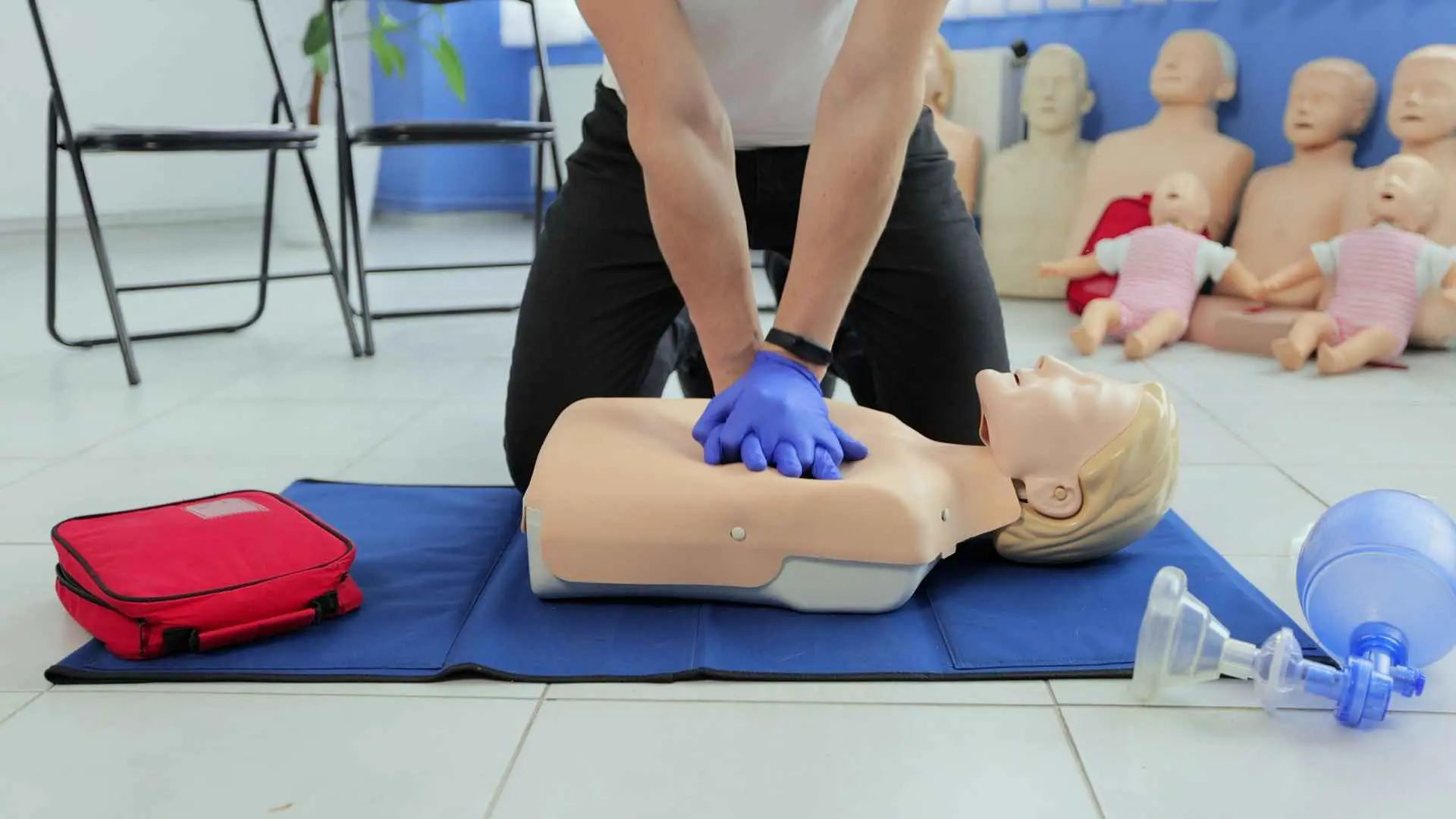
BLS training emphasizes the measurable components of high-quality CPR including compression rate (100-120 per minute), compression depth (at least 5 centimetres for adults), full chest recoil between compressions, minimizing interruptions in compressions, and avoiding excessive ventilation. Participants receive real-time feedback during practice, helping them develop the precise technique needed to deliver the most effective CPR possible.
Advanced Airway Management
While CPR HCP covered basic BVM use, the BLS course provides more extensive training in airway management techniques relevant to healthcare settings. This includes proper BVM technique for one and two rescuers, the use of oropharyngeal and nasopharyngeal airways, and oxygen delivery systems. These skills are essential for healthcare providers who may need to manage airways in clinical emergencies.
Safety Tip: If your employer requires CPR HCP certification, the BLS course meets and exceeds that requirement. Many employers have already updated their policies to specifically require BLS, but even those that still list CPR HCP will accept BLS certification because it covers all HCP content and more.
BLS certification is essential for a wide range of professionals and aspiring professionals in healthcare and related fields:
Healthcare Professionals
Nurses, physicians, paramedics, respiratory therapists, dentists, dental hygienists, physiotherapists, chiropractors, pharmacists, and other regulated healthcare providers typically require BLS certification as a condition of employment and professional licensing. Many regulatory colleges mandate current BLS certification for all practitioners.
Healthcare Students
Students in nursing, medicine, paramedicine, dental hygiene, respiratory therapy, and other health science programs are generally required to hold current BLS certification before beginning clinical placements. Obtaining BLS certification early in your program demonstrates professionalism and preparedness.
First Responders
Firefighters, police officers, lifeguards, and other first responders benefit from BLS-level training because they may need to provide advanced resuscitation support before paramedics arrive. BLS certification complements other certifications such as first aid and Emergency Medical Responder (EMR) training.
Fitness and Recreation Professionals
Personal trainers, fitness instructors, swim coaches, and recreation facility staff often need healthcare-level CPR certification due to the physical nature of the environments they work in. BLS provides these professionals with the advanced skills needed to manage cardiac emergencies in athletic and aquatic settings.
BLS Recertification: The 1-Year Rule
Unlike Standard First Aid (Intermediate) which is valid for 3 years, BLS is valid for only 1 year. This ensures healthcare providers maintain “muscle memory” for life-saving interventions.
Note: You are eligible for a recertification only if your current certificate is still valid and was issued by the Canadian Red Cross.
Watch: BLS Training Overview
BLS vs Standard CPR Courses: Understanding the Difference
It is important to understand that BLS is different from standard CPR and AED courses designed for the general public. Standard CPR courses teach single-rescuer CPR, basic AED use, and choking management — excellent skills for everyday citizens. BLS goes further by adding two-rescuer CPR, team dynamics, advanced airway techniques, and healthcare-specific protocols. If you are a member of the general public without a specific requirement for healthcare-level certification, a standard CPR/AED course is perfectly appropriate and highly valuable.
However, if you work in healthcare, are entering a health science program, or want the most comprehensive CPR training available, BLS is the right choice. The additional skills and knowledge you gain in BLS make you a more effective responder in any cardiac emergency, whether in a hospital, a clinic, or a public setting.
Course Format and Certification
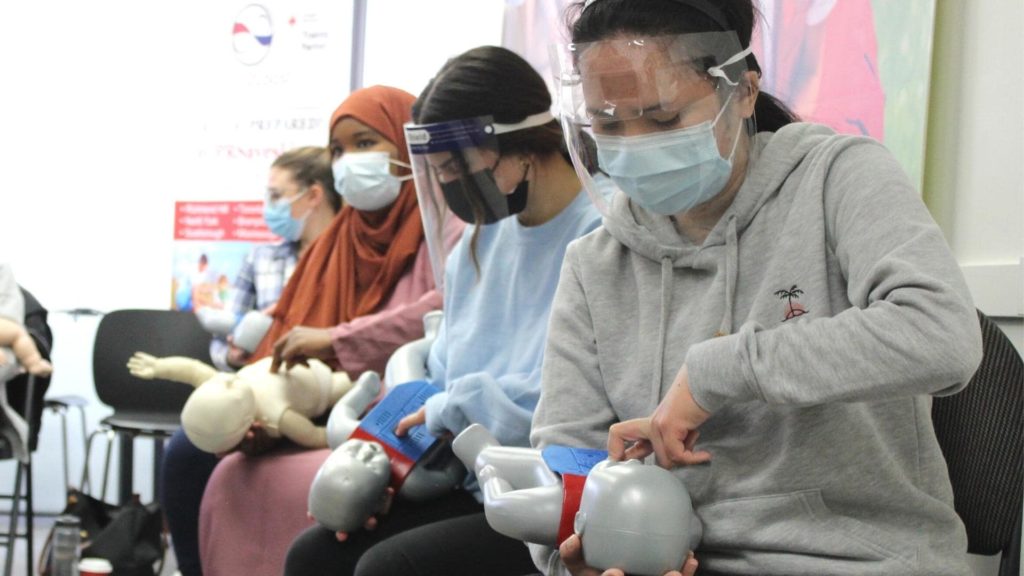
The BLS course at Coast2Coast is typically completed in a single day and includes both classroom instruction and extensive hands-on practice. Participants practice on mannequins equipped with feedback devices that measure compression rate, depth, and recoil, ensuring that every graduate can perform high-quality CPR. The course concludes with a written test and practical skills assessment.
Upon successful completion, participants receive a BLS certification card valid for the period specified by the certifying body. Recertification courses are available when your certification approaches expiration, allowing you to refresh your skills and stay current with any updates to resuscitation guidelines. BLS courses are offered at multiple locations across Canada, and private group sessions can be arranged for healthcare facilities and organizations.
Get Your BLS Certification Today
Need healthcare-level CPR certification? The BLS course from Coast2Coast First Aid and Aquatics exceeds the old CPR HCP standard and prepares you for real-world resuscitation scenarios.
Register Now
Last Updated: March 2026
Medical Review: Aryan Sekhavati, Director at Coast2Coast
Executive Summary: The CPR HCP (Healthcare Provider) designation was officially phased out and replaced by Basic Life Support (BLS) to meet higher clinical standards. In 2026, BLS is the mandatory requirement for Canadian healthcare professionals, focusing on high-performance team dynamics and advanced airway management. All Coast2Coast BLS certifications are Red Cross-approved and valid for one year.
A
About the Author
Ashkon Pourheidary, B.Sc. (Hons) — Co-Founder, Coast2Coast First Aid & Aquatics
Ashkon has been a certified First Aid and CPR instructor since 2011 and an Instructor Trainer since 2013. He is also a certified Emergency Medical Responder (EMR) instructor, Psychological First Aid instructor, and BLS (Basic Life Support) instructor. Ashkon graduated with honours with a Bachelor of Science in Neuroscience from the University of Toronto in 2016. As co-founder of Coast2Coast First Aid & Aquatics, he has helped grow the organization to over 30 locations across Canada and into the United States. Connect on LinkedIn
Summary: Heart disease remains the second leading cause of death in Canada, frequently acting as a catalyst for sudden cardiac arrest. In 2026, managing cardiovascular emergencies requires more than basic awareness; it demands High-Performance CPR and an understanding of the Chest Compression Fraction (CCF). By securing a Canadian Red Cross first aid and CPR course, residents learn to bridge the “Platinum Minutes” of an electrical heart malfunction. Whether you are fulfilling WSIB Regulation 1101 for your workplace or protecting a family member with cardiovascular risk factors, formal training is the definitive standard for heart safety at our training locations across Canada.
High-Impact CPR: Understanding Heart Disease and Cardiac Arrest in Canada
Heart disease is an expansive medical challenge in Canada, claiming tens of thousands of lives every year and impacting millions of families. While most Canadians use the terms “heart attack” and “cardiac arrest” interchangeably, they represent two distinct physiological events. Understanding this distinction is not just academic; it is the foundation of a successful CPR and AED certification. A heart attack is a circulation problem, while sudden cardiac arrest (SCA) is an electrical failure. When these two events collide, the results are often fatal without immediate intervention.
In 2026, the clinical link between chronic heart disease and acute cardiac arrest is better understood than ever. Heart disease often damages the cardiac muscle, creating a “short circuit” that triggers SCA. When this happens, the victim’s survival depends entirely on the presence of a bystander who has completed a practical skills assessment and can act without hesitation. At Coast2Coast First Aid & Aquatics, we specialize in equipping you with the clinical confidence to lead a rescue. This guide explores the “Physiology of the Save” and why 2026 resuscitation standards are essential for everyone living with or caring for someone with cardiovascular risks.
The Clinical Distinction: Circulation vs. Electrical Failure
To save a life, you must first recognize what is happening inside the victim’s body. In our Canadian Red Cross courses, we emphasize the specific pathophysiology of these two crises:
The Heart Attack (Myocardial Infarction)
A heart attack occurs when blood flow to a section of the heart is physically blocked, usually by plaque buildup in the coronary arteries. The muscle begins to die due to a lack of oxygen. The person is typically conscious and may describe symptoms like “an elephant sitting on my chest,” radiating pain in the jaw or left arm, and cold sweats. Your role is to call 911 and assist with oxygen administration or prescribed medications like nitroglycerin as per the latest CSA Z1210:24 standards.
Sudden Cardiac Arrest (The Electrical Short)
Sudden Cardiac Arrest (SCA) occurs when the heart’s electrical system malfunctions and stops the heart from beating entirely. The victim collapses instantly, stops breathing normally, and loses their pulse. This is a clinical death event. The only cure is High-Performance CPR and an Automated External Defibrillator (AED). Because heart disease increases the risk of SCA, every Canadian home with a history of cardiovascular issues should have at least one certified responder.
The Science of Survival: High-Performance CPR and CCF
In 2026, resuscitation is a data-driven science. We train our students in High-Performance CPR, which prioritizes the Chest Compression Fraction (CCF). CCF is the percentage of total rescue time spent actively performing chest compressions. Resuscitation data proves that even a 10-second pause—to check a pulse or adjust a barrier device—causes the victim’s blood pressure to drop to zero. It then takes several compressions just to build that pressure back up to a level that can sustain the brain.
During your classroom session, you will use high-fidelity feedback manikins that provide real-time digital data on your depth (at least 2 inches) and rate (100-120 bpm). This ensures that if a real medical emergency occurs, your muscle memory is tuned to the highest clinical standard. We also teach the vital use of one-way pocket masks to ensure rescue breaths are delivered safely without the risk of infectious disease transmission.
Pro Tip: If you witness a collapse, designating a specific person to call 911 and another to find an AED is critical. In Canada, every minute that an AED is delayed reduces the victim’s survival chances by 7 to 10 percent. Early defibrillation is the single most effective “cure” for SCA.
Watch: How to Perform High-Quality CPR
Who Needs This Certification for Heart Safety?
In 2026, being “Heart Safe” is a mandatory certification prerequisite for many high-stakes professional roles in Canada. Maintaining an unexpired certificate is essential for both public safety and legal WSIB Regulation 1101 compliance:
Security Guards & Property Managers: Often the first responders in high-density high-rises where “Vertical Response Delay” is a major factor for paramedics.
Daycare Staff & ECEs: Legally required to hold CPR Level C to manage pediatric cardiac events and congenital heart complications.
Construction & Industrial Foremen: High-stress environments demand leaders who can manage trauma and utilize AEDs in rugged conditions.
Healthcare Providers: Clinical staff require annual Basic Life Support (BLS) to master team dynamics and oxygen administration using Bag-Valve-Masks (BVMs).
Hospitality Professionals: Personal trainers and restaurant managers are the first line of defense during cardiac events in crowded public venues.
Heart Disease Risk Factors: Why Prevention and Prep Go Together
While 2026 medical advancements have improved heart disease management, many risk factors remain prevalent in the Canadian lifestyle. High blood pressure, sedentary office work, and metabolic syndrome significantly increase the likelihood of a coronary event. Even “healthy” individuals—such as young athletes with undiagnosed genetic conditions—can experience sudden cardiac death. This is why the Red Cross recommends that every Canadian, regardless of their fitness level, passes a written examination and skills test in first aid.
For organizations, investing in private group training sessions is a strategic move. Many corporate liability insurers offer lower premiums to businesses that can demonstrate 100% staff certification. Coast2Coast brings high-tech equipment directly to your facility, ensuring your team is trained in their actual work environment, which dramatically improves real-world response times.
Flexible Training: Blended Learning for Families
We understand that Canadians lead demanding lives. To maximize accessibility, we offer the highly popular blended online learning format. This hybrid model allows you to complete the heavy theoretical modules online at your own pace. Once finished, you attend a shortened in-person session focused entirely on your hands-on practical skills assessment. This ensures you get the “muscle memory” required for certification without spending two full days in a classroom.
If your current three-year certificate is nearing its strict expiry date, our streamlined recertification courses offer a rapid review of the latest protocols, ensuring you remain legally compliant and clinically ready.
Register for Professional Heart Safety Training Today
Don’t wait for a family emergency to wish you had been trained. Register for a WSIB-approved course with Coast2Coast and gain the clinical confidence to save a life.
Question 1: Can a heart attack happen without cardiac arrest?
Answer: Yes. A heart attack is a circulation blockage. While the victim is in pain, their heart is still beating. However, a heart attack is a leading cause of sudden cardiac arrest, making immediate medical help vital.
Question 2: How long is a CPR certificate valid in Canada?
Answer: Official Canadian Red Cross certificates are valid for exactly three years. You must take a recertification course before that date to remain WSIB compliant for work.
Question 3: Does training include Automated External Defibrillator (AED) usage?
Answer: Absolutely. Comprehensive AED training is a core, mandatory component of every CPR and first aid course offered by Coast2Coast.
Question 4: What is Chest Compression Fraction (CCF)?
Answer: CCF is the percentage of total rescue time spent actively performing chest compressions. Higher CCF (over 60-80%) is the single most important factor in patient survival.
Question 5: Can I complete my CPR training entirely online?
Answer: No. While the theory can be done online via blended learning, a physical, hands-on practical skills assessment with an instructor is legally required for certification.
Question 6: Is there a written examination required to pass?
Answer: Yes, a multiple-choice written exam is required to verify your grasp of 2026 CSA Z1210:24 standards and medical protocols.
Question 7: What is the difference between Level A and Level C CPR?
Answer: Level A focuses strictly on adult resuscitation. Level C is more comprehensive, covering adults, children, and infants—it is the required standard for daycare workers and parents.
Question 8: Do security guards in Ontario need specialized CPR?
Answer: Security guards must hold a valid Standard First Aid and CPR Level C certificate to maintain their provincial security license and meet legal mandates.
Question 9: Are barrier devices provided in the course?
Answer: Yes. To ensure hygiene and safety, Coast2Coast provides single-use barrier devices and training pocket masks for all students during rescue breathing practice.
Question 10: How quickly do I receive my digital Red Cross certificate?
Answer: Once you successfully pass both the practical and written exams, your digital certificate is typically emailed to you within 24 to 48 hours.
Question 11: Does workplace first aid training lower business insurance?
Answer: Yes. Many commercial liability insurers recognize a fully certified, WSIB-compliant staff as a major risk-mitigation factor and offer premium reductions.
Question 12: Can I recertify an expired CPR card?
Answer: No. In Canada, there is zero grace period. If your card is expired by even one day, you must retake the full original course instead of a shorter recertification.
Question 13: What should I do for a conscious heart attack victim?
Answer: Call 911 immediately, help them into a comfortable position, and assist them with any prescribed heart medications like nitroglycerin or aspirin.
Question 14: Is High-Performance CPR different from regular CPR?
Answer: Yes. High-Performance CPR is a clinical approach focused on minimizing pauses and maximizing CCF to keep blood pressure high throughout the rescue.
Question 15: Do healthcare workers take the same class as the public?
Answer: No. Healthcare professionals require Basic Life Support (BLS), which covers advanced techniques like BVM ventilation and rapid pulse checks.
A
About the Author
Ashkon Pourheidary, B.Sc. (Hons) — Co-Founder, Coast2Coast First Aid & Aquatics
Ashkon has been a certified First Aid and CPR instructor since 2011 and an Instructor Trainer since 2013. He is also a certified Emergency Medical Responder (EMR) instructor, Psychological First Aid instructor, and BLS (Basic Life Support) instructor. Ashkon graduated with honours with a Bachelor of Science in Neuroscience from the University of Toronto in 2016. As co-founder of Coast2Coast First Aid & Aquatics, he has helped grow the organization to over 30 locations across Canada and into the United States. Ashkon has served on the First Aid Council for the Canadian Red Cross. He spends his time coaching the team of over 100 instructors at Coast2Coast to ensure that students training at Coast2Coast locations receive the best training experience. Connect on LinkedIn