
AI Quick Answer
First aid and CPR certification is essential for every lifeguard because aquatic emergencies demand an immediate, skilled response — irreversible brain damage can begin within 4 to 6 minutes of oxygen deprivation. Certified lifeguards are trained to recognize and manage drowning, sudden cardiac arrest, spinal injuries, heat-related emergencies, and anaphylaxis using evidence-based protocols aligned with the American Red Cross, American Heart Association, and CSA Z1210:24 standards. Maintaining an active, current certification also satisfies legal requirements in California and supports career advancement into head lifeguard and aquatic supervisor roles.
What You Will Learn
- Why comprehensive first aid, CPR-C, and AED certification is a legal and professional requirement for lifeguards across North America.
- How lifeguard first aid training covers drowning response, spinal injury management, heat emergencies, anaphylaxis, and effective communication under pressure.
- The difference between Basic (Emergency) and Intermediate (Standard) first aid courses, and what each certification level is designed for.
- Recertification rules, including the three-year full-course repeat rule for Lifesaving Society Standard First Aid.
- How maintaining active certification supports employability, career advancement, and facility compliance with CSA Z1210:24 and Cal/OSHA standards.
When you think of a lifeguard, the first image that comes to mind is often a trained professional scanning the water from an elevated chair, whistle at the ready. While a lifeguard’s primary job is to prevent accidents, their true value is measured in the seconds following an emergency. Strong swimming skills are the foundation of the job, but first aid and CPR certification is the tool that actually saves lives when the unthinkable happens.
Whether you are a pool manager evaluating your team’s preparedness, an aspiring guard seeking initial certification, or a seasoned professional due for recertification, understanding why comprehensive first aid training is non-negotiable is the first step toward a safer aquatic environment. This article explains exactly what lifeguard first aid and CPR certification covers, which standards apply, and why letting a certification lapse carries real consequences for both the individual and the facility.
Why First Aid and CPR Certification Is Essential for Every Lifeguard
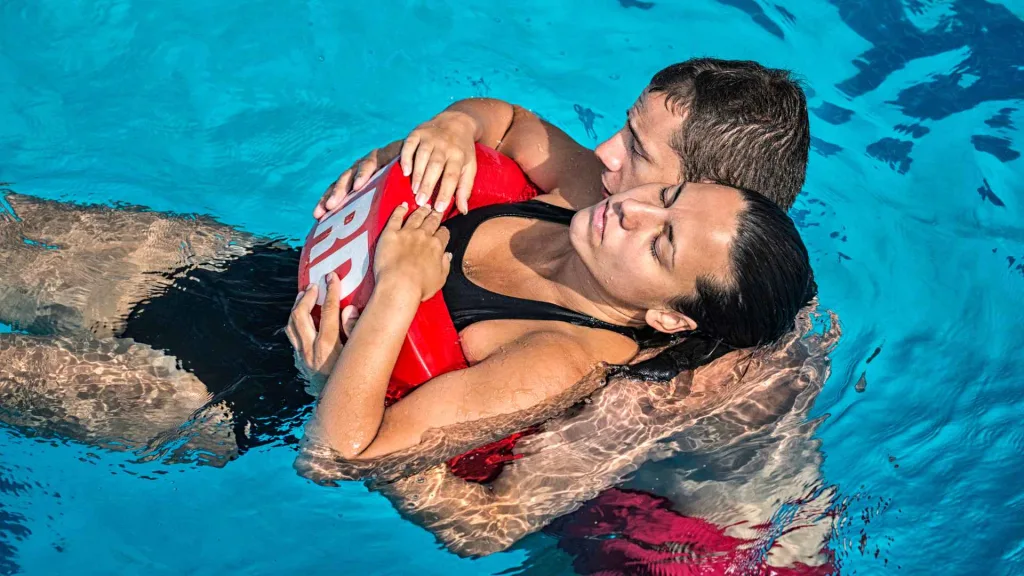
Lifeguards are the primary first responders at every aquatic facility, responsible for acting in the critical window before emergency medical services arrive. Aquatic emergencies are uniquely time-sensitive: irreversible brain damage can begin within 4 to 6 minutes of oxygen deprivation, and a cardiac arrest victim’s chances of survival fall by roughly 10% for every minute that passes without defibrillation. No other pool or beach staff member is positioned to bridge that gap the way a certified lifeguard can.
First aid certification equips lifeguards with the skills and judgment necessary to respond effectively across a wide range of emergencies, significantly increasing the chances of survival for victims. Beyond technical skills, comprehensive training also instills the composure and mental clarity required to assess an emergency, take swift action, and coordinate team-based rescues under pressure. That combination of knowledge, physical skill, and psychological readiness is what separates a certified lifeguard from someone who simply knows how to swim.
Certification is also a legal requirement. California state safety regulations mandate that all active lifeguards hold a current, valid certification in First Aid, CPR, and AED deployment from a recognized provider such as the American Red Cross or the American Heart Association. Facilities operating without certified staff face liability exposure, insurance complications, and potential regulatory action.
What Does Lifeguard First Aid Training Actually Cover?
First aid courses for lifeguards go far beyond drowning response. The curriculum covers a broad spectrum of aquatic and poolside emergencies, ensuring lifeguards are prepared for the full range of situations they will realistically encounter. Comprehensive first aid training for aquatic professionals typically includes the following areas.
Drowning Response and Water Rescue Protocols
Drowning remains one of the leading causes of accidental death in the United States, particularly among children under age 14. Lifeguards trained in advanced first aid understand the complete drowning response protocol: recognition, rescue, removal from water, assessment, rescue breathing, and resuscitation. The ability to perform high-quality CPR-C immediately after pulling a victim from the water dramatically increases survival rates. Training also covers secondary drowning, a condition in which respiratory distress develops hours after a person has inhaled water. Recognizing the symptoms and advising appropriate medical follow-up, even when a rescue appears successful, is a critical part of the protocol.
Spinal Injury Management in Aquatic Environments
Diving accidents, waterslide injuries, and falls on wet pool decks frequently result in suspected spinal injuries. Lifeguards with Basic Life Support training learn how to stabilize a victim in the water using in-line spinal immobilization techniques before removal from the pool. Improper handling of a suspected spinal injury can cause permanent paralysis. Lifeguards are trained to recognize the mechanism of injury, apply gentle stabilization, communicate clearly with the victim and bystanders, and coordinate an organized extrication that protects the spine throughout the process.
Heat-Related Emergencies at Outdoor Facilities
Outdoor aquatic facilities present a specific heat emergency risk during summer months. Lifeguards must recognize and correctly differentiate between heat exhaustion and heat stroke, as the treatment protocols differ. Heat stroke is a life-threatening emergency requiring rapid cooling and immediate EMS activation, while heat exhaustion calls for rest, hydration, and careful monitoring. First aid trained lifeguards know to move affected individuals to shade, apply appropriate cooling measures, and monitor vital signs. They also understand the importance of hydration and sun protection for themselves and other staff during long outdoor shifts.
Allergic Reactions, Asthma, and Other Medical Emergencies Poolside
Lifeguards are the primary responders for slips, falls, cuts, allergic reactions, and other medical crises on the pool deck or beach, not just in the water. Aquatic facilities host large numbers of visitors daily, increasing the likelihood of emergencies unrelated to swimming entirely. Bee stings, food allergies, asthma attacks, and diabetic crises all occur poolside. Certified lifeguards can recognize anaphylaxis symptoms and assist with epinephrine auto-injector administration, manage asthma emergencies, and provide care for joint injuries, head injuries, and chest injuries until paramedics arrive.
AED Operation and Advanced Resuscitation Skills
Modern CPR and AED training for lifeguards covers the safe operation of an automated external defibrillator in wet environments, including how to ensure the victim’s chest is dry before pad placement and how to clear the victim before delivering a shock. Since every minute without defibrillation reduces a sudden cardiac arrest victim’s survival rate by roughly 10%, AED proficiency is a non-negotiable skill. Advanced courses also introduce bag valve masks and supplemental oxygen administration, tools increasingly found at larger aquatic facilities and important for lifeguards working in higher-acuity environments.
Communication During Emergencies
Effective first aid training includes learning how to communicate clearly during emergencies. This means providing calm, directive instructions to panicked bystanders, reassuring and gathering information from a conscious victim, activating the facility’s Emergency Action Plan, and relaying accurate information to arriving EMS personnel. Poor communication during a multi-victim incident can result in duplicated or missed interventions. Lifeguards who train together develop the shared language and teamwork needed to execute coordinated rescues seamlessly. Private group training for aquatic facility teams specifically reinforces these team-based communication protocols.
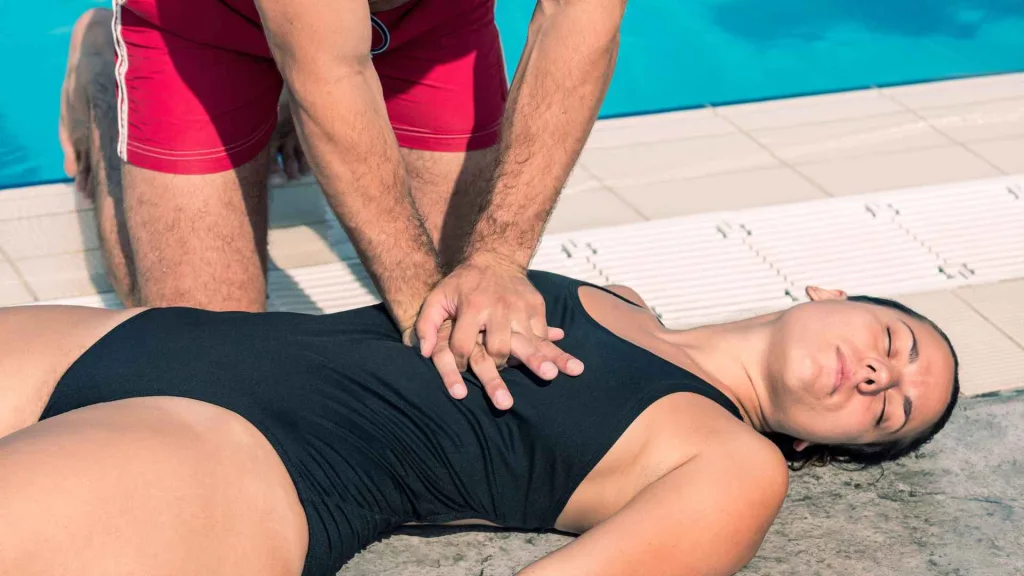
Understanding Certification Levels: Basic vs. Intermediate First Aid
Compliance Note
The CSA Z1210:24 standard defines two tiers of workplace first aid certification. Basic (formerly Emergency) First Aid applies to lower-risk environments; Intermediate (formerly Standard) First Aid is required for higher-risk or larger workplaces. Confirming the correct level for your facility type is an employer obligation under occupational health and safety law.
Not all first aid certifications are created equal, and choosing the right level matters for both regulatory compliance and practical preparedness. The table below summarizes the three primary certification levels relevant to aquatic professionals.
| Certification Level | Best Suited For | Duration | Validity |
|---|---|---|---|
| Basic (Emergency) First Aid & CPR-C | Lower-risk pools, aspiring guards, general public, non-aquatic staff | 1 Day | 2 Years |
| Intermediate (Standard) First Aid & CPR-C | High-risk aquatic facilities, head lifeguards, facility managers | 2 Days | 2 Years |
| Basic Life Support (BLS) | Professional first responders, specialized aquatic rescue teams, healthcare providers | 4–5 Hours | 1 Year |
Basic First Aid courses focus on immediate, life-threatening scenarios and give candidates a solid foundation in CPR-C, AED operation, choking response, and wound care. Intermediate First Aid provides a more comprehensive understanding of injuries and medical emergencies, covering a broader range of conditions appropriate for high-risk aquatic environments. Facilities should carefully determine which level their specific risk profile and regulatory jurisdiction requires.
Recertification: What Are the Rules?
Maintaining active certification is not a one-time achievement. Under American Red Cross and American Heart Association standards, Basic and Intermediate First Aid and CPR certifications are valid for two years. Basic Life Support (BLS) certificates typically require annual renewal. Letting a certification lapse, even by a short period, means a lifeguard is no longer legally compliant and creates liability for the facility.
For lifeguards holding Lifesaving Society Standard First Aid certification, recertification rules are strict: candidates may recertify through a shorter recertification course only once. If the certification has lapsed beyond three years, the candidate must repeat the full course from the beginning. This rule reflects the Lifesaving Society’s commitment to ensuring that all certified holders maintain a current, in-depth understanding of emergency protocols rather than relying on outdated knowledge.
Aid recertification is also an opportunity to update skills as guidelines evolve. CPR compression ratios, AED pad placement protocols, and spinal management techniques are periodically revised based on new evidence. Recertifying ensures lifeguards are practicing to the current standard, not a protocol that has since been updated. Employers who track certification expiry dates and proactively schedule renewal training protect both their staff and their organization.
How Does Certification Support Career Advancement?
Holding current, recognized first aid and CPR certification consistently opens more career opportunities than being without it. Many workplaces across aquatic and non-aquatic sectors require their employees to have first aid training, and candidates with current certifications have a distinct advantage in competitive hiring processes. Employers in aquatic management, recreation, healthcare, and emergency services consistently prioritize candidates with up-to-date credentials from recognized organizations.
For lifeguards specifically, an Intermediate First Aid certification is often the baseline requirement for promotion into head lifeguard and aquatic supervisor positions. Facility managers and aquatic directors are also expected to hold advanced certifications, both to lead their teams effectively and to fulfill their employer obligations under occupational health and safety legislation. Investing in ongoing education demonstrates professional commitment and positions lifeguards as top candidates in a competitive field.
Certification also builds transferable skills that extend well beyond aquatic environments. The composure, communication ability, and clinical judgment developed through comprehensive first aid training are valued across healthcare, public safety, recreation management, and community services. For many individuals, lifeguard first aid training serves as the foundation for future careers in paramedicine, nursing, or emergency management.
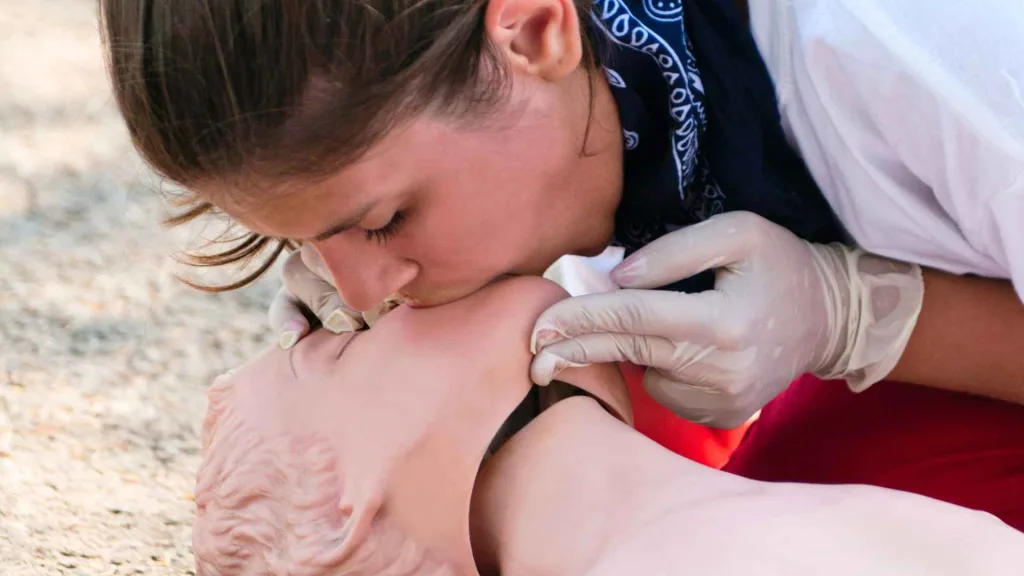
Team Training, Emergency Action Plans, and Facility Compliance
Effective aquatic safety extends beyond individual lifeguard certification. Facilities should conduct regular in-service training sessions where the entire team practices emergency scenarios together. These drills cover multiple-victim incidents, missing swimmer protocols, severe weather evacuations, and coordinated rescue operations. Non-aquatic staff members who work at or near the pool deck also benefit from Basic First Aid training, since they may be the first person on scene before a lifeguard can respond.
Every aquatic facility should maintain a comprehensive Emergency Action Plan that all staff review and rehearse regularly. This plan outlines specific roles for each team member during various emergency types, communication protocols with local EMS, AED locations and access procedures, and incident documentation requirements. Lifeguards who train together develop the shared communication skills needed to execute these plans accurately under pressure. Private group training sessions for aquatic facilities allow the team to practice within the actual physical environment and with the specific equipment they will use on the job.
From a compliance standpoint, facilities in California must satisfy Cal/OSHA requirements for staff training, and WSIB-approved first aid programs are the benchmark standard for workplace emergency preparedness across North America. The CSA Z1210:24 standard provides the current framework for determining how many first aid providers are required based on facility size, hazard level, and worker population. Keeping certification records current and accessible is an employer obligation, not an optional administrative task.
Key Takeaway
First aid and CPR certification is not a credential to obtain once and forget. It is a continuously maintained professional obligation that determines a lifeguard’s legal compliance, practical readiness, and career trajectory. Irreversible brain damage begins within 4 to 6 minutes of oxygen deprivation, AED survival rates drop 10% per minute without a shock, and certifications must be renewed before they lapse — because aquatic emergencies do not wait for paperwork to catch up. The lifeguard who shows up with a current certification card, current skills, and current knowledge is the one who saves lives.
Get Certified
Ready to Earn or Renew Your Lifeguard First Aid Certification?
Coast2Coast offers American Red Cross and AHA-aligned First Aid, CPR-C, and Basic Life Support courses for individual lifeguards and full aquatic facility teams.
Frequently Asked Questions: 2026 Lifeguard First Aid & CPR Certification
Q1: Why do lifeguards need first aid and CPR certification?
A: Lifeguards are the immediate first responders during aquatic emergencies, positioned to act in the critical window before emergency medical services arrive. Irreversible brain damage can begin within 4 to 6 minutes of oxygen deprivation, and a cardiac arrest victim’s survival rate drops roughly 10% for every minute without defibrillation. First aid and CPR certification equips lifeguards with the skills, knowledge, and composure to perform effective rescue breathing, CPR-C, AED operation, and advanced emergency care. Without current certification, a lifeguard is neither legally compliant nor practically prepared.
Q2: How long is a lifeguard first aid and CPR certification valid?
A: Under American Red Cross and American Heart Association standards, Basic and Intermediate First Aid and CPR-C certifications are typically valid for two years from the date of successful completion. Basic Life Support (BLS) certifications, which are required by some advanced aquatic facilities, usually require annual renewal. The certification card issued upon course completion documents the expiry date. Allowing any of these certifications to lapse places the individual out of legal compliance and creates liability exposure for the employing facility.
Q3: What is the 120-second response rule for lifeguards?
A: The 120-second response rule is an industry standard stating that a lifeguard should be able to recognize an aquatic emergency, reach the victim, remove them from the water, and begin ventilations or CPR within two minutes. This timeline exists because brain damage from oxygen deprivation begins within 4 to 6 minutes, and any delay in initiating rescue breathing or compressions reduces the victim’s chances of a full neurological recovery. Meeting the 120-second standard requires consistent scanning technique, physical readiness, practiced rescue protocols, and a clearly rehearsed Emergency Action Plan.
Q4: Does California require lifeguards to hold current first aid certification?
A: Yes. California state safety regulations mandate that all active lifeguards hold a current, valid certification in First Aid, CPR, and AED deployment from a recognized provider such as the American Red Cross or the American Heart Association. Facilities operating with uncertified lifeguards face regulatory penalties, insurance coverage complications, and serious liability in the event of an incident. Certification must remain active throughout the lifeguard’s period of employment; it cannot lapse between hiring and the next scheduled renewal date.
Q5: What is the difference between Basic and Intermediate first aid for lifeguards?
A: Basic First Aid (formerly Emergency First Aid) focuses on immediate, life-threatening emergencies and is typically completed in one day. It covers CPR-C, AED operation, choking response, wound care, and essential recognition skills. Intermediate First Aid (formerly Standard First Aid) is a two-day course that provides a more comprehensive understanding of injuries and medical emergencies, covering a broader range of conditions including hypothermia, complex wound management, joint injuries, head injuries, and multi-system trauma. High-risk aquatic facilities, head lifeguards, and facility managers are typically required to hold Intermediate certification.
Q6: What is the Lifesaving Society recertification rule for Standard First Aid?
A: Lifeguards holding a Lifesaving Society Standard First Aid certification may recertify through a shorter recertification course only once before they must repeat the full course. Critically, if the certification has been expired for more than three years, the individual must complete the full course again from the beginning regardless of how many times they have previously certified. This rule ensures that all certified holders maintain a current, in-depth understanding of emergency protocols rather than retaining outdated knowledge. Checking current Lifesaving Society aid prerequisites before scheduling recertification is strongly recommended.
Q7: What is the CSA Z1210:24 standard and how does it apply to lifeguards?
A: CSA Z1210:24 is the current Canadian Standards Association standard for workplace emergency first aid. It defines the minimum first aid requirements for workplaces based on hazard level and number of workers, distinguishing between Basic (formerly Emergency) and Intermediate (formerly Standard) certification requirements. For aquatic facilities, it determines how many certified first aid providers must be on site and at what certification level. While it is a Canadian standard, many American aquatic operators reference it as a performance benchmark alongside Cal/OSHA requirements. Ensuring your team meets the correct level for your facility type is an employer obligation.
Q8: Do lifeguards need Basic Life Support (BLS) training?
A: Standard CPR and AED certification is the minimum legal requirement for lifeguards at most facilities. However, many advanced aquatic environments, water parks, and municipal pools prefer or require lifeguards to also hold Basic Life Support certification for a higher level of professional care. BLS training introduces team-based resuscitation, bag valve mask operation, supplemental oxygen administration, and advanced airway management techniques. BLS certificates are valid for one year and are aligned with American Heart Association guidelines, making them the preferred credential for lifeguards pursuing roles at high-acuity facilities or in healthcare-adjacent aquatic environments.
Q9: Are lifeguards trained to handle suspected spinal injuries?
A: Yes. Comprehensive lifeguard first aid training includes specialized instruction in aquatic spinal injury management. Lifeguards learn to recognize the mechanisms of injury — such as diving accidents, waterslide falls, and high-impact collisions — that indicate a potential spinal injury, and how to stabilize the victim’s head, neck, and spine in-line while still in the water. Improper handling or premature extrication of a suspected spinal injury can result in permanent paralysis. Training emphasizes gentle, coordinated extrication techniques that protect the spine from the moment of first contact through safe transfer to a backboard.
Q10: What is secondary drowning and how are lifeguards trained to recognize it?
A: Secondary drowning, sometimes called delayed or dry drowning, refers to respiratory distress that develops hours after a person has inhaled water — even a small amount. The water causes inflammation and fluid accumulation in the lungs, progressively impairing breathing. Symptoms include persistent coughing, unusual fatigue, changes in behavior, and difficulty breathing that appear after the person seems to have recovered from a water incident. Lifeguards trained in advanced first aid are taught to recognize these warning signs and advise the individual or their guardians to seek immediate medical evaluation, even when the original rescue appeared successful.
Q11: How do lifeguards manage heat stroke versus heat exhaustion?
A: Heat exhaustion and heat stroke require different responses, and distinguishing between them is a key first aid skill. Heat exhaustion presents with heavy sweating, pale skin, weakness, nausea, and a normal or slightly elevated body temperature. The response involves moving the person to a cool, shaded area, removing excess clothing, applying cool compresses, and providing fluids if the person is conscious and able to swallow. Heat stroke is a life-threatening emergency presenting with high body temperature (above 40°C / 104°F), hot and dry or hot and wet skin, confusion, and possible unconsciousness. It requires immediate cooling, EMS activation, and continuous monitoring of vital signs.
Q12: Can a certified lifeguard safely operate an AED near water?
A: Yes. AED training for lifeguards specifically covers safe operation in wet environments. Before applying AED pads, the lifeguard must ensure the victim’s chest is dry and that no one is in contact with water connected to the victim. Modern AEDs are designed for use by trained laypersons and guide the operator through each step with audio and visual prompts. Since every minute without defibrillation reduces a cardiac arrest victim’s survival rate by roughly 10%, confidence and speed with the AED are critical. Lifeguard training includes repeated AED practice drills to build the muscle memory needed for fast, correct deployment under stress.
Q13: How does first aid certification support a lifeguard’s career advancement?
A: Holding current, recognized first aid and CPR certification consistently opens more career opportunities than being without it. Employers in aquatic management, recreation, healthcare, and emergency services prioritize candidates with up-to-date credentials from recognized organizations. Intermediate First Aid certification is often the baseline requirement for promotion into head lifeguard and aquatic supervisor positions, and facility managers are expected to hold advanced certifications to fulfill employer obligations under occupational health and safety law. The communication, clinical judgment, and composure skills developed through comprehensive training also transfer to careers in paramedicine, nursing, and public safety.
Q14: Do pool managers and non-aquatic facility staff need first aid certification?
A: Facility managers and head lifeguards are strongly encouraged, and in many jurisdictions legally required, to hold the same level of first aid and CPR certification as their front-line staff — often at a more advanced level. Non-aquatic staff working at or near the pool deck, such as concession workers, administrative personnel, and cleaning crews, also benefit from Basic First Aid training. They may be the first person on scene before a lifeguard can respond. Many workplaces require their employees to have first aid training regardless of role, and candidates with that credential have measurably more career options than those without.
Q15: Can a lifeguard team complete first aid and CPR training together as a group?
A: Yes. Private group training is highly recommended for aquatic facilities and is one of the most effective ways to ensure team-wide preparedness. Training the entire lifeguard staff together builds the shared communication protocols and practiced coordination needed for multi-victim incidents, Emergency Action Plan execution, and role-specific responsibilities during a crisis. Group training can be conducted at the facility itself, allowing the team to practice with their actual AEDs, rescue equipment, and physical layout. This format produces more cohesive, confident teams than sending individual staff members to separate public classes.
Sources & Regulatory References
- American Red Cross — Adult & Pediatric First Aid/CPR/AED Program Guidelines (2025–2026)
- American Heart Association — CPR and Emergency Cardiovascular Care Guidelines (2020, updated 2024)
- CSA Group — CSA Z1210:24: First Aid Training for the Workplace (Canadian Standards Association, 2024)
- California Division of Occupational Safety and Health (Cal/OSHA) — Aquatic Facility and Lifeguard Certification Requirements
- Lifesaving Society — Standard First Aid and Recertification Program Requirements (2024–2026)
- Centers for Disease Control and Prevention (CDC) — Drowning Prevention: Data and Statistics
This article was reviewed by Ashkon Pourheidary, B.Sc. (Hons), Co-Founder, Coast2Coast First Aid & Aquatics — certified First Aid and CPR instructor since 2011, Instructor Trainer since 2013. Last reviewed May 2026.