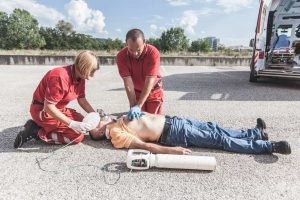

A tourniquet is a medical device used to stop life-threatening bleeding from an arm or leg by compressing blood vessels and cutting off blood flow to the wound. It is a last resort, applied only when direct pressure fails to control severe bleeding. Proper tourniquet use, including correct placement 2 to 4 inches above the wound, sufficient tightening, and recording the exact time of application, can prevent fatal blood loss until emergency medical help arrives.
What Is a Tourniquet and How Does It Work?
A tourniquet is a medical device designed to control severe bleeding by compressing the blood vessels in an injured limb. When wrapped tightly around an arm or leg and secured, it restricts blood flow through the limb, preventing further blood loss from the wound site. In a life-threatening bleeding emergency, this compression can be the difference between survival and fatal hemorrhage.
Tourniquets work by applying circumferential pressure around the limb with enough force to collapse the blood vessels beneath it. This stops both arterial and venous return, which is why the application must be tight enough to fully arrest circulation, not merely slow it. A tourniquet applied with insufficient pressure may slow bleeding without stopping it, which can give a false sense of control while blood loss continues.
Modern commercial tourniquets are built around a windlass mechanism: a rod or bar that is twisted to progressively tighten the strap until bleeding stops. Improvised versions rely on a similar principle but are less reliable. Understanding how the device works helps you apply it with confidence in critical moments when acting quickly can save a life.
Commercial Tourniquets
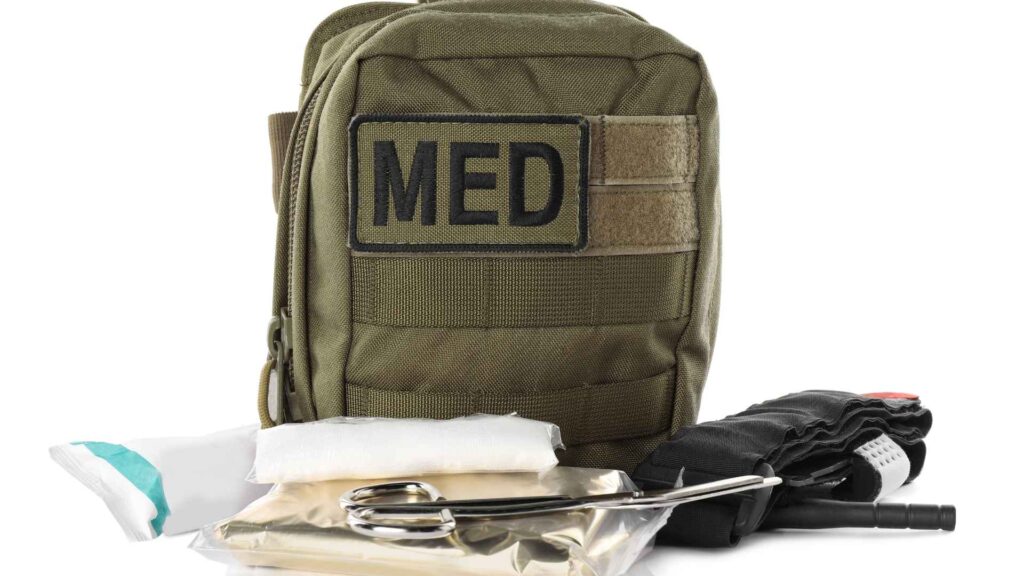
Commercial tourniquets are purpose-built medical devices made from durable materials such as a nylon strap and rigid plastic components. They include locking mechanisms to hold the windlass in place once tightened, and quick-reference time-marking panels so you can record the exact time of application. Well-known models include the Combat Application Tourniquet (CAT) and the SOF Tactical Tourniquet (SOFTT). These are the devices used by military personnel, first responders, and trained first aid providers, and they are significantly more reliable than improvised alternatives.
Commercial tourniquets are widely available for purchase and are increasingly included in workplace first aid kits, stop-the-bleed kits, and emergency response supplies. The cost of a quality commercial tourniquet is modest, typically ranging from $25 to $40 USD, and is a worthwhile investment given what is at stake. If you work in a high-risk environment or want to be prepared for emergencies involving any part of the body, having a commercial tourniquet in your first aid kit and knowing how to use it is a practical step. This applies equally to injuries of the arm or the leg.
Improvised Tourniquets
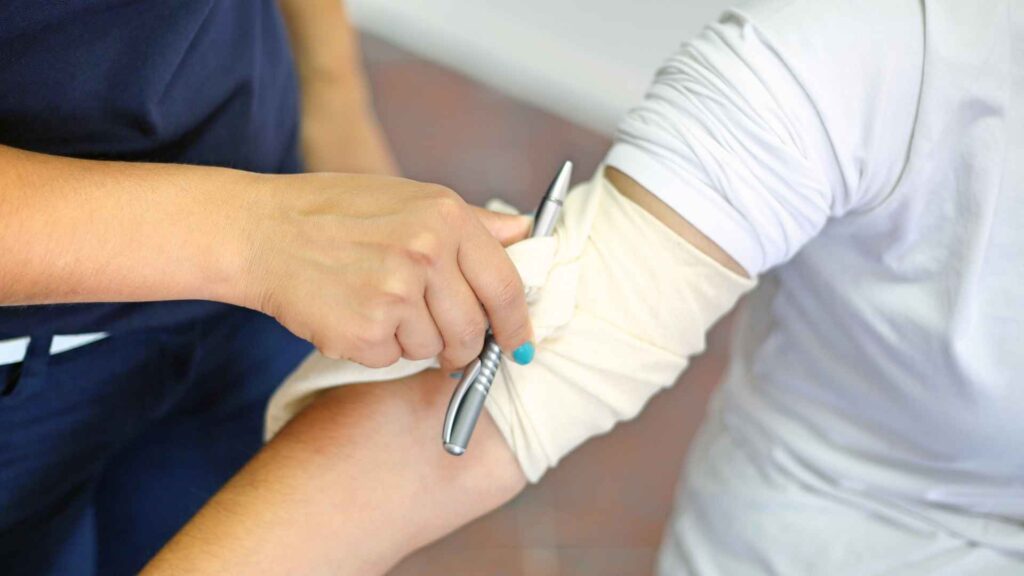
When a commercial tourniquet is not available, an improvised tourniquet can be assembled from everyday materials: a belt, a length of rope, a triangular bandage folded to a width of at least 4 centimeters, or strips of fabric from a shirt. A rigid object such as a stick, pen, or spoon serves as the windlass to generate enough pressure to compress the blood vessels.
Improvised tourniquets are significantly less effective than commercial ones. They are harder to tighten to sufficient pressure, more likely to slip, and more difficult to lock in place. However, in a remote or wilderness setting where no commercial device is available, a well-applied improvised tourniquet may buy time until professional medical help arrives. The key is width: materials that are too narrow (less than 4 cm) concentrate pressure on a small area and increase the risk of nerve and tissue damage without reliably stopping blood flow.
When Should You Use a Tourniquet?
In a life or death situation involving a severely bleeding limb, knowing when to escalate beyond direct pressure can determine the outcome. A tourniquet is a last resort for severe bleeding control, not a first response. The first step is always to control bleeding with direct pressure: apply firm, sustained pressure to the wound with a clean dressing or cloth, applying pressure continuously without lifting the dressing. The majority of wounds, even serious ones, can be controlled this way. A tourniquet becomes necessary only when applying pressure alone is not enough.
A tourniquet becomes necessary when:
- Direct pressure is not working. If you have applied firm, sustained pressure and the wound is still bleeding heavily after several minutes, a tourniquet may be needed.
- The wound is too large or the location makes pressure impossible. Some injuries make it physically impossible to maintain effective direct pressure.
- You are alone and cannot maintain pressure while also calling for help or moving the person to safety.
- The bleeding is from an arterial source. Arterial bleeding is characterized by bright red blood that spurts or pulses with each heartbeat. This type of blood loss is rapid and can be fatal within minutes.
- A traumatic amputation has occurred. Partial or complete loss of a limb results in immediate, catastrophic blood loss that cannot be managed by pressure alone.
Signs That a Tourniquet Is Needed
Recognizing the early signs of life-threatening blood loss helps you act quickly. Key indicators include blood that is spurting rather than flowing steadily, a wound that soaks through dressings rapidly, or a large traumatic injury to a limb. As blood loss progresses, the person may become confused, restless, or unusually pale and cold. Their pulse may become rapid and weak. These are signs of hypovolemic shock, a medical emergency caused by severe blood loss. At this point, controlling the bleed with a tourniquet and calling emergency services immediately is critical.
How to Apply a Tourniquet Step by Step
Applying a tourniquet correctly under stress requires knowing the steps before an emergency occurs. The following procedure applies to a commercial windlass tourniquet. First aid training provides hands-on practice with these exact steps so you can act with confidence when it matters most.
- Expose the limb. Remove or cut away clothing to expose the injured arm or leg. A tourniquet applied over thick clothing will not generate enough pressure to be effective.
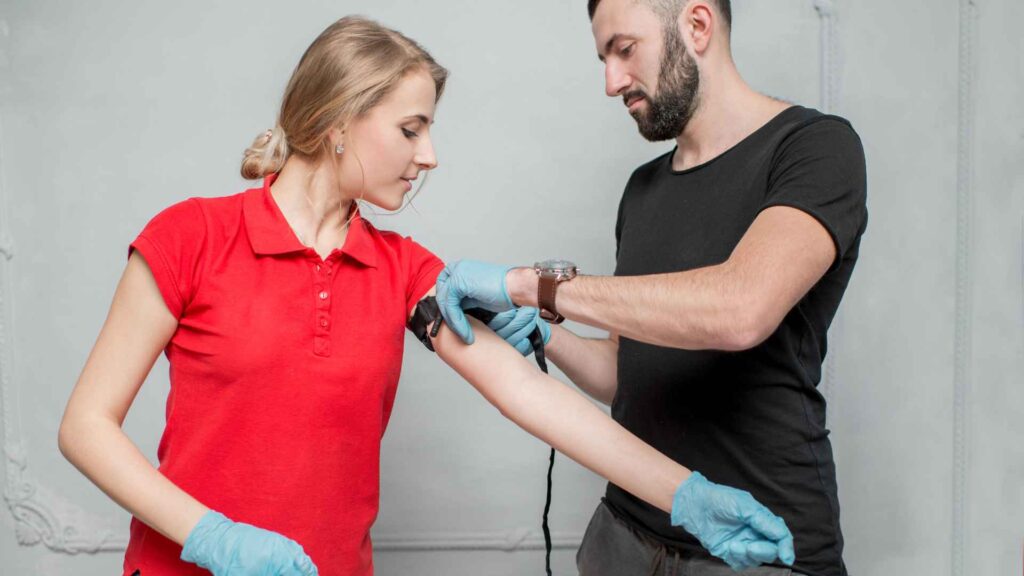
- Position the tourniquet. Place the tourniquet 5 to 10 centimeters (2 to 4 inches) above the wound, between the injury and the heart. The tourniquet must be placed on the limb, never on the trunk of the body, and never over a joint such as the knee or elbow. Placing it over a joint reduces effectiveness and increases the risk of nerve compression.
- Secure and tighten. Thread the strap through the buckle, pull it snug around the limb, and begin turning the windlass rod. Continue tightening until bleeding stops completely. The process is painful, and that is expected. Insufficient tightening is one of the most common errors in tourniquet application. The tourniquet must be applied correctly to control bleeding effectively.
- Lock the windlass. Once bleeding has stopped, secure the windlass rod in its locking clip so it cannot loosen. Some models include a strap to wrap around the rod for additional security.
- Record the exact time. Note the time of application immediately. Write it on the tourniquet’s time strip, on the person’s forehead with a marker if available, or communicate it clearly to arriving emergency medical professionals. This information is vital for the surgical team, as it determines how long the limb has been without circulation.
- Do not remove the tourniquet. Once applied, a tourniquet must never be loosened or removed by anyone other than trained medical professionals. Loosening can cause rapid re-bleeding and reperfusion injury.
- Call for emergency help. If you have not already done so, call 911 immediately. Keep the person calm and still, and monitor them for signs of shock while waiting for help to arrive.
What to Do If the First Tourniquet Does Not Stop the Bleeding
If the first tourniquet does not fully stop bleeding after tightening as much as possible, do not loosen it. Apply a second tourniquet directly above the first, between the first device and the heart. Tighten the second tourniquet using the same method until bleeding stops. Record the application time for both. Some tactical medicine protocols routinely recommend dual tourniquet application for severe lower limb injuries. Both times must be reported to emergency medical professionals when they arrive.
Risks and Complications of Tourniquet Use
Tourniquets carry real risks, and those risks increase with the duration of application. However, these risks must always be weighed against the immediate life-threatening nature of uncontrolled hemorrhage. Preventing fatal blood loss is always the priority.
Nerve damage. Sustained compression at high pressure can damage peripheral nerves in the limb, causing numbness, tingling, weakness, or, in severe cases, longer-term sensory loss.
Limb ischemia and tissue damage. Cutting off circulation to a limb deprives the tissues of oxygen. Most sources suggest that a tourniquet can remain in place for up to two hours before the risk of permanent tissue damage increases significantly. However, this is not an absolute limit: the severity of the injury, the patient’s overall condition, and the time to surgical care all affect outcomes.
Reperfusion injury. When circulation is restored after a tourniquet is removed, the sudden return of blood to oxygen-deprived tissue can trigger a cascade of cellular damage. This is another reason why only trained medical professionals should remove a tourniquet, and why venous return must be carefully managed in a clinical setting. Treatment of reperfusion injury and ischemic complications requires hospital care and is beyond the scope of first aid.
Pain. Tourniquet application is always painful. If a person cries out in pain while you are tightening, do not stop or loosen the tourniquet. Reassure them and continue tightening until bleeding stops completely.
When the tourniquet is applied correctly and medical treatment is sought immediately, the risks are far lower than the risk of fatal hemorrhage from uncontrolled severe bleeding. Every part of the body depends on circulation, and preserving that circulation through prompt, skilled care is the goal from first response through to hospital treatment.
Practice Tourniquet Skills With a Certified Instructor
Knowing the steps is not the same as being able to execute them under pressure. A first aid class gives you hands-on repetitions with a real tourniquet so you can act with confidence in an emergency.
Tourniquets in the Workplace and High-Risk Settings
First responders, military personnel, construction workers, and industrial employees have long recognized the value of tourniquet training. High-risk workplaces where power tools, heavy machinery, or vehicles are in use carry an elevated risk of traumatic limb injuries. Ensuring that staff can recognize life-threatening bleeding and respond with a tourniquet before emergency services arrive can save lives in the critical minutes after an injury.
California workplace safety regulations under Cal/OSHA require employers in many industries to maintain adequate first aid supplies and ensure that trained first aiders are available on site. A well-stocked first aid kit for high-risk workplaces should include at least one commercial tourniquet alongside standard wound dressings. The cost of equipping a worksite with tourniquets is minimal compared to the cost of a preventable fatality. The Stop the Bleed initiative, led by the American College of Surgeons, has made tourniquet training more accessible to the general public, including employees in non-medical settings, covering everything from applying pressure on a wound to full severe bleeding control and tourniquet use. Prompt treatment in the field before paramedics arrive has been shown to significantly improve outcomes in traumatic limb injury cases.
For organizations looking to ensure their workforce is prepared, private group first aid training covering bleeding control and tourniquet application is a practical and increasingly common investment in workplace safety.

Train Your Whole Team in Bleeding Control
Private group sessions can be tailored for your workplace, covering tourniquet application, direct pressure, wound management, and full first aid certification for your entire team.
How First Aid Training Prepares You to Use a Tourniquet
Knowing the steps for tourniquet application in theory is very different from being able to execute them under stress in a real emergency. A first aid class provides hands-on practice with commercial tourniquets, allowing you to build the muscle memory and confidence needed to act decisively when it matters most. In a life or death situation, a tourniquet that is applied correctly can mean the difference between survival and fatal blood loss.
Standard First Aid courses cover a full range of severe bleeding control skills, including applying pressure correctly to a wound, wound dressings, and tourniquet application as a last resort. Every aid class session includes practical scenarios that teach you how to control bleeding in high-stress conditions. These skills are relevant not just for emergencies at work but for anyone who wants to be prepared at home, on the road, or in outdoor settings where medical help may be delayed.
For healthcare workers and those in high-acuity environments, Basic Life Support (BLS) training builds on these foundational first aid skills with more advanced emergency response techniques, including management of complex trauma scenarios requiring immediate treatment.
Tourniquets save lives when used properly. The gap between knowing that fact and being able to apply one correctly in a high-stress situation is closed through training. Regular recertification is recommended because aid skills deteriorate over time without practice, and updated techniques and guidelines are incorporated into refreshed course content.
For those new to emergency preparedness, CPR and AED certification is an excellent starting point that pairs naturally with bleeding control training to give you a complete emergency response skill set.
Key Takeaway
A tourniquet is a last resort for controlling life-threatening limb bleeding when direct pressure fails. Place it 2 to 4 inches above the wound, tighten until bleeding stops completely, record the exact time, and never remove it. Only trained medical professionals should take a tourniquet off. Knowing how to use one correctly before an emergency occurs is one of the most important first aid skills anyone can have.
Join 150,000+ Trained First Aiders Across North America
Build the skills and confidence to respond to any bleeding emergency. First aid courses are available at locations across the US.
Frequently Asked Questions: Tourniquet First Aid 2025
More FAQs: Tourniquet Application and Bleeding Control
About the Author and Reviewer
Ashkon Pourheidary
B.Sc. Hons Neuroscience | Canadian Red Cross Certified Instructor since 2011 | Co-founder, Coast2Coast First Aid and Aquatics
Ashkon has delivered first aid and CPR certification training across Canada and the United States since 2011. His neuroscience background informs the evidence-based approach to emergency response education at Coast2Coast.
Primary Source: American College of Surgeons, Stop the Bleed Program. Civilian hemorrhage control and tourniquet application guidelines. stopthebleed.org
Additional References: European Resuscitation Council Guidelines on Tourniquet Use; Prehospital Emergency Care: Civilian Extremity Trauma Tourniquet Use Data.
Content reviewed and updated May 2025. Tourniquet protocols are consistent with current Stop the Bleed and prehospital emergency care guidelines.