
More than 75 to 87 percent of out-of-hospital cardiac arrests happen in the home environment, making family members the true first responders. Immediate action during a cardiac arrest can double or triple a person’s chance of survival. A family CPR course teaches life-saving skills for adults, children, and infants including hands-only CPR, CPR with breaths, AED usage, and choking relief. CPR Level C is the recommended certification for families and is valid for three years through the Canadian Red Cross.
✓ CPR for Adults, Children & Infants
Family CPR and First Aid Courses
CPR Level C, Child Care First Aid, Emergency First Aid, and Intermediate / Standard First Aid at 30+ locations. Blended learning and private group options available for families.
CPR Course for Family: Why Every Household Needs These Skills
Your family is the most important thing in your life, and keeping them safe is a responsibility that every parent, spouse, and caregiver takes seriously. While you cannot predict when a medical emergency will strike, you can prepare yourself to respond effectively when it does. A CPR course for family members provides the practical, hands-on training you need to protect the people you love during the most critical moments of a cardiac emergency.
Research shows that more than 75 to 87 percent of out-of-hospital cardiac arrests happen in the home environment, making family members the true first responders. Immediate action during a cardiac arrest can double or triple a person’s chance of survival. Every minute without CPR reduces survival odds by 7 to 10 percent, and prompt chest compressions keep oxygenated blood flowing to the brain, preventing permanent neurological damage while waiting for professional help. The Stroke Foundation highlights the importance of widespread CPR training in improving survival rates, and being prepared gives every family peace of mind that they can act when it matters most.
Family-focused CPR programs are designed for lay rescuers, covering sick and injured individuals of all ages and incorporating CPR techniques specific to age groups. A family CPR course typically teaches life-saving skills for adults, children, and infants, including hands-only CPR, CPR with breaths, AED usage, and choking relief. Courses like CPR Level C are tailored for families, teaching resuscitation skills for adults, children, and infants, which are essential for home safety.
Untrained individuals often freeze during an emergency due to the bystander effect, which can be mitigated by hands-on training that builds mental resilience. When you have practiced the essential skills in a classroom setting, you develop the muscle memory needed to act decisively instead of freezing. Family-focused first aid courses are designed to help parents and caregivers respond effectively to emergencies that can occur at home, such as choking, falls, and allergic reactions.
First Aid and CPR Training: What a Family CPR Course Covers
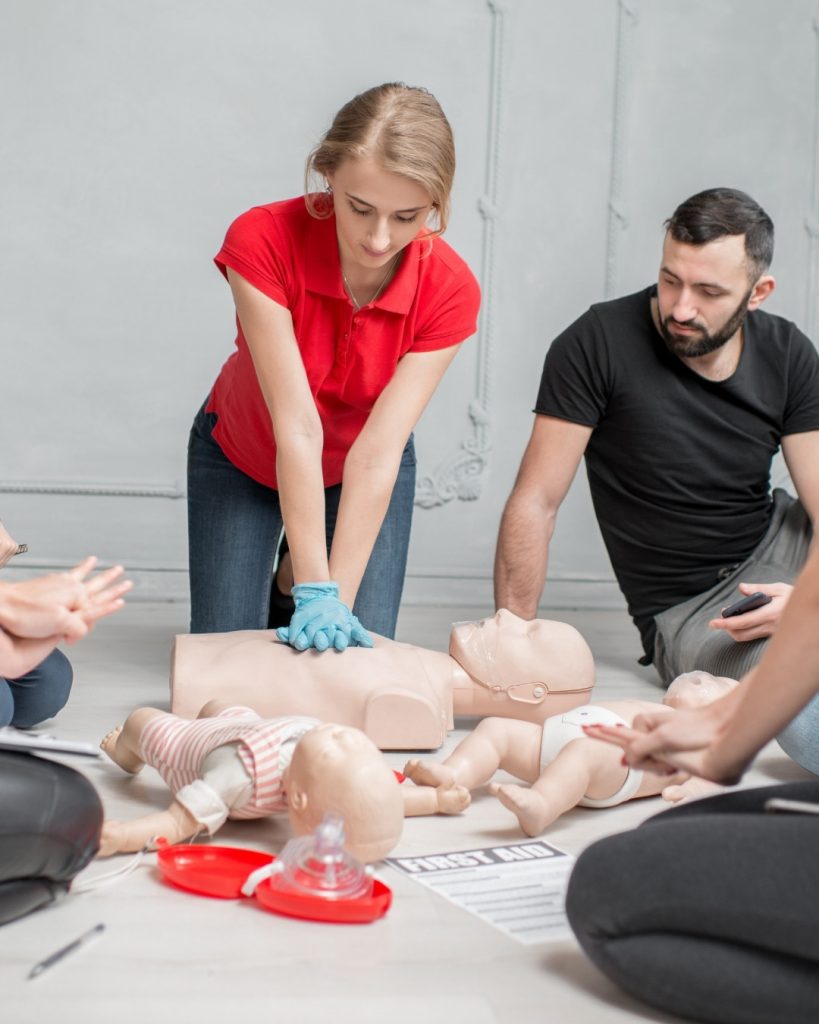
A family CPR course covers essential skills across all age groups. The Canadian Red Cross CPR Level C course teaches life-saving skills for adults, children, and infants, and meets provincial legislation requirements for workplace safety. Family CPR training includes hands-on practice with scenarios that caregivers face at home, such as choking and cardiac emergencies in children.
The Heartsaver CPR AED Level C course teaches life-saving skills of CPR and relief of choking in adults, children, and infants, as well as how to use an AED. CPR Level C courses cover resuscitation skills for adults, children, and infants, making them suitable for family-focused training.
Adult CPR: Responding to Cardiac Arrest at Home
Adult CPR uses the heel of both hands placed on the center of the chest, with compressions delivered at a rate of 100 to 120 per minute and a depth of at least 2 inches. Conventional cardiopulmonary resuscitation combines 30 chest compressions with 2 rescue breaths. High-quality CPR maintains blood flow to the brain and vital organs until an AED or paramedics can restore a normal heart rhythm. Immediate bystander CPR acts as an external pump, maintaining necessary blood flow to the brain to significantly reduce the risk of brain damage while waiting for professional help.
Child CPR and Infant CPR: Key Differences
Parents face a unique set of emergency scenarios that require specialized knowledge. Child CPR for children aged 1 to 8 years uses one or two hands depending on the child’s size, with shallower compressions than adult CPR. Infant CPR for babies under 1 year uses two-finger compressions on the sternum rather than the heel of the hand, with compression depth and force strictly adjusted for a much smaller body.
Beyond cardiac emergencies, parents need to know how to respond to choking, which is a leading cause of injury and death in children under five. Family CPR training covers the difference between back blows for infants and abdominal thrusts for older children and adults. Emergency Child Care First Aid courses focus specifically on the needs of new and expecting parents, covering infant and child emergencies including choking and common injuries.
Hands-On Practice: AED Use, Choking, and Cardiopulmonary Resuscitation
Hands-on practice is the most important component of any CPR course for family members. CPR Level C courses provide skills needed to recognize and respond to cardiovascular emergencies and choking for adults, children, and babies, meeting provincial legislation requirements. High-quality CPR technique, correct AED use, and confident choking response can only be developed through repeated practice on training manikins and AED trainers with certified instructors. Courses accredited by major national organizations ensure that participants learn the most up-to-date science in CPR and first aid.
Learn This Skill in a Real Classroom
CPR Level C: Adults, Children and Infants
Canadian Red Cross CPR Level C covers hands-only CPR, CPR with breaths, AED use, and choking relief for all age groups. The most widely required CPR certification in Canada. Meets provincial legislation requirements.
CPR Level C: The Standard for Family and Home Safety
CPR Level C is the most comprehensive and widely recognized certification for families. It covers resuscitation skills for adults, children, and infants, including hands-only CPR, conventional CPR with rescue breaths, AED use, and choking relief for all age groups. CPR Level C courses cover resuscitation skills for adults, children, and infants, making them suitable for family-focused training. The Canadian Red Cross CPR Level C course meets provincial legislation requirements across Canada.
CPR and AED certification courses typically require recertification every 3 years, with annual training recommended for CPR AED skills to maintain proficiency. Recertification courses for CPR AED are designed to refresh skills and knowledge, ensuring participants are up-to-date with the latest guidelines and practices in emergency response.
Intermediate / Standard First Aid: Comprehensive Aid Training for Families
Intermediate / Standard First Aid with CPR Level C is the most complete option for families wanting broader emergency coverage. It adds training on head and spinal injuries, severe bleeding control, anaphylaxis management, burns, poisoning, environmental emergencies including hypothermia and heat exhaustion, and seizure response. Intermediate / Standard First Aid is particularly valuable for families with young children, older adults in the household, or anyone with known medical conditions that increase the risk of a sudden emergency.
Emergency First Aid Level C is a one-day course that covers CPR for adults, children, and infants, and is designed for those who need basic first aid training for work or personal interest. It is the most accessible entry point for families and individuals seeking essential skills without committing to a two-day program.
Aid Skills for Parents and Caregivers: Protecting Every Age Group
Family-focused first aid courses are designed to help parents and caregivers respond effectively to emergencies that occur at home. For parents with young children, the Child Care First Aid course is specifically tailored to address pediatric emergencies, including febrile seizures, severe allergic reactions, anaphylaxis, and poisoning from household chemicals. Babysitters, grandparents, and anyone who cares for children regularly benefit from the same specialized pediatric aid skills.
Emergency Child Care First Aid courses focus specifically on the needs of new and expecting parents, covering infant and child emergencies including choking and common injuries. The Friends and Family CPR Training course is designed to teach families, friends, and caregivers of children and infants CPR and relief of choking, with options for advanced airway management. These courses are accessible to learners of all backgrounds with no prior medical experience required. Participants are encouraged to bring family members and friends to train together.
Aid Training for Older Adults: Stroke and Cardiac Warning Signs
As parents age, their risk of cardiac events, strokes, and falls increases significantly. Adult children trained in first aid are better prepared to recognize the warning signs of a stroke using the FAST framework, which the Stroke Foundation promotes widely: Face drooping, Arm weakness, Speech difficulty, Time to call 911. Recognizing the warning signs of a heart attack, which may present as chest pain, shortness of breath, and pain radiating to the arm or jaw, allows family members to call for help before full cardiac arrest occurs.
In 2026, AED use for older adults is a primary focus of family CPR training, as immediate defibrillation is often the only way to correct a life-threatening heart rhythm in seniors. AEDs are designed for use by anyone, and knowing how to deploy one quickly during a cardiac emergency in the home can save a life.
Train Your Whole Family
Child Care First Aid for Parents and Caregivers
Specifically designed for parents, babysitters, grandparents, and daycare workers. Covers infant CPR, pediatric choking, febrile seizures, anaphylaxis, and household poisoning. Canadian Red Cross certified.
CPR AED Training: First Aid and CPR in the Home
An Automated External Defibrillator analyzes the heart’s rhythm and delivers an electric shock to restore a normal heart rhythm during cardiac arrest. AED use combined with CPR is the most effective treatment for sudden cardiac arrest. Every minute of delay between cardiac arrest and defibrillation reduces survival odds by 7 to 10 percent. In Canada, AEDs are installed in many community buildings, schools, sports facilities, shopping centres, and transit stations. Families who know how to use an AED dramatically improve the chances of survival for a family member who collapses outside the home.
CPR Courses and Certification: What Families Need to Know
The Canadian Red Cross CPR Level C course teaches life-saving skills for adults, children, and infants and meets provincial legislation requirements for workplace safety. Certification is valid for three years. CPR and AED certification courses typically require recertification every 3 years, with annual training recommended to maintain proficiency.
Blended learning formats allow families to complete theory modules online before attending a short in-person session for hands-on practice, making it ideal for busy schedules. The convenience of the self-paced online component means parents can complete theory at home before attending a practical session at any Coast2Coast location. For families wanting group training, private group sessions bring certified instructors and all equipment directly to your home or community space, the most convenient option for extended families, friends, and parent associations wanting to learn together.
Key Takeaway
More than 75 to 87 percent of cardiac arrests happen at home. Immediate CPR doubles or triples survival odds. Every minute without CPR reduces survival by 7 to 10 percent. A family CPR course covers life-saving skills for adults, children, and infants including hands-only CPR, CPR with breaths, AED usage, and choking relief. Emergency First Aid Level C is a one-day course covering CPR for all age groups. CPR Level C meets provincial legislation requirements and is valid for three years. Blended learning provides the convenience of completing theory at home before hands-on practice.
Canada’s Top-Rated Training Partner
Join 150,000+ Canadians Who Are Certified
Coast2Coast is Canada’s largest Canadian Red Cross Training Partner.
4.9 stars across 20,491 Google reviews. Register online in 2 minutes.
Frequently Asked Questions: CPR Course for Family 2026
Q1: Why should every family have CPR-trained members?
A: More than 75 to 87 percent of out-of-hospital cardiac arrests happen in the home environment, making family members the most likely first responders. Immediate action during a cardiac arrest can double or triple a person’s chance of survival. Every minute without CPR reduces survival odds by 7 to 10 percent. Family-focused CPR training ensures that when a cardiac emergency, choking incident, or allergic reaction occurs at home, someone in the household can respond immediately and effectively.
Q2: What does a family CPR course cover?
A: A family CPR course typically teaches life-saving skills for adults, children, and infants including hands-only CPR, CPR with breaths, AED usage, and choking relief. CPR Level C courses cover resuscitation skills for all age groups and meet provincial legislation requirements. Family CPR training includes hands-on practice with scenarios that caregivers face at home, such as choking and cardiac emergencies in children. These essential skills can be learned in a single day or through a blended learning format.
Q3: What is the difference between infant CPR and child CPR?
A: Infant CPR for babies under 1 year uses two-finger compressions on the sternum with compression depth and force adjusted for a small body. Child CPR for children aged 1 to 8 uses one or two hands depending on size. Adult CPR uses both hands with compressions at least 2 inches deep. All three techniques are covered in CPR Level C and Intermediate / Standard First Aid courses. Emergency Child Care First Aid courses provide the most focused coverage of infant and child emergencies.
Q4: How does CPR keep the brain alive during cardiac arrest?
A: Immediate bystander CPR acts as an external pump, maintaining necessary blood flow to the brain to significantly reduce the risk of brain damage. Prompt chest compressions keep oxygenated blood flowing to the brain while waiting for professional help. Without CPR, irreversible brain damage begins within 4 to 6 minutes of cardiac arrest. High-quality CPR maintains the blood pressure needed for brain viability until an AED or paramedics can restore a normal heart rhythm.
Q5: What is CPR Level C and why is it recommended for families?
A: CPR Level C is the most comprehensive family CPR certification, covering resuscitation skills for adults, children, and infants as well as AED use and choking relief for all age groups. CPR Level C courses cover resuscitation skills for adults, children, and infants, making them suitable for family-focused training. Courses like CPR Level C are tailored for families, teaching these essential skills which are critical for home safety. Certification is valid for three years.
Q6: What is the best first aid course for parents of young children?
A: For parents of young children, Child Care First Aid is specifically tailored to pediatric emergencies including infant CPR, pediatric choking, febrile seizures, anaphylaxis, and poisoning from household chemicals. Emergency First Aid Level C is a one-day course that covers CPR for adults, children, and infants, and is designed for those who need basic first aid training for work or personal interest. Intermediate / Standard First Aid adds broader emergency coverage including burns, spinal injuries, and environmental emergencies.
Q7: How does AED training protect families?
A: AED use combined with CPR is the most effective treatment for sudden cardiac arrest. The Heartsaver CPR AED Level C course teaches how to use an AED on adults, children, and infants as well as CPR and choking relief. In 2026, AED training for older adults is a primary focus of family CPR courses, as immediate defibrillation is often the only way to correct a life-threatening heart rhythm in seniors. Every minute without defibrillation reduces survival odds by 7 to 10 percent.
More FAQs: Training Options, Recertification, and Family Safety
Q8: Can the whole family train together?
A: Yes. Coast2Coast encourages families and friends to register together for CPR Level C or Intermediate / Standard First Aid courses. Private group training brings certified instructors and all equipment directly to your home or community space. This is the most efficient option for extended families, neighbor groups, or parent associations wanting to learn together as a group.
Q9: What age can children start CPR training?
A: Most Canadian Red Cross CPR courses accept participants aged 14 and older. Teenagers are physically capable of performing effective chest compressions on adults. Younger children can benefit from basic first aid awareness programs. Participants are encouraged to register with family members and friends to build a household team of prepared responders.
Q10: How often should families renew their CPR certification?
A: CPR and AED certification courses typically require recertification every 3 years, with annual training recommended to maintain proficiency. Research shows CPR skills begin to deteriorate as early as three to six months after initial training without practice. Many families schedule an annual refresher session to review AED locations, choking response, and cardiac arrest recognition.
Q11: What is blended learning and is it suitable for families?
A: Blended learning formats allow families to complete the theory modules online before attending a short in-person session for hands-on practice, making it ideal for busy schedules. The convenience of the self-paced online component means parents can complete theory at home. The in-person practical session is mandatory for Canadian Red Cross certification and covers CPR technique, AED use, and choking response with certified instructors.
Q12: What are the warning signs of a stroke that families should know?
A: The FAST framework, promoted by the Stroke Foundation, covers the primary warning signs: Face drooping on one side, Arm weakness or numbness, Speech difficulty or slurred words, Time to call 911 immediately. Additional warning signs include sudden severe headache, vision changes, and loss of balance. Adult children who care for aging parents benefit significantly from first aid and CPR training that covers stroke recognition alongside cardiac emergency response.
Q13: Are Canadian Red Cross CPR courses recognized for workplace use?
A: Yes. All Canadian Red Cross courses provided by Coast2Coast are WSIB approved and meet Ontario’s Ministry of Labour requirements. The Canadian Red Cross CPR Level C course meets provincial legislation requirements for workplace safety across Canada. Certification is recognized by regulatory bodies in all provinces including Ontario, Nova Scotia, and British Columbia.
Q14: What should families include in their home emergency plan?
A: A family emergency plan should include emergency contact numbers including 911 and local poison control, the location of your home first aid kit, the location of the nearest AED in your community, and the steps for cardiac arrest, choking, and anaphylaxis response. Review this plan with all family members including children at least once a year. Families who have completed a CPR course are significantly more confident and effective when an emergency occurs at home.
Q15: Where can families take a CPR course in Canada?
A: Coast2Coast First Aid and Aquatics offers Canadian Red Cross certified CPR Level C, Child Care First Aid, Emergency First Aid, Intermediate / Standard First Aid, and blended learning options at more than 30 locations across Ontario, Nova Scotia, Alberta, and California. Weekday, weekend, and evening formats are available. Private group training for families and friends is also available. All courses meet 2026 CSA Z1210:24 standards and issue nationally recognized certifications upon completion.
The information in this article is for educational and informational purposes only and does not constitute medical advice. In any cardiac emergency, call 911 immediately. CPR and first aid techniques described should be learned and practised under the supervision of a qualified instructor. Survival statistics cited are from published research and may vary by setting. Coast2Coast First Aid Inc. assumes no liability for any outcomes resulting from the application or misapplication of information in this article.
Written and reviewed by Ashkon Pourheidary, B.Sc. (Hons) Neuroscience, Co-Founder, Coast2Coast First Aid and Aquatics. Ashkon has been a certified First Aid and CPR instructor since 2011 and an Instructor Trainer since 2013. He is a certified EMR instructor, Psychological First Aid instructor, and BLS instructor, and has served on the First Aid Council for the Canadian Red Cross. Cardiac arrest statistics sourced from the Heart and Stroke Foundation of Canada and the Stroke Foundation. CPR protocols aligned with Canadian Red Cross First Aid Guidelines and CSA Z1210:24. Coast2Coast First Aid Inc. is Canada’s largest Canadian Red Cross Training Partner. Last reviewed: March 2026. Contact info@c2cfirstaidaquatics.com or 1-866-291-9121.