





Choosing the right first aid course in Toronto in 2026 means matching your certification to your industry risk level and WSIB requirements. Workplaces with 1 to 5 employees need Emergency First Aid (Basic). Workplaces with 6 or more need Intermediate / Standard First Aid (Intermediate). Emergency First Aid and Intermediate / Standard First Aid with CPR Level C are recommended for beginners. Ensure your provider is Canadian Red Cross accredited to guarantee WSIB approved certification. Most first aid certificates are valid for three years.
✓ Canadian Red Cross Certified
First Aid Training in Toronto
Emergency First Aid, Intermediate / Standard First Aid, CPR Level C, and BLS at multiple GTA locations. Weekday, weekend, and evening formats. Private group training available.
Choosing the Right First Aid Course: What to Consider First
Choosing the right first aid course in Toronto in 2026 requires matching your certification to your industry risk level, your professional requirements, and your schedule. In a city with a population approaching three million people, medical emergencies happen constantly. From construction sites along major infrastructure projects to corporate towers in the financial district, from daycare centres in North York to logistics facilities in Etobicoke, the need for trained first aiders is always present.
First aid training can vary from basic introductory classes to advanced, legally compliant certification based on your training purposes. Emergency First Aid with CPR Level C and Intermediate / Standard First Aid with CPR Level C are recommended for beginners seeking critical life-saving skills. These courses are designed for the general public, workplaces, and professionals across various types of industries and roles. Understanding the different levels available, what your employer or regulatory body requires, and what to look for in a provider ensures you get the most value from your training investment.
High-risk environments require extensive first aid certifications while low-risk environments require basic life-saving skills. Certification requirements must meet employer mandates or regulatory standards, typically covering Emergency First Aid or Intermediate / Standard First Aid. If your employer has not specified a level, Intermediate / Standard First Aid with CPR Level C is the most versatile choice as it satisfies the broadest range of requirements across industries in Ontario. When choosing a first aid course, consider the course duration and schedule, as some courses may be offered as intensive full-day sessions while others may be spread out over multiple sessions or evenings. This is particularly important for Toronto professionals balancing work and family commitments on busy schedules.
Different Levels of First Aid Certification in Toronto
First aid training programs have various types of certification levels including Emergency First Aid, Intermediate / Standard First Aid, Wilderness First Aid, Pediatric First Aid, and Basic Life Support, each designed to meet varying needs and skill levels. Understanding which level is right for your situation is the foundation of choosing the right first aid course.
Emergency First Aid: First Aid Basics and CPR Level C
Emergency First Aid with CPR Level C is a one-day course recommended for beginners seeking critical life-saving skills. Basic courses in first aid cover immediate emergencies such as heavy bleeding and choking, as well as adult, child, and infant CPR, AED use, wound care, and recognition of common medical emergencies. Emergency First Aid courses provide fundamental first aid knowledge and CPR AED skills, suitable for the general public and individuals wanting essential life-saving skills in a shorter time frame.
Emergency First Aid meets the minimum WSIB requirements for Ontario workplaces with 1 to 5 employees per shift. Under the 2026 CSA Z1210:24 terminology update, Emergency First Aid is now called Basic First Aid. Legacy certificates remain valid until expiry.
Intermediate / Standard First Aid: Comprehensive Aid Training
Intermediate / Standard First Aid with CPR Level C is a two-day comprehensive program recommended for beginners and experienced responders alike who need more complete coverage of medical emergencies. It adds modules on head and spinal injuries, chest injuries, bone and joint fractures, poisoning and substance misuse, environmental emergencies, and multiple casualty management. Intermediate / Standard First Aid is the certification required by most workplaces with 6 or more employees per shift under WSIB Regulation 1101 and is the most widely recognized certification across Ontario and British Columbia.
Intermediate / Standard First Aid certifications last three years before needing renewal. Under the 2026 CSA Z1210:24 update, Intermediate / Standard First Aid is now called Intermediate First Aid.
Basic Life Support for Healthcare Professionals
Healthcare professionals, healthcare workers, nursing students, and those pursuing careers in medicine should consider the Basic Life Support course, which provides advanced resuscitation skills designed for clinical environments. BLS covers two-rescuer CPR, bag-valve-mask ventilation, opioid overdose response, and team-based emergency response. BLS certifications require annual renewal, differing from other first aid certifications that typically last three years.
Wilderness First Aid: Remote and Outdoor Emergencies
Wilderness First Aid courses focus on providing first aid in remote areas where professional medical help may be delayed, catering to outdoor enthusiasts, camp counsellors, hiking guides, and anyone working in settings where emergency medical services may take an hour or more to arrive. These courses cover all Intermediate / Standard First Aid topics with an emphasis on improvised techniques and extended patient care in environments without immediate access to professional help.
Pediatric First Aid: Specialized Training for Infants and Children
Pediatric First Aid courses specialize in first aid techniques for infants and children, addressing specific challenges related to pediatric emergencies including infant CPR, pediatric choking maneuvers, febrile seizures, anaphylaxis management, and childhood illness recognition. These courses are particularly relevant for parents, early childhood educators, daycare workers, babysitters, and school staff who regularly care for young children. The Child Care First Aid course offered by Coast2Coast covers all of these pediatric-specific skills.

First Aid Certification Requirements for Toronto Workplaces
Ontario’s Workplace Safety and Insurance Act and WSIB Regulation 1101 establish clear requirements for first aid coverage in the workplace. Businesses with 6 or more employees must have at least one worker with valid Intermediate / Standard First Aid certification on site during all working hours. Workplaces with 1 to 5 employees require Emergency First Aid at minimum.
Beyond workplace requirements, many professional licensing bodies in Ontario require first aid certification. Teachers, early childhood educators, personal trainers, lifeguards, security guards, and many healthcare workers must maintain current first aid credentials as a condition of their professional designation. When choosing a first aid course, ensure that the provider is accredited by a recognized organization such as the Canadian Red Cross to guarantee your certification is WSIB approved and accepted by occupational health and safety regulatory bodies across Ontario.
Emergency Medical Services and the 120-Second Rule
WSIB has clarified that a certified first aider must be able to reach any injured worker within 120 seconds for a workplace to be considered compliant. In large or multi-floor Toronto facilities this often requires training a higher ratio of staff than the minimum. Employers must audit their facility layout and shift coverage to ensure the 120-second standard can be met at all times.
Learn This Skill in a Real Classroom
Intermediate / Standard First Aid with CPR Level C
Two-day comprehensive Canadian Red Cross course. Meets WSIB Regulation 1101 for most Ontario workplaces. Covers cardiac arrest, bleeding, spinal injuries, environmental emergencies, and multiple casualty management.
Industry-Specific First Aid Training in Toronto
Different industries in the Greater Toronto Area have specific first aid training requirements that go beyond the minimum WSIB standard. Understanding your sector’s requirements before choosing a course ensures full compliance and prepares you for the actual emergencies you are most likely to face.
Construction and Infrastructure: Almost all construction workers in Toronto now require Intermediate First Aid. WSIB inspectors look for a high ratio of trained responders, typically one for every 15 to 20 workers, to meet the 120-second rule. As of January 1, 2026, new Ontario legislation mandates that any construction project employing 20 or more workers and lasting longer than three months must have an AED on-site, making AED training essential for Toronto tradespeople.
Corporate and High-Rise Offices: Most office environments satisfy WSIB requirements with Basic First Aid for shifts of 1 to 5 workers. Best practice in high-rise towers is to have at least two trained responders per floor. Advanced AED usage and emergency communication training are critical for corporate teams where paramedics may take 10 or more minutes to reach the scene.
Education and Childcare: ECEs and daycare owners in North York, Scarborough, and Etobicoke must hold a valid Intermediate / Standard First Aid with CPR Level C certificate under the Child Care and Early Years Act (CCEYA). In 2026, the Ministry of Education has increased scrutiny on anaphylaxis and EpiPen training and pediatric-specific choking maneuvers. Many Toronto daycare organizations now require annual skills refreshes even though the certificate is valid for three years.
Security and Hospitality: The Ministry of the Solicitor General requires all licensed security guards to be first aid certified. In 2026, the industry standard has moved toward Intermediate First Aid with a focus on Naloxone and opioid overdose training. Any workplace with a perceived risk of opioid overdose under the Occupational Health and Safety Act must provide Naloxone kits and trained staff.
Manufacturing and Logistics: In the industrial pockets of Etobicoke and North York, Intermediate First Aid is mandatory. Training for 2026 includes advanced modules on tourniquet application and wound packing to prevent life-threatening blood loss on the factory floor.
CPR AED Training: Why It Matters in Every Setting
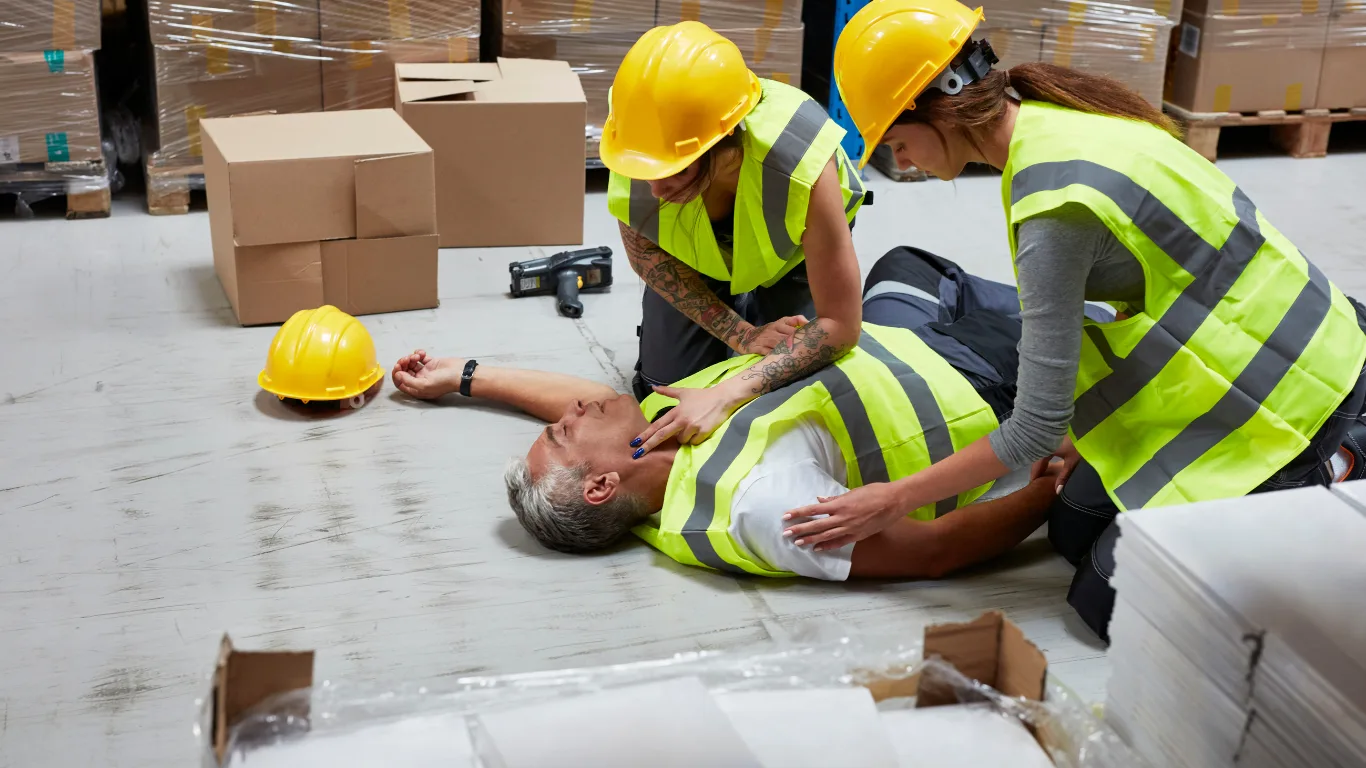
CPR Level A covers adult resuscitation only, while CPR Level C includes adults, children, and infants, making Level C the required standard for most workplaces, professional certifications, and WSIB compliance in Toronto. CPR AED training is essential for individuals who want to gain life-saving skills and is often required by employers in healthcare, education, and public safety sectors.
CPR AED courses typically last between 4 to 6 hours and include hands-on practice to ensure participants can effectively respond to cardiac emergencies. Certifications for CPR AED training generally last for three years. In 2026, AED training has become mandatory for Toronto construction sites and is strongly recommended for all workplaces given the density of the city and response time variability.
Train Your Whole Team
Private Group Training for Toronto Businesses
Coast2Coast brings certified instructors and all equipment directly to your Toronto workplace. Ideal for construction firms, corporate offices, daycares, security companies, and manufacturing facilities. Weekday, evening, and weekend scheduling available.
How to Evaluate Training Providers in Toronto
The quality of your training experience depends heavily on the provider you choose. When selecting a first aid course, ensure that the provider is accredited by a recognized organization such as the Canadian Red Cross to guarantee that the training meets industry standards and produces WSIB approved certifications recognized by occupational health regulatory bodies. Official accreditation is essential for training providers to ensure recognition by local occupational health authorities.
It is important to research the qualifications and experience of the instructors delivering the first aid course, as experienced instructors can significantly enhance the learning experience. Look for instructors who combine professional credentials with real-world emergency response experience and deliver engaging, interactive instruction.
Instructor Qualifications and Class Size
Instructor qualifications matter significantly when choosing a first aid course. The best instructors hold current Canadian Red Cross instructor certifications, have real-world emergency response experience, and create a supportive learning environment. Smaller class sizes with ideal student-to-instructor ratios of 12 to 1 or 15 to 1 ensure dedicated time with the equipment and more direct feedback on practical skills. Coast2Coast maintains controlled class sizes to ensure every student receives adequate hands-on practice time and personalized feedback on their CPR technique, AED use, and emergency scene management.
Aid Courses: In-Person vs Blended Learning
Modern first aid training is available in several formats to accommodate different learning preferences and busy schedules. Instructor-led in-person training provides direct feedback throughout the entire course, making it the most immersive experience for developing practical skills. These classroom-based courses are available on weekdays, weekends, and evenings at locations across the GTA.
Blended learning formats are beneficial for beginners as they build real-world confidence through practical hands-on practice after completing self-paced online theory. This format combines online theory with hands-on skills sessions, allowing Toronto professionals to complete the theory component at a self-paced schedule before attending a shorter in-person practical session. Blended learning is particularly convenient for people with demanding work schedules or family commitments on busy schedules.
When choosing a first aid course, consider the course duration and schedule carefully. Some courses are offered as intensive full-day sessions while others may be spread over multiple evenings or weekends. For businesses training multiple employees, private group training brings certified instructors directly to your workplace with all equipment, minimizing disruption to operations.
First Aid Certification Renewal in Toronto
Canadian Red Cross first aid certifications are valid for three years. As your expiration date approaches, complete a recertification course to maintain your credentials. Recertification courses are available for individuals whose current certification is still valid and from recognized providers like the Canadian Red Cross. They are shorter and less expensive than initial certification courses, making regular renewal both convenient and affordable.
If you allow your credentials to lapse, you will need to retake the full course rather than the abbreviated recertification program. Setting a calendar reminder approximately three months before your expiration date gives you plenty of time to find a convenient course date. This applies across all provinces including Ontario and British Columbia, where occupational health and safety authorities require continuously valid certification for regulated workplaces.
Key Takeaway
Choosing the right first aid course in Toronto means matching certification to WSIB requirements. Workplaces with 1 to 5 employees need Emergency First Aid (Basic). Workplaces with 6 or more need Intermediate / Standard First Aid (Intermediate). Emergency First Aid and Intermediate / Standard First Aid with CPR Level C are recommended for beginners. Ensure your provider is Canadian Red Cross accredited for WSIB approved certification. A certified first aider must reach any worker within 120 seconds. Certificates are valid for three years. BLS for healthcare workers requires annual renewal.
Canada’s Top-Rated Training Partner
Join 150,000+ Canadians Who Are Certified
Coast2Coast is Canada’s largest Canadian Red Cross Training Partner.
4.9 stars across 20,491 Google reviews. Register online in 2 minutes.
Frequently Asked Questions: Choosing the Right First Aid Course in Toronto 2026
Q1: How do I know which first aid course level I need in Toronto?
A: Check with your employer or professional licensing body first. Workplaces with 1 to 5 employees per shift require Emergency First Aid. Workplaces with 6 or more require Intermediate / Standard First Aid. Healthcare professionals, healthcare workers, and nursing students typically need BLS. Emergency First Aid and Intermediate / Standard First Aid with CPR Level C are recommended for beginners seeking critical life-saving skills. If unsure, Intermediate / Standard First Aid is the most versatile choice.
Q2: What is the difference between Emergency First Aid and Intermediate / Standard First Aid?
A: Emergency First Aid (now Basic First Aid) is a one-day course covering CPR Level C, AED use, choking, heavy bleeding, wound care, and common medical emergencies. Basic courses cover immediate emergencies such as heavy bleeding and choking, making them suitable for the general public and low-risk workplaces. Intermediate / Standard First Aid (now Intermediate) is a two-day comprehensive course required by most workplaces in higher-risk industries and adds spinal injuries, environmental emergencies, and trauma care.
Q3: Does my Toronto workplace need an AED?
A: As of January 1, 2026, any Toronto construction project employing 20 or more workers lasting longer than three months must have an AED on-site. For other workplaces, AEDs are strongly recommended and CPR AED training is included in all Canadian Red Cross first aid courses. WSIB also requires that certified first aiders can reach any injured worker within 120 seconds.
Q4: What first aid certification do Early Childhood Educators need in Toronto?
A: ECEs and daycare operators in Toronto must hold a valid Intermediate / Standard First Aid with CPR Level C certificate under the Child Care and Early Years Act (CCEYA). Pediatric First Aid courses specialize in first aid techniques for infants and children, addressing specific challenges related to pediatric emergencies. In 2026, the Ministry of Education has increased scrutiny on EpiPen training and pediatric-specific choking maneuvers.
Q5: How long does first aid certification take?
A: When choosing a first aid course, consider the course duration and schedule carefully. Emergency First Aid is a one-day intensive course. Intermediate / Standard First Aid takes two full days. CPR AED standalone courses last 4 to 6 hours. Blended learning formats allow you to complete theory online at a self-paced schedule, reducing in-person time significantly. BLS for healthcare workers is typically completed in a half day.
Q6: What should I look for when choosing a first aid training provider in Toronto?
A: Ensure the provider is accredited by the Canadian Red Cross to guarantee WSIB approved certifications recognized by occupational health and safety regulatory bodies. Research instructor qualifications and real-world experience. Prefer providers with smaller class sizes of 12 to 1 or 15 to 1 student-to-instructor ratios. Instructor-led in-person training provides direct feedback on practical skills, while blended learning formats combine self-paced online theory with hands-on skills sessions.
Q7: Is blended learning a valid option for first aid certification in Toronto?
A: Yes. Blended learning formats are beneficial for beginners as they build real-world confidence through practical hands-on practice after completing self-paced online theory. This format combines online theory with hands-on skills sessions and is a valid and recognized format for Canadian Red Cross certification. The in-person practical component is mandatory and cannot be completed online.
More FAQs: Recertification, BLS, and Industry Requirements
Q8: What happens if my first aid certification expires?
A: If your certification lapses beyond one year, you must retake the full initial course rather than the shorter recertification program. Canadian Red Cross certifications are valid for three years. Recertification courses are available for individuals whose current certification is still valid and from recognized providers like the Canadian Red Cross. Set a reminder three months before expiry.
Q9: What is the 120-second rule and how does it affect Toronto employers?
A: WSIB requires that a certified first aider must be able to reach any injured worker within 120 seconds. In large Toronto facilities, multi-floor office towers, or spread-out construction sites, this often requires training more staff than the minimum. Employers must audit their layout and shift coverage to ensure the standard is met at all times during operations.
Q10: Do security guards in Toronto need first aid certification?
A: Yes. The Ministry of the Solicitor General requires all licensed security guards in Ontario to be first aid certified. In 2026, the industry standard has moved toward Intermediate First Aid with a heavy focus on Naloxone and opioid overdose training. Any workplace with a perceived risk of opioid overdose under the Occupational Health and Safety Act must provide Naloxone kits and trained staff.
Q11: What is the difference between CPR Level A and CPR Level C?
A: CPR Level A covers adult resuscitation only. CPR Level C is more comprehensive, covering adults, children, and infants, making it the required standard for most workplaces, professional certifications, and WSIB compliance in Toronto. CPR Level C is included in both Emergency First Aid and Intermediate / Standard First Aid courses.
Q12: What is Wilderness First Aid and who needs it?
A: Wilderness First Aid courses focus on providing first aid in remote areas where professional medical help may be delayed, catering to outdoor enthusiasts, camp counsellors, and hiking guides. These courses cover Intermediate / Standard First Aid with an emphasis on improvised techniques and extended patient care without immediate access to professional help.
Q13: What first aid training do construction workers in Toronto need in 2026?
A: Construction workers in Toronto require Intermediate First Aid under WSIB Regulation 1101. Sites must maintain a high ratio of trained responders, typically one per 15 to 20 workers. As of January 1, 2026, construction projects employing 20 or more workers for more than three months must also have an AED on-site, making AED training mandatory for tradespeople.
Q14: Can my whole team get certified together in Toronto?
A: Yes. Coast2Coast offers private group training where certified instructors come to your Toronto workplace with all equipment and materials. This is the most efficient option for businesses training multiple employees at once. Group training can be scheduled on weekdays, evenings, or weekends to accommodate various types of shift-based workforces across the GTA.
Q15: Where can I take a first aid course in Toronto?
A: Coast2Coast First Aid and Aquatics offers Canadian Red Cross certified Emergency First Aid, Intermediate / Standard First Aid, CPR Level C, and BLS courses at multiple locations across the Greater Toronto Area including Toronto, North York, Scarborough, Etobicoke, Brampton, Mississauga, and Richmond Hill. Weekday, weekend, and evening formats are available. Blended learning and private group training options are also offered.
The information in this article is for educational and informational purposes only and does not constitute legal or occupational health and safety advice. WSIB regulation requirements vary by workplace type, industry, and workforce size. Always verify current requirements with WSIB or your provincial occupational health and safety authority before making compliance decisions. Coast2Coast First Aid Inc. assumes no liability for outcomes resulting from reliance on information in this article.
Written and reviewed by Ashkon Pourheidary, B.Sc. (Hons) Neuroscience, Co-Founder, Coast2Coast First Aid and Aquatics. Ashkon has been a certified First Aid and CPR instructor since 2011 and an Instructor Trainer since 2013. He is a certified EMR instructor, Psychological First Aid instructor, and BLS instructor, and has served on the First Aid Council for the Canadian Red Cross. Workplace first aid requirements sourced from WSIB Regulation 1101, CSA Z1210:24, the Ontario Occupational Health and Safety Act, and the Child Care and Early Years Act. Coast2Coast First Aid Inc. is Canada’s largest Canadian Red Cross Training Partner. Last reviewed: March 2026. Contact info@c2cfirstaidaquatics.com or 1-866-291-9121.


