We offer courses in Canada and the US. If you are experiencing issues with our website and need help to register, or if you have questions, please call us at 866-291-9121.
If you are facing any issues with your online course, registration, or training, please click here to submit a help request.
If you are facing any issues with your online course, registration, or training, please click here to submit a help request.
With great adventure comes great responsibilities.” Venturing into Canada’s incredible wilderness is exhilarating, but adventure can be challenging at the same time. There might be a possibility where help is hours away. Here’s when remote first aid skills come to the rescue. Unfortunate events like accidents, mishaps or injuries could happen even in the most serene places. That is why it’s crucial to understand the situation and act accordingly, ensuring you have the necessary skills and supplies. Let’s discover the challenges that can arise in remote locations and how to prepare yourself to be a lifesaver.
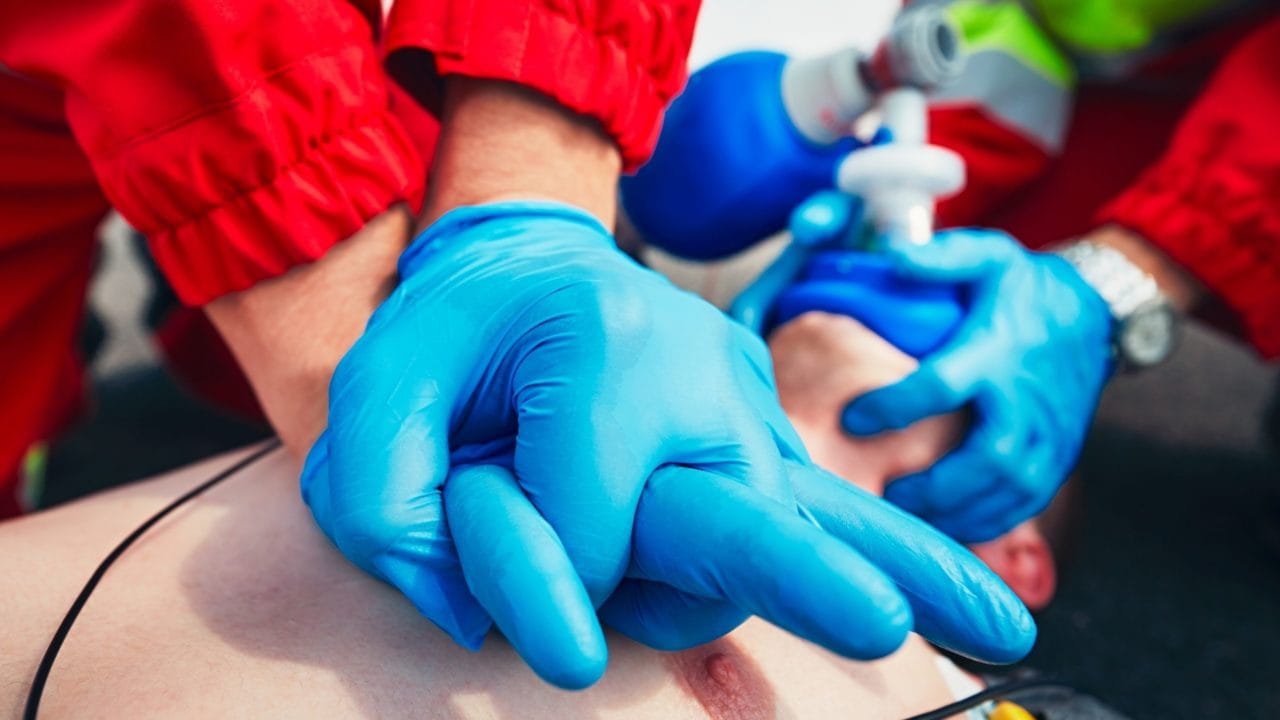
At Coast2Coast, we believe that providing immediate life-saving care to critical patients requires in-depth knowledge and skills. Upon completion of our Emergency Medical Responders (EMR) Course, certificate holders are trained to provide basic life-saving interventions in any type of emergency.
First Responders are usually the first line of help to arrive at the scene of an emergency. They have minimal equipment at their disposal but can perform their life-saving skills as they wait for additional resources to arrive. Once completed with their training, Emergency Medical Responders are also capable of assisting higher-level personnel during patient transportation.
EMR Training Course
Learning to care for patients as a first responder requires the proper training. This is easy to do when you register for EMR training at Coast2Coast.
The Course
Successful candidates, who pass every section of the course, receive the Canadian Red Cross certification. The certificate is valid for 3 years. At Coast2Coast, our dedicated instructors have put together high-quality programs that follow the Canadian Red Cross guidelines and are based on years of experience. Our course and topics cover all types of life-saving skills that emergency medical responders may face during any type of emergency, including in a marine environment.
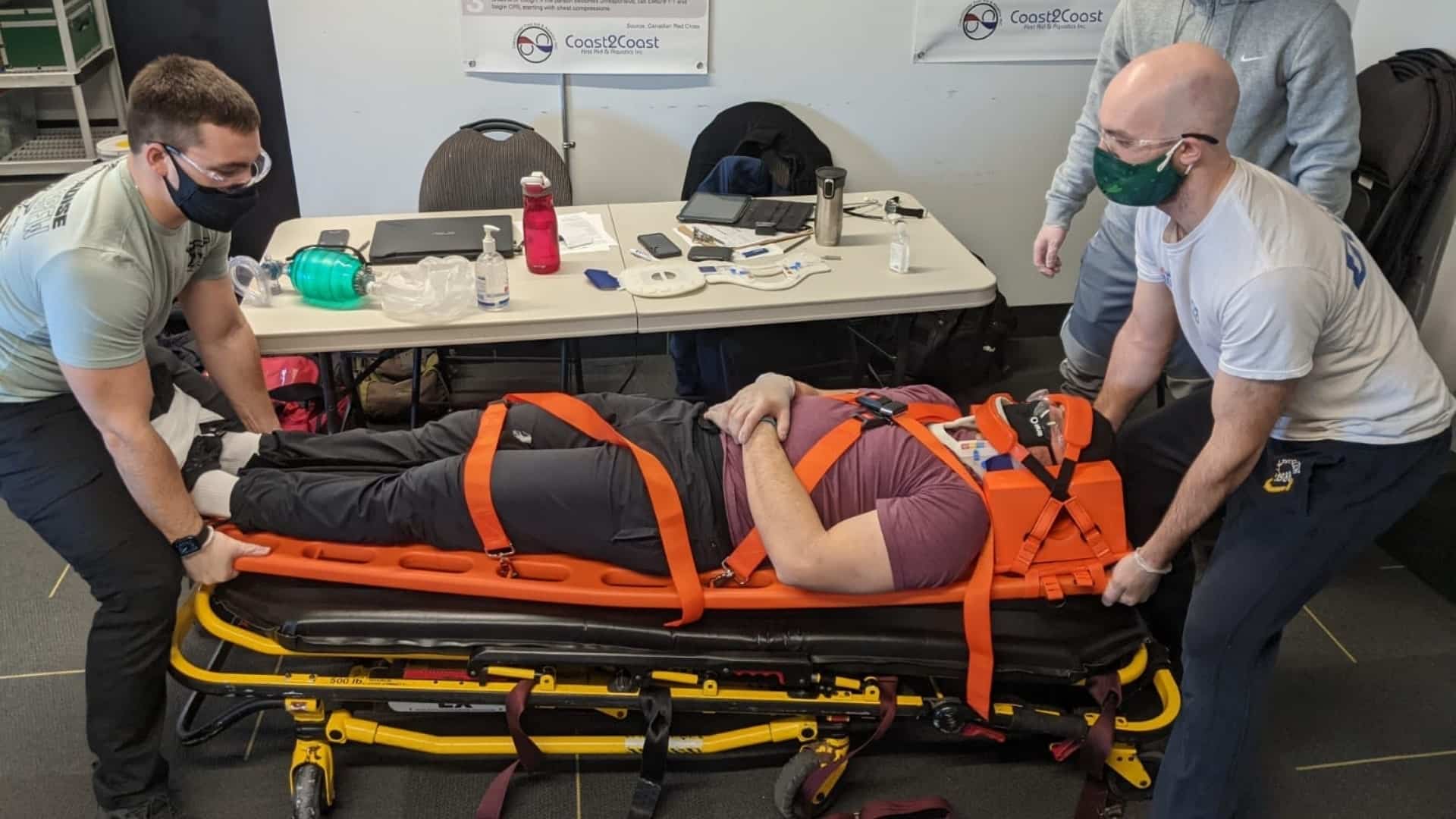
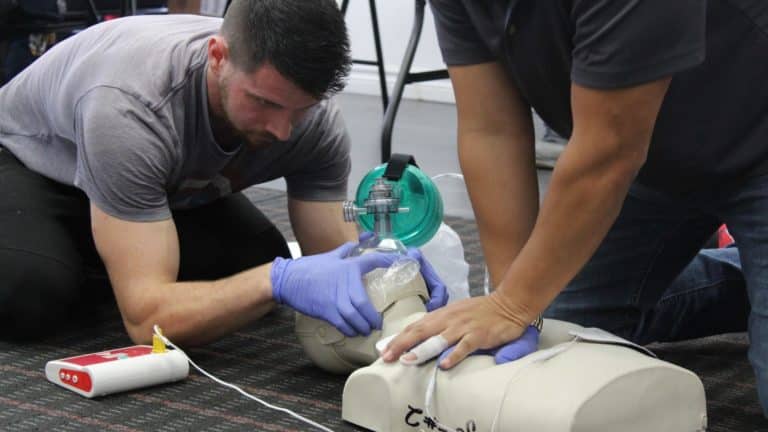
State-of-the-art equipment is used for all EMR training, and once the course is completed, everyone is well-versed in how to use everything. The field of emergency care is ever-evolving, and we feel it is vital that skills are learned by using the latest available technology. This ensures that the heroes who respond to emergencies in their communities are equipped to meet any situation head-on.
Register for EMR Training
Coast2Coast offers Pre-Hospital Care courses and training to First Responders, and those providing care in a pre-hospital setting. All of our training is based on the Canadian Red Cross guidelines.
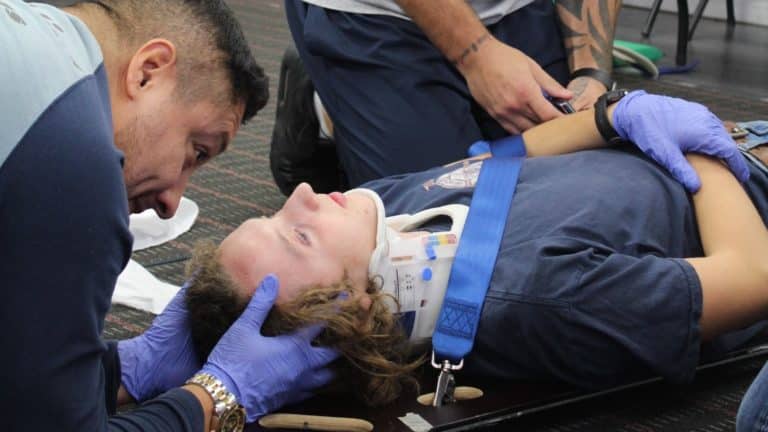
The course covers a variety of topics to ensure the ability to deal with any unexpected situations during emergencies. These include basic topics like circulation, breathing emergencies, and the prevention of disease transmission during any emergency. The instruction also includes advanced situations like sudden medical emergencies and how to deal with head and spine injuries.
Understanding workplace legislation and responsibilities are also important, and the course offers detailed instruction on these topics.
Here’s a video we made that summarizes the essentials students will review in the Emergency First Aid & CPR/AED Level C course.
Course Duration
As the highest level of First Aid and CPR/AED training, the Emergency Medical Responder course is intensive. The eight-day course takes 80 hours to complete and prepares first responder participants in both theoretical and practical training. Training is typically held over a two-week period. Occasionally, courses will run over four weekends for those who cannot attend during weekdays.
Other Important Course Topics
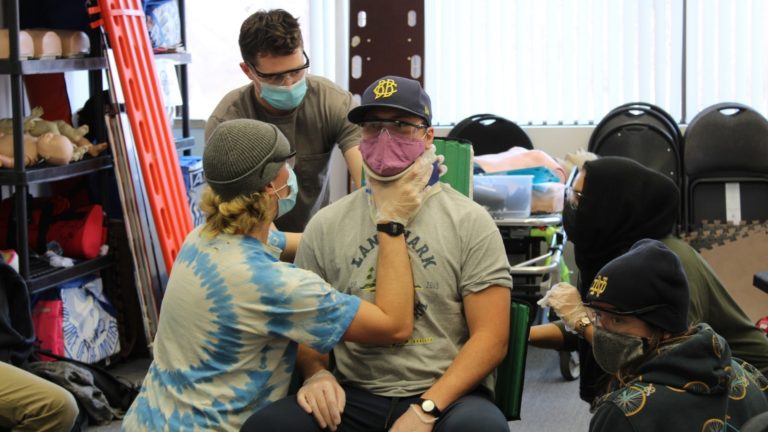
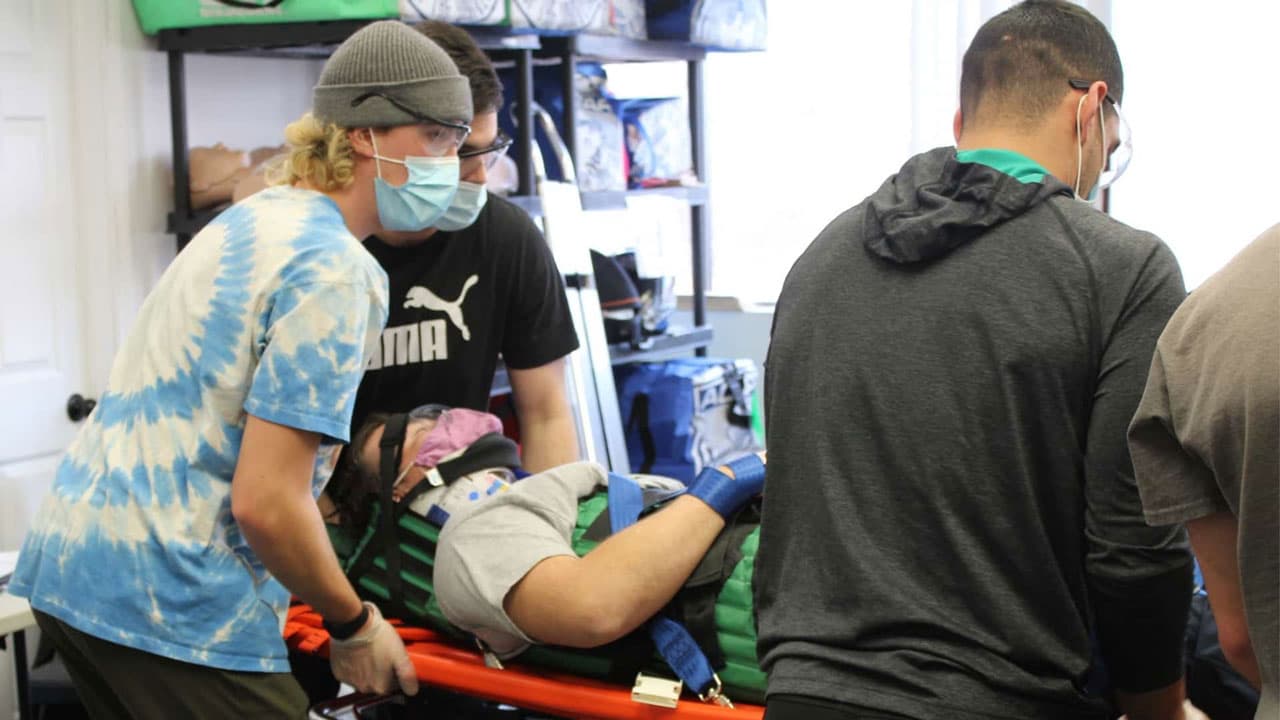
Lifesaving and patient assessment skills require hours of practice and during the course, many different scenarios are covered. This ensures the students are ready to care for patients as first responders.
During the 80-hour course, the participants learn anatomy and physiology, circulatory emergencies, airway management, and respiratory emergencies. Other important topics covered include threatening hemorrhages and soft tissue trauma, shock, choking, all types of musculoskeletal injuries, acute and chronic illnesses, pregnancy emergencies (including labour), and crisis intervention. Pharmacology, transportation, dealing with multi-casualty emergencies, and reaching and extricating patients are also taught. This is an intense and complete course that covers the needs of every person wanting to work as a first responder.
What Types of Training Courses are Available?
Once the basic First Responder training is completed, some responders choose to do an Emergency Medical Responder Upgrade course. The upgrade course provides Emergency Medical Responders another 40-hours of theoretical learning and hands-on training.
For those who need EMR training recertification, there is a 4-day training course. Recertification is important because responders get to learn the latest techniques and how to use the latest technology. Not only do they learn the latest techniques, but they also get time to practice skills they may not be as familiar with.
At Coast2Coast, groups of eight participants or more also have the option of booking a private training course. This can either be held at one of our facilities, or an experienced instructor can come to your location.
Register for First Aid Training
Register today for a First Aid training course and learn how to deal with emergencies and keep your loved ones safe! Check out our facilities and book your spot now.
The Emergency Medical Responder course is an 8 day, 80 hour program which provides the necessary skills and knowledge to help preserve lives, reduce pain, and diminish the consequences of injuries and sudden illnesses for those who are a part of a medical healthcare provider in a pre-hospital setting.
The first part of the course is about Preparing to Respond: the program goes through the responder, the emergency scene (location, victims, bystanders, injuries) and how to prevent disease transmission at the scene and in the ambulance.
Part Two of the course is about Establishing Priorities of Care. It goes through the human body anatomy and physiology, as well as an assessment of the current situation of the victim. This part goes through the main medical emergencies that responders are accustomed to, such as respiratory and circulatory emergencies, airway and ventilation problems, bleeding, shock, as well as pharmacology to understand medications that the victim may be on or may need. Our third part of the course goes through the process of identifying and helping those with Traumatic Injuries. This includes but is not limited to soft tissue, musculoskeletal, head and spine, chest, abdominal, and pelvic injuries Part Four goes through non-injury Medical Emergencies, which includes how to help those with sudden illnesses, poison ingestion, and temperature related emergencies (heat and frozen) The fifth and last portion of the course is handling Special Populations and Situations. Topics will be centered around special populations and crisis intervention, with events such as childbirth, reaching and moving patients from the area, multiple casualty and victim incidents, and transportation and workplace situations.
Who
Many of our course participants go on to be fire-fighters, law-enforcement officers, and become a part of an emergency medical services personnel.
One must have a Standard First Aid and CPR/AED Level C to be able to take the course. Anyone who completes the Standard First Aid course can enroll in the Emergency Medical Responder course!
Why
The world we live in today is full of danger and unexpected circumstances that require many first responders and emergency medical responders to aid victims of such tragic incidents.
Obtaining the Emergency Medical Responder certificate proves to the community that you are ready to help anyone in need if a medical emergency were to happen, and that you care about the well-being and safety of your city or town!
Where
Coast2Coast offers the Emergency Medical Responder course at 4 of our locations:
North York – #216, 180 Steeles Ave. W, Thornhill, Ontario
There are two ways to register for our Emergency Medical Responder course:
Call our toll-free phone number at 1-866-291-9121 to speak with one of our representatives to register you over the phone.
Go to our registration pagehere and click one of the previous locations stated above to register for a course. We offer the course once a month in each location.
Join our Emergency Medical Responder (EMR) training and equip yourself with the critical skills needed to respond to emergencies effectively. Learn from experienced instructors and gain hands-on experience that can make a real difference.