
Quick Answer
How do you identify cardiac arrest?
Cardiac arrest occurs when an electrical failure causes the heart to suddenly stop pumping blood, leading to immediate loss of consciousness, no pulse, and absent or abnormal breathing. It differs from a heart attack, which is caused by a blocked artery and does not always stop the heart from beating. When someone suddenly collapses and is unresponsive, call emergency services immediately, begin chest compressions at 100 to 120 per minute, and use an automated external defibrillator as soon as one is available. Immediate CPR can double or triple survival chances.
Find a Class Near You
Canadian Red Cross CPR & First Aid courses across Ontario and Alberta. Register online in 2 minutes.
356,000
Out-of-hospital cardiac arrests in the US annually (AHA)
90%
Fatal due to lack of timely bystander intervention
50–70%
Survival rate with immediate CPR + AED within 3–5 minutes
What You Will Learn
- What sudden cardiac arrest is and how it differs from a heart attack or other cardiac event
- The early warning signs and common signs of cardiac arrest to watch for
- Which risk factors, including heart disease, high blood pressure, and diabetes, increase the risk of cardiac arrest
- The correct steps to respond to suspected cardiac arrest, including CPR and AED use
- What happens when cardiac arrest is left untreated and why immediate treatment is critical
- How to reduce personal risk through lifestyle changes, medical attention, and regular screening
Approximately 356,000 Americans experience out-of-hospital cardiac arrest annually, according to the American Heart Association. Around 90% of those cases are fatal because bystanders did not know how to respond in time. Knowing how to identify sudden cardiac arrest and acting immediately can be the difference between life and death. Immediate treatment through cardiopulmonary resuscitation (CPR) and use of an automated external defibrillator can double or even triple a person’s chance of survival.
What Is Sudden Cardiac Arrest?
Sudden cardiac arrest occurs when there is an electrical failure within the heart that causes an irregular heartbeat, stopping the heart from pumping blood effectively to the brain and body. The most common cause is ventricular fibrillation, an abnormal heart rhythm in which the heart’s electrical impulses become chaotic, causing the heart muscle to quiver rather than contract and pump blood. When this happens, blood flow to vital organs stops within seconds.
Sudden cardiac arrest is often fatal if not treated immediately with CPR and defibrillation. It can happen in people with no known heart disease, and it can strike without warning at any age. This unpredictability makes it one of the most serious medical emergencies a bystander will ever face.
Sudden cardiac death occurs when cardiac arrest is not treated promptly. Within 4 to 6 minutes of the heart suddenly stopping, the brain is deprived of oxygen-rich blood and begins to sustain permanent damage. Without emergency treatment, death follows rapidly. The window for effective intervention is narrow, which is why recognising cardiac arrest immediately is a critical skill.
Cardiac Arrest vs Heart Attack: What Is the Difference?
These two emergencies are frequently confused, but understanding the difference is essential for choosing the correct response. Cardiac arrest and a heart attack are distinct conditions with different causes, symptoms, and treatments.
Cardiac arrest occurs due to an electrical malfunction in the heart. The heart suddenly stops beating, blood flow ceases entirely, and the person loses consciousness immediately. There is no pulse and no normal breathing. The person will not recover without CPR and defibrillation.
A heart attack occurs due to a blockage in the coronary artery, typically caused by a blood clot forming at the site of a plaque build-up. This blocked artery cuts off the oxygen-rich blood supply to a section of the heart muscle. During a heart attack, the heart usually continues to beat, and the person generally remains conscious. Symptoms may include chest pain or chest discomfort, shortness of breath, nausea, and pain radiating to the arm or jaw.
A key distinction: cardiac arrest can lead to death within minutes if not treated immediately, whereas a heart attack, while a serious medical emergency, may not be immediately fatal and can allow time for the person to seek medical attention. However, a heart attack can trigger cardiac arrest, particularly if a large portion of the heart muscle is damaged. Coronary artery disease is one of the leading underlying conditions that raises the risk of both.
Key Distinction
Heart attack: blocked artery, heart keeps beating, person usually conscious. Cardiac arrest: electrical failure, heart stops pumping blood, person immediately unconscious. Both are emergencies. Only cardiac arrest requires immediate CPR.
What Are the Warning Signs of Cardiac Arrest?
Symptoms of cardiac arrest can appear without warning, but some individuals experience early warning signs in the hours or even weeks prior to the event. Recognising these mild symptoms and seeking medical attention promptly can prevent a full cardiac arrest from occurring.
Early warning signs that may occur before sudden cardiac arrest include:
- Chest discomfort or chest pain that comes and goes or feels like pressure or squeezing
- Shortness of breath with minimal or no exertion
- Heart palpitations or a racing, fluttering irregular heartbeat
- Dizziness or lightheadedness that comes on suddenly
- Unusual fatigue or unexplained weakness, particularly in women
- Nausea or a feeling of general unwellness
- Near-fainting or fainting (syncope), which may indicate a dangerous arrhythmia
These other symptoms are not always present, and many people who suddenly collapse have had no prior warning at all. Someone can even experience cardiac arrest with no symptoms whatsoever. This is especially common in cases where the underlying cause is an undiagnosed heart condition such as heart valve disease, an enlarged heart, or coronary artery disease.
Common signs of cardiac arrest at the moment it occurs include:
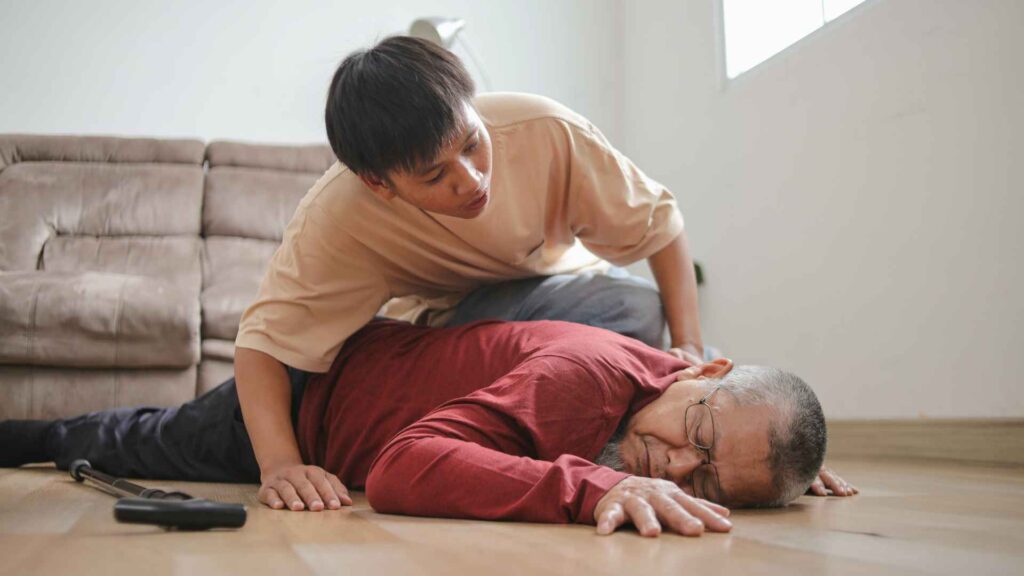
- Sudden collapse with no ability to stand or support body weight
- Complete unresponsiveness to voice or touch
- Absent or abnormal breathing, including agonal gasping, which is not effective breathing
- No pulse detectable at the wrist or neck
- Seizure-like activity in the first seconds as the brain loses oxygen
- Blue or grey colouring around the lips as oxygen flow is cut off
Safety Tip
If someone suddenly collapses and is unresponsive with no normal breathing, treat it as cardiac arrest. Call emergency services immediately and begin CPR. Do not wait for all symptoms to confirm. Acting within the first two minutes dramatically improves survival outcomes.
What Are the Risk Factors for Sudden Cardiac Arrest?
Risk factors for sudden cardiac arrest include a history of heart disease, high blood pressure, diabetes, smoking, and a sedentary lifestyle, all of which can increase the likelihood of heart rhythm disturbances. Understanding these risk factors is a critical first step toward prevention and early intervention.
Cardiovascular and Medical Risk Factors
- Coronary Artery Disease and Heart Disease: The most significant risk factor. Coronary artery disease narrows the arteries that supply the heart muscle, reducing blood supply and creating conditions for dangerous electrical failure. Approximately 18 million American adults have coronary artery disease. A history of heart failure, heart valve disease, or an enlarged heart further elevates risk.
- High Blood Pressure: Uncontrolled blood pressure overworks the heart muscle and damages the coronary artery walls, increasing the risk of abnormal heart rhythms. It affects approximately 48% of American adults.
- Previous Abnormal Heart Rhythms: A prior episode of ventricular fibrillation, ventricular tachycardia, or other serious arrhythmias significantly raises the likelihood of future cardiac arrest. These abnormal heart rhythms interfere with the electrical impulses that coordinate the heart’s pumping action.
- Heart Failure: When the heart is weakened and cannot pump blood efficiently, it becomes increasingly susceptible to electrical instability and sudden cardiac arrest.
- Diabetes: High blood sugar stiffens and damages arteries, reducing oxygen flow to the heart and affecting the electrical nerves that regulate the heart’s rhythm. Around 38 million Americans have diabetes.
- Family History: A family history of sudden cardiac death, heart disease, or inherited arrhythmia conditions raises individual risk. Family members of cardiac arrest survivors should discuss screening with a cardiologist.
Lifestyle Risk Factors
- Smoking: Constricts blood vessels, reduces oxygen flow, and accelerates coronary artery disease. Smoking is a directly modifiable risk factor for sudden cardiac arrest.
- Sedentary Lifestyle: Physical inactivity is associated with obesity, high blood pressure, and poor cardiovascular health. The CDC estimates 25% of American adults are physically inactive.
- Obesity: More than 42% of American adults are obese. Excess body weight contributes to hypertension, diabetes, and coronary artery disease.
- Drug Overdose: Drug overdose, particularly opioid overdose, is a leading trigger of cardiac arrest outside hospital settings. In 2022, over 80,000 Americans died from opioid overdose, the majority in cardiac arrest. Stimulant drug use including cocaine and amphetamines triggers dangerous electrical disturbances in the heart.
- Sleep Apnea: Untreated sleep apnea repeatedly disrupts oxygen flow during sleep, straining the heart and increasing the risk of abnormal heart rhythms overnight.
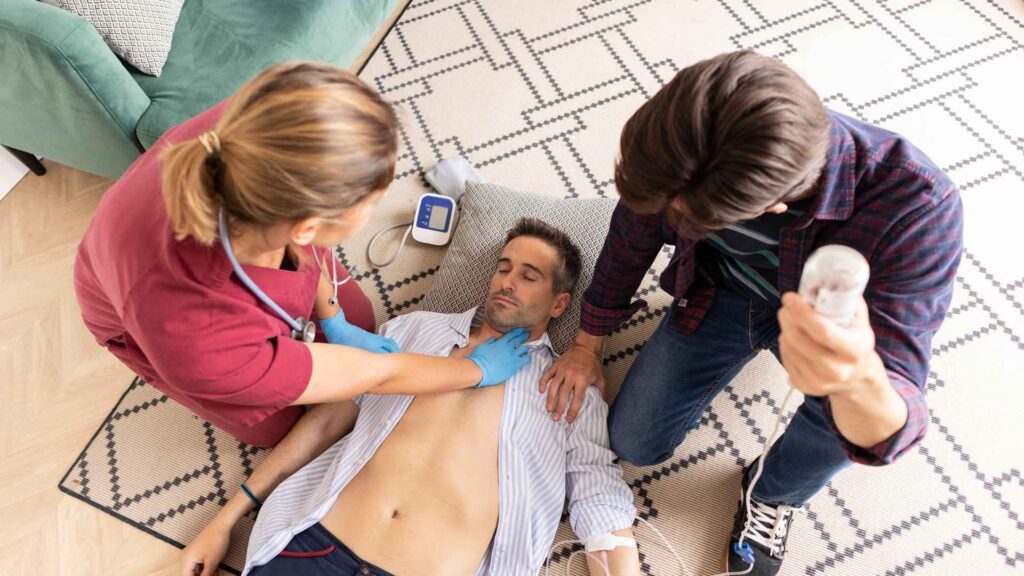
How to Identify Cardiac Arrest and Respond Immediately
The recommended response to suspected cardiac arrest is to check for responsiveness and normal breathing, call emergency services, and start CPR immediately. Survival decreases by 7 to 10% with every minute that passes without CPR and defibrillation. The following steps reflect current American Heart Association guidelines.
Step 1: Check for Responsiveness and Normal Breathing
Tap the person’s shoulders firmly and call loudly: “Are you okay?” Check whether the person is breathing normally. Agonal breathing, which sounds like gasping or gurgling, is a sign of cardiac arrest, not normal breathing. If the person does not respond and is not breathing normally, assume cardiac arrest and act immediately.
Step 2: Call Emergency Services
Call 911 immediately, or direct a specific bystander to call while you begin CPR. Inform the dispatcher that the person is unresponsive and not breathing normally. Emergency medical services will guide you through next steps and dispatch first responders. Do not leave the person unattended to search for a phone.
Step 3: Begin CPR Immediately
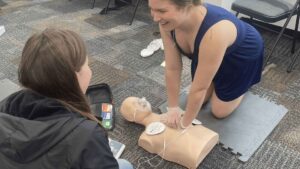
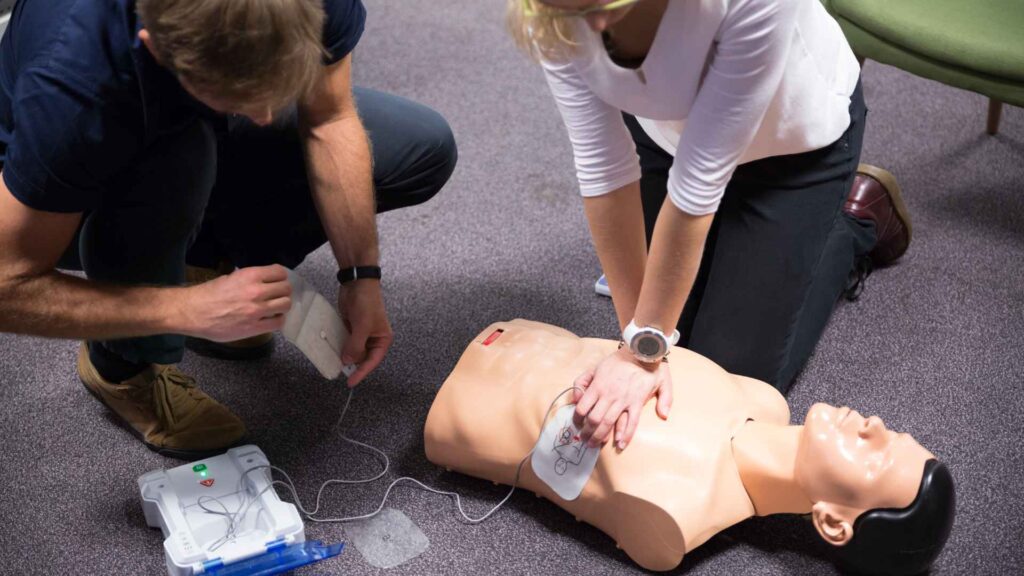
Begin CPR right away. Place the heel of one hand on the centre of the chest, place your other hand on top, and perform chest compressions at a rate of 100 to 120 compressions per minute. Each compression should be at least 2 inches deep, and you must allow the chest to fully rise between compressions. This full recoil allows the heart to refill with blood before the next compression.
If you are untrained in CPR, you should still perform hands-only CPR by continuing chest compressions without rescue breaths until help arrives or an AED becomes available. Hands-only CPR is highly effective in the first few minutes of cardiac arrest and is far better than doing nothing. Even with no training, pushing hard and fast on the centre of the chest maintains blood flow to the brain while emergency medical services are on the way.
Step 4: Use an Automated External Defibrillator (AED) as Soon as Possible
An automated external defibrillator, commonly called an AED, is a portable device that analyses the heart’s rhythm and delivers an electric shock to restore normal electrical activity if a shockable rhythm such as ventricular fibrillation is detected. Using an automated external defibrillator AED as soon as possible can significantly increase the chances of survival for someone in cardiac arrest. AEDs are available in airports, train stations, gyms, shopping centres, schools, and many other public locations.
The device provides clear voice prompts and requires no medical training to operate. Attach the pads to the person’s bare chest as shown in the diagrams on the pads, allow the device called AED to analyse the rhythm, and follow all instructions. If a shock is advised, ensure no one is touching the person, then press the shock button. Resume CPR immediately after any shock is delivered. Continue until first responders arrive.
What Happens If Cardiac Arrest Is Not Treated?
When cardiac arrest is treated immediately with CPR and defibrillation, survival is possible and full neurological recovery can occur. Without immediate intervention, the consequences are severe and irreversible:
- Loss of Consciousness and Pulse: Within seconds of the heart stopping, the person loses consciousness and pulse. Blood pressure drops to zero. Oxygen flow to the brain and organs stops completely.
- Brain Damage: Permanent brain damage begins within 4 to 6 minutes without CPR. Every additional minute without blood flow increases the severity of neurological injury. CPR maintains partial blood flow to the brain, buying critical time until first responders arrive.
- Sudden Cardiac Death: Without emergency treatment, cardiac arrest leads to sudden cardiac death. Cardiac arrest can lead to death within minutes if not treated immediately, making it one of the most time-critical medical emergencies.
Immediate CPR is crucial as it can double or even triple a person’s chance of survival. When CPR is combined with defibrillation within 3 to 5 minutes of collapse, survival rates can reach 50 to 70%, compared to the national average of 10 to 12% for out-of-hospital cardiac arrest.
How to Reduce Your Risk of Sudden Cardiac Arrest
Many risk factors for sudden cardiac arrest are manageable through lifestyle changes and proactive medical care. The National Heart, Lung, and Blood Institute and the American Heart Association recommend the following strategies:
- Manage blood pressure and cholesterol through diet, exercise, and medication if prescribed. High blood pressure is one of the most common and treatable risk factors for cardiac arrest.
- Control diabetes with medical guidance to protect arteries and preserve the electrical health of the heart.
- Quit smoking to reduce constriction of blood vessels and lower your risk of coronary artery disease.
- Exercise regularly. The American Heart Association recommends at least 30 minutes of moderate activity five days per week to strengthen the heart and reduce blood pressure.
- Maintain a healthy weight to reduce the compounding effects of obesity on blood pressure, diabetes, and heart disease.
- Seek regular medical attention. Blood tests and cardiovascular screening can detect early signs of coronary artery disease, heart valve disease, and arrhythmia before they become life-threatening.
- Know your family history. If family members have experienced sudden cardiac death or coronary artery disease at a young age, discuss genetic screening with your doctor.
- Treat sleep apnea to reduce the nightly strain on the heart and prevent oxygen deprivation during sleep.
Even with all preventive measures in place, sudden cardiac arrest can occur without warning. This is why knowing how to recognise the signs of cardiac arrest, knowing how to begin CPR, and knowing how to use an automated external defibrillator are skills that save lives regardless of a person’s individual health status.
Why Bystander Response Is the Most Important Factor in Cardiac Arrest Survival
More than 80% of cardiac arrests that occur outside a hospital happen at home. The first person to reach a cardiac arrest victim is almost always a family member, coworker, or bystander, not a paramedic. By the time emergency medical services and first responders arrive, the window for effective defibrillation may have already closed.
Bystander CPR, even without rescue breaths, maintains critical blood flow to the brain until a defibrillator is available or until first responders arrive and begin treatment. When someone in cardiac arrest receives CPR from a bystander, their chance of surviving to hospital discharge nearly doubles compared to receiving no CPR at all.
Knowing how to identify cardiac arrest quickly (sudden collapse, no pulse, absent or abnormal breathing, complete unresponsiveness) and knowing how to start CPR are the two most valuable skills any person can possess in a public or domestic emergency. The seconds between collapse and the first chest compression determine whether the brain survives intact.
Training in CPR and AED use, provided through accredited courses recognised by the American Heart Association, gives bystanders the knowledge, muscle memory, and confidence to begin treatment before first responders arrive. Untrained bystanders who witness cardiac arrest frequently hesitate or do nothing out of fear of causing harm. That hesitation, not the CPR itself, is what costs lives.
Key Takeaway
Cardiac arrest is survivable when bystanders act immediately.
Recognising the signs (sudden collapse, no pulse, no normal breathing) and starting CPR within two minutes, combined with AED use within three to five minutes, can raise survival rates from 10% to over 50%. The most important thing you can do right now is get trained.
Be Prepared
Get CPR and AED Certified
Hands-on certification courses across California. American Heart Association approved. Register in minutes.
Frequently Asked Questions: 2025 Cardiac Arrest Identification
Sources & Regulatory References
- American Heart Association. Heart Disease and Stroke Statistics 2024 Update. heart.org
- American Heart Association. CPR and ECC Guidelines 2020. cpr.heart.org
- Centers for Disease Control and Prevention. Physical Inactivity in American Adults. cdc.gov
- National Heart, Lung, and Blood Institute. Sudden Cardiac Arrest. nhlbi.nih.gov
- California Health and Safety Code Section 1799.102. Good Samaritan Law. leginfo.legislature.ca.gov
- Substance Abuse and Mental Health Services Administration. 2021 National Survey on Drug Use and Health. samhsa.gov